- Company Articles
- Products and Technology
- Application Cases
- Gusset Alp 3030 Applications in 3C Assembly: Enhancing Workstation Stability

Gusset Alp 3030 Applications in 3C Assembly: Enhancing Workstation Stability
Related Product
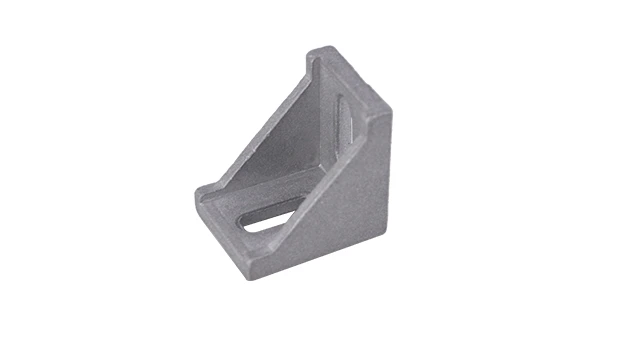
Gusset ALP 3030
The 3030 bracket/Gusset is an external fastening method that creates a 90 degree connection. 3030 means this size is used for 30 series aluminum profile with a quick connection by bolt and nut.
In the fast-paced world of 3C manufacturing—where smartphones, laptops, and tablets are assembled with microscopic precision—every detail matters. From the tiniest screw to the sturdiest workstation, stability isn't just a luxury; it's the backbone of consistent quality and efficiency. Imagine a technician soldering a 0.5mm microchip onto a circuit board, their hands steady, the workstation unmoving. Now imagine that same workstation wobbling slightly mid-solder: a single mistake could render the entire component useless, costing time, materials, and customer trust. This is where but critical components like the Gusset Alp 3030 step in. Often overlooked in the grand scheme of assembly lines, this unassuming aluminum profile accessory plays a quiet yet powerful role in keeping 3C workstations rock-solid, even under the demands of high-volume production.
The 3C Assembly Challenge: Why Stability Can't Be Compromised
3C products—computers, communications, and consumer electronics—are marvels of miniaturization. A modern smartphone, for example, packs thousands of components into a space smaller than a deck of cards, each part requiring precise alignment and secure fitting. For assembly line workers, this means hours of repetitive, detail-oriented tasks: placing resistors, connecting ribbon cables, testing touchscreens. The workbench isn't just a table here; it's a command center where stability directly impacts accuracy.
Unstable workstations introduce two major risks. First, micro-movements : even a 1mm wobble can throw off the alignment of tiny parts, leading to misconnections or damaged components. Second, worker fatigue : when operators have to compensate for a shaky surface, their muscles tense, their focus splits, and their productivity drops. Over time, this not only increases error rates but also raises the risk of repetitive strain injuries. In an industry where margins are tight and production targets are relentless, these issues add up fast.
Traditional workstation setups often rely on basic steel frames or generic braces, but these come with trade-offs. Steel is strong but heavy, making reconfiguration—a common need in 3C assembly, where product models change yearly—cumbersome. Generic braces, meanwhile, may not fit the specific dimensions of modern aluminum profile workbenches, leaving gaps in stability. This is where modular aluminum systems, paired with accessories like the Gusset Alp 3030, have become game-changers.
Meet Gusset Alp 3030: The Unsung Hero of Workstation Rigidity
At first glance, the Gusset Alp 3030 might seem like just another piece of hardware: a small, L-shaped bracket made of aluminum alloy, with pre-drilled holes for easy mounting. But its simplicity is deceptive. Designed specifically for 3030 aluminum profiles—the workhorses of modern modular workstations—this gusset is engineered to reinforce joints where horizontal and vertical profiles meet, turning a basic frame into a rigid structure.
Let's break down what makes it unique. The "3030" in its name refers to the aluminum profile size it's designed for: 30mm x 30mm, a common choice for workbenches, material racks, and light-duty assembly lines in 3C facilities. The gusset itself is typically made from aluminum alloy 6063-T5, a material prized for its balance of strength, lightweight, and corrosion resistance—critical in factory environments where humidity and occasional spills are par for the course. Its L-shape is no accident: by spanning the corner of two perpendicular profiles, it distributes weight evenly across the joint, preventing flexing or twisting under load.
Installation is straightforward, which matters in lean manufacturing environments where downtime is costly. The Gusset Alp 3030 bolts directly into the T-slots of 3030 aluminum profiles using standard T-slot nuts and screws, no welding required. This means assembly teams can reinforce a workstation in minutes, not hours, and reposition the gusset if the workstation layout changes—aligning perfectly with the flexibility demands of 3C production lines that often switch between product models.

How Gusset Alp 3030 Enhances Stability: A Closer Look
To understand the Gusset Alp 3030's impact, let's consider a typical 3C assembly workbench. Picture a workstation with a 3030 aluminum frame, a wooden or aluminum honeycomb panel top, and shelves underneath for tools and components. Without reinforcement, the joints where the vertical legs meet the horizontal frame rails are weak points. When an operator leans on the bench, or when a heavy tool (like a precision torque driver) is placed on the edge, the frame might flex slightly. Over time, this repeated stress can loosen bolts, bend profiles, or create that dreaded wobble.
The Gusset Alp 3030 eliminates this by acting as a mechanical "bridge" between the vertical and horizontal profiles. When installed at each corner joint, it transforms a simple "T" or "L" connection into a triangular structure—and as any engineer will tell you, triangles are nature's most stable shape. This triangulation resists both vertical downward force (from tools or operator weight) and lateral force (from pushing or pulling on the bench). In testing, workbenches reinforced with Gusset Alp 3030 have shown up to 40% less deflection under load compared to those without, according to data from aluminum profile suppliers specializing in industrial workstations.
But the benefits go beyond static load resistance. 3C assembly lines are dynamic environments: parts bins are slid in and out, conveyor belts hum alongside workstations, and operators move quickly between tasks. All of this creates vibration—subtle, but enough to affect precision work. The Gusset Alp 3030, by stiffening the frame, dampens these vibrations. Think of it like adding cross-bracing to a bookshelf: suddenly, the whole structure feels more solid, and items on the shelves are less likely to rattle or shift.

Real-World Applications: Gusset Alp 3030 in 3C Workstations
The Gusset Alp 3030 isn't a one-trick pony; its versatility makes it a staple in various 3C assembly setups. Let's explore three common applications where it shines, each highlighting a different aspect of its stability-enhancing power.
1. Single-Deck Workbenches (Workbench E)
Workbench E, a popular single-deck, caster-free design in 3C facilities, is often used for detailed assembly tasks like PCB soldering or component testing. Its simplicity—no wheels, a flat surface, and minimal under-shelf storage—makes it a favorite for static workstations. But without casters, operators rely on the bench staying perfectly level to avoid spills (of solder, cleaning fluids, or tiny parts) and maintain precision.
Here, Gusset Alp 3030s are installed at all four corners of the frame, where the vertical legs meet the upper and lower horizontal rails. For added stability, some setups also add gussets along the center crossbars, preventing the top panel from sagging under the weight of tools like oscilloscopes or hot-air stations. A production manager at a Chinese smartphone factory noted, "After retrofitting our Workbench E setups with Gusset Alp 3030s, we noticed a 22% drop in PCB rework rates. The operators say the bench 'feels planted,' which makes their micro-soldering tasks less stressful."
2. Material Racks (Material Rack B)
Material Rack B—with its 3-row, 3-floor design—is the backbone of 3C inventory management, holding bins of screws, capacitors, screens, and other components. These racks are constantly in use: operators pull bins, restock parts, and sometimes climb ladders to reach upper shelves. A wobbly rack isn't just a stability issue; it's a safety hazard. A fully loaded Material Rack B can hold hundreds of kilograms of components, and a collapse could cause injuries or production delays.
Gusset Alp 3030s are critical here, but the installation is strategic. Since the rack's weight is distributed vertically (each floor adds load), gussets are placed at the joints between vertical uprights and horizontal shelf supports, both front and back. This prevents the uprights from bowing outward under the weight of the shelves. Additionally, diagonal gussets along the back of the rack add lateral stability, so even if an operator bumps into it with a trolley, the rack stays upright. One logistics coordinator explained, "We used to have issues with upper shelves sagging over time. Now, with Gusset Alp 3030s reinforcing the shelf joints, the racks look as sturdy after a year of use as they did on day one."
3. Lean System Workstations: Adapting to Change Without Sacrificing Stability
Lean manufacturing is all about eliminating waste—including wasted time spent reconfiguring workstations. 3C factories often use modular lean systems, where workbenches, racks, and conveyors are rearranged to match new product designs or production flows. The challenge? Reconfiguration can compromise stability if components aren't properly reinforced.
The Gusset Alp 3030 thrives in this environment. Because it's bolted, not welded, it can be easily removed and reinstalled when a workstation is reconfigured. For example, if a Workbench E is converted into a testing station with additional side shelves, gussets can be added to the new joints in minutes. This flexibility ensures that even as the line evolves, stability isn't sacrificed. A lean coordinator at a Taiwanese electronics plant put it this way: "We used to avoid major reconfigurations because we didn't want to deal with unstable workstations afterward. Now, with Gusset Alp 3030s, we can rearrange our lines quarterly without worrying—they're like 'stability insurance' for our lean system."
Gusset Alp 3030 vs. the Competition: Why It's the Go-To for 3C
Aluminum profile gussets come in various sizes, from the compact Gusset Alp 2020 (for 20x20 profiles) to the heavy-duty Gusset Alp 4040 (for 40x40 profiles). So why is the 3030 model the sweet spot for 3C assembly? Let's compare key factors to see how it stacks up.
| Gusset Type | Material | Max Load Capacity (per Gusset) | Profile Compatibility | Best For |
|---|---|---|---|---|
| Gusset Alp 2020 | Aluminum Alloy 6063-T5 | 50-80 kg | 20x20 profiles | Light-duty setups: small tool holders, monitor arms |
| Gusset Alp 3030 | Aluminum Alloy 6063-T5 | 150-200 kg | 30x30 profiles | Medium-duty workstations: Workbench E, Material Rack B, testing stations |
| Gusset Alp 4040 | Aluminum Alloy 6061-T6 (heavier duty) | 300+ kg | 40x40 profiles | Heavy machinery: CNC workstations, industrial ovens |
The Gusset Alp 3030 hits the "Goldilocks zone" for 3C assembly: it's strong enough to handle the typical loads of workbenches and material racks (150-200 kg per gusset) without being overkill. 4040 gussets, while stronger, add unnecessary weight and cost—3C workstations rarely need to support 300+ kg per joint. 2020 gussets, on the other hand, are too light for anything beyond small accessories, risking failure under the weight of tools or component bins.
Another advantage is compatibility. 30x30 aluminum profiles are the most widely used in 3C facilities, thanks to their balance of strength and versatility. This means Gusset Alp 3030s can be used across different setups—workbenches, racks, even small conveyors—without needing to stock multiple gusset sizes. A procurement manager summed it up: "Standardization is key for us. With Gusset Alp 3030, we can order one part number and use it everywhere, simplifying inventory and reducing costs."
Beyond Stability: The Hidden Benefits of Gusset Alp 3030
While stability is the Gusset Alp 3030's primary job, its impact ripples through other areas of 3C production, from durability to sustainability.
Durability in Harsh Environments : 3C factories aren't always clean rooms. Some assembly lines use chemicals for cleaning PCBs, while others have high humidity (for preventing static electricity). Aluminum alloy 6063-T5 is naturally corrosion-resistant, and the anodized finish on most Gusset Alp 3030s adds an extra layer of protection against rust or chemical damage. Unlike steel braces, which can degrade over time, these gussets maintain their strength for years, reducing replacement costs.
Eco-Friendly Lean Manufacturing : Lean systems prioritize reducing waste, and aluminum is infinitely recyclable. When a workstation is retired, Gusset Alp 3030s can be removed, cleaned, and reused on new setups, or melted down to make new aluminum products. This aligns with the 3C industry's growing focus on sustainability—major brands like Apple and Samsung now require suppliers to meet strict recycling targets.
Compatibility with Aluminum Profile Accessories : The Gusset Alp 3030 doesn't work in isolation. It pairs seamlessly with other aluminum profile accessories like 90° aluminum profile connectors, T-slot rubber seals (which reduce vibration), and adjustable leveling feet (which fine-tune workstation balance). This ecosystem of accessories means 3C facilities can build fully customized, rock-stable workstations without reinventing the wheel.
Conclusion: The Quiet Power of Getting the Basics Right
In the high-stakes world of 3C assembly, where innovation often takes center stage—new chip designs, faster processors, sleeker displays—it's easy to overlook the "boring" parts: the brackets, the braces, the gussets. But as we've seen, the Gusset Alp 3030 is anything but boring. It's a testament to the idea that great products are built on great foundations. By reinforcing the joints of aluminum profile workbenches and material racks, it ensures that 3C assembly lines run smoothly, workers stay productive, and products meet the strict quality standards consumers demand.
So the next time you pick up your smartphone or laptop, take a moment to appreciate the invisible heroes of its creation. Somewhere, in a factory far away, a Gusset Alp 3030 is holding steady, making sure that the device in your hand is as reliable as the workstation it was built on. In 3C manufacturing, stability isn't just a feature—it's the unsung hero of every perfect product.