- Company Articles
- Products and Technology
- Product knowledge
- Gusset Alp 3030 Dimensions: Understanding 30x30mm Specifications for Compatibility

Gusset Alp 3030 Dimensions: Understanding 30x30mm Specifications for Compatibility
Related Product
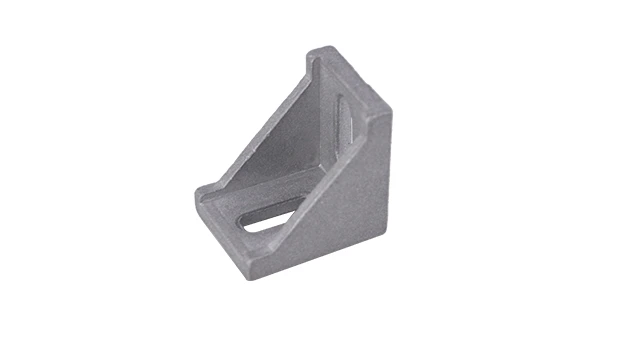
Gusset ALP 3030
The 3030 bracket/Gusset is an external fastening method that creates a 90 degree connection. 3030 means this size is used for 30 series aluminum profile with a quick connection by bolt and nut.
Introduction: The Unsung Hero of Stable Lean Systems
Walk into any well-organized production floor, warehouse, or workshop, and you'll likely spot the quiet efficiency of a lean system at work. From streamlined workbenches to smooth-flowing material racks, these setups rely on a symphony of components working together seamlessly. But behind that harmony lies a network of small, often overlooked parts that hold everything together—parts like the Gusset Alp 3030. At first glance, it might seem like just another metal plate, but this 30x30mm gusset is a linchpin of stability, ensuring that your aluminum profiles stay rigid, your structures hold weight, and your operations run without costly hiccups. In this guide, we're diving deep into the dimensions of the Gusset Alp 3030, why they matter, and how understanding them can save you time, money, and frustration when building or upgrading your lean system.
What Is the Gusset Alp 3030, Anyway?
Let's start with the basics. The Gusset Alp 3030 is a type of reinforcement plate designed specifically for use with 3030 aluminum profile systems. Think of it as the "backbone" of your structure's joints—when you connect two or more aluminum profiles at an angle (like the corners of a workbench or the shelves of a material rack), the gusset adds extra strength, preventing the joint from flexing or weakening under load. Made from lightweight yet durable aluminum, it's engineered to fit precisely with 30x30mm profiles, which are among the most common sizes in lean manufacturing and modular workspace setups.
But why "Alp 3030"? The "Alp" likely refers to its aluminum composition, while "3030" denotes its compatibility with 30x30mm profiles—a critical detail we'll unpack later. Unlike generic metal brackets, this gusset is purpose-built for the modular nature of lean systems, where adaptability and reusability are key. Whether you're building a simple workbench or a complex conveyor system, the Gusset Alp 3030 ensures that your structure can handle daily wear and tear without compromising safety or efficiency.

Why Dimensions Matter: The Cost of "Close Enough"
We've all been there: you order a set of components for your lean system, unbox them eager to build, and then realize the gussets won't align with the profiles. The holes are off by a millimeter, the edges don't sit flush, or the thickness makes it impossible to attach end caps. Suddenly, that "quick weekend project" turns into a frustrating hunt for replacement parts—and that's if you catch the issue before assembly. If not, you might end up with a wobbly workbench that risks damaging materials or, worse, endangering workers.
In modular systems, precision is everything. The Gusset Alp 3030's dimensions aren't arbitrary; they're the result of careful engineering to ensure compatibility with 30x30mm profiles and their accompanying aluminum profile accessories . Even a tiny discrepancy—say, a hole that's 4.9mm instead of 5mm—can mean the difference between a tight, secure joint and one that loosens over time. That's why understanding these specs isn't just for engineers; it's for anyone who wants their lean system to work as hard as they do.

Breaking Down the Gusset Alp 3030 Dimensions: A Closer Look
Let's get technical—but don't worry, we'll keep it simple. The Gusset Alp 3030 is defined by several key measurements, each playing a role in its compatibility and performance. Below is a detailed breakdown of its core dimensions, along with why each one matters:
| Specification | Typical Measurement | Why It Matters |
|---|---|---|
| Overall Length | 60mm | Determines how far the gusset extends along the profile, affecting stability at the joint. |
| Overall Width | 60mm | Matches the width of 30x30mm profiles, ensuring full contact with the profile surface for even load distribution. |
| Thickness | 2mm–3mm | Thicker gussets (3mm) handle heavier loads; thinner (2mm) are lighter for low-weight applications. |
| Hole Diameter | 5mm | Accommodates M5 bolts, the standard fastener for 30x30mm aluminum profiles. |
| Hole Center Distance | 30mm (along profile length) | Aligns with the T-slot spacing on 3030 profiles, allowing bolts to slide into place and secure the gusset. |
| Corner Radius | 5mm | Prevents sharp edges, reducing the risk of cuts during assembly and improving safety in busy workspaces. |
Let's zoom in on a few of these. The hole center distance, for example, is no accident. 3030 aluminum profiles have T-slots (the grooves running along their length) spaced 30mm apart. By placing its holes 30mm apart, the Gusset Alp 3030 ensures that when you slide an M5 bolt into the T-slot, it lines up perfectly with the gusset's hole—no guessing, no forcing, no stripped threads. Similarly, the overall width and length (60mm each) mean the gusset spans two T-slot intervals on a 3030 profile, distributing stress across multiple points instead of concentrating it on a single bolt. That's the difference between a joint that holds and one that bends under pressure.
Material Matters: Aluminum's Role in Compatibility
Dimensions aren't the only factor in compatibility—material matters too. The Gusset Alp 3030 is typically made from 6063-T5 aluminum, a popular choice for aluminum profile systems for good reason. This alloy offers a winning combo of strength, lightweight, and corrosion resistance, making it ideal for both indoor and light outdoor use. But how does this affect compatibility?
For starters, aluminum's malleability allows for precise manufacturing. Unlike steel, which can warp during cutting or drilling, aluminum maintains tight tolerances—so the 5mm hole you see on the spec sheet is actually 5mm, not 5.1mm or 4.9mm. This consistency ensures that gussets from the same supplier (or even different reputable suppliers) will fit the same 3030 profiles. Additionally, aluminum's lightweight nature means adding gussets doesn't weigh down your structure, which is crucial for mobile setups like turnover trolleys or workbenches on casters.
It's also worth noting that the aluminum is often anodized—a process that adds a protective oxide layer. This finish not only prevents rust but also creates a smooth surface that sits flush against the profile, avoiding gaps that could weaken the joint. When paired with other aluminum accessories (like end caps or brackets), the anodized finish ensures a uniform look and feel, too—because let's be honest, a clean, professional workspace just works better.
Fitting In: Compatibility with Other 3030 Profile Accessories
The Gusset Alp 3030 doesn't work alone—it's part of a ecosystem of aluminum profile accessories , and its dimensions are designed to play nice with them. Let's take a look at two common companions and how the gusset's specs ensure they work together:
1. 3030 Aluminum Profile End Cap : These caps slide over the ends of 30x30mm profiles to cover sharp edges and prevent dust buildup. But if your gusset is too thick or extends too far toward the end of the profile, it can block the end cap from seating properly. The Gusset Alp 3030's 60mm length solves this: since most 3030 profiles are cut to custom lengths, the gusset is positioned 30mm–50mm from the end, leaving enough space for the end cap to fit without interference. Pro tip: Always check the end cap's depth (typically 10mm–15mm) and ensure your gusset is placed at least that distance from the profile end.
2. T-Slot Nuts and Bolts : These are the "glue" of modular systems. The gusset's 5mm holes are sized for M5 bolts, which pair with M5 T-slot nuts that slide into the profile's T-slots. If the hole diameter were even slightly smaller (say, 4.5mm), the bolt wouldn't thread through; too large (6mm), and the bolt would wobble, leading to a loose joint. The 30mm hole spacing, meanwhile, aligns with the T-slot intervals, so you can position the gusset exactly where you need it along the profile—no drilling extra holes required.
Real-World Applications: Where Gusset Alp 3030 Shines
Now that we understand the "what" and "why," let's talk about the "where." The Gusset Alp 3030 is a workhorse in lean systems, popping up in countless applications. Here are a few common scenarios where its dimensions make all the difference:
Workbenches : Whether you're assembling electronics or packing orders, a sturdy workbench is non-negotiable. The Gusset Alp 3030 reinforces the corners where the legs meet the tabletop frame, preventing the bench from wobbling when you lean on it or place heavy tools. Its 60mm length ensures it spans two T-slots on each profile, distributing the weight of the bench and its contents evenly.
Material Racks : From 3-row, 3-floor material racks to simple shelving units, these structures need to hold boxes, parts, and inventory without sagging. The Gusset Alp 3030 is often used at the connection points between vertical supports and horizontal shelves, adding rigidity to keep the shelves level and secure—even when fully loaded.
Conveyor Systems : Lean systems thrive on smooth material flow, and conveyors are a big part of that. The frames supporting conveyor belts or roller tracks rely on gussets to stay stable, especially when materials are moving at speed. The Gusset Alp 3030's lightweight aluminum construction keeps the overall system light enough to adjust, while its thickness ensures it can handle the vibration and stress of constant use.
Avoiding Headaches: Common Compatibility Mistakes to Skip
Even with the right specs, compatibility issues can creep in. Here are a few pitfalls to watch for—and how to avoid them:
Mixing Profile Sizes : This might seem obvious, but it's easy to grab a gusset labeled "3030" and assume it works with any profile. Not so! 2020 (20x20mm) or 4040 (40x40mm) profiles have different T-slot spacing and widths, so the Gusset Alp 3030's 60mm width will hang off a 2020 profile or be too narrow for a 4040. Always double-check that your profiles are indeed 30x30mm before buying gussets.
Ignoring Thickness for Loads : A 2mm gusset might save you a few grams, but if you're building a rack to hold 50kg boxes, it could bend over time. Always match the gusset thickness to your load requirements—suppliers usually list weight limits for each thickness, so don't guess.
Overlooking Hole Alignment : Not all 3030 gussets are created equal. Some cheaper versions might have hole centers at 29mm or 31mm instead of 30mm, which won't align with standard T-slots. Always ask for a spec sheet from your supplier, and if possible, test one gusset with your profiles before ordering in bulk.
Final Thoughts: Small Part, Big Impact
The Gusset Alp 3030 might not be the flashiest component in your lean system, but its dimensions are the unsung heroes of stability and compatibility. By understanding its length, width, thickness, and hole spacing, you can ensure that your workbenches stay sturdy, your material racks hold strong, and your entire setup runs like a well-oiled machine. Remember: in lean manufacturing, efficiency starts with the details—and the Gusset Alp 3030 is one detail that's worth getting right. So next time you're planning a build, take a minute to check those specs. Your future self (and your production timeline) will thank you.