- Company Articles
- Products and Technology
- Product knowledge
- Gusset Alp 3030 Explained: From Design to Application in Industrial Workbenches

Gusset Alp 3030 Explained: From Design to Application in Industrial Workbenches
Related Product
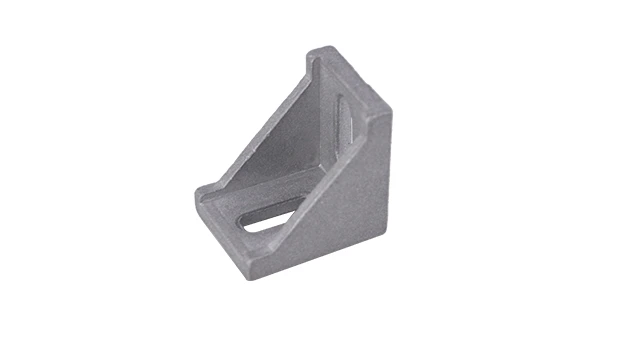
Gusset ALP 3030
The 3030 bracket/Gusset is an external fastening method that creates a 90 degree connection. 3030 means this size is used for 30 series aluminum profile with a quick connection by bolt and nut.
Introduction: The Unsung Hero of Sturdy Workbenches
Walk into any manufacturing plant, electronics workshop, or logistics hub, and you'll notice a common workhorse: the industrial workbench. It's where products are assembled, tools are organized, and ideas take physical form. But what makes a great workbench? Is it the surface material? The storage options? While those matter, there's a quieter component that often goes unnoticed but holds everything together: the gusset. Specifically, today we're diving into the Gusset Alp 3030—a small but mighty piece that transforms a basic frame into a rock-solid workstation. Whether you're building a custom setup for a lean system or upgrading an old bench, understanding this unassuming accessory could be the key to unlocking efficiency, durability, and adaptability in your workspace.
Understanding Industrial Workbenches and Their Core Components
Before we zoom in on the Gusset Alp 3030, let's take a step back. Industrial workbenches aren't just tables—they're engineered systems designed to withstand daily wear, support heavy loads, and adapt to evolving needs. Think about a car assembly line: workers lean on the bench, tools drop, parts weighing tens of pounds slide across the surface. A flimsy bench here isn't just inconvenient; it's a safety hazard and a productivity killer.
At the heart of most modern workbenches is the 3030 aluminum profile. These extruded aluminum beams, with their T-slot design, are the building blocks of modular industrial setups. They're lightweight, strong, and compatible with a universe of aluminum profile accessories—from shelves and drawers to lighting and tool holders. But even the sturdiest 3030 aluminum profile needs help at the joints. That's where gussets come in. A gusset is a bracket, typically triangular or L-shaped, that reinforces connections between profiles, preventing flexing, wobbling, or outright failure under stress.
In the world of lean manufacturing, where every second and every square inch counts, modularity is king. Workbenches need to be reconfigurable as production lines change, and components need to be easy to install, adjust, and replace. This is where the Gusset Alp 3030 shines. It's not just a reinforcement bracket; it's a bridge between rigidity and flexibility, ensuring your workbench can handle the demands of today while adapting to the needs of tomorrow.

What is Gusset Alp 3030? Breaking Down the Basics
Let's start with the name: "Gusset Alp 3030." "Gusset" tells us it's a reinforcing bracket. "Alp" likely refers to its aluminum construction (a nod to "aluminum profile"). "3030" is the key—it's designed specifically for 3030 aluminum profiles, which measure 30mm x 30mm in cross-section, a standard size in industrial framing. So, in short, the Gusset Alp 3030 is an aluminum gusset engineered to strengthen joints in workbenches, racks, and other structures built with 3030 aluminum profiles.
But it's more than just a metal bracket. Pick one up, and you'll notice its precision: clean edges, evenly spaced holes, and a lightweight feel that belies its strength. Unlike generic steel gussets that rust or plastic ones that warp, the Gusset Alp 3030 is built from high-grade aluminum alloy. This choice of material is intentional: aluminum resists corrosion, won't add unnecessary weight to the structure, and offers an excellent strength-to-weight ratio. For workbenches that need to be moved (say, on casters) or reconfigured, this lightness is a game-changer.
Visually, the Gusset Alp 3030 is often L-shaped, with two flanges that attach to perpendicular 3030 aluminum profiles. Some designs feature additional holes or notches to accommodate different joint types—T-joints, corner joints, even cross-joints. This versatility means it's not limited to workbenches; you'll find it in material racks, turnover trolleys, and even custom machine guards. But today, we're focusing on its role in the workbench ecosystem, where its impact is most tangible.

The Design Philosophy Behind Gusset Alp 3030: Form Follows Function
Great industrial design isn't about making something look good—it's about solving a problem. The Gusset Alp 3030 was born from a simple challenge: How do you make a joint between two 3030 aluminum profiles as strong as the profiles themselves? To answer that, engineers had to think about stress distribution, material fatigue, and ease of assembly.
First, consider stress. When you place a heavy object on a workbench, the weight doesn't just press down on the surface—it pulls and pushes at the joints where the vertical legs meet the horizontal frame. A weak joint here will flex over time, leading to a wobbly bench, uneven surfaces, and eventually, structural failure. The Gusset Alp 3030 addresses this by spreading the stress across a larger area. Instead of the loading on a few bolts, the gusset acts as a buffer, distributing force along the length of the 3030 aluminum profile's flanges. It's like adding a truss to a bridge—small in size, huge in impact.
Next, ease of assembly. In lean system environments, downtime is the enemy. A workbench that takes hours to build or adjust isn't just slow; it disrupts workflows. The Gusset Alp 3030's design prioritizes simplicity. Its holes are pre-drilled to align perfectly with the T-slots of 3030 aluminum profiles, so you don't need to measure or drill new holes. Just slide in a T-bolt, secure with a nut, and you're done. Even someone with basic tools can install it in minutes—a far cry from welding steel brackets or gluing plastic ones.
Finally, adaptability. Industrial needs change. One month, your workbench might hold small electronic components; the next, it's supporting a 50kg test fixture. The Gusset Alp 3030's aluminum construction and robust design mean it can handle these shifts without needing replacement. It's not a "one-and-done" part; it's a long-term partner in your workspace's evolution.
Materials Matter: Why Aluminum Makes the Gusset Alp 3030 Tick
Let's talk about aluminum—the unsung hero of modern manufacturing. When you choose a Gusset Alp 3030, you're not just choosing a bracket; you're choosing aluminum's unique properties. Let's break down why this material is non-negotiable for this application.
First, corrosion resistance. Industrial environments are tough: oil, coolant, humidity, even chemicals. A steel gusset here would rust, weakening the joint and leaving unsightly stains. Aluminum, however, forms a natural oxide layer that protects it from corrosion. Wipe it down with a damp cloth, and it looks as good as new. This is especially critical in workbenches used in food processing, pharmaceuticals, or coastal areas where moisture is high.
Second, weight vs. strength. Aluminum is about one-third the weight of steel, but it's no lightweight in strength. The Gusset Alp 3030, made from high-strength aluminum alloy (often 6063-T5, a common grade for extrusions), can support significant loads without adding bulk. This makes the entire workbench easier to move (if on casters) and reduces stress on the floor or mounting surface. Imagine pushing a steel-framed bench across a warehouse vs. an aluminum one—no contest.
Third, recyclability. In an era where sustainability is a priority, aluminum's recyclability is a big plus. Unlike plastic gussets, which end up in landfills, or steel, which requires energy-intensive recycling, aluminum can be recycled repeatedly without losing quality. For companies aiming to reduce their carbon footprint, choosing aluminum profile accessories like the Gusset Alp 3030 is a small step with a big environmental impact.
Compatibility 101: How Gusset Alp 3030 Works with 3030 Aluminum Profiles
You can't talk about the Gusset Alp 3030 without talking about its soulmate: the 3030 aluminum profile. These two are designed to work together, like a lock and key. Let's demystify their relationship.
3030 aluminum profiles are extruded with a specific cross-section: 30mm wide, 30mm tall, with T-slots running along their length. These T-slots are the secret to their modularity—they let you attach accessories without drilling into the profile itself. The Gusset Alp 3030's holes are spaced to match the T-slot pitch (typically 50mm or 100mm) of standard 3030 profiles. This means when you align the gusset with the profile, the holes line up perfectly with the T-slots, allowing you to use T-bolts, flange nuts, or drop-in anchors to secure the connection.
But compatibility isn't just about holes. It's about fit. The Gusset Alp 3030's inner edges are contoured to match the 3030 aluminum profile's corners. No gaps, no play—just a tight, snug connection that eliminates wobble. This precision is critical for workbenches where accuracy matters, like in electronics assembly or quality inspection. A bench that shifts even a millimeter can throw off measurements or damage delicate components.
What about other profile sizes? Could you use a Gusset Alp 3030 on a 4040 aluminum profile? Technically, maybe, but it wouldn't be optimal. The holes wouldn't align, the fit would be loose, and you'd lose the stress-distributing benefits. The Gusset Alp 3030 is a specialist, not a generalist—and that's a good thing. By focusing on 3030 profiles, it excels at its job, ensuring you get the maximum strength and reliability from your workbench.
Installation Guide: Putting Gusset Alp 3030 to Work (It's Easier Than You Think)
Let's get hands-on. Installing a Gusset Alp 3030 is a straightforward process, even if you're not a seasoned builder. Here's a step-by-step walkthrough to get you started:
Step 1: Gather Your Tools and Parts You'll need: Gusset Alp 3030 bracket(s), 3030 aluminum profiles (already cut to size), T-bolts (M6 or M8, depending on your profile's T-slot size), flange nuts, a hex key or wrench, and a level (to ensure everything is straight).
Step 2: Position the Profiles Assemble the basic frame of your workbench (e.g., four legs, two front/back rails, two side rails). Use clamps to hold the joints tight—this prevents shifting during installation.
Step 3: Attach the Gusset Place the Gusset Alp 3030 at the joint where two profiles meet (e.g., a vertical leg and horizontal rail). Align the gusset's holes with the T-slots of both profiles. Slide a T-bolt into each T-slot, through the gusset's hole, and secure with a flange nut. Tighten just enough to hold the gusset in place—we'll fully tighten after checking alignment.
Step 4: Check for Square Use your level to ensure the frame is square and the profiles are plumb. If the bench is wobbly, loosen the nuts, adjust the profiles, and retighten. The Gusset Alp 3030 will help hold the alignment, but it can't fix a misassembled frame!
Step 5: Fully Tighten the Nuts Once everything is straight, use your hex key or wrench to fully tighten the flange nuts. Be careful not to overtighten—you don't want to strip the threads or warp the aluminum.
Step 6: Repeat Install gussets at all joints (typically four corners for a basic bench, plus additional ones for longer rails or heavier loads). For extra stability, add gussets on both sides of the joint.
That's it! In under 30 minutes, you've transformed a basic frame into a reinforced workbench ready for action. No welding, no specialized tools—just a few bolts and a little elbow grease. This simplicity is why the Gusset Alp 3030 is a favorite among lean system implementers: it lets teams build and adapt workbenches without relying on external contractors.
The Benefits of Gusset Alp 3030: Why It's a Must-Have for Your Workbench
By now, you might be thinking, "Is a gusset really worth the investment?" Let's put it this way: a workbench without proper gussets is like a house without nails—eventually, it'll come apart. Here's why the Gusset Alp 3030 is worth every penny:
1. Unmatched Stability The most obvious benefit is reduced wobble. A workbench with Gusset Alp 3030s feels solid underfoot, even when you lean on it or slide heavy objects. This stability isn't just nice—it's critical for tasks requiring precision, like soldering circuit boards or measuring parts. A wobbly bench increases the risk of mistakes, rework, and even injury.
2. Longer Lifespan Aluminum's durability means the Gusset Alp 3030 won't rust, crack, or degrade over time. Unlike plastic gussets that become brittle in sunlight or steel ones that corrode in humid environments, these aluminum brackets will outlast the workbench itself. It's a one-time purchase that pays dividends for years.
3. Modularity Without Compromise Modular workbenches are great, but they often sacrifice strength for flexibility. Not with the Gusset Alp 3030. Because it's bolted, not welded, you can disassemble and reconfigure your bench as needed—add a shelf, extend the length, or move it to a new location—without damaging the gusset or profiles. It's the best of both worlds: strong and adaptable.
4. Safety First A stable workbench is a safe workbench. Loose joints can lead to collapses, which endanger workers and damage equipment. The Gusset Alp 3030 reduces this risk by ensuring joints stay tight, even under repeated stress. It's a small investment in peace of mind.
5. Compatibility with Aluminum Profile Accessories The Gusset Alp 3030 plays well with others. Since it's designed for 3030 aluminum profiles, it works seamlessly with all the other aluminum profile accessories in your setup—shelving brackets, tool hooks, monitor arms, you name it. No need to mix and match brands or worry about fit issues.
Real-World Applications: How Industries Are Using Gusset Alp 3030
Theory is great, but let's look at real-world examples. The Gusset Alp 3030 isn't just a lab experiment—it's hard at work in factories, workshops, and labs around the world. Here are three case studies that show its impact:
Case Study 1: Automotive Parts Manufacturer A mid-sized automotive parts company was struggling with wobbly workbenches on their assembly line. Workers were complaining about tools sliding off, and quality checks revealed parts were being misaligned due to bench movement. The solution? Adding Gusset Alp 3030 brackets to all bench joints. Within a week, wobble was eliminated, rework dropped by 15%, and worker satisfaction improved. The company later expanded the use of Gusset Alp 3030 to their material racks and turnover trolleys, citing similar benefits.
Case Study 2: Electronics Repair Shop A small electronics repair shop needed a custom workbench to hold diagnostic equipment, tools, and sensitive circuit boards. They chose a 3030 aluminum profile frame with ESD (electrostatic discharge) top. To ensure stability for delicate repairs, they installed Gusset Alp 3030 brackets at every joint. The result? A bench that stays level, even when technicians lean on it, and that can be reconfigured with new shelves or tool holders as their equipment collection grows. "It's like building with Lego, but for adults—and it doesn't fall apart," said the shop owner.
Case Study 3: University Research Lab A university's engineering lab needed a flexible workspace for student projects. They built modular workbenches using 3030 aluminum profiles, with Gusset Alp 3030 brackets to reinforce joints. Over the semester, students disassembled and reassembled the benches multiple times, adding components like 3D printers and soldering stations. The gussets held up perfectly, and the lab saved thousands by avoiding custom-built furniture. "We used to throw away old benches when needs changed," said the lab manager. "Now we just reconfigure—thanks in large part to how sturdy the gussets make the frames."
Gusset Alp 3030 vs. the Competition: How It Stacks Up
Not all gussets are created equal. Let's compare the Gusset Alp 3030 to two common alternatives: generic steel gussets and plastic gussets. The table below breaks down the key differences:
| Feature | Gusset Alp 3030 (Aluminum) | Generic Steel Gusset | Plastic Gusset |
|---|---|---|---|
| Material | High-grade aluminum alloy | Mild steel (often uncoated) | ABS or nylon plastic |
| Weight | Light (≈50-80g per bracket) | Heavy (≈200-300g per bracket) | Very light (≈20-40g per bracket) |
| Corrosion Resistance | Excellent (natural oxide layer) | Poor (rusts without coating) | Good (but prone to UV damage) |
| Strength | High (resists bending under load) | Very high (but overkill for most workbenches) | Low (flexes under heavy loads) |
| Compatibility with 3030 Profiles | Perfect (pre-drilled for T-slots) | Limited (often requires drilling new holes) | Hit-or-miss (inconsistent hole spacing) |
| Installation Ease | Easy (bolts into T-slots, no drilling) | Hard (may require welding or drilling) | Easy (but bolts can strip plastic threads) |
| Cost | Moderate ($5-10 per bracket) | Low ($3-7 per bracket, but higher shipping due to weight) | Low ($2-5 per bracket) |
| Lifespan | 10+ years (with minimal maintenance) | 5-7 years (if coated; less if rusted) | 2-3 years (prone to cracking, warping) |
As the table shows, the Gusset Alp 3030 strikes a balance between strength, weight, and cost. Steel gussets are stronger, but they're heavy, hard to install, and prone to rust. Plastic gussets are cheap and light, but they lack the durability needed for industrial use. The Gusset Alp 3030, with its aluminum construction and precision design, is the sweet spot for most workbench applications.
Maintenance and Longevity: Caring for Your Gusset Alp 3030
One of the best things about the Gusset Alp 3030 is how little maintenance it needs. Aluminum's natural corrosion resistance means you don't have to paint, coat, or treat it. Here are a few simple tips to keep your gussets (and workbench) in top shape:
1. Keep It Clean Wipe down the gussets with a damp cloth occasionally to remove dust, oil, or debris. This prevents buildup that could hide loose bolts or damage to the bracket.
2. Check Bolts Regularly Over time, vibrations from daily use can loosen bolts. Every few months, give the flange nuts a quick tighten with a hex key. It's a 5-minute task that prevents major issues later.
3. Avoid Overloading While the Gusset Alp 3030 is strong, it's not indestructible. Check the weight rating of your 3030 aluminum profiles and gussets, and don't exceed it. If you need to support heavier loads, add extra gussets or upgrade to thicker profiles.
4. Protect from Impact Aluminum is strong, but it can dent if hit with heavy tools or falling objects. Be mindful of your workspace, and consider adding corner guards if the bench is in a high-traffic area.
With these simple steps, your Gusset Alp 3030 brackets will last for decades—outliving multiple workbench tops and even some of the aluminum profiles they connect.
Conclusion: The Gusset That Elevates Your Workbench
The Gusset Alp 3030 is more than just a bracket. It's a testament to the power of thoughtful design in industrial tools. By focusing on the specific needs of 3030 aluminum profile workbenches—stability, ease of use, adaptability—it transforms ordinary frames into reliable, long-lasting workstations that support lean system goals and boost productivity.
Whether you're building a new workbench from scratch or upgrading an existing one, don't overlook the importance of quality gussets. The Gusset Alp 3030 may be small, but its impact is huge: fewer wobbles, fewer repairs, and a workspace that grows with your needs. It's the kind of component that makes you wonder how you ever worked without it.
So, the next time you walk into a workshop and see a sturdy, reliable workbench, take a closer look at the joints. Chances are, there's a Gusset Alp 3030 holding it all together—quietly, efficiently, and without fanfare. After all, the best industrial components are the ones that work so well, you forget they're there.