- Company Articles
- Products and Technology
- Product knowledge
- Gusset Alp 3030 in Communication Equipment: Stable Frames for Sensitive Gear

Gusset Alp 3030 in Communication Equipment: Stable Frames for Sensitive Gear
Related Product
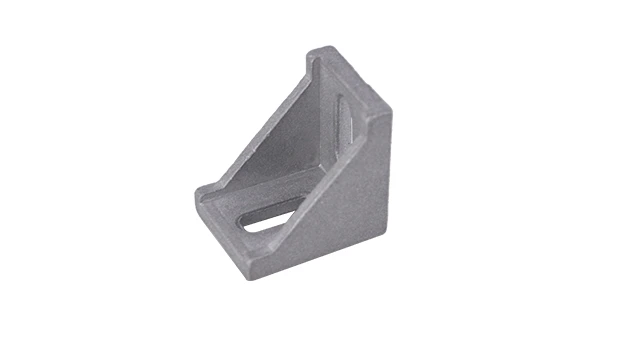
Gusset ALP 3030
The 3030 bracket/Gusset is an external fastening method that creates a 90 degree connection. 3030 means this size is used for 30 series aluminum profile with a quick connection by bolt and nut.
Walk into any modern data center, and you'll be met with a symphony of soft hums—fans whirring, servers processing, and routers directing data across the globe. These facilities are the backbone of our digital lives, but behind the scenes, there's a quiet hero keeping everything upright: the unassuming hardware that holds sensitive communication gear steady. Among these unsung components, the Gusset Alp 3030 stands out. It's not flashy, but without it, the racks holding your router, the cabinets shielding servers, and the frames supporting outdoor transmitters might wobble, flex, or even fail. Let's dive into why this small aluminum bracket matters so much in keeping our communication systems reliable.
What Even Is a Gusset Alp 3030?
First things first: let's demystify the name. A "gusset" is a reinforcement bracket, typically triangular, used to strengthen joints in a structure. Think of it like the corner bracket on a bookshelf, but engineered for industrial use. The "Alp 3030" part? That tells us it's designed for 3030 aluminum profile —a common type of extruded aluminum frame used in manufacturing, data centers, and communication setups. So, the Gusset Alp 3030 is a specialized bracket that locks into 3030 aluminum profiles, adding rigidity to corners and joints.
Made from aluminum extrusion profile , this gusset is lightweight but surprisingly strong. Aluminum extrusion is a process where molten aluminum is pushed through a die to create uniform shapes—think of squeezing toothpaste through a tube, but with metal. This method ensures the Gusset Alp 3030 has consistent strength and precision, which is critical when you're supporting gear that can cost thousands of dollars (and hold irreplaceable data).
You'll often find it paired with 3030 aluminum profile end cap s—small caps that seal the ends of aluminum profiles, preventing dust and moisture from seeping in. Together, the gusset and end caps turn a basic aluminum frame into a robust, long-lasting structure. It's a simple combo, but it's the kind of detail that separates a flimsy setup from one that can run 24/7 for years.
Why Communication Gear Can't Afford to Wobble
Communication equipment is finicky. Servers, routers, and transmitters have tiny internal components—circuit boards, connectors, and cooling systems—that need to stay perfectly aligned. Even a small amount of flex in the frame can throw things off. Imagine a server's hard drive: if the frame wobbles, the read/write arm might misalign, causing data corruption. Or a router's antenna: a tilted frame could weaken signal strength, leading to dropped calls or lagging video calls.
Then there's vibration. Data centers are full of moving parts—fans, cooling systems, even the hum of nearby machinery. Over time, these vibrations can loosen screws, shift components, or fatigue metal. Outdoor setups face even more chaos: wind, rain, and temperature swings (which make metal expand and contract) all test a frame's stability. A weak joint here, a flexing corner there… it all adds up to downtime. And in the world of communication, downtime isn't just annoying—it's expensive. Telecom companies lose millions per hour when networks go down, and for businesses, every second of server outage risks lost sales or damaged customer trust.
That's where the Gusset Alp 3030 comes in. By reinforcing the corners of aluminum frames, it acts like a backbone, absorbing vibrations and preventing flex. It turns a "good enough" frame into one that can handle the chaos of real-world operation.

How Gusset Alp 3030 Delivers That Much-Needed Stability
Let's get technical (but not too technical). The Gusset Alp 3030 is designed to fit snugly into the T-slots of 3030 aluminum profiles. T-slots are the grooves running along the length of the profile, which let you slide in brackets, screws, or other accessories. The gusset has tabs that lock into these slots, creating a tight, secure connection—no wiggling, no slipping.
What makes it so effective? Its triangular shape. Triangles are inherently stable; unlike rectangles, they don't flex under pressure. When you attach a Gusset Alp 3030 to a corner joint (say, where a vertical and horizontal aluminum profile meet), it turns that joint into a triangle. Suddenly, the frame can't twist or bend as easily. It's the same reason bridges and towers use triangular trusses—physics is on our side here.
Another win: aluminum itself. Aluminum is lightweight, which is a big plus when you're building racks that might need to be moved or adjusted. But it's also surprisingly strong, especially when alloyed with other metals like magnesium or silicon (common in industrial aluminum). And unlike steel, it doesn't rust, which is crucial for outdoor setups or humid data centers. The Gusset Alp 3030 often comes anodized—a process that adds a protective oxide layer to the surface—making it even more resistant to corrosion and wear. So even in harsh environments, it keeps doing its job.

Beyond Stability: Other Perks of Using Gusset Alp 3030
Stability is the main job, but the Gusset Alp 3030 brings more to the table. For one, it's easy to install. No welding, no special tools—just slide it into the T-slot, tighten a few screws, and you're done. This is a big deal for technicians and manufacturers. In a busy data center, time is money. Being able to assemble or reconfigure a rack quickly means less downtime and more flexibility. It's a small part of a larger lean system —the idea of streamlining processes to reduce waste (in this case, wasted time on complicated installations).
It's also adaptable. 3030 aluminum profiles are a standard in the industry, so the Gusset Alp 3030 works with a wide range of frames, racks, and cabinets. Need to build a custom server rack? Add a few gussets. Want to reinforce an existing cabinet? Just bolt them on. This versatility means companies don't have to invest in proprietary hardware—they can stick with standard parts, which are cheaper and easier to replace.
And let's not forget about maintenance. Communication equipment needs regular check-ups—cleaning, part replacements, upgrades. With the Gusset Alp 3030, taking apart a frame is as easy as installing it. Loosen the screws, remove the gusset, adjust the profile, and put it back. No need to cut or weld, which reduces the risk of damaging the frame (or the expensive gear inside). Technicians love it because it makes their jobs faster and less frustrating—another win for lean system efficiency.
How Does It Stack Up Against Alternatives?
You might be thinking, "Can't I just use steel brackets or plastic corner pieces instead?" Sure, but they come with trade-offs. Let's break it down with a quick comparison:
| Feature | Gusset Alp 3030 (Aluminum) | Steel Corner Bracket | Plastic Reinforcement |
|---|---|---|---|
| Weight | Light (easy to handle/install) | Heavy (adds bulk to frames) | Lightest, but flimsy under stress |
| Strength | High (resists flex and vibration) | Very high, but overkill for most setups | Low (bends or cracks under pressure) |
| Corrosion Resistance | Excellent (anodized aluminum doesn't rust) | Poor (needs painting/coating to avoid rust) | Good, but degrades in UV light (outdoors) |
| Installation Ease | Easy (slides into T-slots, no special tools) | Harder (heavier, may require welding) | Easy, but screws strip easily |
| Cost Over Time | Moderate upfront, low maintenance (long lifespan) | Low upfront, high maintenance (rust, repainting) | Cheap upfront, high replacement cost (breaks easily) |
As you can see, the Gusset Alp 3030 hits that sweet spot: strong enough for industrial use, light enough for easy handling, and durable enough to last for years. Steel is stronger, but it's overkill for most communication setups—you don't need tank-level strength for a server rack, and the extra weight makes installation and adjustments a hassle. Plastic is cheap, but it's not built to last, especially in high-vibration or outdoor environments. Aluminum, with its balance of strength and practicality, is the clear winner here.
Real-World Uses: Where You'll Find Gusset Alp 3030 Hard at Work
Now that we know why it's great, let's look at where it's actually used. The Gusset Alp 3030 pops up in all kinds of communication setups, from the data center in your city to the cell tower on the highway.
Server Racks & Cabinets: This is the most common spot. Server racks are tall, narrow frames that hold multiple servers stacked on top of each other. Without reinforcement, the weight of all those servers (which can be 50+ pounds each) would make the rack bow in the middle. The Gusset Alp 3030 reinforces the corners, keeping the rack straight and preventing the servers from shifting. It also works with 3030 aluminum profile end cap s to seal the top and bottom of the rack, keeping dust out of the T-slots (which would make future adjustments a pain).
Outdoor Communication Towers: Cell towers and microwave transmitters are exposed to wind, rain, and extreme temperatures. Their frames need to be tough, and aluminum (with gussets) is perfect here. The Gusset Alp 3030 ensures the tower's support beams don't twist in high winds, which could misalign the antennas. And since aluminum doesn't rust, the tower stays strong for decades with minimal maintenance.
Network Closets & Patch Panels: Even small office network closets benefit from stable frames. Patch panels (the boxes with all those Ethernet ports) need to stay level so cables don't get kinked or disconnected. A wobbly frame could lead to loose connections, which means spotty Wi-Fi or dropped calls. The Gusset Alp 3030 keeps the panel steady, even when technicians are plugging and unplugging cables all day.
Mobile Communication Units: Think of the trucks that deploy during natural disasters to restore cell service. These mobile units have racks of equipment that need to stay secure while the truck is moving. The Gusset Alp 3030's lightweight strength is ideal here— it adds stability without weighing down the vehicle, which is crucial for fuel efficiency and maneuverability.
The Future: Why Gusset Alp 3030 Will Keep Mattering
As our demand for faster, more reliable communication grows, so does the need for better infrastructure. 5G networks require more transmitters, edge computing means smaller, denser data centers, and the Internet of Things (IoT) is adding billions of connected devices—all of which need stable frames to operate. The Gusset Alp 3030 is poised to keep up with these trends, and here's why:
5G and High-Density Setups: 5G equipment is more compact but generates more heat, which means frames need to be both stable and well-ventilated. Aluminum's thermal conductivity helps dissipate heat, and the Gusset Alp 3030's slim design doesn't block airflow. It's a perfect match for tight, high-performance setups.
Sustainability: Aluminum is 100% recyclable, and recycling it uses 95% less energy than producing new aluminum. As companies push for greener operations, using aluminum profiles and gussets aligns with sustainability goals. Unlike plastic, which ends up in landfills, or steel, which is energy-intensive to recycle, aluminum is a eco-friendly choice.
Customization: The rise of "smart" factories and modular data centers means frames need to be easy to reconfigure. With the Gusset Alp 3030, you can take apart a rack, add a new profile, and put it back together in minutes—no welding, no cutting. This flexibility is key for adapting to new technology (like upgrading to faster servers or adding more storage).
Wrapping Up: The Quiet Hero of Communication Stability
The Gusset Alp 3030 might not get the same attention as the latest router or 5G antenna, but it's just as important. It's the kind of component that works behind the scenes, ensuring our communication systems stay reliable, efficient, and ready for whatever the future throws at them. From data centers to cell towers, from office closets to disaster response trucks, it's the backbone that keeps the digital world upright.
So the next time you stream a movie, make a video call, or check your email, take a second to appreciate the small, strong bracket that helped make it all possible. The Gusset Alp 3030—proving that sometimes, the most important innovations are the ones that hold everything together.