- Company Articles
- Products and Technology
- Solution
- Gusset Alp 3030 in Green Manufacturing: Reducing Carbon Footprint

Gusset Alp 3030 in Green Manufacturing: Reducing Carbon Footprint
Related Product
Gusset ALP 3030
The 3030 bracket/Gusset is an external fastening method that creates a 90 degree connection. 3030 means this size is used for 30 series aluminum profile with a quick connection by bolt and nut.
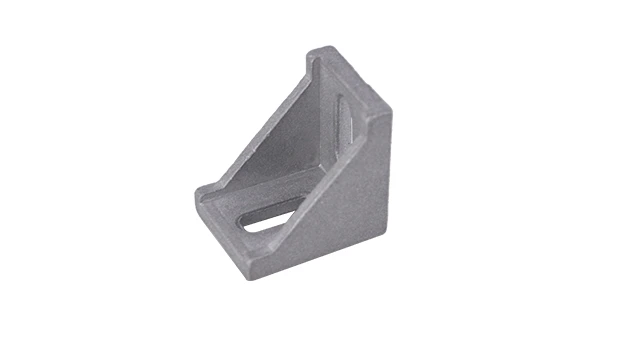
Walk into any modern manufacturing facility today, and you'll likely hear the same buzzword echoing through the halls: sustainability. It's not just a trend anymore—it's a pressing need. With governments cracking down on carbon emissions, consumers demanding eco-friendly products, and businesses racing to meet net-zero goals, the pressure is on. But here's the thing about sustainability in manufacturing: it's rarely about grand, sweeping changes alone. Often, it's the small, unassuming components that quietly drive the biggest impact. Enter the gusset alp 3030 —a humble yet powerful player in the world of green manufacturing. Let's dive into how this unassuming aluminum profile accessory is helping factories around the world shrink their carbon footprints, one connection at a time.
The Green Manufacturing Challenge: Why Every Component Counts
Manufacturing has long been a cornerstone of global economies, but it's also a major contributor to greenhouse gas emissions. From raw material extraction to energy-intensive production lines, traditional manufacturing processes leave a heavy carbon trail. Today, plant managers and operations directors aren't just tasked with keeping production running smoothly—they're also being asked to slash emissions, reduce waste, and rethink every part of their workflow. The problem? Many of the tools and components they've relied on for decades are part of the issue. Heavy steel structures, single-use fixtures, and hard-to-recycle materials all add up, making sustainability feel like an uphill battle.
But what if the solution wasn't about overhauling entire factories overnight? What if it started with reimagining the small parts that hold everything together? That's where aluminum profile systems, and specifically the gusset alp 3030, come into play. These components are changing the game by proving that sustainability and efficiency can go hand in hand—without sacrificing performance.
Meet Gusset Alp 3030: The Unsung Hero of Sustainable Structures
If you're not deep into manufacturing hardware, you might be wondering: what even is a gusset alp 3030? Let's break it down. Think of it as a critical "connector" in the world of aluminum extrusion profile systems. These small, angular pieces are designed to reinforce joints between aluminum profiles, adding strength and stability to everything from workbenches and material racks to conveyor systems and assembly lines. But unlike clunky steel brackets or one-and-done plastic fasteners, the gusset alp 3030 is built with sustainability in mind—right down to its core.
First, let's talk materials. The gusset alp 3030 is made from high-grade aluminum, a metal that's already a sustainability standout. Aluminum is 100% recyclable, and recycling it uses just 5% of the energy required to produce new aluminum from raw ore. That's a massive energy savings right off the bat. But it's not just about the material—it's how the gusset is designed. Aluminum extrusion, the process used to create these profiles, is inherently efficient. It shapes aluminum into complex cross-sections with minimal waste, meaning less material ends up in landfills during production. The gusset alp 3030 takes this a step further with a lightweight, precision-engineered design that uses exactly the amount of aluminum needed to get the job done—no excess, no waste.

Lean Systems, Greener Results: How Gusset Alp 3030 Supports Lean Manufacturing
Sustainability and lean manufacturing are two sides of the same coin. Lean principles focus on eliminating waste—whether it's time, materials, or energy—and that aligns perfectly with reducing carbon footprints. The gusset alp 3030 isn't just a green component on its own; it's a key player in building lean system setups that minimize waste across the board.
Here's how it works: Traditional manufacturing setups often rely on fixed, custom-built structures. If a production line needs to change—say, to accommodate a new product or streamline a process—those structures become obsolete. Factories end up scrapping old steel racks, welding new ones, and generating tons of waste in the process. With aluminum profile systems and gusset alp 3030 connectors, though, flexibility is built in. These components are modular, meaning they can be easily disassembled, reconfigured, and reused. A workbench that's no longer needed? Take it apart, and use the gusset alp 3030 brackets to build a material rack instead. A conveyor system that's too slow? Swap out the profiles, keep the connectors, and create something new. This adaptability means fewer new materials are needed over time, and less waste ends up in landfills.
Plant managers love this because it's not just good for the planet—it's good for the bottom line. Reducing the need to purchase new equipment every time processes change cuts costs, and faster reconfigurations mean less downtime. It's a win-win that makes sustainability feel achievable, not just idealistic.

By the Numbers: Comparing Traditional vs. Sustainable Components
Still skeptical that a small bracket can make a big difference? Let's look at the data. The table below compares traditional steel brackets with gusset alp 3030 aluminum brackets across key sustainability metrics. The results might surprise you:
| Metric | Traditional Steel Bracket | Gusset Alp 3030 Aluminum Bracket |
|---|---|---|
| Carbon Footprint (Production) | High (1.8 tons CO2e per ton of steel) | Low (0.2 tons CO2e per ton of aluminum, with recycled content) |
| Weight (per unit) | Heavy (3.2 lbs on average) | Lightweight (1.1 lbs on average) |
| Recyclability | Possible but energy-intensive; often downcycled | 100% recyclable; retains 95% of original value |
| Reusability | Low (welded or permanently fastened; hard to repurpose) | High (modular design; easy to disassemble and reuse) |
| Maintenance Needs | High (prone to rust; requires regular painting/coating) | Low (corrosion-resistant; no coating needed) |
The numbers speak for themselves. From production to end-of-life, the gusset alp 3030 outperforms traditional steel in nearly every sustainability category. And when you multiply these savings across an entire factory—dozens or even hundreds of brackets— the impact adds up fast. A mid-sized manufacturing plant using aluminum profile systems with gusset alp 3030 could reduce its annual carbon emissions by tens of tons, just by switching out its connectors.
Beyond the Bracket: The Ecosystem of Sustainable Aluminum Profile Accessories
The gusset alp 3030 doesn't work alone. It's part of a larger ecosystem of aluminum profile accessories that together create a sustainable manufacturing infrastructure. Think of it like a puzzle: the gusset is a key piece, but you also need profiles, joints, fasteners, and panels to build a complete system. What makes this ecosystem so powerful is that every piece is designed with the same sustainability principles in mind.
Take aluminum profiles, for example. Made from the same recyclable aluminum as the gusset alp 3030, they're extruded into precise shapes that maximize strength while minimizing material use. Then there are the joints and connectors—like the internal rotary aluminum joint or parallel aluminum joint—that work seamlessly with the gusset to create sturdy, flexible structures. Even the accessories, like end caps and rubber strips, are often made from recycled or biodegradable materials, ensuring the entire system stays true to its green roots.
This interconnectedness is crucial. When every component in a manufacturing setup is designed to be lightweight, recyclable, and reusable, the collective impact on carbon footprint is enormous. It's not just about one bracket—it's about reimagining the entire factory as a circular system where waste is minimized, and resources are.
Real-World Impact: How Factories Are Using Gusset Alp 3030 to Go Green
Talk is cheap, but real-world examples tell the story best. Let's take a look at a mid-sized electronics assembly plant in Ohio that recently switched to aluminum profile systems with gusset alp 3030 brackets. Before the switch, the plant relied on steel workbenches and fixed material racks. When production needs changed, old equipment was often scrapped, and new steel structures were welded in place. The result? High waste, high energy use, and a carbon footprint that was steadily increasing.
After transitioning to aluminum profiles and gusset alp 3030 brackets, the plant saw immediate changes. First, assembly lines could be reconfigured in hours instead of days, cutting downtime by 60%. Second, the lightweight aluminum structures reduced the load on conveyor motors, lowering energy consumption by 12% annually. Third, when old workbenches were no longer needed, they were disassembled and repurposed into mobile trolleys, diverting 2.3 tons of material from landfills in the first year alone. And because aluminum is corrosion-resistant, maintenance costs dropped by 35%—no more painting or rust removal.
The plant manager, Maria Gonzalez, put it best: "We used to see sustainability as a cost. Now, with components like the gusset alp 3030, it's a savings. We're reducing our carbon footprint and our operating costs at the same time. It's not just good for the planet—it's good business."
The Future of Green Manufacturing: Small Components, Big Dreams
As the push for sustainability intensifies, the role of components like the gusset alp 3030 will only grow. Manufacturers are starting to realize that greening their operations isn't about replacing everything at once—it's about making smarter choices, one component at a time. Aluminum extrusion profiles, with their efficiency and recyclability, are becoming the backbone of this movement, and the gusset alp 3030 is leading the charge as a model for how even the smallest parts can drive meaningful change.
Looking ahead, we can expect to see even more innovation in this space. Imagine factories where every bracket, joint, and panel is designed with carbon footprint in mind—where reusability is standard, and waste is a thing of the past. It's not a pipe dream; it's already happening, and components like the gusset alp 3030 are making it possible.
Conclusion: The Power of Small Choices in a Big Industry
Sustainability in manufacturing is a journey, not a destination. It requires commitment, creativity, and a willingness to rethink the status quo. The gusset alp 3030 might seem like a small piece of that puzzle, but small pieces can build something extraordinary. By choosing lightweight, recyclable, and reusable components like this aluminum bracket, manufacturers are not just reducing their carbon footprints—they're building a future where industry and the planet thrive together.
So the next time you walk through a factory, take a closer look at the structures around you. The brackets holding up the workbenches, the connectors keeping the conveyor belts steady—they might not look like much, but they're quietly writing the next chapter of sustainable manufacturing. And who knows? Maybe one day, we'll look back and realize that it was the gusset alp 3030, and components like it, that helped us turn the tide on climate change—one connection at a time.