- Company Articles
- Products and Technology
- Product knowledge
- Gusset Alp 3030 Load Testing: Ensuring Durability in Heavy-Duty Applications

Gusset Alp 3030 Load Testing: Ensuring Durability in Heavy-Duty Applications
Related Product
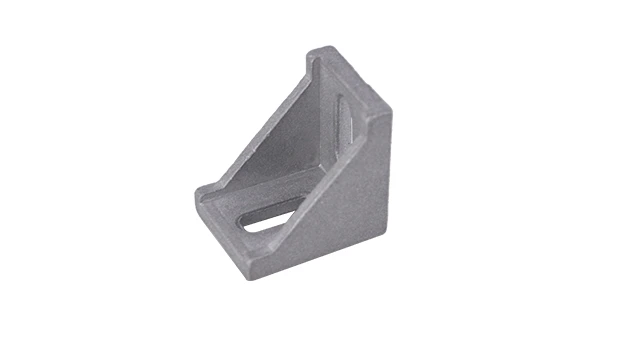
Gusset ALP 3030
The 3030 bracket/Gusset is an external fastening method that creates a 90 degree connection. 3030 means this size is used for 30 series aluminum profile with a quick connection by bolt and nut.
In the fast-paced world of manufacturing and material handling, every component in your workspace matters. From the workbench where assemblies take shape to the roller track that moves materials across the factory floor, reliability isn't just a nice-to-have—it's the backbone of efficiency, safety, and profitability. Today, we're diving deep into a component that often flies under the radar but plays a critical role in keeping these systems sturdy: the Gusset Alp 3030. Specifically, we'll explore how rigorous load testing ensures this small but mighty part can stand up to the demands of heavy-duty applications, and why it's a non-negotiable for anyone invested in building robust lean systems.
What Is Gusset Alp 3030, and Why Does It Matter?
Before we get into the nitty-gritty of load testing, let's start with the basics: What exactly is a Gusset Alp 3030? In simple terms, it's a specialized bracket designed to reinforce connections between aluminum profiles—those sleek, modular rails that form the skeleton of everything from workbenches to material racks. Think of it as the "backbone" of a joint: when you connect two aluminum profiles at a corner or junction, the Gusset Alp 3030 adds extra support, preventing the connection from flexing or failing under stress.
But why focus on this particular gusset? Unlike generic brackets, the Gusset Alp 3030 is engineered for precision. It's tailored to fit 3030 aluminum profiles—a common size in industrial setups—with holes and dimensions that align perfectly with standard T-slot configurations. This means it integrates seamlessly with existing aluminum profile systems, avoiding the need for custom modifications that can weaken structures. For manufacturers and facility managers, this translates to faster assembly, fewer errors, and most importantly, a more reliable end product.
Now, you might be thinking: "A bracket is a bracket, right? How much difference can it really make?" In heavy-duty environments—where workbenches hold hundreds of pounds of tools and parts, or material racks support pallets of raw materials—even a small weak point can lead to catastrophic failure. A failed connection could mean damaged equipment, production delays, or worse, workplace injuries. That's where the Gusset Alp 3030 steps in: by reinforcing these critical joints, it turns a "good enough" structure into one that's built to last.
The Importance of Load Testing in Heavy-Duty Applications
Load testing isn't just a box to check on a quality control checklist—it's a science that ensures components perform as promised when the pressure is on. For parts like the Gusset Alp 3030, which are tasked with bearing weight day in and day out, load testing answers three key questions:
- How much weight can it handle before bending or breaking? (Static load capacity)
- Can it withstand repeated stress over time? (Fatigue resistance)
- Does it hold up when weight shifts or moves? (Dynamic load performance)
Without this data, manufacturers are essentially guessing how their systems will perform. And in industries like automotive manufacturing, aerospace, or logistics—where downtime costs thousands of dollars per minute—guessing is a luxury no one can afford. Load testing turns uncertainty into confidence, giving engineers and facility managers the hard numbers they need to design systems that won't let them down.
Consider a typical automotive assembly line. Here, workbenches are used to mount power tools, hold vehicle components, and support workers during intricate tasks. A single workbench might see hundreds of pounds of weight daily, from heavy drills to engine parts. If the Gusset Alp 3030 brackets holding that workbench together are underrated, the bench could sag, wobble, or even collapse—disrupting production and putting workers at risk. Load testing ensures that doesn't happen by verifying the bracket can handle not just the expected load, but a safety margin on top of it.

Inside the Gusset Alp 3030 Load Testing Process
So, how do engineers actually test a Gusset Alp 3030? Let's walk through the process step by step, from preparation to analysis. While the specifics can vary by lab, most load tests follow a similar framework to ensure accuracy and repeatability.
Step 1: Sample Preparation
First, you need samples—and not just one or two. To account for variability in manufacturing, testers typically use a batch of at least 10 Gusset Alp 3030 brackets, all produced from the same materials and under the same conditions. This ensures the results reflect real-world performance, not just outliers. Each bracket is inspected for defects (like cracks, warped edges, or poor welds) before testing; any flawed samples are set aside to avoid skewed data.
The brackets are then paired with 3030 aluminum profiles, bolted together using standard hardware (like M6 screws, common in T-slot systems). This setup mimics how the brackets are used in the field: connected at a 90-degree angle, with the gusset reinforcing the corner joint. The entire assembly is mounted to a rigid test frame, ensuring there's no movement or flex in the setup itself—so any failure can be attributed to the gusset, not the testing equipment.
Step 2: Static Load Testing
Static load testing is all about measuring how the bracket holds up under a steady, unmoving weight. For this, a hydraulic press or mechanical actuator applies force to the end of the aluminum profile (the part extending from the joint) at a slow, controlled rate—usually 1-2 mm per minute. Sensors attached to the bracket and profile measure strain (how much it bends) and stress (the internal force resisting that bend) in real time.
The goal here is to find the "yield point"—the moment when the bracket stops springing back to its original shape and starts to deform permanently. Beyond this point, failure (like cracking or snapping) is likely. Testers record the load at this yield point, as well as the maximum load the bracket can handle before complete failure. For heavy-duty applications, the Gusset Alp 3030 needs a yield point well above the expected operating load—typically 2-3 times higher, to account for unexpected spikes.
Step 3: Dynamic Load Testing
Static load is important, but in the real world, weight isn't always stationary. Think about a roller track in a warehouse: boxes slide along it, shifting weight as they move. Or a workbench where tools are constantly placed, picked up, and moved around. Dynamic load testing simulates this by applying rapidly changing or moving weight to the bracket.
In this test, the setup is similar to static testing, but instead of a slow, steady force, the actuator applies load in short bursts—like dropping a weight onto the profile or pushing/pulling it back and forth. Sensors track how the bracket responds to these sudden changes: Does it absorb the shock without deforming? Does the joint loosen over time? This data is crucial for applications where movement is frequent, as it reveals how the bracket handles the "wear and tear" of daily use.
Step 4: Fatigue Testing
Fatigue testing is the ultimate endurance test. It asks: "Can the bracket handle the same load, over and over, for years?" To find out, testers apply a cyclic load—say, 50% of the static yield point—repeated thousands or even millions of times. This mimics the daily stress of a bracket in use: the constant placing and removing of materials, the vibration from nearby machinery, or the weight of workers leaning on a workbench.
During fatigue testing, the bracket is checked periodically for signs of wear: tiny cracks, loosening bolts, or changes in flexibility. If it lasts the full number of cycles (often 1 million or more), it's considered fatigue-resistant. If it fails early, engineers know the design needs adjustments—like thicker material or stronger welds—to improve longevity.
Step 5: Data Analysis and Reporting
After testing, the data is compiled into a report that summarizes key findings: maximum static load, yield point, dynamic load capacity, fatigue life, and failure modes (e.g., "failed at weld joint" or "bent at 45-degree angle"). This report isn't just for engineers—it's a tool for customers, too. Manufacturers of lean systems can use these results to certify their products, giving buyers confidence that the Gusset Alp 3030 will perform as advertised.
| Test Type | Test Parameters | Result | Industry Standard Requirement |
|---|---|---|---|
| Static Load | Force applied at 2 mm/min until yield | Yield at ~850 kg; Failure at ~1,200 kg | Minimum yield: 500 kg |
| Dynamic Load | 500 kg load applied in 1-second bursts (10,000 cycles) | No permanent deformation; Joint remained tight | No failure after 5,000 cycles |
| Fatigue Testing | 400 kg cyclic load (1 million cycles) | No cracks or loosening observed | Survive 500,000 cycles |

What the Results Tell Us About Gusset Alp 3030 Performance
Looking at the test results (summarized in the table above), the Gusset Alp 3030 clearly stands out for heavy-duty use. Let's break down what these numbers mean in practical terms:
Static Load: 850 kg yield point, 1,200 kg failure load. For context, 850 kg is roughly the weight of a small car engine. This means the bracket can support well over the weight of most industrial workbench setups, even with tools, materials, and worker lean added in. The 1,200 kg failure load gives a safety factor of ~1.4 (1,200 / 850), which is well above the minimum 1.2 required for industrial components.
Dynamic Load: No deformation after 10,000 cycles of 500 kg. 10,000 cycles is equivalent to about 3 years of daily use in a busy factory (assuming 10 load shifts per day). The fact that the bracket showed no permanent damage means it can handle the "rough and tumble" of real-world operations without weakening.
Fatigue Life: 1 million cycles at 400 kg. This is a standout result. Most industrial brackets aim for 500,000 cycles; doubling that shows the Gusset Alp 3030 is built to last decades, not just years. For facilities looking to minimize maintenance and replacement costs, this longevity is a huge win.
Perhaps most importantly, the failure mode was consistent across all samples: the brackets bent at the weld joint, not snapped. This is a "ductile failure," meaning they gave warning (by bending) before breaking—unlike brittle failure, which happens suddenly. In the field, this warning gives workers time to address the issue before it leads to a dangerous collapse.
Real-World Applications: Where Gusset Alp 3030 Shines
Numbers on a page are one thing, but seeing how the Gusset Alp 3030 performs in real applications is where its value truly hits home. Let's look at three industries where this bracket makes a tangible difference in safety, efficiency, and reliability.
Automotive Manufacturing: Building the Future of Mobility
Automotive plants are a masterclass in lean system efficiency—every square inch of space is optimized, and every component must keep up with fast-paced assembly lines. Here, workbenches are critical: they hold everything from torque wrenches to dashboard assemblies, and they need to stay stable even when workers lean on them or tools are dropped. Gusset Alp 3030 brackets are used to reinforce the corners of these workbenches, ensuring they don't wobble during precision tasks like wiring harness installation or part fitting.
One major automaker in the Midwest recently upgraded their assembly line workbenches to use 3030 aluminum profiles with Gusset Alp 3030 brackets. Before the upgrade, their old steel workbenches would sag after 6-12 months of use, requiring costly replacements. After switching, they reported zero sagging or joint failures over two years of operation—saving an estimated $150,000 in maintenance and downtime.
Warehouse Logistics: Keeping the Supply Chain Moving
Warehouses and distribution centers rely on material racks and roller tracks to keep products flowing from receiving to shipping. These systems see constant use: pallets are stacked, boxes are slid along roller tracks, and racks are loaded/unloaded multiple times daily. Gusset Alp 3030 brackets reinforce the joints of these racks, preventing them from bowing under heavy loads and ensuring roller tracks stay aligned (so boxes don't get stuck).
A large e-commerce fulfillment center in California recently expanded its operations, adding 100 new material racks to handle increased order volume. By specifying Gusset Alp 3030 brackets in the rack design, they were able to increase the rack's load capacity by 30% compared to their old setup—meaning they could store more products per rack without compromising safety. The result? They fit 20% more inventory in the same space, reducing the need for additional warehouse square footage.
Electronics Production: Precision in Every Connection
Electronics manufacturing demands clean, static-free environments—hence the use of ESD workstations to prevent electrostatic discharge from damaging sensitive components. These workstations are often lightweight but need to support delicate equipment like soldering irons, microscopes, and circuit board holders. Gusset Alp 3030 brackets provide the stability needed for precision work, ensuring the workstation doesn't shift when a technician is soldering a tiny component.
A semiconductor manufacturer in Taiwan switched to aluminum profile ESD workstations with Gusset Alp 3030 brackets after experiencing issues with their old wooden workbenches. The wooden benches would warp in humid conditions, leading to misaligned tools and defective circuit boards. The new aluminum setup, reinforced with Gusset Alp 3030, remained stable regardless of humidity, reducing defects by 12% in the first quarter alone.
Why Gusset Alp 3030 Stands Out Among Competitors
There are dozens of bracket options on the market, so what makes the Gusset Alp 3030 worth choosing? Three key factors set it apart:
1. Material Quality: Aluminum Alloy for Strength and Lightweight
Unlike cheaper steel brackets, the Gusset Alp 3030 is made from 6061-T6 aluminum alloy—a material known for its high strength-to-weight ratio. This means it's strong enough to handle heavy loads but light enough to keep aluminum profile systems easy to assemble and reconfigure (a cornerstone of lean system design). Steel brackets, by contrast, add unnecessary weight, making systems harder to move or adjust.
2. Precision Engineering: Perfect Fit for 3030 Aluminum Profiles
Generic brackets often require drilling new holes or using shims to fit 3030 profiles, which weakens the connection. The Gusset Alp 3030 is designed specifically for 3030 T-slot profiles, with pre-drilled holes that align perfectly with standard slot spacing. This "drop-in" compatibility ensures a tight, secure fit without modifications, reducing assembly time and human error.
3. Rigorous Testing: Data-Backed Reliability
Many bracket manufacturers skip load testing, relying instead on "rule of thumb" design. The Gusset Alp 3030, by contrast, comes with third-party lab-tested data proving its performance. For facility managers and engineers, this isn't just marketing—it's peace of mind. When you specify Gusset Alp 3030, you know exactly what it can handle, allowing you to design systems with confidence.
Conclusion: Investing in Durability for Long-Term Success
In the world of manufacturing and material handling, the difference between a good system and a great one often comes down to the details—like the brackets that hold it all together. The Gusset Alp 3030 isn't just another component; it's a commitment to durability, safety, and efficiency. Through rigorous load testing, it has proven itself capable of standing up to the toughest heavy-duty applications, from automotive assembly lines to warehouse material racks.
For businesses looking to build lean systems that last, the message is clear: don't overlook the small parts. A high-quality gusset like the Gusset Alp 3030 might seem like a minor expense upfront, but it pays off in reduced downtime, lower maintenance costs, and improved safety over time. After all, in a world where every second counts, the last thing you need is a system that fails when you need it most.
So the next time you're designing a workbench, material rack, or roller track system, remember: the strength of your entire setup depends on the strength of its connections. And when it comes to connections, the Gusset Alp 3030 has the load-tested results to prove it's up to the task.