- Company Articles
- Products and Technology
- Product knowledge
- Gusset Alp 3030 Manufacturing Process: How Precision Shapes Industrial Components

Gusset Alp 3030 Manufacturing Process: How Precision Shapes Industrial Components
Related Product
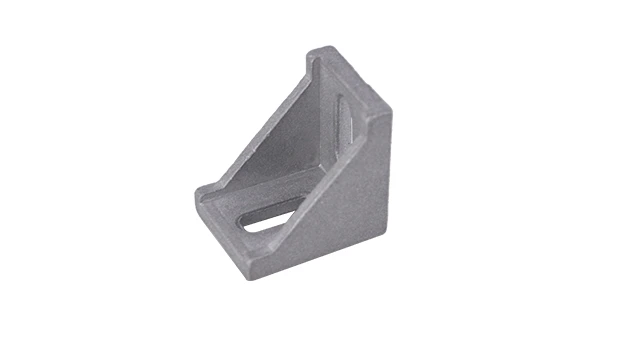
Gusset ALP 3030
The 3030 bracket/Gusset is an external fastening method that creates a 90 degree connection. 3030 means this size is used for 30 series aluminum profile with a quick connection by bolt and nut.
Walk into any modern factory, warehouse, or production facility, and you'll likely spot a network of structures working in harmony: workbenches where assembly line workers piece together products, flow racks organizing parts for easy access, and lean systems that keep operations running like well-oiled machines. Behind all these structures lies a world of small but critical components—parts so essential that their absence would throw even the most efficient processes into chaos. One such component is the Gusset Alp 3030, a unassuming yet vital piece that reinforces stability, ensures structural integrity, and enables the flexibility that modern industries demand. But how does this small but mighty part go from raw materials to a cornerstone of industrial setups? Let's dive into the manufacturing process of the Gusset Alp 3030, exploring how precision, technology, and attention to detail shape every step.
The Starting Point: Designing for Purpose
Before a single piece of aluminum is cut or shaped, the Gusset Alp 3030 begins as an idea—one rooted in solving a specific problem: how to strengthen connections between aluminum profiles without adding unnecessary weight or complexity. In industrial settings, aluminum profiles are the backbone of countless structures, from workbenches to material racks. These profiles, typically hollow and lightweight, rely on accessories like gussets to reinforce joints, especially in areas where stress or weight is concentrated. The Gusset Alp 3030, in particular, is designed for use with 3030 aluminum profiles—a common size in manufacturing due to its balance of strength and versatility.
The design phase starts with engineers and product designers collaborating to define the gusset's specifications. They ask: What load will it need to bear? How will it attach to the aluminum profile? What's the minimum thickness required to ensure durability without sacrificing the profile's lightweight nature? Using computer-aided design (CAD) software, they draft 3D models, testing different angles, thicknesses, and hole placements. For example, the Gusset Alp 3030 often features triangular or L-shaped designs, as these shapes distribute weight evenly across joints—a key trait for preventing bending or warping under pressure. Holes are strategically placed to align with the T-slots in 3030 aluminum profiles, allowing for easy attachment with bolts or screws, which are part of the broader category of aluminum profile accessories that make assembly quick and tool-free.
Once the digital design is finalized, it's put through virtual stress tests. Using finite element analysis (FEA), engineers simulate how the gusset will perform under various conditions: heavy loads, vibrations from machinery, even temperature fluctuations common in factory environments. If a design weakens or deforms in the simulation, adjustments are made—maybe thickening a section or repositioning a hole—until the gusset meets the strict safety and performance standards required for industrial use. This phase isn't just about creating a functional part; it's about ensuring that the Gusset Alp 3030 can keep up with the demands of real-world operations, where reliability can mean the difference between a smooth workflow and costly downtime.
Material Selection: Why Aluminum Takes Center Stage
With the design locked in, the next step is choosing the right material. For the Gusset Alp 3030, aluminum is the clear choice—and for good reason. Aluminum extrusion profiles, like the 3030 aluminum profile it's designed to complement, are prized in manufacturing for their unique blend of properties: they're lightweight, corrosion-resistant, and infinitely customizable. But not just any aluminum will do. The Gusset Alp 3030 typically uses 6061 or 6063 aluminum alloys, which are known for their excellent strength-to-weight ratios and weldability. These alloys contain small amounts of magnesium and silicon, which enhance their mechanical properties, making them ideal for structural components that need to withstand repeated stress.
The aluminum starts as ingots—large blocks of raw material that are melted down in furnaces at temperatures around 700°C (1292°F). During melting, impurities are removed to ensure the metal's purity, as even tiny contaminants can weaken the final product. Once molten, the aluminum is cast into billets—cylindrical logs that will later be fed into extrusion presses. This step is critical: any inconsistency in the billet's composition or density can lead to defects in the extrusion process, so strict quality checks are performed here, including chemical analysis to verify alloy composition and ultrasonic testing to detect hidden flaws.
Why not steel, you might wonder? While steel is stronger, it's also much heavier, which would add unnecessary bulk to structures like workbenches or lean system setups. Aluminum's lightweight nature makes it easier to transport, assemble, and reconfigure—essential in today's agile manufacturing environments, where production lines are often adjusted to meet changing demand. Additionally, aluminum's natural resistance to corrosion means the Gusset Alp 3030 can hold up in environments with moisture, oils, or chemicals, common in factories, without rusting or degrading over time. For industries like automotive or electronics, where cleanliness and longevity matter, this is a game-changer.

Extrusion: Shaping Aluminum into Profile Form
If the design phase is about vision and the material phase about foundation, extrusion is where the Gusset Alp 3030 truly starts to take shape—literally. Extrusion is the process of forcing molten or semi-solid aluminum through a die to create a specific cross-sectional shape. For aluminum extrusion profiles, this is how we get the consistent, precise dimensions that make profiles like the 3030 so versatile. But for a smaller component like the Gusset Alp 3030, the extrusion process is slightly different: instead of creating long, continuous profiles, the gusset is often cut from larger extruded sheets or shaped using stamping, depending on its design complexity.
Let's break it down. First, the aluminum billet is preheated to around 480°C (900°F)—hot enough to make the metal malleable but not so hot that it loses structural integrity. The billet is then loaded into an extrusion press, where a hydraulic ram pushes it through a die—a steel tool with a opening that matches the desired cross-section of the final product. For a gusset, the die might have a triangular or L-shaped opening, with notches for the holes that will later accommodate bolts. As the aluminum is forced through the die, it takes on the die's shape, emerging as a long, continuous piece. This piece is then cooled rapidly with water or air to lock in the shape and strengthen the metal—a process called quenching.
After cooling, the extruded pieces undergo a process called aging, where they're heated to a lower temperature (around 120°C/248°F) for several hours. This step, known as precipitation hardening, helps the aluminum alloys form tiny, stable particles that increase strength and hardness. For the Gusset Alp 3030, this is crucial: without aging, the aluminum might be too soft to withstand the loads it will face in industrial use. Once aged, the extruded lengths are cut into smaller sections using precision saws, ready for the next phase of manufacturing.

Precision Cutting: From Blanks to Exact Dimensions
Now that we have extruded aluminum blanks, the next step is cutting them into the exact size and shape of the Gusset Alp 3030. Precision here is non-negotiable: even a millimeter of error in length or angle could mean the gusset won't fit properly with the 3030 aluminum profile, compromising the structure's stability. To achieve this level of accuracy, manufacturers use computer numerical control (CNC) machines—automated tools programmed to cut, drill, and shape materials with pinpoint precision.
The process starts by loading the aluminum blanks into the CNC machine. Using the original CAD design, operators program the machine with the gusset's exact dimensions: length, width, thickness, and hole positions. The CNC machine then uses rotating cutting tools—mills, drills, or lasers—to shape the blank. For example, if the Gusset Alp 3030 has a triangular shape with three holes, the machine will first cut the outline of the triangle, ensuring clean, straight edges, then drill the holes to the precise diameter needed to fit standard aluminum profile accessories like T-slot bolts. The laser cutting method is especially popular here, as it produces smooth, burr-free edges, reducing the need for post-processing and ensuring a tight fit when assembled.
Throughout the cutting process, sensors and cameras monitor the machine's performance, checking for any deviations from the programmed design. If a hole is drilled slightly off-center or a cut is angled incorrectly, the machine automatically adjusts or pauses, alerting operators to the issue. This real-time quality control minimizes waste and ensures that every Gusset Alp 3030 meets the same strict standards. After cutting, each gusset is measured manually with calipers or micrometers as a final check—because even the most advanced machines benefit from a human eye.
Surface Treatment: Protecting and Perfecting the Finish
Aluminum's natural resistance to corrosion is a plus, but in industrial environments—where exposure to oils, chemicals, or moisture is common—extra protection goes a long way. That's where surface treatment comes in. The Gusset Alp 3030 undergoes several treatments to enhance its durability, appearance, and performance. The first step is cleaning: the gussets are submerged in a series of chemical baths to remove dirt, grease, and any oxide layers that formed during extrusion or cutting. This ensures that subsequent treatments adhere properly to the surface.
Next, most Gusset Alp 3030 components are anodized. Anodizing is an electrolytic process that creates a thick, protective oxide layer on the aluminum's surface. Here's how it works: the cleaned gussets are immersed in an acid electrolyte bath, with the aluminum acting as the anode (positive electrode) and a lead plate as the cathode (negative electrode). When an electric current is applied, oxygen ions from the electrolyte combine with the aluminum, forming aluminum oxide. This oxide layer is porous, allowing for dyeing if color-coding is needed (though most industrial gussets remain natural silver or black for versatility). More importantly, the anodized layer is extremely hard and resistant to scratches, corrosion, and wear—extending the gusset's lifespan even in harsh conditions.
For some applications, especially those requiring electrical conductivity or a smoother finish, the gusset may undergo powder coating instead. Powder coating involves applying a dry powder (typically polyester) to the aluminum surface, then curing it in an oven. The heat melts the powder, forming a hard, even layer that's resistant to chipping and fading. While powder coating adds thickness compared to anodizing, it offers a wider range of colors and can hide minor surface imperfections. Whichever treatment is used, the goal is the same: to create a gusset that not only performs well but also stands up to the daily grind of industrial life.
Assembly and Integration: Becoming Part of the Bigger Picture
Once the Gusset Alp 3030 is cut, treated, and inspected, it's ready to take its place as part of larger aluminum profile accessories kits. These kits, which include bolts, nuts, brackets, and other hardware, are what make aluminum profiles so easy to assemble into structures like workbenches, material racks, or lean systems. The gusset's role here is to reinforce joints where two or more aluminum profiles meet. For example, in a workbench frame, the corners where vertical and horizontal 3030 profiles connect are prime spots for stress. Adding a Gusset Alp 3030 to these corners distributes the weight of the workbench and any tools or materials on it, preventing the profiles from bending or twisting over time.
Assembling the gusset with the aluminum profile is surprisingly simple, thanks to the T-slot design of 3030 profiles. The gusset is placed over the joint, with its holes aligning with the T-slots in the profiles. A bolt is inserted into the T-slot, slid into position, and tightened with a nut—no drilling or welding required. This tool-free assembly not only saves time during setup but also allows for easy reconfiguration. If a factory needs to adjust the height of a workbench or rearrange a flow rack, the gusset can be removed and reused elsewhere, supporting the lean system philosophy of minimizing waste and maximizing flexibility.
To ensure that the Gusset Alp 3030 works seamlessly with other accessories, manufacturers often test-fit components during production. They assemble small sections of workbenches or racks using the gussets, checking for tight fits, smooth adjustments, and overall stability. This hands-on testing helps identify any issues—like a hole that's slightly misaligned or a bolt that's too short—before the products reach customers. After all, the best components are those that work together without a hitch, making the end user's job easier.
Quality Control: Ensuring Every Gusset Meets the Mark
At every stage of manufacturing—from design to assembly—quality control is woven into the process. But before the Gusset Alp 3030 leaves the factory, it undergoes one final round of rigorous testing to ensure it meets industry standards and customer expectations. This final inspection covers everything from dimensions to performance, leaving no room for error.
First, a sample of gussets is selected for dimensional checks. Using coordinate measuring machines (CMMs), inspectors create 3D scans of the gussets, comparing them to the original CAD model. This ensures that every feature—length, hole position, thickness—is within the specified tolerance (often as tight as ±0.1mm). Next, mechanical tests are performed: samples are subjected to tension, compression, and bending tests to verify they can withstand the loads they're designed for. For example, a Gusset Alp 3030 might be clamped to two 3030 profiles and loaded with weights until it deforms—a test that ensures it exceeds the minimum strength requirements by a safety margin.
Corrosion resistance is also tested: samples are exposed to salt spray or chemical solutions for extended periods, then inspected for signs of rust or degradation. Anodized or powder-coated surfaces should show no signs of peeling, pitting, or discoloration. Finally, visual inspections check for cosmetic defects: scratches, dents, or uneven finishes that might affect the gusset's appearance, even if they don't impact performance. Any gusset that fails these tests is rejected, melted down, and recycled—aligning with the sustainability goals that many modern manufacturers prioritize.
| Stage in Manufacturing | Key Purpose | Equipment/Tools Used | Quality Check Points |
|---|---|---|---|
| Design & CAD Modeling | Define gusset dimensions, shape, and hole placements | CAD software (AutoCAD, SolidWorks), FEA simulation tools | Virtual stress tests, load-bearing simulations |
| Material Extrusion | Shape aluminum into billets or sheets for gusset production | Extrusion press, die tools, quenching systems | Alloy composition analysis, dimensional consistency |
| Precision Cutting | Cut extruded aluminum into exact gusset shape with holes | CNC laser cutters, CNC mills, precision saws | Length/angle measurements, hole position accuracy (±0.1mm) |
| Surface Treatment | Enhance corrosion resistance and durability | Anodizing tanks, powder coating ovens, chemical cleaning baths | Oxide layer thickness, adhesion tests (tape test for powder coating) |
| Final Assembly Testing | Verify compatibility with aluminum profiles and accessories | Test workbenches/racks, torque wrenches | Fit with 3030 profiles, bolt tightness, joint stability |
From Factory to Floor: The Impact of the Gusset Alp 3030
After passing all quality checks, the Gusset Alp 3030 is packaged, shipped, and installed in factories, warehouses, and workshops around the world. Its impact, though small in size, is huge in scope. On the assembly line, it reinforces workbenches where workers build electronics or assemble automotive parts, ensuring the surface stays stable even during repetitive tasks. In warehouses, it strengthens flow racks holding heavy components, preventing shelves from sagging under the weight of inventory. In lean systems, it enables quick reconfigurations, allowing factories to adapt to new product lines or seasonal demand without rebuilding entire structures from scratch.
Consider a small electronics manufacturer that recently upgraded its assembly line. By using 3030 aluminum profiles and Gusset Alp 3030 gussets, they built modular workbenches that can be adjusted in height or length as needed. When they introduced a new product with larger components, instead of buying new workbenches, they simply repositioned the profiles and added extra gussets to support the heavier load. The result? Reduced costs, less waste, and a production line that's as flexible as their business needs. This is the power of well-designed aluminum profile accessories: they turn static structures into dynamic tools that grow with the company.
Beyond functionality, the Gusset Alp 3030 also plays a role in workplace safety. By reinforcing joints, it reduces the risk of structures collapsing or parts failing, protecting workers from injury. Its lightweight design also makes assembly and reconfiguration easier, reducing the risk of strains or accidents that can occur when moving heavy steel components. In an industry where safety is paramount, these small contributions add up to big improvements in workplace well-being.
Conclusion: Precision as the Foundation of Industrial Excellence
The manufacturing process of the Gusset Alp 3030 is a testament to the role of precision in modern industry. From the initial CAD design to the final quality check, every step is guided by a commitment to creating a component that's not just functional, but reliable, durable, and adaptable. It's a reminder that the most efficient factories, the safest workplaces, and the most innovative production lines are built on small, well-crafted parts—parts like the Gusset Alp 3030.
As industries continue to evolve, demanding more flexibility, sustainability, and efficiency, the importance of components like this will only grow. Whether it's supporting a workbench in a startup's workshop or reinforcing a lean system in a multinational factory, the Gusset Alp 3030 embodies the idea that great things come from attention to detail. So the next time you walk through a factory or use a product built on an assembly line, take a moment to appreciate the small but mighty parts that make it all possible. Behind every smooth operation, there's a story of precision—and the Gusset Alp 3030 is a key chapter in that story.