- Company Articles
- Products and Technology
- Product knowledge
- Gusset Alp 3030 Material: Why Aluminum Alloy Stands Out in Lean Production

Gusset Alp 3030 Material: Why Aluminum Alloy Stands Out in Lean Production
Related Product
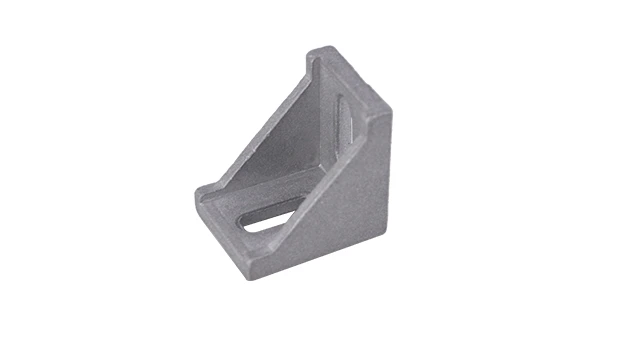
Gusset ALP 3030
The 3030 bracket/Gusset is an external fastening method that creates a 90 degree connection. 3030 means this size is used for 30 series aluminum profile with a quick connection by bolt and nut.
Walk into any modern manufacturing facility today, and you'll notice a quiet revolution happening on the factory floor. Gone are the days of clunky, immovable steel workbenches and rigid production lines that take weeks to reconfigure. Instead, there's a new rhythm—one of flexibility, speed, and precision. This shift isn't just about new software or fancy robots; it's often rooted in something far more fundamental: the materials we use to build the backbone of production. And when it comes to lean production, few materials have made as big an impact as aluminum alloy—especially when paired with components like the Gusset Alp 3030 .
Lean production, at its core, is about stripping away waste. Whether it's wasted time, wasted space, or wasted effort, the goal is to create a system that flows as smoothly as a well-oiled machine. But here's the thing: you can't build a flexible, waste-free system with inflexible materials. That's where aluminum alloy steps in. Lightweight yet surprisingly strong, easy to assemble yet built to last, it's become the unsung hero of lean operations worldwide. And within that ecosystem, the Gusset Alp 3030 plays a small but mighty role—acting as the quiet enforcer that holds everything together, quite literally.
Lean Production in Action: Why Infrastructure Flexibility Matters
Let's start with the basics: What makes lean production so different from traditional manufacturing? It's all about adaptability. In a lean system, customer demands change overnight, product designs evolve weekly, and production runs get shorter. A factory that can't keep up with these shifts gets left behind. Imagine, for example, a electronics plant that suddenly needs to switch from assembling smartphones to tablets. If their workbenches are bolted to the floor and their material racks are welded into place, that transition could take days—if not weeks—of downtime. That's wasted time, and in lean terms, wasted time is wasted money.
This is where the lean system philosophy really shines: it demands infrastructure that can keep up. Workbenches should be adjustable to fit different operators. Flow racks need to adapt to new part sizes without requiring a complete overhaul. And every component—from the smallest joint to the largest table—should be easy to move, reconfigure, or repurpose. Traditional materials like steel, while strong, often fall short here. Steel is heavy, which makes repositioning equipment a hassle. It's also prone to rust in humid environments, and welding or drilling into it to make changes is time-consuming. Plastic, on the other hand, might be lightweight, but it lacks the durability to handle heavy loads day in and day out.
Aluminum alloy, though? It checks all the boxes. It's about a third the weight of steel, so even a fully loaded aluminum workbench can be moved by a couple of people without a forklift. It resists corrosion, making it ideal for factories where moisture or chemicals are present. And perhaps most importantly, it's modular. Instead of welding, you can connect aluminum profiles with simple brackets and joints—like the Gusset Alp 3030—to build just about anything, then take it apart and rebuild it again when needs change. That's the kind of flexibility lean production craves.
Aluminum Alloy: The Perfect Marriage of Strength and Flexibility
To understand why aluminum alloy has become a staple in lean systems, let's break down its key properties. First, there's its strength-to-weight ratio. Aluminum might feel light in your hand, but don't let that fool you. Modern aluminum alloys—like the ones used in aerospace and automotive parts—can withstand significant loads without bending or warping. For example, a standard aluminum profile used in workbenches can easily support 200-300 kg of weight, which is more than enough for most assembly tasks. Compare that to steel, which would require a much thicker (and heavier) profile to achieve the same strength, and you start to see why aluminum is a game-changer for mobility.
Then there's its modularity. Unlike steel, which often requires welding or drilling to join pieces, aluminum profiles are designed with built-in T-slots. These slots allow you to attach brackets, shelves, or other components using simple screws or bolts—no special tools required. This means a team can assemble a custom workbench in hours instead of days, or reconfigure a flow rack to accommodate a new product in minutes. And when the next change comes? Just unscrew the components and start fresh. There's no need to cut, weld, or throw away perfectly good materials—another win for waste reduction.
Durability is another hidden advantage. Aluminum naturally forms a thin oxide layer on its surface, which protects it from corrosion. That's why you'll find it in everything from outdoor furniture to marine equipment. In a factory setting, where spills, humidity, or even chemical exposure are common, this resistance to rust and wear means aluminum structures last longer than their steel counterparts—reducing the need for frequent replacements. And when they do reach the end of their life? Aluminum is 100% recyclable, aligning perfectly with the lean principle of minimizing environmental waste.

Gusset Alp 3030: The "Glue" That Holds Lean Systems Together
Now, let's zoom in on the star of the show: the Gusset Alp 3030. If aluminum profiles are the bones of a lean production system, then components like the Gusset Alp 3030 are the ligaments and tendons—small but critical for stability and movement. So, what exactly is it? In simple terms, a gusset is a bracket used to reinforce joints where two or more parts meet. The Gusset Alp 3030, specifically, is designed to work with 3030 series aluminum profiles (profiles with a 30mm x 30mm cross-section), one of the most common sizes in industrial settings.
At first glance, it might seem like just another metal bracket. But look closer, and you'll notice the details that make it indispensable for lean systems. Made from high-grade aluminum alloy, it's lightweight but thick enough to add rigidity to joints. Its design is sleek, with pre-drilled holes that align perfectly with the T-slots in 3030 profiles, making installation a breeze. No more fumbling with mismatched holes or custom drilling—just slide it into place, tighten a few screws, and you're done.
Why does this matter? Think about a typical workbench. When operators are assembling products, they're constantly moving tools, parts, and finished goods across the surface. Over time, that movement creates stress on the joints where the tabletop meets the legs, or where shelves attach to the frame. A weak joint here could lead to wobbling, which not only slows down work but also increases the risk of errors or accidents. The Gusset Alp 3030 reinforces these high-stress points, distributing weight evenly and preventing the kind of flex that leads to wear and tear.
But its real superpower? It doesn't just add strength—it does so without sacrificing flexibility. Unlike a welded joint, which is permanent, the Gusset Alp 3030 can be removed and reused. If you need to shorten a workbench or add a new shelf, just unscrew the gusset, adjust the profiles, and reattach it. It's a small detail, but in a lean system where change is constant, that kind of adaptability is gold.

From Workbenches to Flow Racks: How Aluminum and Gusset Alp 3030 Transform the Floor
Let's get practical. How do these components actually come together on the factory floor? Let's take a common scenario: building a custom workbench for an assembly line. In the past, this might involve cutting steel pipes, welding them into a frame, and bolting on a wooden top—a process that could take a skilled worker a full day. With aluminum profiles and Gusset Alp 3030 brackets? It's a job for two people with basic tools, and it's done in under two hours.
Start with the frame: 3030 aluminum profiles cut to length (no welding required). Attach the legs using corner brackets, then add horizontal supports for stability. At each joint where the horizontal and vertical profiles meet, slap on a Gusset Alp 3030 to reinforce the connection. Top it off with an aluminum honeycomb panel (lightweight, flat, and easy to clean), and you've got a workbench that's sturdy enough for daily use but light enough to move with a pallet jack if needed. Need to add a shelf halfway up? Just slide some T-slot nuts into the vertical profiles, attach a few more brackets and a shelf panel, and you're done. No mess, no fuss, no wasted time.
Flow racks are another area where this combo shines. A flow rack—used to feed parts to assembly lines via gravity—needs to be angled just right to ensure smooth movement, but also strong enough to hold stacks of heavy bins. Aluminum profiles make it easy to adjust the angle (just loosen the brackets and tilt), while Gusset Alp 3030 brackets keep the frame steady even when fully loaded. Compare this to a steel flow rack, which would require cutting and rewelding to adjust the angle, and the time savings alone are enough to justify the switch.
Even something as simple as a turnover trolley gets a upgrade. Traditional steel trolleys are heavy, making them hard to maneuver in tight spaces. An aluminum trolley with Gusset Alp 3030-reinforced corners, though? It's light enough for a single operator to push, but strong enough to carry 500+ kg of parts. And when the trolley isn't needed for parts anymore? Disassemble it, repurpose the profiles and gussets, and build something new—a storage rack, a mobile workstation, or even a temporary staging area for incoming shipments. In lean terms, that's not just flexibility; it's resourcefulness.
The Numbers Don't Lie: Comparing Materials for Lean Infrastructure
Still not convinced aluminum alloy is the way to go? Let's look at the data. Below is a comparison of three common materials used in factory infrastructure: traditional steel, plastic, and aluminum alloy (with Gusset Alp 3030 reinforcement).
| Factor | Traditional Steel | Plastic | Aluminum Alloy (w/ Gusset Alp 3030) |
|---|---|---|---|
| Weight (per meter of 30x30 profile) | 2.5 kg | 0.8 kg | 1.2 kg |
| Max Load Capacity (per vertical profile) | 800 kg | 150 kg | 400 kg (with Gusset Alp 3030 reinforcement) |
| Assembly Time (for a basic workbench) | 8+ hours (welding required) | 3 hours (snap-fit, but less stable) | 1.5 hours (tool-free T-slot assembly) |
| Corrosion Resistance | Low (prone to rust without coating) | High (but UV-sensitive) | High (natural oxide layer) |
| Reusability | Low (welded joints are permanent) | Medium (can crack under repeated stress) | High (100% reusable, no permanent joints) |
| Long-Term Cost (10-year lifespan) | High (coating, replacement, labor) | Medium (frequent replacement) | Low (minimal maintenance, reusable components) |
The takeaway? Aluminum alloy hits the sweet spot. It's lighter than steel but far stronger than plastic. It assembles faster than steel and lasts longer than plastic. And when you factor in reusability and long-term maintenance costs, it often ends up being the most cost-effective choice—even if the upfront price tag is slightly higher than plastic.
Real-World Impact: How One Factory Cut Waste with Aluminum
Let's hear from a real example. A mid-sized automotive parts manufacturer in Ohio was struggling with their lean transformation. Their production lines were built with steel workbenches and fixed flow racks, and reconfiguring for new part models took 2-3 days of downtime—time they couldn't afford in a market with tight deadlines. They decided to experiment with aluminum profiles and Gusset Alp 3030 brackets, starting with a single assembly line.
The results were striking. First, setup time for new part runs dropped from 3 days to just 4 hours. Instead of welding new steel frames, the team could now adjust their aluminum workbenches and flow racks in minutes. Second, operator satisfaction improved: the lighter, more ergonomic workbenches reduced fatigue, and the ability to customize shelf heights meant tools were always within reach. Finally, waste dropped—by reusing components from old setups, they cut material costs by 18% in the first year alone.
"It's like night and day," said the plant manager. "We used to dread product changes because of all the downtime. Now, we can switch from making door handles to dashboard brackets before lunch, and the line is ready to go by afternoon. The Gusset Alp 3030 brackets might seem small, but they're what make the whole system feel solid. No more wobbling tables or loose shelves—just a setup that works, every time."
Choosing the Right Components: What to Look for in a Supplier
If you're ready to make the switch to aluminum alloy for your lean system, there are a few things to keep in mind when choosing components. First, not all aluminum profiles are created equal. Look for suppliers who use high-quality alloys (like 6063-T5, a common choice for industrial use) and precision extrusion processes—this ensures consistent dimensions and strength. Second, pay attention to the little things, like the finish. A smooth, anodized finish will resist scratches and corrosion better than a basic mill finish.
When it comes to brackets like the Gusset Alp 3030, check for tight tolerances. A well-made gusset should fit snugly against the profile without gaps, which ensures maximum strength. Avoid cheap, thin brackets—they might save money upfront, but they'll bend or break under stress, leading to costly replacements down the line. And don't forget about accessories: T-slot nuts, screws, and end caps might seem trivial, but using high-quality versions will make assembly smoother and more reliable.
Finally, look for a supplier who understands lean principles themselves. The best suppliers don't just sell parts—they offer expertise. They can help you design a workbench that maximizes space, suggest the right flow rack angle for your parts, or even help you calculate load capacities. After all, a lean system is only as good as the people and partners who build it.
Conclusion: The Future of Lean is Light, Strong, and Ready to Adapt
At the end of the day, lean production isn't just a set of principles—it's a mindset. It's about seeing waste where others see "the way we've always done it" and asking, "How can we make this better?" For many factories, that answer starts with the materials they use. Aluminum alloy, with its unbeatable combination of strength, light weight, and flexibility, has become the foundation of that better way.
And within that foundation, components like the Gusset Alp 3030 remind us that great systems are built from great details. They might not get the same attention as a new robot or a flashy ERP system, but they're the quiet workhorses that make lean production possible—one sturdy joint, one reconfigurable workbench, one waste-free day at a time.
So the next time you walk onto your factory floor, take a look around. Are your workbenches holding you back? Are your flow racks stuck in the past? Maybe it's time to embrace the aluminum revolution. Your operators will thank you, your bottom line will thank you, and your lean system? It'll finally be able to flow like it was always meant to.