- Company Articles
- Products and Technology
- Product knowledge
- Gusset Alp 3030 Tolerances: Why Precision Matters in Industrial Frames

Gusset Alp 3030 Tolerances: Why Precision Matters in Industrial Frames
Related Product
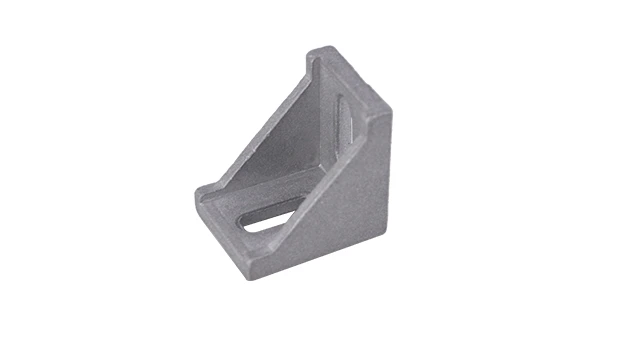
Gusset ALP 3030
The 3030 bracket/Gusset is an external fastening method that creates a 90 degree connection. 3030 means this size is used for 30 series aluminum profile with a quick connection by bolt and nut.
The Hidden Cost of "Close Enough" in Industrial Frames
Imagine standing on a factory floor at 8 a.m. The line is supposed to be running full tilt, but instead, there's a huddle around a workbench. The supervisor is frowning, a technician is muttering while adjusting a wrench, and the production schedule is already slipping. "It's just a little wobbly," someone says. "Can't we just tighten the bolts and move on?" But the wobble isn't going away. An hour later, after disassembling half the frame, they find the culprit: a small, unassuming metal plate called a gusset. Its holes are off by just half a millimeter—barely visible to the eye—but enough to throw the entire structure out of alignment. That "close enough" gusset just cost the company thousands in lost productivity. Sound familiar? In industrial manufacturing, the difference between a smooth operation and a day of headaches often comes down to details we can barely measure: tolerances.
In this article, we're diving deep into one such detail: the tolerances of Gusset Alp 3030. If you work with aluminum profiles, build workbenches, assemble material racks, or design production lines, this small component might be the unsung hero (or villain) of your workflow. We'll break down why precision here isn't just a "nice-to-have," but a critical investment in reliability, safety, and efficiency. And yes—we'll even talk about how those tiny millimeters impact everything from assembly time to the lifespan of your equipment.
What is Gusset Alp 3030, Anyway?
Let's start with the basics. If you've ever seen an aluminum frame—whether it's a workbench in a workshop, a shelving unit in a warehouse, or a conveyor support structure—you've probably noticed the sleek, angular beams that form its skeleton. Those beams are aluminum profiles, and one of the most common sizes is 3030 (meaning 30mm by 30mm in cross-section). Now, when you connect these profiles at corners or joints, you need something to reinforce the connection and keep the frame from flexing under load. Enter the gusset plate.
A gusset is a flat, often triangular or rectangular piece of metal that bolts onto the corners of aluminum profiles, adding rigidity. Think of it as the "backbone" of the joint—without it, the frame might hold up initially, but over time, vibrations, weight, and repeated use can cause the connection to loosen or warp. Gusset Alp 3030 specifically refers to gusset plates designed for 3030 aluminum profiles. They're engineered to fit the T-slots and bolt holes of these profiles perfectly, distributing stress evenly across the joint.
But here's the thing: "perfectly" is subjective in manufacturing. Even the most advanced machines have limits to how precisely they can cut, drill, or shape metal. That's where tolerances come in. A tolerance is the allowable variation in a dimension—say, the distance between two bolt holes on a gusset. If the design calls for holes 25mm apart, a tolerance of ±0.1mm means the actual distance could be anywhere from 24.9mm to 25.1mm. Seems small, right? But in the world of aluminum profile frames, that tiny range can make or break the integrity of the entire structure.

Tolerances 101: Why "Good Enough" Isn't Good Enough
Let's get real: In a busy workshop, it's tempting to brush off small variations. "It's just a fraction of a millimeter—who'll notice?" But here's the problem: industrial frames are systems, not standalone parts. A gusset doesn't work in isolation; it connects to aluminum profiles, which connect to 90° aluminum profile connectors, which connect to shelves, which hold tools or products. Every component depends on the one next to it. If your gusset's holes are 0.3mm too far apart, the bolts might still thread in, but the profile will sit at a slight angle. That angle puts extra stress on the connector, which then transfers stress to the next joint, and so on. Over time, this "domino effect" can lead to loose bolts, squeaky frames, and eventually, structural failure.
Consider this: A typical assembly line workbench might support 50kg of tools, parts, and equipment. If the gussets holding its corners have poor tolerances, the bench might wobble by a few millimeters every time an operator places a heavy tool on it. At first, it's just annoying. But over weeks and months, that wobble vibrates the bolts loose. Then the shelves start to sag. Then a container of parts slides off, causing a spill. Suddenly, "close enough" has turned into a safety hazard and a production delay.
Tolerances also matter for consistency. Imagine ordering 100 gussets for a batch of material racks (like the Material Rack B, 3 rows and 3 floors, a common setup in warehouses). If half of them have holes at 24.8mm and the other half at 25.2mm, your assembly team will spend twice as long sorting, adjusting, and forcing parts to fit. What should take an hour per rack might take two. Multiply that by 100 racks, and you're looking at weeks of wasted labor—all because of a tolerance that was "close enough" on paper.

The Ripple Effect: How Gusset Tolerances Impact Entire Systems
To really understand why Gusset Alp 3030 tolerances matter, let's break down their impact on three key areas: assembly, structural integrity, and compatibility with other aluminum profile accessories.
1. Assembly: Time is Money (and Frustration)
Anyone who's built furniture from a flat pack knows the frustration of misaligned holes. Now multiply that by 100, and you've got industrial assembly with poor-tolerance gussets. When holes don't line up with the T-slots on 3030 aluminum profiles, workers have to force bolts, use extra washers, or even drill new holes—all of which add time. A study by the Manufacturing Technology Insights found that inconsistent tolerances can increase assembly time by up to 40% for complex frames. For a factory churning out hundreds of workbenches or racks, that's a massive hit to productivity.
Worse, forced assembly weakens the joint. If you have to bend a gusset slightly to get the bolts in, you're introducing internal stress that will relax over time, leading to loose connections. What starts as a 10-minute "fix" during assembly becomes a recurring maintenance issue down the line.
2. Structural Integrity: When "Wobbly" Becomes Dangerous
Industrial frames don't just hold tools—they hold people, heavy machinery, and sometimes hazardous materials. A gusset with off tolerances compromises the frame's ability to distribute weight. Let's say you're building a workbench for an electronics assembly line, using Aluminum Workbench E (single deck, without casters). The design calls for the bench to support 75kg. If the gussets at the corners are undersized or have misaligned holes, the bench might sag under load. At first, it's 5mm. Then 10mm. Eventually, the stress on the weakest joint, causing it to fail. Now you've got a collapsed workbench, damaged equipment, and potentially injured workers.
Vibration is another silent killer. Factories are noisy places, with conveyor belts, drills, and presses creating constant vibrations. A frame with tight tolerances acts like a solid unit, absorbing these vibrations. A frame with loose joints (thanks to poor gusset tolerances) amplifies them, turning small shakes into big movements. Over time, this can loosen bolts, crack welds, and even damage sensitive equipment mounted on the frame.
3. Compatibility: Playing Well with Others
Gussets don't work alone—they're part of a ecosystem of aluminum profile accessories. Think 3030 aluminum profile end caps, which seal the ends of profiles to prevent dust and debris from entering. If a gusset's bolt holes are off, it might push the profile slightly out of square, making the end cap sit unevenly. Or consider 90° aluminum profile connectors, which join profiles at right angles. A misaligned gusset can twist the connector, throwing the entire frame's geometry off. Suddenly, your "square" frame is actually a parallelogram, and nothing lines up with the conveyors or shelving next to it.
Even small accessories like caster wheels (used on mobile workbenches or trolleys) feel the impact. If the frame is out of square due to poor gusset tolerances, the casters won't roll smoothly—they'll bind, squeak, or wear unevenly. What should be a mobile workstation becomes a chore to move, defeating the purpose of using casters in the first place.
| Tolerance Range | Assembly Impact | Structural Impact | Compatibility Impact |
|---|---|---|---|
| ±0.1mm (Standard) | Holes align perfectly; bolts thread easily. Assembly time on target. | Stress distributed evenly. Frame holds rated load without flexing. | Works seamlessly with 3030 end caps, 90° connectors, and other accessories. |
| ±0.3mm (Poor) | Holes may require forcing bolts or extra washers. Assembly time +20%. | Minor flexing under load. Vibration loosens bolts over 3–6 months. | End caps sit unevenly; 90° connectors may twist slightly. |
| ±0.5mm (Critical) | Holes rarely align. Workers drill new holes or bend gussets. Assembly time +40%. | Frame sags under load. Risk of joint failure under heavy use. | Incompatible with standard accessories. Requires custom modifications. |
Measuring Precision: How Suppliers Ensure Gusset Alp 3030 Tolerances
So, how do reputable aluminum profile suppliers ensure their Gusset Alp 3030 meets tight tolerances? It starts with the right tools and processes. Top suppliers use CNC (Computer Numerical Control) machining to cut and drill gussets. Unlike manual machining, CNC machines follow digital blueprints with precision down to 0.01mm, ensuring every gusset is identical. After machining, parts are inspected using coordinate measuring machines (CMMs), which scan the gusset and compare its dimensions to the design specs. If a part is even 0.05mm out of tolerance, it's rejected.
Material quality also plays a role. Gussets are typically made from aluminum alloy (like 6061 or 6063), which is strong yet lightweight. But if the raw material has inconsistencies—like air bubbles or uneven thickness—the finished gusset might warp during machining, throwing off tolerances. Reputable suppliers test raw materials for density and uniformity before production, ensuring the aluminum can hold tight tolerances through the manufacturing process.
Another key step is batch testing. Even with CNC machines, tool wear or minor calibration drift can cause tolerances to slip over time. That's why suppliers test samples from every batch of gussets. For example, a batch of 500 Gusset Alp 3030 plates might have 10 randomly selected for CMM inspection. If any of those 10 are out of spec, the entire batch is reviewed—no exceptions. This level of quality control might cost more upfront, but it's a fraction of the cost of replacing failed frames or reworking assemblies later.
Real-World Consequences: Case Studies in Tolerance Failures
Still skeptical that a half-millimeter tolerance matters? Let's look at two real-world examples (with names changed for privacy) where Gusset Alp 3030 tolerances made or broke the project.
Case Study 1: The Wobbly Workbench Disaster
A medical device manufacturer in Ohio ordered 50 Aluminum Workbench E units (single deck, no casters) for their new assembly line. The supplier, looking to cut costs, sourced gussets with a tolerance of ±0.4mm instead of the specified ±0.1mm. Initially, the workbenches seemed fine. But within two months, operators reported wobbling. By month three, three workbenches had collapsed under the weight of precision tools, damaging $10,000 worth of equipment. An investigation revealed the gussets had loosened, causing the frames to twist. The manufacturer had to recall all 50 workbenches, replace the gussets, and retrain staff on assembly—costing over $150,000 in downtime and repairs.
Case Study 2: The Material Rack Meltdown
A logistics company in Texas built 200 Material Rack B units (3 rows, 3 floors) to store inventory. They used gussets from a new supplier offering a "budget-friendly" option with ±0.3mm tolerances. During assembly, workers noticed holes often misaligned with the 3030 aluminum profiles, but management pushed to "make it work" to meet deadlines. Six months later, the racks started to sag. Some shelves tilted, causing boxes to slide off. An engineer discovered the gussets had flexed under load, warping the frame. The company had to reinforce each rack with additional gussets, costing $50,000 in parts and labor—far more than the "savings" from the cheaper gussets.
Choosing the Right Supplier: What to Ask About Gusset Alp 3030 Quality
Now that you know why tolerances matter, how do you ensure you're getting Gusset Alp 3030 with tight, consistent tolerances? Start by asking your aluminum profile supplier these key questions:
- What's your standard tolerance for Gusset Alp 3030? Look for suppliers who guarantee ±0.1mm or better. If they can't specify a number, walk away.
- How do you test for tolerances? Reputable suppliers will mention CNC machining, CMM inspections, and batch testing. If they say "we check with a ruler," that's a red flag.
- Can you provide a certificate of compliance (CoC) for each batch? A CoC proves the gussets meet the specified tolerances. If they refuse, they might be cutting corners.
- What materials do you use for gussets? Aluminum alloys like 6061-T6 are ideal for strength and precision. Avoid suppliers using unknown or recycled alloys.
Remember: The cheapest supplier isn't always the best value. Paying a little more for tight-tolerance gussets saves you money in assembly time, maintenance, and avoided failures down the line. It's an investment in your factory's reliability—and your peace of mind.
Conclusion: Precision as the Foundation of Productivity
At the end of the day, Gusset Alp 3030 tolerances are about more than just numbers on a blueprint. They're about building frames that don't just hold things up, but hold up to the chaos of daily production—vibrations, heavy loads, and the relentless march of time. A gusset with tight tolerances is quiet, reliable, and invisible in the best way: it lets your team focus on making products, not fixing frames.
So the next time you're sourcing aluminum profile accessories, don't overlook the humble gusset. Ask about tolerances. Demand certificates. And remember: "close enough" might save you a few dollars today, but it will cost you far more tomorrow. In industrial manufacturing, precision isn't a luxury—it's the foundation of every productive, safe, and efficient operation.
After all, the factory floor huddle we imagined at the start? It never has to happen. Not if you start with gussets that fit right the first time.