- Company Articles
- Products and Technology
- Product knowledge
- Gusset Alp 3030 vs. Plastic Corners: Why Aluminum Wins in Industrial Settings

Gusset Alp 3030 vs. Plastic Corners: Why Aluminum Wins in Industrial Settings
Related Product
Gusset ALP 3030
The 3030 bracket/Gusset is an external fastening method that creates a 90 degree connection. 3030 means this size is used for 30 series aluminum profile with a quick connection by bolt and nut.
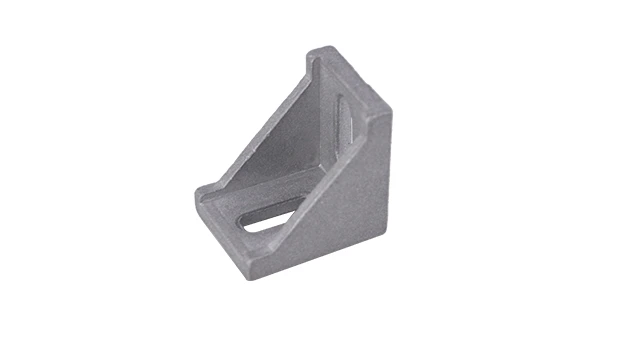
Walk into any busy factory, and you'll notice the unsung heroes keeping operations moving: the workbenches where assemblers piece together products, the material racks holding components, the conveyor systems shuttling parts from station to station. But behind these systems are smaller, critical components that often go unnoticed—until they fail. Take corners, for example. For years, many industrial setups relied on plastic corners to connect frames, support shelves, or reinforce joints. They're cheap, lightweight, and easy to install, right? But ask any plant manager who's dealt with cracked plastic, wobbly workbenches, or unexpected downtime, and they'll tell you: plastic corners might save a few dollars upfront, but they cost far more in the long run. That's where Gusset Alp 3030 comes in. As a staple in aluminum profile systems, this aluminum corner solution isn't just a replacement for plastic—it's a game-changer for lean systems, durability, and day-to-day efficiency.
The Problem with Plastic: Why "Cheap" Often Costs More
Let's start with the obvious: plastic corners are designed for light-duty use. In a quiet office or a home workshop, they might hold up. But in an industrial environment—where temperatures fluctuate, heavy tools are dropped, chemicals are spilled, and equipment runs 12-hour shifts—plastic simply can't keep up. I've talked to maintenance supervisors who describe the "plastic corner cycle": install them, notice they start to warp after a month, tighten the screws to compensate, watch them crack under pressure three months later, and then spend hours replacing them. Each replacement means shutting down a workstation, pulling parts from inventory, and paying a technician to fix what should have lasted years.
Take temperature, for example. Plastic softens in heat and becomes brittle in cold. A factory in summer, with machinery generating heat, can push plastic corners past their melting point, causing frames to sag. In winter, a cold storage area or unheated warehouse can make plastic so rigid that a simple bump from a pallet jack shatters it. Then there's chemical resistance: oils, solvents, and cleaning agents common in manufacturing eat away at plastic over time, turning once-tight joints into loose, unstable connections.
And let's not forget weight. A workbench loaded with tools, or a material rack stacked with metal components, puts constant stress on corners. Plastic, even reinforced plastic, flexes under load. Over time, that flexing weakens the material, leading to cracks or complete failure. One plant I worked with had to replace plastic corners on their assembly line workbenches every six months—each time, halting production for half a day. The cost of downtime alone was enough to make their CFO wince.
Gusset Alp 3030: The Aluminum Advantage in Industrial Design
Enter Gusset Alp 3030 . As part of the aluminum profile family, this corner solution is built for the realities of industrial life. Aluminum isn't just stronger than plastic—it's smarter. Let's break down why it's become a go-to for manufacturers invested in lean systems (think: reducing waste, maximizing uptime, and optimizing workflows).
1. Durability That Stands Up to Industrial Abuse
Aluminum is inherently tough. Unlike plastic, it doesn't warp in heat or crack in cold. Gusset Alp 3030, made from high-grade aluminum extrusion profile, can handle temperatures from -40°C to 80°C without losing structural integrity. That's a range that covers everything from frozen food warehouses to foundries. And when it comes to impact? drop a wrench on a plastic corner, and you'll likely see a crack. Do the same on Gusset Alp 3030, and the corner might scratch, but the joint stays solid.
Chemical resistance is another win. Aluminum's natural oxide layer acts as a barrier against oils, solvents, and cleaning agents. Wipe down a workstation with degreaser, and the Gusset Alp 3030 corners won't degrade. Even in environments with heavy moisture—like automotive plants or food processing facilities—aluminum resists rust and corrosion (unlike steel, which needs constant painting or coating).
2. Adaptability: Perfect for Custom Lean Systems
Lean manufacturing isn't just about cutting costs—it's about flexibility. Production lines change, workstations get reconfigured, and new products require new setups. Plastic corners, with their fixed designs, limit how much you can adapt. Gusset Alp 3030, though, is part of a modular aluminum profile system. Its T-slot design lets you add or remove components (like shelves, tool holders, or conveyor tracks) with just a hex key. Need to adjust the height of a workbench? Swap out the legs, tighten the Gusset Alp 3030 corners, and you're done. No drilling, no gluing, no waiting for parts to arrive.
I visited a electronics manufacturer last year that had just switched to aluminum profiles with Gusset Alp 3030 corners. Their old plastic corner system required custom brackets for every new workstation design, which took weeks to fabricate. With aluminum, they reconfigured three assembly lines in a single weekend—saving time and keeping up with a sudden surge in orders. "We used to dread product launches because of the setup time," their operations manager told me. "Now, we can pivot on a dime."
3. Long-Term Cost Savings: Pay Now, Save Later
Yes, Gusset Alp 3030 costs more upfront than plastic corners. But let's do the math. A pack of plastic corners might cost $20 and last 6 months. A Gusset Alp 3030 corner costs $10 each but lasts 10 years. If you need 20 corners per workstation, that's $400/year for plastic vs. $200 every 10 years for aluminum. Over a decade, you're saving $3,800 per workstation. Multiply that by 50 workstations, and you're looking at $190,000 in savings—before factoring in downtime, labor for replacements, or inventory costs for spare plastic parts.
And let's not forget weight. Aluminum is lighter than steel but stronger than plastic, so you get the best of both worlds: sturdy structures that are easy to move. A team of two can relocate a Gusset Alp 3030-reinforced workbench without a forklift, reducing the risk of injury and speeding up floor plan changes.

Gusset Alp 3030 vs. Plastic Corners: A Side-by-Side Comparison
| Feature | Gusset Alp 3030 (Aluminum) | Plastic Corners |
|---|---|---|
| Lifespan | 10+ years | 6–12 months (industrial use) |
| Temperature Resistance | -40°C to 80°C | 0°C to 50°C (warps/cracks outside range) |
| Impact Strength | Withstands heavy impacts without cracking | Brittle; cracks under moderate impact |
| Chemical Resistance | Resistant to oils, solvents, and cleaning agents | Degrades with chemical exposure |
| Modularity | Compatible with T-slot aluminum profiles; easy to reconfigure | Fixed design; limited adaptability |
| Long-Term Cost | Low (minimal replacements, no downtime) | High (frequent replacements + downtime costs) |

Real-World Impact: How Gusset Alp 3030 Transforms Workspaces
Numbers tell part of the story, but let's look at real examples. A automotive parts supplier in Michigan was struggling with their plastic corner material racks. The racks, loaded with heavy metal components, kept collapsing—damaging parts and risking worker safety. They switched to aluminum profiles with Gusset Alp 3030 corners and haven't had a single rack failure in three years. "We used to have a near-miss every month," their safety manager said. "Now, the racks feel like they'll outlast the building."
Another example: a pharmaceutical manufacturer needed cleanroom-compatible workstations. Plastic corners, with their porous surfaces, trapped dust and bacteria—violating FDA standards. Gusset Alp 3030, with its smooth aluminum finish, is easy to sanitize and doesn't harbor contaminants. They now use it for all their cleanroom setups, passing inspections with zero issues.
Even small businesses are seeing results. A local machine shop I know replaced their plastic corner workbenches with aluminum ones using Gusset Alp 3030. Their old benches wobbled so much that precision machining was impossible. The new aluminum benches, with rigid corners, reduced vibration by 80%—improving part accuracy and cutting down on rework.
Beyond Corners: Why Aluminum Profiles Are the Future of Lean Systems
Gusset Alp 3030 isn't just a better corner—it's part of a larger ecosystem. Aluminum profiles, with their modular design, support everything from conveyor systems to flow racks to ESD workstations. When you invest in aluminum, you're not just fixing a corner problem; you're building a foundation for a truly lean system. No more waiting for custom parts, no more wasting time on repairs, and no more sacrificing safety for cost.
Plastic corners might seem like a quick fix, but in industrial settings, they're a Band-Aid on a problem that needs surgery. Gusset Alp 3030, with its durability, adaptability, and long-term savings, is the solution. It's not just about metal vs. plastic—it's about building a workspace that works as hard as your team does.
Final Thoughts: The Case for Investing in Quality
At the end of the day, every component in your facility matters. The corners that hold up your workbench, the joints that support your material racks—they're the backbone of your operation. Cutting corners (pun intended) with plastic might save a few dollars today, but it costs you in downtime, repairs, and frustration tomorrow. Gusset Alp 3030, as part of the aluminum profile family, is an investment in reliability. It's the difference between a production line that stumbles and one that thrives.
"We don't just build workstations—we build systems that last. With Gusset Alp 3030, we've stopped worrying about corners and started focusing on what matters: making great products." — Plant Manager, Midwest Manufacturing Co.