- Company Articles
- Products and Technology
- Product knowledge
- Gusset ALP 4040 and Inner Rotating Aluminum Joints: Complementary Components in Lean Systems

Gusset ALP 4040 and Inner Rotating Aluminum Joints: Complementary Components in Lean Systems
Related Product
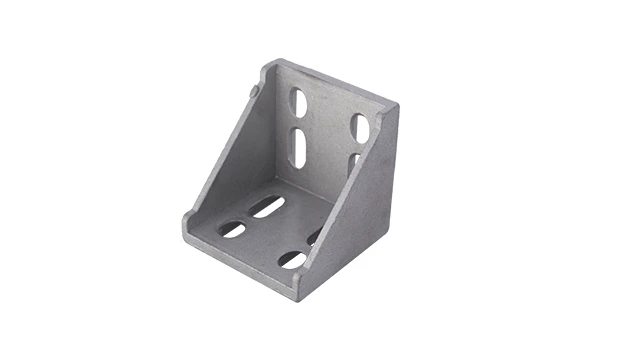
Gusset ALP 4040
The 4040 bracket/Gusset is an external fastening method that creates a 90 degree connection. 4040 means this size is used for 40 series aluminum profile with a quick connection by bolt and nut. It is a lightweight bracket that requires no machining servic
Walk into any modern manufacturing facility, and you'll likely notice a quiet revolution unfolding. Factories that once felt cluttered, slow, or stuck in rigid routines are now humming with purpose—materials glide smoothly along roller tracks, workbenches adapt to shifting tasks in seconds, and every tool seems to have its perfect place. This isn't magic; it's the power of lean systems in action. Lean isn't just a buzzword thrown around in boardrooms; it's a philosophy rooted in efficiency, flexibility, and continuous improvement. But here's the thing: lean principles can't thrive in a vacuum. They depend on the tangible, often unsung heroes of the factory floor—the components that turn abstract ideas into functional, adaptable workspaces. Today, we're diving into two such heroes: the Gusset ALP 4040 and Inner Rotating Aluminum Joints. These unassuming parts might not grab headlines, but together, they form the backbone of stable, flexible lean systems that keep production lines moving and teams thriving.
The Backbone of Lean: Why Components Matter
Before we zoom in on our two stars, let's take a step back. Lean systems are all about eliminating waste—whether that's wasted time, space, or effort. To do that, manufacturers need structures that can keep up with change. A static workbench that can't adjust to a new product size, or a material rack that wobbles under daily use, isn't just inefficient; it's a bottleneck. That's where high-quality components come in. They're the building blocks that let teams design workspaces that grow, shrink, pivot, and evolve as needs change. And when it comes to building these blocks, few materials rival aluminum. Lightweight yet surprisingly strong, resistant to corrosion, and infinitely customizable, aluminum has become the go-to for lean systems. Pair that with smartly designed brackets, joints, and connectors, and you've got a recipe for a workspace that doesn't just support lean principles—it embodies them.
A Quick Note on Aluminum Profiles
If you've ever assembled furniture with those grooved metal bars, you're already familiar with aluminum profiles. These extruded pieces (think of them as metal "Lego bricks") come in standard sizes—like the popular 4040 profile, named for its 40mm x 40mm cross-section—and feature T-slots that let you attach brackets, shelves, or tools with ease. They're the canvas on which lean systems are painted. And to make that canvas truly functional, you need the right "paintbrushes"—components like gussets and joints that turn individual profiles into sturdy, adaptable structures.
Gusset ALP 4040: The Silent Stabilizer
Let's start with the Gusset ALP 4040. If lean systems were a team, this component would be the reliable anchor—quietly ensuring everything stays steady, even when the going gets tough. So, what exactly is it? At its core, a gusset is a bracket designed to reinforce connections between two or more parts. The ALP 4040, in particular, is engineered to work seamlessly with 4040 aluminum profiles, the workhorses of many lean setups.
Design That Delivers Stability
Picture a right-angle bracket, but with a twist. The Gusset ALP 4040 isn't just a simple L-shape; it's crafted with precision to wrap around the edges of 4040 aluminum profiles, creating a connection that feels almost welded—without the permanence. Its aluminum construction keeps it lightweight (no adding unnecessary bulk to your setup), while its thickness (typically 2-3mm) ensures it can handle heavy loads without bending. What really sets it apart, though, is its attention to detail. The gusset features pre-drilled holes that align perfectly with the T-slots of 4040 profiles, making installation a breeze. No guesswork, no fumbling with mismatched holes—just slide in a bolt, tighten, and you're done. This might sound small, but in a factory where every minute counts, "easy installation" translates to less downtime and more time spent on actual production.
Why Stability Matters (Spoiler: It's About More Than Just "Not Wobbling")
You might be thinking, "Stability is nice, but do I really need a special gusset for that?" Let's put it this way: Imagine building a workbench out of aluminum profiles. Without reinforcement, the corners where the legs meet the tabletop might hold up initially, but over time—with tools being dropped, materials being stacked, and workers leaning on the edges—those joints could loosen. A wobbly workbench isn't just annoying; it's a safety hazard. It could cause tools to slip, materials to topple, or even lead to repetitive strain injuries if workers overcompensate for the instability. The Gusset ALP 4040 eliminates that risk by distributing weight evenly across the joint. It turns a "good enough" connection into one that's rock-solid, even under the daily grind of a busy factory. And because it's made of aluminum, it won't rust or corrode—perfect for environments where spills, humidity, or cleaning chemicals are part of the norm.
Beyond Workbenches: Where Else Does the ALP 4040 Shine?
While workbenches are a common use case, the Gusset ALP 4040 is a versatile player. Think about material racks that hold heavy inventory—those vertical supports need to stay upright, even when loaded with boxes. The ALP 4040 reinforces the connections between horizontal and vertical profiles, ensuring the rack doesn't bow or tip. Or consider assembly lines with overhead shelving; a loose bracket here could mean tools crashing down. The gusset adds that extra layer of security, turning "it might hold" into "it will hold." Even in less obvious places, like guardrails around machinery or mobile trolleys (yes, even those with caster wheels !), the ALP 4040 ensures that movement and vibration don't weaken critical joints over time.

Inner Rotating Aluminum Joints: Flexibility in Motion
If the Gusset ALP 4040 is the anchor of lean systems, then Inner Rotating Aluminum Joints are the hinges that let the system move. Lean isn't just about stability—it's about adaptability. A workspace that can't change when production needs shift is a workspace stuck in the past. That's where rotating joints come in. These clever connectors allow aluminum profiles to pivot, swivel, or adjust angles, turning rigid structures into ones that bend (literally!) to your needs.
How Do They Work? A Closer Look
Let's break it down. An Inner Rotating Aluminum Joint is essentially a connector with a hidden superpower: it can rotate along its axis, letting the profiles attached to it swing into new positions. Unlike fixed joints, which lock two profiles at a set angle (say, 90 degrees), rotating joints offer a range of motion—some can swivel 180 degrees, others even 360. The "inner" part refers to how the rotation mechanism is housed inside the joint, keeping it protected from dust, debris, and accidental damage. Installation is straightforward: slide the joint into the T-slots of two aluminum profiles, tighten the bolts, and voilà—you've got a connection that moves when you need it to, and locks into place when you don't. Some models even feature a locking lever or set screw, so you can secure the joint at a specific angle once you've found the perfect position.
Flexibility That Solves Real Problems
Why does this matter? Let's say you run a small electronics assembly line. One day, you're building smartphones; the next, you're shifting to tablets, which are larger and require more workspace. With fixed joints, your workbench's shelves are stuck at a height that's now too low. You'd either have to rebuild the entire bench (wasting time) or with a suboptimal setup (wasting efficiency). But with Inner Rotating Aluminum Joints, you can simply unlock the shelves, pivot them up a few inches, relock, and keep working. Problem solved in minutes, not hours.
Or consider a material handling scenario. You've got a trolley with a side rack that holds tools—but when you need to load large boxes onto the trolley, that rack gets in the way. With a rotating joint, you can swing the rack out of the way, load the boxes, then swing it back. No disassembly, no hassle. These small, everyday adjustments add up to big gains in productivity. Workers aren't stuck waiting for maintenance to reconfigure their space; they can do it themselves, on the fly.

Better Together: The Synergy of Gusset ALP 4040 and Inner Rotating Joints
By now, you might be thinking, "Stability is great, flexibility is great—but can you have both?" The answer is a resounding yes, and it's all thanks to the synergy between Gusset ALP 4040 and Inner Rotating Aluminum Joints. Think of it like a dance: the rotating joint leads with flexibility, and the gusset follows with stability, ensuring the dance never loses its rhythm.
A Case Study: The Adaptable Assembly Workbench
Let's bring this to life with a real-world example: a multi-purpose assembly workbench. The main frame is built with 4040 aluminum profiles. At the corners, Inner Rotating Aluminum Joints connect the legs to the tabletop frame. This lets the legs fold in for easy storage when the bench isn't in use—a game-changer for facilities short on space. But when the bench is set up, those rotating joints need to stay put. That's where the Gusset ALP 4040 comes in. Once the legs are locked into position, gussets are added at each corner, reinforcing the joint and preventing any wobble during use. Now the bench is both flexible (foldable for storage) and stable (rock-solid during assembly). It's the best of both worlds.
But the synergy doesn't stop there. The workbench might have a side shelf attached with rotating joints, allowing it to swing over the table when needed or tuck away when not. Underneath that shelf, a Gusset ALP 4040 reinforces the connection to the main frame, so even when the shelf is loaded with tools, it doesn't sag or twist. The result? A workbench that adapts to the task at hand, without ever compromising on stability.
The Science of "Stable Flexibility"
It's easy to see why these two components work well together, but let's dig into the mechanics. Rotating joints introduce a small amount of "play" into a structure by design—that's what allows movement. Over time, this play could lead to wear or instability if not managed. The Gusset ALP 4040 counteracts that by adding rigidity exactly where it's needed. It's like adding a seatbelt to a car with a sunroof: the sunroof (rotating joint) gives you flexibility, but the seatbelt (gusset) keeps you safe. By strategically placing gussets near rotating joints, you create a structure that can move when intended but stays rock-solid during operation.
Comparing Traditional vs. Modern: A Look at the Numbers
Still not convinced these components are worth the investment? Let's stack them up against traditional alternatives—like welded steel brackets or plastic connectors—in a quick comparison. This table breaks down how Gusset ALP 4040 and Inner Rotating Aluminum Joints measure up in key areas:
| Feature | Traditional Steel Welds | Plastic Connectors | Gusset ALP 4040 + Rotating Joints |
|---|---|---|---|
| Flexibility | None (permanent) | Low (limited rotation, prone to cracking) | High (360° rotation, lockable angles) |
| Installation Time | Hours (requires welding equipment/skill) | Minutes (snap-fit, but weak) | Minutes (bolt-on, no special tools) |
| Load Capacity | High (but heavy) | Low (bends under >50kg) | High (supports 100-200kg per joint) |
| Durability | High (but rusts if uncoated) | Low (fades, cracks in sunlight/heat) | High (aluminum resists corrosion, no rust) |
| Reusability | None (welds must be cut) | Low (breaks when disassembled) | High (can be moved/reused indefinitely) |
The takeaway? Traditional options force you to choose between stability (steel) and flexibility (plastic). Gusset ALP 4040 and Inner Rotating Joints let you have both—without sacrificing durability, speed, or cost-effectiveness.
Choosing the Right Components for Your Lean Journey
So, you're sold on the benefits—now what? How do you know if Gusset ALP 4040 and Inner Rotating Aluminum Joints are right for your specific setup? Here are a few questions to ask yourself:
- How often does your workspace change? If you're running the same product line for years, fixed joints might be enough. But if you switch tasks weekly (or daily!), rotating joints are a no-brainer.
- What's your load capacity? The Gusset ALP 4040 excels with heavy loads (think 100kg+), so if your shelves or workbenches hold tools, machinery, or bulky materials, reinforce those joints with gussets.
- What's your environment like? If your facility is humid, dusty, or uses harsh chemicals, aluminum's corrosion resistance will outlast steel or plastic. Gussets and joints made from aluminum will stand up to the elements better than alternatives.
- Who will be using the space? If your team needs to reconfigure setups themselves (without waiting for maintenance), the "no special tools" installation of these components is a huge win.
Remember, lean systems are about continuous improvement—and that includes your components. Start small: maybe swap out a few plastic connectors on a workbench with Inner Rotating Joints, or add Gusset ALP 4040s to a wobbly material rack. See how it impacts your team's efficiency, then scale from there. You might be surprised by how quickly those small changes add up to big results.
The Future of Lean: Where Do Components Go From Here?
As manufacturing continues to evolve—with trends like automation, IoT, and "lights-out" factories gaining steam—lean systems will only grow more important. And the components that power them will evolve too. We're already seeing innovations like smart joints with built-in sensors that alert teams when a connection is loose, or gussets with integrated cable management for cleaner, safer workspaces. But even as technology advances, the core principles behind Gusset ALP 4040 and Inner Rotating Aluminum Joints will remain: stability, flexibility, and durability. These components aren't just keeping up with the future—they're helping build it.
Wrapping Up: The Unsung Heroes of Lean Success
At the end of the day, lean systems are about people. They're about giving workers the tools, space, and flexibility to do their best work—without the frustration of clunky, outdated setups. Gusset ALP 4040 and Inner Rotating Aluminum Joints might not be the first things you notice when you walk into a factory, but they're the reason that factory feels efficient, adaptable, and ready for whatever comes next. They're the silent partners in every successful lean journey—turning "we can't" into "we can," and "good enough" into "better."
So, the next time you see a smooth-running assembly line, a workbench that adjusts to a worker's height, or a material rack that stays steady under pressure, take a closer look. Chances are, you'll spot the marks of these two components—quietly doing their jobs, so your team can do theirs. Because in the world of lean, the best systems aren't just built on ideas. They're built on the right parts.