- Company Articles
- Products and Technology
- Product knowledge
- Gusset ALP 4040 for Sustainable Warehousing: Reusable Racks and Shelving Systems

Gusset ALP 4040 for Sustainable Warehousing: Reusable Racks and Shelving Systems
Related Product
Gusset ALP 4040
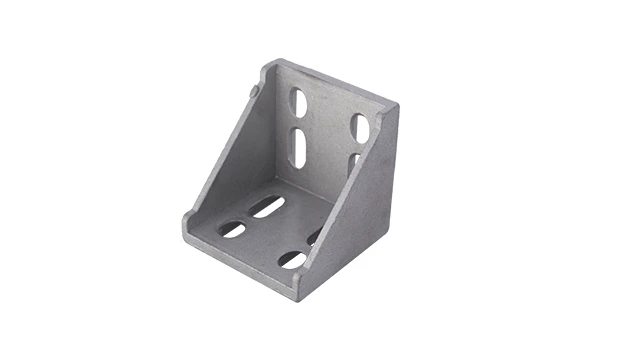
The 4040 bracket/Gusset is an external fastening method that creates a 90 degree connection. 4040 means this size is used for 40 series aluminum profile with a quick connection by bolt and nut. It is a lightweight bracket that requires no machining servic
Walk into any modern warehouse, and you'll quickly realize it's more than just a big room with boxes. It's a carefully orchestrated ecosystem where every square foot, every minute, and every piece of equipment matters. In 2025, warehouse managers aren't just juggling deadlines and inventory—they're also under pressure to do more with less, cut costs, and, increasingly, shrink their environmental footprint. The old playbook of relying on rigid, single-use steel racks that gather dust (or end up in landfills) when layouts change? It's being rewritten. Enter reusable shelving systems, and at the heart of this transformation lies a small but mighty component: the Gusset ALP 4040. Let's dive into how this unassuming piece of hardware is revolutionizing sustainable warehousing, one adjustable rack and customizable workbench at a time.
The Rise of Sustainable Warehousing: Why Reusability Matters Now More Than Ever
Sustainability in warehousing isn't just a trend—it's a business imperative. Let's start with the numbers: According to the World Economic Forum, supply chains account for over 50% of global carbon emissions, and warehouses are a significant piece of that puzzle. Governments are cracking down with stricter regulations (think carbon taxes and waste reduction mandates), while consumers are voting with their wallets, preferring brands that prioritize eco-friendly practices. But here's the kicker: sustainability doesn't have to mean sacrificing efficiency or profits. In fact, the most sustainable warehousing solutions often end up saving money in the long run.
Traditional warehousing setups have a dirty little secret: they're shockingly wasteful. Steel racks, once welded into place, become permanent fixtures. If your business grows, or your product line shifts, or you adopt a new lean system to streamline operations, those racks become obsolete. You can't easily resize them, so you either cram new items into awkward spaces (wasting time and increasing errors) or buy entirely new racks (wasting money and creating more waste). By the time a warehouse undergoes its third or fourth layout change, those old steel racks are headed for the scrapyard—if they're lucky. More often, they end up in landfills, taking decades to degrade.
Reusable systems flip this script. They're built on the idea that adaptability equals sustainability. Instead of investing in rigid infrastructure, you invest in modular components that can be taken apart, reconfigured, and repurposed as your needs change. And that's where Gusset ALP 4040 comes in. As a key accessory for aluminum extrusion profiles, it's the glue that holds these flexible systems together—literally and figuratively.
Gusset ALP 4040: The Unsung Hero of Reusable Racking
At first glance, the Gusset ALP 4040 might look like just another metal bracket. But to warehouse operators who've made the switch, it's a game-changer. Let's break down what it is and why it matters. The Gusset ALP 4040 is a type of aluminum corner code, specifically designed to connect aluminum extrusion profiles—the lightweight, durable rails that form the backbone of modern reusable racks, workbenches, and flow racks. Made from high-grade aluminum alloy, it's engineered to balance strength, weight, and longevity.
What sets the ALP 4040 apart? Its gusseted design. Unlike simple L-shaped brackets that can flex under heavy loads, the ALP 4040 features triangular reinforcement (the "gusset") that distributes weight evenly across the joint. This makes it surprisingly strong—strong enough to support heavy pallets, bulky tools, or stacks of inventory—while remaining lightweight enough for two people to assemble without heavy machinery. And because it's made of aluminum, it's resistant to rust and corrosion, even in damp warehouse environments where steel might start to degrade.
But the real magic is in its reusability. Traditional steel racks rely on welding or bolts that strip threads when removed, making them one-and-done. Plastic connectors? They crack under stress or degrade in sunlight. The ALP 4040, though? It uses T-slot connections, a simple but genius design where bolts slide into grooves in the aluminum extrusion profile and tighten securely. When you need to reconfigure your setup, just loosen the bolts, take the joint apart, and reuse it elsewhere. No welding, no drilling new holes, no wasted materials. It's the kind of flexibility that makes warehouse managers sleep easier.

How Gusset ALP 4040 Powers Lean Systems in Warehouses
If you've spent any time in operations, you've probably heard of "lean systems"—the methodology focused on eliminating waste, streamlining processes, and continuous improvement. But lean isn't just about on the wall; it's about designing systems that make efficiency inevitable. Gusset ALP 4040 and aluminum extrusion profiles are a match made in lean heaven, and here's why:
1. Waste Reduction: From Scrap Heaps to Second Lives
The biggest waste in traditional warehousing? Underutilized space and unused equipment. A lean system aims to eliminate "muda" (Japanese for waste), and rigid racks are a classic example of muda. With Gusset ALP 4040, you can adjust your racks on the fly. Need to add a shelf to accommodate taller boxes? Swap out a shorter aluminum extrusion profile for a longer one. Shifting to a new picking process that requires flow racks instead of static shelving? Disassemble the old racks and rebuild them as flow racks using the same ALP 4040 joints. No more paying to haul away perfectly good steel that just doesn't fit anymore.
2. Flexibility: Adapt to Change Without Breaking a Sweat
In today's fast-paced market, product lines change, seasonal demand spikes, and new technologies (like automation) require reconfigured workspaces. A warehouse that can't adapt gets left behind. Gusset ALP 4040 makes adaptation easy. Take workbenches, for example: A manufacturing workbench built with ALP 4040 joints can start as a simple table, then get upgraded with tool hooks, overhead shelves, or even ESD mats for electronics assembly—all without replacing the frame. When production shifts to a new product, the workbench can be disassembled and rebuilt in a new location, or repurposed as a packing station. It's the opposite of the "set it and forget it" mindset that traps so many warehouses.
3. Continuous Improvement: Small Changes, Big Results
Lean systems thrive on "kaizen," or continuous improvement—small, incremental changes that add up over time. With traditional racks, making even a tiny adjustment (like raising a shelf by 6 inches) can require hiring a welder or buying new parts. With ALP 4040, your team can experiment. Maybe the picking team suggests angling a flow rack slightly to reduce bending—grab a wrench, adjust the ALP 4040 joints, and test it out. If it works, keep it; if not, change it back. This culture of experimentation leads to smarter, more efficient processes that no top-down mandate could ever achieve.

Real-World Applications: Workbenches, Flow Racks, and Beyond
Enough theory—let's talk about how Gusset ALP 4040 actually gets used in warehouses. Two of the most common applications are workbenches and flow racks, but the possibilities are nearly endless. Let's take a closer look:
Workbenches: The Heart of Warehouse Productivity
A workbench isn't just a table—it's where orders get picked, products get assembled, and problems get solved. Traditional workbenches are often heavy, fixed, and generic. A Gusset ALP 4040 workbench, though, is a blank canvas. Imagine a shipping department where each packer has a customized workbench: One might need extra shelves for packing materials, another a lower surface to reduce back strain, and a third a fold-down extension for oversized items. With ALP 4040 joints and aluminum extrusion profiles, each workbench can be tailored to the user, boosting comfort and speed. And when the team grows? Add more workbenches using the same components, ensuring consistency across the board.
Flow Racks: Keeping Products Moving Efficiently
Flow racks are the unsung heroes of order fulfillment, using gravity to feed products from the back to the front, so pickers always have easy access. But traditional flow racks are often one-size-fits-all, with fixed angles and shelf heights. Gusset ALP 4040 changes that. By adjusting the angle of the aluminum extrusion profiles (using ALP 4040 joints), you can control how quickly products flow—slower for fragile items, faster for small parts. Need to add a new lane for a seasonal product? Just add a few more profiles and joints. The result? Reduced picking time, fewer errors, and a system that grows with your inventory.
And it's not just workbenches and flow racks. We've seen warehouses use ALP 4040 to build everything from mobile carts (add casters to the base!) to overhead storage racks, from packing stations to quality control tables. The only limit is creativity—and with a component as versatile as ALP 4040, the creativity knows no bounds.
Traditional vs. Reusable: The Numbers Speak for Themselves
Still on the fence about whether Gusset ALP 4040 and reusable systems are worth the investment? Let's crunch the numbers. Below is a comparison of traditional steel racks and ALP 4040-based reusable systems over a 10-year lifecycle—a typical span for warehouse equipment:
| Feature | Traditional Steel Racks | Gusset ALP 4040 & Aluminum Extrusion Profile Systems |
|---|---|---|
| Initial Cost | Lower upfront ($500–$800 per unit) | Higher upfront ($800–$1,200 per unit) |
| Installation Time | Longer (requires welding, 4–6 hours per unit) | Shorter (tool-free assembly, 1–2 hours per unit) |
| Reconfiguration Ability | Low (welded joints, often requires replacement) | High (T-slot connections, reusable joints) |
| Maintenance Costs | Higher (rust treatment, welding repairs: ~$200/year) | Lower (occasional bolt tightening: ~$20/year) |
| Waste Generated | High (100% of unit ends in landfill when obsolete) | Low (95% reusable; aluminum is 100% recyclable) |
| 10-Year Total Cost | ~$2,500–$3,500 (initial + replacement + maintenance) | ~$1,500–$2,000 (initial + minimal maintenance) |
The takeaway? While reusable systems cost more upfront, they pay for themselves in 3–5 years through reduced maintenance, fewer replacements, and lower waste disposal fees. And that's not even counting intangibles like faster adaptation to market changes or happier employees who aren't stuck working around rigid, inefficient setups.
Sustainability Beyond the Bottom Line: The Environmental Impact
Let's talk about the planet, too. Every time a warehouse replaces a steel rack, that old rack often ends up in a landfill. Steel is recyclable, but recycling it requires energy, and many scrap yards won't accept welded racks because they're hard to process. Aluminum extrusion profiles and Gusset ALP 4040 joints, on the other hand, are designed for circularity. Aluminum is 100% recyclable, and recycling it uses just 5% of the energy required to produce new aluminum. But here's the best part: With ALP 4040, you might not even need to recycle them. These systems are built to last 15–20 years, and when they finally do reach the end of their lifecycle, they can be melted down and turned into new profiles or joints—no waste, no guilt.
Then there's the carbon footprint of shipping. Aluminum extrusion profiles are lighter than steel, so transporting them emits less CO2. A typical steel rack weighs 50–80 lbs; an equivalent aluminum rack with ALP 4040 joints weighs 20–30 lbs. Over a full warehouse setup, that's a huge difference in fuel usage and emissions. And because ALP 4040 systems are modular, you can ship just the components you need, reducing empty space in trucks and further cutting emissions.
It's the kind of sustainability that makes a real difference. One mid-sized warehouse we worked with recently estimated that switching to ALP 4040-based systems reduced their annual carbon footprint by 12 tons—equivalent to taking 2.5 cars off the road. And when they shared that number with customers, it became a selling point, helping them win contracts with eco-conscious brands. Sustainability, it turns out, is good for both the planet and the bottom line.
Choosing the Right Supplier: What to Look For
Not all Gusset ALP 4040 joints and aluminum extrusion profiles are created equal. To get the most out of your investment, you need a supplier who understands both the technical side and your unique needs. Here are a few things to keep in mind:
- Quality Materials: Look for suppliers who use high-grade aluminum alloys (like 6063-T5, a common choice for extrusion profiles) that balance strength and durability. Avoid cheap imports with thin walls or weak joints—they'll bend under load and cost you more in the long run.
- Range of Accessories: A good supplier will offer not just ALP 4040 joints but also the full ecosystem: different lengths of aluminum extrusion profiles, casters for mobile carts, roller tracks for flow racks, and shelf boards. The more options they have, the more customized your setup can be.
- Technical Support: Even the most modular system can feel overwhelming at first. Choose a supplier who offers design help, assembly guides, and responsive customer service. You don't want to be stuck with a box of parts and no idea how to build the workbench or flow rack you need.
- Sustainability Credentials: If eco-friendliness is a priority for your business, ask about the supplier's own sustainability practices. Do they use recycled aluminum? Do they offset their manufacturing emissions? It's a small detail, but it aligns your values with your supply chain.
The Future of Warehousing: Adaptable, Efficient, and Green
As we look ahead, one thing is clear: the warehouses of tomorrow won't look like the warehouses of yesterday. They'll be smarter, more flexible, and far more sustainable. Gusset ALP 4040 might seem like a small piece of that puzzle, but small pieces have a way of adding up to big change. By making reusability easy, affordable, and efficient, it's helping warehouse operators do more than just store products—they're building systems that grow with their businesses, respect the planet, and empower their teams.
So whether you're a warehouse manager staring at a layout that no longer works, a sustainability director tasked with cutting emissions, or a business owner looking to future-proof your operations, it's time to think differently about your racks and shelving. Traditional systems were built for a world that doesn't exist anymore—a world of static demand, cheap labor, and endless landfill space. Today's world demands better, and Gusset ALP 4040 is leading the way.
At the end of the day, it's not just about brackets and profiles. It's about building a warehouse that works for you, not against you. And with Gusset ALP 4040, that future is already here.