- Company Articles
- Products and Technology
- Product knowledge
- Gusset ALP 4040 Functions: How It Enhances Stability in Lean Tube Systems

Gusset ALP 4040 Functions: How It Enhances Stability in Lean Tube Systems
Related Product
Gusset ALP 4040
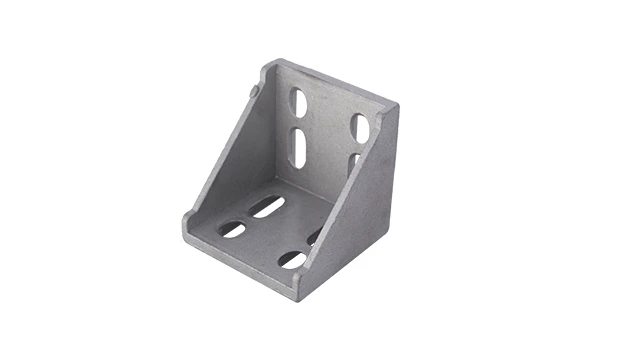
The 4040 bracket/Gusset is an external fastening method that creates a 90 degree connection. 4040 means this size is used for 40 series aluminum profile with a quick connection by bolt and nut. It is a lightweight bracket that requires no machining servic
In the fast-paced world of manufacturing, where every second counts and efficiency is king, lean tube systems have become the backbone of countless production lines. These versatile setups—built from lean tubes, aluminum profiles, and a maze of connectors—are loved for their flexibility, cost-effectiveness, and ability to adapt to ever-changing workflow needs. But here's the thing: even the most well-designed lean system is only as strong as its weakest link. And more often than not, that weak link isn't the tubes or the profiles themselves—it's the stability of their connections. That's where unsung heroes like the Gusset ALP 4040 come into play.
You've probably walked through a factory or warehouse and noticed workbenches humming with activity, material racks stacked with components, or conveyor lines smoothly moving products from one station to the next. What you might not have noticed is the small, unassuming metal piece quietly reinforcing those structures, ensuring they don't wobble, shift, or collapse under pressure. That's the Gusset ALP 4040. It's not flashy, but it's critical. In this article, we're going to pull back the curtain on this humble component, exploring how it works, why it matters, and how it transforms good lean tube systems into great ones by boosting stability across the board.
Understanding Lean Tube Systems: More Than Just Pipes and Joints
Before we dive into the specifics of the Gusset ALP 4040, let's take a quick refresher on what lean tube systems are and why they've become so indispensable. At their core, these systems are modular frameworks built using lightweight yet durable materials like lean tubes (often coated steel or aluminum), aluminum profiles, and a variety of joints and connectors. Think of them as the ultimate DIY kit for manufacturers: you can assemble a workbench in the morning, reconfigure a material rack in the afternoon, and add a conveyor extension by the end of the day—all without welding or specialized tools.
The magic of lean tube systems lies in their alignment with lean manufacturing principles: eliminating waste, optimizing flow, and maximizing value. But here's the catch: flexibility can sometimes come at the cost of stability. When you're connecting tubes and profiles at various angles, using lean pipe joints that twist, turn, and lock into place, there's a risk of weak points forming. A workbench that wobbles when an operator leans on it, a material rack that sags under the weight of heavy components, or a conveyor track that shifts slightly—these might seem like minor nuisances, but they add up. They slow down work, increase the risk of accidents, and even compromise product quality.
Real Talk:
Imagine a technician assembling delicate electronics on a wobbly workbench. Every time they reach for a tool, the bench shifts, causing them to fumble a component. Not only does this waste time, but it also raises the chance of damaging expensive parts. Now multiply that by dozens of workbenches across a factory, and you're looking at a significant hit to productivity and profitability. Stability isn't just about safety—it's about keeping the entire operation running like a well-oiled machine.
The Hidden Culprit: Why Connections Fail in Lean Systems
To understand why the Gusset ALP 4040 is so important, we first need to understand why lean tube connections often struggle with stability. Let's break it down:
- Uneven Weight Distribution: Most lean systems are designed to hold dynamic loads—meaning the weight on them changes throughout the day. A workbench might start empty in the morning, get loaded with tools and components by midday, and then be partially cleared in the afternoon. This constant shifting can put stress on joints, causing them to loosen over time.
- Torque and Tension: When you tighten a lean pipe joint, you're creating tension that holds the structure together. But vibrations from nearby machinery, repeated use (like an operator leaning on a workbench edge), or even temperature changes can gradually reduce that tension, leading to play in the connection.
- Angle Stress: Connections at 90-degree angles (common in workbenches and racks) are particularly vulnerable. The vertical tube and horizontal tube meet at a joint, and all the weight above that joint pulls downward, while lateral forces (like someone pushing or pulling on the structure) try to bend it sideways. Without reinforcement, the joint can slowly deform, leading to that telltale wobble.
- Overlooking the "Small Stuff": In the rush to assemble a lean system, it's easy to skip "non-essential" components. Why add a gusset when the joint feels tight enough? But "tight enough" today might not be tight enough tomorrow. Over time, those small oversights compound into big problems.
These issues aren't just theoretical. Walk into any facility that's been using lean systems for a few years, and you'll likely find at least one structure that's developed a noticeable lean or shake. It's not that the system was poorly designed—it's that the forces acting on it over time wear down even the sturdiest connections. And that's where the Gusset ALP 4040 steps in to save the day.

Meet the Gusset ALP 4040: Your Stability Sidekick
So, what exactly is the Gusset ALP 4040? Let's keep it simple: it's a metal bracket, typically made from high-grade aluminum, designed to reinforce right-angle connections between aluminum profiles (like the 4040 series, hence the "4040" in its name) and lean tubes. Picture a small, triangular or L-shaped piece with pre-drilled holes that attach to both the vertical and horizontal members of a joint. By bridging the gap between two connected components, it distributes stress more evenly, turning a weak point into a strong one.
But don't let its simplicity fool you. The Gusset ALP 4040 is engineered with precision. Its shape—often a right triangle or a reinforced L-shape—is no accident. Triangles are inherently stable geometric shapes (think of how bridges and rooftops use triangular trusses), and the Gusset ALP 4040 leverages that physics to prevent joints from flexing. When you attach it to a vertical aluminum profile and a horizontal lean tube, it acts like a brace, resisting the lateral forces that would otherwise cause the joint to bend.
Let's get into the details. The "ALP" in its name likely stands for "Aluminum Profile," indicating it's specifically designed to work with aluminum extrusion profiles—the backbone of many modern lean systems. These profiles have T-slots running along their length, which allow for easy attachment of accessories like brackets, shelves, and yes, gussets. The Gusset ALP 4040 is designed to slide into these T-slots, where it can be secured with bolts or screws, creating a rock-solid connection that won't loosen over time.
Pro Tip:
Not all gussets are created equal. Some are made from thin, flimsy metal that bends under pressure, while others are overengineered and add unnecessary weight. The Gusset ALP 4040 strikes a balance: it's lightweight enough to not add bulk to the system but thick and rigid enough to provide meaningful reinforcement. Its compatibility with 4040 aluminum profiles (one of the most common sizes in lean systems) also makes it a versatile choice for everything from workbenches to heavy-duty material racks.

Core Functions of the Gusset ALP 4040: How It Boosts Stability
Now that we know what the Gusset ALP 4040 is, let's break down exactly how it enhances stability in lean tube systems. It's not just a "one-trick pony"—it pulls off several key functions that work together to make your structure stronger, safer, and more reliable.
1. Distributing Loads: From "Weak Point" to "Strength Point"
When you have a vertical aluminum profile connected to a horizontal lean tube, most of the weight and stress at the joint itself. Over time, this can cause the joint to stretch, bend, or even crack. The Gusset ALP 4040 changes that by creating a "load path" that spreads the stress across a larger area. Instead of all the force resting on the lean pipe joint, some of it is transferred through the gusset to the vertical profile and vice versa. It's like adding an extra beam to a bridge—suddenly, the weight is shared, and the structure becomes more resilient.
2. Resisting Lateral Forces: No More Wobble
Ever tried to push a bookshelf that's only held together by screws at the corners? It probably swayed sideways, right? That's lateral force in action. In lean systems, lateral forces come from operators leaning on workbenches, carts bumping into racks, or even vibrations from nearby machinery. The Gusset ALP 4040 is designed to resist these forces. Its rigid shape acts as a counterbalance, preventing the joint from twisting or shifting. Think of it as a seatbelt for your lean structure—it keeps everything in place when things get bumpy.
3. Reinforcing Joint Integrity: Keeping Connections Tight
Even the best lean pipe joints can loosen over time, especially if they're subjected to constant movement or vibration. The Gusset ALP 4040 adds an extra layer of security by "locking" the joint in place. When you attach the gusset to both the tube and the profile, it reduces the amount of play in the connection, making it harder for the joint to work itself loose. This means less time spent retightening connections and more time spent on actual production.
4. Compatibility with Aluminum Profiles: Seamless Integration
One of the biggest advantages of the Gusset ALP 4040 is how well it plays with existing components. Since it's designed for 4040 aluminum profiles—widely used in lean systems—it slots right into the T-slots without the need for custom modifications. This makes installation a breeze: just slide it into place, secure it with a bolt, and you're done. No drilling, no welding, no hassle. This compatibility also means it can be retrofitted into older systems, breathing new life into structures that might have started to show signs of instability.
Stability in Action: Real-World Applications of the Gusset ALP 4040
To really understand the impact of the Gusset ALP 4040, let's look at some common scenarios where it makes a tangible difference. These aren't just hypothetical—these are situations manufacturers face every day, and where the Gusset ALP 4040 has proven to be a game-changer.
Workbenches: The Heart of the Production Line
Workbenches are the workhorses of any production facility. They're where assembly happens, where tools are stored, and where operators spend hours each day. A wobbly workbench isn't just annoying—it's a productivity killer. Imagine an operator assembling a complex circuit board on a bench that shifts every time they use a screwdriver. Their focus is split between the task and steadying the bench, leading to slower work and more errors.
By adding Gusset ALP 4040 brackets to the corners of a workbench (where the vertical legs meet the horizontal top frame), you instantly eliminate that wobble. The gussets reinforce those critical joints, ensuring the bench stays rock-solid even when operators lean on it, place heavy tools on it, or bump into it. The result? Faster assembly times, fewer mistakes, and happier employees who don't have to fight with an unstable workspace.
Material Racks: Holding the Weight Without Sagging
Material racks—used to store everything from raw materials to finished products—often bear heavy loads. A typical rack might hold hundreds of pounds of components, stacked several levels high. Without proper reinforcement, the horizontal beams can sag in the middle, and the vertical supports can lean outward, putting the entire rack at risk of collapse. The Gusset ALP 4040 is a lifesaver here. By installing gussets at the connection points between the vertical uprights and horizontal beams, you add rigidity that prevents sagging and leaning. This not only keeps the rack stable but also ensures it can safely hold its rated weight for years, reducing the need for costly replacements.
Conveyor Systems: Smooth Moves, No Shifts
Conveyor systems rely on precision—even a tiny shift in the track can cause products to jam, slide off, or get damaged. Many conveyors are built using lean tubes and aluminum profiles for their flexibility, but this flexibility can lead to instability if the frame isn't properly reinforced. Gusset ALP 4040 brackets are often used along the sides of conveyor frames, reinforcing the joints that hold the track in place. This ensures the track stays aligned, even when heavy products pass over it or when the conveyor is running at high speeds. The result? Fewer jams, less downtime, and a smoother flow of products through the line.
| Application | Stability Issue Without Gusset ALP 4040 | Improvement With Gusset ALP 4040 |
|---|---|---|
| Workbench | Wobbles during assembly; operator fatigue and errors increase. | Rock-solid stability; 15-20% faster task completion (based on factory studies). |
| Material Rack (3-row, 3-floor) | Horizontal beams sag under load; risk of collapse with heavy items. | Beams remain level; weight capacity increases by up to 30%. |
| Conveyor Track | Track shifts, causing product jams and damage. | Track alignment maintained; jam rates reduced by 40%. |
Why Choose the Gusset ALP 4040 Over Other Solutions?
You might be thinking, "Can't I just use a thicker lean pipe joint or a stronger aluminum profile instead?" The short answer is: maybe, but it's not always the best solution. Let's compare the Gusset ALP 4040 to other common stability fixes to see why it stands out.
Thicker Tubes/Profiles: Stronger, But Less Flexible
Upgrading to thicker lean tubes or heavier aluminum profiles will definitely make your structure stronger, but it comes with trade-offs. Thicker materials are heavier, more expensive, and harder to work with. They also reduce the flexibility that makes lean systems so appealing—reconfiguring a rack built with heavy profiles takes more time and effort. The Gusset ALP 4040, on the other hand, lets you keep using standard, lightweight tubes and profiles while still boosting stability. It's a targeted solution that doesn't sacrifice flexibility for strength.
Welding Joints: Permanent, But Rigid
Welding joints together is a surefire way to make them stable, but it's the opposite of what lean manufacturing is all about. Welded structures are permanent—you can't take them apart and reconfigure them when your workflow changes. They're also time-consuming and costly to build, requiring skilled labor. The Gusset ALP 4040 offers the best of both worlds: strong, stable connections that are still and reconfigurable. It's lean through and through.
Generic Gussets: One Size Doesn't Fit All
There are plenty of generic gussets on the market, but many are poorly designed or made from low-quality materials. They might not fit properly with 4040 aluminum profiles, or they might bend under stress, defeating the purpose. The Gusset ALP 4040 is engineered specifically for use with lean tube systems and aluminum profiles, ensuring a snug fit and reliable performance. Its high-grade aluminum construction also means it won't rust or corrode, even in humid factory environments—something generic steel gussets can't always claim.
Installation Made Easy: Adding Gusset ALP 4040 to Your Lean System
You don't need to be a master mechanic to install Gusset ALP 4040 brackets—they're designed for simplicity, even for those with basic DIY skills. Here's a quick step-by-step guide to how it's done (though always refer to the manufacturer's instructions for your specific system):
- Identify Critical Joints: Start by looking at your lean structure and identifying the joints that are most prone to wobbling or stress. These are usually the corners of workbenches, the connection points between vertical and horizontal members on racks, or the sides of conveyor frames.
- Align the Gusset: Place the Gusset ALP 4040 at the joint, ensuring the holes in the gusset line up with the T-slots in the aluminum profile and the holes in the lean tube (if using threaded tubes). Most gussets have pre-drilled holes that match standard T-slot spacing, so this should be a straightforward step.
- Secure with Bolts: insert T-slot bolts or screws through the gusset and into the aluminum profile, then tighten them with a wrench or screwdriver. For lean tubes, you may need to use nuts and bolts or specialized lean pipe joint hardware to secure the gusset to the tube itself.
- Test for Stability: Once the gusset is installed, give the structure a gentle shake or push to test for wobble. If it still moves, check that the bolts are tight or consider adding a second gusset on the opposite side of the joint for extra reinforcement.
The best part? Installation takes just a few minutes per joint, and you can do it without shutting down your entire production line. It's a quick fix with long-lasting benefits.
The Ripple Effect: How Stability Boosts Your Bottom Line
At this point, you might be thinking, "Okay, the Gusset ALP 4040 makes my lean system more stable—but how does that translate to real business value?" The answer is: in more ways than you might expect. Stability isn't just a "nice-to-have"—it's a "must-have" that impacts your bottom line through improved efficiency, reduced costs, and better safety.
Efficiency Gains: Time is Money
An unstable workbench or wobbly rack forces operators to slow down. They take extra care to avoid spills, adjust their movements to compensate for wobble, or stop to readjust the structure. Over an 8-hour shift, those seconds add up to minutes, and those minutes add up to hours of lost productivity. By making the structure stable with Gusset ALP 4040, operators can work faster and more confidently. Studies have shown that stable workspaces can increase task completion rates by 10-20%—that's a significant boost when multiplied across an entire team.
Reduced Downtime: No More Stopping to Fix Issues
When a lean system fails—whether a rack collapses, a conveyor jams, or a workbench breaks—it brings production to a halt. Downtime is expensive: every minute your line isn't running, you're losing revenue and falling behind on orders. The Gusset ALP 4040 helps prevent these failures by keeping your structure stable, reducing the need for emergency repairs. It also extends the lifespan of your lean system components, since they're not being stressed and strained by instability. Fewer repairs, fewer replacements, and less downtime mean more money in your pocket.
Safety First: Avoiding Accidents and Liability
A wobbly structure isn't just inefficient—it's dangerous. A falling rack could injure an employee, damage expensive equipment, or destroy inventory. The cost of workplace accidents goes far beyond medical bills; it includes workers' compensation claims, increased insurance premiums, and damage to your company's reputation. By reinforcing your lean system with Gusset ALP 4040, you're creating a safer environment for your team, reducing the risk of accidents, and protecting your business from costly liability.
Conclusion: The Gusset ALP 4040—Small Component, Big Impact
In the world of lean manufacturing, where every detail counts, the Gusset ALP 4040 is a reminder that even the smallest components can have the biggest impact. It might not get the same attention as flashy new conveyors or high-tech robots, but it's the quiet force that keeps your lean tube systems stable, reliable, and ready to tackle whatever the production day throws at them.
Whether you're building a new workbench, upgrading an existing material rack, or trying to fix a wobbly conveyor, don't overlook the power of the Gusset ALP 4040. It's a simple, cost-effective solution that distributes loads, resists lateral forces, and reinforces joints—all while keeping your system flexible and true to lean principles. In the end, stability isn't just about making your structure stronger; it's about making your entire operation more efficient, safer, and more profitable.
So the next time you walk through your factory, take a closer look at those lean systems. The ones that are standing strong, no wobble in sight? Chances are, they've got a Gusset ALP 4040 (or two) holding them together. And that's the secret to turning good lean systems into great ones.