- Company Articles
- Products and Technology
- Product knowledge
- Gusset ALP 4040 in Conveyor Systems: Supporting Modular and Flexible Production

Gusset ALP 4040 in Conveyor Systems: Supporting Modular and Flexible Production
Related Product
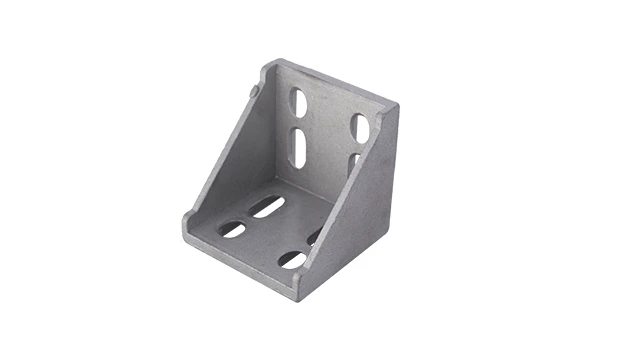
Gusset ALP 4040
The 4040 bracket/Gusset is an external fastening method that creates a 90 degree connection. 4040 means this size is used for 40 series aluminum profile with a quick connection by bolt and nut. It is a lightweight bracket that requires no machining servic
Walk into any modern manufacturing facility, and you'll notice a quiet revolution unfolding. The rigid, one-size-fits-all production lines of the past are giving way to dynamic, adaptable setups that can pivot with changing demand, new product launches, or even sudden shifts in market trends. At the heart of this transformation lies the humble conveyor system—but not just any conveyor. Today's most efficient operations rely on modular conveyor systems, built to evolve alongside the business. And if modular conveyors are the backbone of flexible production, then components like the Gusset ALP 4040 are the unsung heroes holding it all together.
In this article, we'll explore how Gusset ALP 4040, a seemingly simple accessory, plays a critical role in making conveyor systems more modular, durable, and responsive. We'll dive into its design, its synergy with aluminum profiles and roller tracks, and why it's become a staple for manufacturers embracing lean systems. Whether you're a plant manager looking to upgrade your line or a curious observer of manufacturing trends, understanding the impact of components like Gusset ALP 4040 helps demystify the future of production.
What Is Gusset ALP 4040, Anyway?
Let's start with the basics. Gusset ALP 4040 is a specialized accessory designed for use with aluminum profiles—specifically, the 40x40mm aluminum profile, a workhorse in modular manufacturing setups. Think of it as a "strengthening bracket" with a purpose: to reinforce the joints where aluminum profiles meet, adding rigidity and stability to structures like conveyor frames, workbenches, or material racks. Made from lightweight yet durable aluminum, it's engineered to fit seamlessly into the T-slot grooves of 4040 aluminum profiles, requiring no welding or complex tools to install.
But why does this matter? In modular systems, connections between components are everything. A loose joint or a wobbly frame can throw off an entire conveyor line, leading to jams, slowdowns, or even damage to materials. Gusset ALP 4040 addresses this by distributing stress evenly across the joint, turning a simple "corner" into a robust, load-bearing connection. It's the difference between a structure that holds up under daily use and one that starts to sag or shift after a few months.
The Role of Gusset ALP 4040 in Conveyor Systems
Conveyor systems are the circulatory system of manufacturing—they move parts, components, and finished goods from one station to the next, keeping production flowing. But to be truly flexible, these systems need to do more than just "move stuff." They need to be reconfigurable. Maybe you need to add a 90-degree turn to route materials to a new assembly station. Or perhaps you need to extend the line by 10 feet to accommodate a larger batch size. In these scenarios, the conveyor's frame—often built from aluminum profiles—must be easy to adjust and rock-solid once adjusted. That's where Gusset ALP 4040 shines.
Stability for Roller Tracks
Most modular conveyors use roller tracks to slide or roll items along the line. These tracks are typically mounted onto a frame made of aluminum profiles. Now, imagine a roller track carrying heavy components—say, automotive parts or large electronics. Over time, the weight and constant motion can put stress on the frame, especially at the joints where the aluminum profiles meet. Without reinforcement, these joints might flex, causing the roller track to tilt or misalign. The result? Parts get stuck, operators waste time fixing jams, and productivity takes a hit.
Gusset ALP 4040 prevents this by stiffening the frame at critical points. For example, where a vertical aluminum profile meets a horizontal one (like the legs of the conveyor frame meeting the side rails), adding a Gusset ALP 4040 creates a triangular support structure—a shape known for its inherent stability. This not only keeps the roller track level but also ensures smooth, consistent movement of materials, even under heavy loads. It's a small addition that eliminates a host of potential headaches.
Speed and Ease of Reconfiguration
One of the biggest advantages of modular systems is their ability to be reconfigured quickly. Traditional conveyor systems, built with welded steel frames, require cutting, welding, and repainting to modify—processes that can take days and disrupt production. Modular systems, by contrast, use aluminum profiles and accessories like Gusset ALP 4040 to allow "click-and-go" adjustments.
Here's how it works: When you need to reconfigure a conveyor, you loosen the bolts holding the aluminum profiles together, adjust the frame to the new layout, and then retighten. But without a gusset, those joints might not hold as tightly after being moved repeatedly. Gusset ALP 4040 solves this by acting as a "permanent" reinforcement that stays in place even as the frame is adjusted. It ensures that every time you reconfigure, the joint remains strong and stable, so you don't have to sacrifice durability for flexibility.

Synergy with Aluminum Profiles and Roller Tracks
To truly appreciate Gusset ALP 4040, it helps to understand its partners in crime: aluminum profiles and roller tracks. Let's break down how these three components work together to create a modular conveyor system.
Aluminum Profiles: The "Building Blocks"
Aluminum profiles—like the 4040, 3030, or 2020 series—are the backbone of modular systems. Their T-slot design allows accessories (including Gusset ALP 4040) to be attached anywhere along the length of the profile, using bolts or brackets that slide into the slots. This means you're not limited to pre-drilled holes or fixed positions; you can customize the frame to fit your exact needs.
4040 aluminum profiles are particularly popular for conveyor frames because they strike a balance between strength and weight. They can support heavy roller tracks and materials without adding unnecessary bulk, making the entire system easier to move or reconfigure. And since they're made of aluminum, they resist corrosion—ideal for factories where moisture or chemicals might be present.
Roller Tracks: The "Movement Makers"
Roller tracks are the surfaces that actually move materials along the conveyor. They consist of a series of rollers mounted on a frame, allowing items to glide smoothly from one point to another. In modular systems, roller tracks are often mounted directly onto aluminum profile frames. For example, a plastic roller track guide rail (yellow or grey, depending on the application) might be bolted to the top of a 4040 aluminum profile, creating a "lane" for materials to flow.
The problem? Roller tracks generate forces as materials move over them—vibrations, lateral stress, and downward pressure. Without a stable frame, these forces can cause the track to shift, leading to misalignment. That's where Gusset ALP 4040 comes in: by reinforcing the frame's joints, it ensures the roller track stays level and secure, even when handling heavy or irregularly shaped items.
Gusset ALP 4040: The "Glue" That Holds It All Together
Think of it this way: Aluminum profiles are the "bones" of the conveyor frame, roller tracks are the "muscles" that move materials, and Gusset ALP 4040 is the "ligament" that keeps the bones connected strongly. When you mount a roller track onto a 4040 aluminum profile frame, every turn, every joint, and every support leg is a potential weak point. Gusset ALP 4040(strengthens these points), turning a basic frame into a structure that can handle the daily grind of manufacturing.
| Feature | Gusset ALP 4040 | Standard Steel Gusset | Plastic Corner Bracket |
|---|---|---|---|
| Material | Aluminum | Steel | Plastic |
| Weight (per unit) | ~150g | ~400g | ~80g |
| Load Capacity | High (up to 500kg per joint) | Very High (up to 800kg per joint) | Low (up to 100kg per joint) |
| Corrosion Resistance | High (aluminum oxide layer) | Low (prone to rust without coating) | High (but prone to UV damage) |
| Installation | Tool-free (slides into T-slot, secured with bolts) | Requires welding or drilling | Snaps into place (but may loosen over time) |
| Best For | Modular conveyor frames, workbenches, material racks | Permanent, heavy-duty structures | Light-duty, temporary setups |
The table above highlights why Gusset ALP 4040 stands out. It offers the best of both worlds: the strength to handle industrial loads, the light weight to keep systems mobile, and the ease of installation to support quick reconfigurations. Unlike steel gussets, it won't weigh down the frame or require specialized tools. And unlike plastic brackets, it won't crack under stress or degrade in harsh factory environments.

Why Lean Systems Love Gusset ALP 4040
Lean systems—manufacturing approaches focused on minimizing waste and maximizing efficiency—thrive on flexibility. A lean production line should be able to adapt to changes without creating bottlenecks or excess inventory. Modular conveyor systems are a natural fit for lean, but they need components that align with lean principles: easy to adjust, durable enough to last, and cost-effective to maintain. Gusset ALP 4040 checks all these boxes.
Reducing Downtime During Reconfigurations
In lean manufacturing, downtime is the enemy. Every minute a line is idle translates to lost productivity and missed opportunities. Traditional conveyor systems, with their welded frames, can take hours or even days to reconfigure. Modular systems with Gusset ALP 4040? They can be adjusted in minutes. Need to add a new section to the conveyor? Loosen the bolts, slide the aluminum profiles into place, attach the Gusset ALP 4040 to reinforce the joints, and you're back up and running. This speed is a game-changer for lean teams, who often need to pivot quickly to address process improvements or customer demands.
Minimizing Waste in Materials and Labor
Lean systems also emphasize reducing waste in materials and labor. Gusset ALP 4040 supports this by being reusable. Unlike welded steel brackets, which are destroyed if you need to disassemble a frame, Gusset ALP 4040 can be removed and reused on another project. This cuts down on material waste, as you don't need to buy new brackets every time you reconfigure. It also reduces labor costs: since installation requires no welding or specialized skills, your existing maintenance team can handle adjustments, rather than hiring outside contractors.
Supporting Continuous Improvement
Continuous improvement—Kaizen, in lean terms—is about making small, incremental changes to improve efficiency over time. For example, a team might notice that a conveyor's roller track is causing bottlenecks at a certain workstation. With a modular system using Gusset ALP 4040, they can test a new layout in a matter of hours: reposition the aluminum profiles, adjust the roller track, and reinforce the joints with gussets. If the change works, they keep it; if not, they revert back—all without disrupting the entire line for days. This ability to experiment and adapt is what makes lean systems so powerful, and Gusset ALP 4040 makes those experiments possible.
Real-World Applications: How Gusset ALP 4040 Makes a Difference
Let's put this all into context with a real-world example. Imagine a mid-sized electronics manufacturer that produces smartphone components. Their assembly line includes a conveyor system that moves circuit boards from the soldering station to the testing station. The line is built using 4040 aluminum profiles, plastic roller track guide rails (grey, to match their factory's color scheme), and a few workbenches where operators inspect the boards.
One day, the manufacturer lands a new client who needs a larger circuit board—too wide for the existing conveyor's roller track. The production team needs to widen the conveyor by 10cm to accommodate the new boards. With a traditional welded steel frame, this would mean shutting down the line for a week, cutting the old frame, welding new sections, and repainting. But with their modular system, they do the following:
- Loosen the bolts holding the existing aluminum profiles together.
- Add extension pieces to widen the frame, using new 4040 aluminum profiles.
- Attach Gusset ALP 4040 to the new joints, reinforcing the widened frame.
- Mount a wider plastic roller track guide rail onto the extended frame.
- Test the new setup —all in under 4 hours.
The line is back up and running the same day, with zero downtime for the rest of the week. The new circuit boards flow smoothly, and the client is happy. This scenario isn't hypothetical—it's happening in factories around the world, thanks to components like Gusset ALP 4040.
Another example: a food packaging plant that uses conveyor systems to move boxes of products to shipping. They need to add a 180-degree turn to route boxes to a new labeling station. Using aluminum profiles and Gusset ALP 4040, they build a curved frame, mount roller tracks on it, and reinforce the joints with gussets. The turn is stable, the boxes don't jam, and the entire project costs a fraction of what a custom steel frame would have.
Choosing the Right Components: Why Gusset ALP 4040 Isn't Just Another Bracket
With so many accessories on the market—from basic corner brackets to heavy-duty steel gussets—why should manufacturers choose Gusset ALP 4040? The answer lies in its balance of strength, flexibility, and cost-effectiveness. Here are a few key reasons:
It's Built for Modularity
Gusset ALP 4040 is designed specifically for 4040 aluminum profiles, which are the most common size in modular systems. This means it works seamlessly with other aluminum profile accessories—like T-slot bolts, end caps, or pipe clamps—so you don't have to worry about compatibility issues. Whether you're building a conveyor, a workbench, or a material rack, you can mix and match components without second-guessing.
It's Lightweight but Strong
Aluminum is lighter than steel, which makes the entire conveyor system easier to move or reconfigure. But don't let the weight fool you: Gusset ALP 4040 is engineered to handle heavy loads. Tests show it can support up to 500kg per joint, which is more than enough for most industrial conveyor applications. This combination of light weight and high strength is a rare find in bracket design.
It's Cost-Effective in the Long Run
While Gusset ALP 4040 might cost slightly more than a basic plastic bracket upfront, its durability and reusability make it cheaper over time. A plastic bracket might crack after a year of use, requiring replacement. A steel gusset might rust in a humid factory, leading to costly repairs. Gusset ALP 4040, with its corrosion-resistant aluminum construction, lasts for years—even in tough environments. And since it can be reused, you'll save money on new components when you reconfigure your line.
The Future of Conveyor Systems: More Modular, More Connected, More Gusset ALP 4040
As manufacturing continues to evolve—with trends like Industry 4.0, smart factories, and mass customization—modular conveyor systems will only grow in importance. These systems will need to connect with sensors, robots, and AI-driven software to optimize material flow in real time. But none of that matters if the physical infrastructure— the frames, the tracks, the joints—can't keep up.
Gusset ALP 4040 is poised to play a key role in this future. As conveyor systems become more complex—with curved tracks, variable speeds, and integration with automated guided vehicles (AGVs)—the need for strong, flexible joints will only increase. Gusset ALP 4040 provides that strength without sacrificing the modularity that makes these systems adaptable. It's a small component, but it's part of a larger shift toward manufacturing systems that are as dynamic as the markets they serve.
Final Thoughts: The Power of Small Components in Big Systems
In the grand scheme of manufacturing, Gusset ALP 4040 might seem insignificant. It's not a flashy robot or a high-tech sensor. But as we've explored, it's a critical piece of the puzzle that makes modular, flexible conveyor systems possible. It's the difference between a production line that struggles to adapt and one that thrives on change.
For manufacturers looking to stay competitive, investing in components like Gusset ALP 4040 isn't just about upgrading a conveyor—it's about future-proofing their operations. In a world where customer demands change overnight and new technologies emerge daily, flexibility isn't a luxury; it's a necessity. And with Gusset ALP 4040 holding things together, that flexibility becomes achievable, affordable, and sustainable.
So the next time you walk through a factory and see a conveyor system gliding smoothly, take a closer look at the joints where the aluminum profiles meet. Chances are, there's a Gusset ALP 4040 there—quietly doing its job, supporting the future of manufacturing, one strong joint at a time.