- Company Articles
- Products and Technology
- Product knowledge
- Gusset ALP 4040 Technical Manual: Essential Reading for Engineers and Purchasers

Gusset ALP 4040 Technical Manual: Essential Reading for Engineers and Purchasers
Related Product
Gusset ALP 4040
The 4040 bracket/Gusset is an external fastening method that creates a 90 degree connection. 4040 means this size is used for 40 series aluminum profile with a quick connection by bolt and nut. It is a lightweight bracket that requires no machining servic
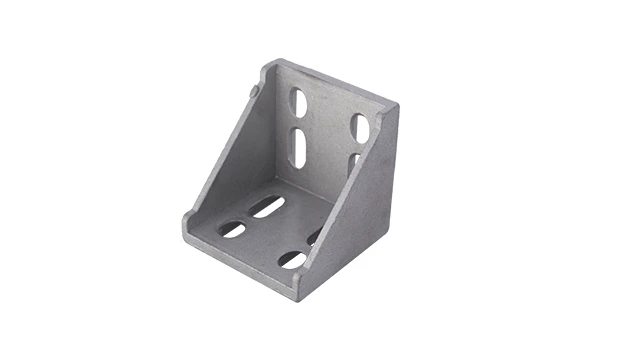
In the world of manufacturing and facility design, every component counts. For engineers tasked with building robust workbenches, material racks, or conveyor systems, and for purchasers sourcing reliable parts that balance quality and cost, the details matter most. Today, we're diving deep into a yet critical component: the Gusset ALP 4040. This small but mighty accessory is the unsung hero of stable, durable aluminum profile structures—from lean system workstations to heavy-duty material racks. By the end of this guide, you'll understand why it's non-negotiable for your next project, how to choose the right one, and where to source it for long-term success.
What Is Gusset ALP 4040, and Why Does It Matter?
Let's start with the basics. If you've worked with aluminum extrusion profiles—those versatile, T-slot frames that form the backbone of modern workbenches, production lines, and storage systems—you know that their strength lies in how they're connected. Aluminum profiles like the 4040 EU standard aluminum profile are lightweight yet rigid, but without the right reinforcements, joints can wobble, bend, or even fail under stress. That's where the Gusset ALP 4040 comes in.
Gusset ALP 4040 is a specialized aluminum profile accessory designed to reinforce 90-degree joints between 4040 aluminum profiles. Think of it as a "strengthening bracket" that fits snugly at the corner where two profiles meet, distributing weight evenly and preventing lateral movement. Made from high-grade aluminum alloy, it's engineered to complement the 4040 profile's dimensions—40mm x 40mm, the most common size for medium to heavy-duty applications. Whether you're building a workbench E (single deck-without caster) for assembly line workers or a material rack B (3 row and 3 floor) for storing heavy components, this gusset ensures the structure stays stable, even with daily wear and tear.
But why focus on this specific gusset? Because not all aluminum profile accessories are created equal. Cheap, generic corner brackets might save a few dollars upfront, but they often lack precision. A poorly fitting gusset can leave gaps between profiles, leading to vibration, noise, and reduced load capacity over time. The Gusset ALP 4040, by contrast, is machined to tight tolerances, ensuring a seamless fit with 4040 profiles. It's the difference between a workbench that sways when you lean on it and one that feels solid as a rock—even after years of use.
Key Features of Gusset ALP 4040: Engineering Excellence in Every Detail
To truly appreciate the Gusset ALP 4040, let's break down its design and materials. Engineers and purchasers alike need to know what sets it apart from run-of-the-mill aluminum profile accessories. Here's what makes it a standout choice:
1. High-Strength Aluminum Alloy Construction
The Gusset ALP 4040 is crafted from 6063-T5 aluminum alloy, a material prized in the industry for its excellent balance of strength, corrosion resistance, and machinability. This isn't just any aluminum—it's heat-treated to enhance hardness, ensuring the gusset can withstand heavy loads without deforming. For context, 6063-T5 has a tensile strength of around 180 MPa, which means it can handle significant stress before stretching or breaking. When paired with a 4040 aluminum extrusion profile of similar material, the result is a joint that can support hundreds of kilograms—critical for applications like industrial workbenches or multi-level material racks.
2. Precision Machining for a Perfect Fit
Ever tried assembling furniture with misaligned holes? Frustrating, right? The same applies to aluminum profiles. The Gusset ALP 4040 is drilled and tapped with precision to match the T-slot spacing of 4040 EU standard aluminum profiles. Most 4040 profiles have T-slots with a 20mm pitch (the distance between slot centers), and the gusset's mounting holes align exactly with this pattern. This means no guesswork during installation—just slide in the T-bolts, tighten the nuts, and you're done. No gaps, no wiggling, no need to drill extra holes in your expensive profiles.
3. Corrosion Resistance for Longevity
Manufacturing environments can be tough. From oily workshops to humid warehouses, aluminum components are exposed to all kinds of elements that cause rust or degradation. The Gusset ALP 4040 addresses this with a clear anodized finish. Anodizing creates a protective oxide layer on the aluminum surface, making it resistant to corrosion, scratches, and even mild chemicals. Unlike painted brackets that chip over time, this finish is integral to the material, ensuring the gusset stays looking and performing like new for years—even in harsh conditions. For purchasers, this translates to lower replacement costs and less downtime for maintenance.
4. Versatile Load Capacity
Not all projects have the same needs. A light-duty assembly workbench might only need to support a few tools, while a material rack B (3 row and 3 floor) could hold hundreds of kilograms of parts. The Gusset ALP 4040 is designed to scale with these demands. In testing, a single gusset can typically support vertical loads of up to 500 kg when properly installed with M8 T-bolts and nuts. For heavier applications, engineers can double up—using two gussets per joint (one on each side of the profile) to boost capacity even further. This flexibility makes it a go-to choice for everything from small workbenches to large-scale production line structures.
5. ESD Compatibility (Optional)
In electronics manufacturing, static electricity is a silent killer. A single electrostatic discharge can damage sensitive components like circuit boards or semiconductors. That's why many facilities require ESD-safe workbenches and equipment. Some variants of the Gusset ALP 4040 are available with an ESD coating, which dissipates static charges to ground, protecting both products and workers. If your project involves ESD workstations or ESD workbenches, look for this option—it's a small detail that can save you from costly product defects down the line.

Applications: Where Gusset ALP 4040 Shines in Real-World Scenarios
The best way to understand the value of the Gusset ALP 4040 is to see it in action. Let's walk through common applications where this accessory plays a starring role—from factory floors to cleanrooms.
Industrial Workbenches: Stability for Precision Tasks
Imagine an assembly line worker installing tiny electronics components on a circuit board. If their workbench wobbles even slightly, they might misalign a part, leading to rework or scrap. Workbench E (single deck-without caster) is a popular choice for such tasks, but its stability depends entirely on how its aluminum profiles are joined. By adding Gusset ALP 4040 brackets at the corners, engineers ensure the workbench top stays flat and steady, even when the worker leans in or uses tools that generate vibration. This isn't just about comfort—it's about quality control. A stable workbench reduces errors, speeds up production, and keeps workers safer by minimizing the risk of tools slipping.
Material Racks and Storage Systems: Supporting Heavy Loads Safely
Material rack B (3 row and 3 floor) is a workhorse in warehouses, holding everything from raw materials to finished products. Each shelf might carry boxes weighing 20 kg or more, and over time, that weight adds up. Without proper reinforcement, the vertical and horizontal profiles of the rack can bow, causing shelves to sag or even collapse. The Gusset ALP 4040 distributes this weight across the joints, preventing stress concentration. For example, a 3-row, 3-floor rack with 4040 profiles and Gusset ALP 4040 brackets can safely hold up to 1,500 kg total—far more than a rack with generic brackets. For purchasers, this means fewer accidents, lower insurance costs, and peace of mind knowing stored goods are secure.
Conveyor Systems: Smooth Operation, Minimal Downtime
Conveyors are the arteries of manufacturing, moving parts from one station to the next. Many conveyor frames are built with aluminum profiles, and any instability in the frame can cause jams, misalignment, or premature wear on rollers and belts. The Gusset ALP 4040 is critical here, especially for roller track systems. Roller track placon mount brackets and roller track placon mount connectors attach the roller track to the aluminum frame, but without a strong joint, the track might shift, leading to parts getting stuck. By reinforcing the frame's corners with Gusset ALP 4040, engineers ensure the conveyor stays aligned, reducing downtime and maintenance costs. It's a small investment that pays off in smoother, more reliable operation.
Cleanrooms and Lab Environments: Durability Meets Hygiene
In pharmaceutical or food processing facilities, cleanliness is non-negotiable. Aluminum profiles are popular here because they're easy to clean and resistant to bacteria growth. The Gusset ALP 4040's anodized finish adds another layer of hygiene—no paint to chip off, no crevices for dirt to hide in. When paired with 4040 aluminum profile end caps (which seal the ends of profiles to prevent dust buildup), it creates a structure that meets strict cleanroom standards. Whether it's a lab bench or a storage rack for sterile equipment, the Gusset ALP 4040 ensures the structure is both durable and easy to sanitize.

Compatibility with Aluminum Profile Systems: A Perfect Partner for 4040 Profiles
One of the biggest advantages of aluminum extrusion profiles is their modularity—you can mix and match components to build almost anything. But that modularity only works if accessories like the Gusset ALP 4040 play well with other parts. Let's explore how this gusset integrates with common aluminum profile systems and accessories.
| Aluminum Profile Type | Gusset ALP 4040 Compatibility | Recommended Accessories |
|---|---|---|
| 4040 EU Standard Aluminum Profile (4040A, 4040B, 4040C) | Full compatibility. Tight fit with standard T-slot spacing (20mm pitch). | 4040 aluminum profile end cap, M8 T-bolts, aluminum pipe clamp |
| 4040 National Standard Profile (e.g., 3060 National Standard Profile A) | Compatible with minor adjustments. Check T-slot dimensions (some national standards have 16mm pitch). | Adjustable T-bolts, plastic pipe sleeve for gap filling |
| Aluminum Guide Rail A/B | Compatible when used as side supports for roller tracks. Mount gussets at rail-to-frame joints. | Roller track placon mount for aluminum profile flat, caster wheel for mobile systems |
| Basic Aluminum Tube (Non-T-Slot) | Not directly compatible. Requires aluminum pipe clamp or parallel fixation aluminum pipe joint for attachment. | Aluminum pipe clamp, two way aluminum pipe joint |
Pairing with Other Lean System Components
The Gusset ALP 4040 isn't just for static structures—it also works seamlessly with dynamic lean system components like casters and roller tracks. For example, if you're building a mobile turnover trolley, adding gussets at the base joints (where the vertical profiles meet the horizontal frame) ensures the trolley can handle bumps and turns without wobbling. Pair this with high-quality caster wheels and caster accessories, and you've got a mobile system that's both agile and stable.
Similarly, when integrating roller track systems into a material rack, the Gusset ALP 4040 reinforces the connection between the rack's vertical profiles and the roller track placon mount brackets. This is critical for roller tracks that carry heavy loads, like 40 steel roller track yellow wheel or 85 steel roller track. Without proper reinforcement, the track might sag, causing items to get stuck or roll unevenly. The gusset ensures the track stays level, keeping materials flowing smoothly through the production line.
Installation Guide: How to Install Gusset ALP 4040 Like a Pro
Installing Gusset ALP 4040 is straightforward, but attention to detail ensures the best results. Here's a step-by-step guide for engineers and technicians:
Tools You'll Need
- M5 or M8 hex key (depending on bolt size)
- Tape measure and level
- Deburring tool (to smooth any sharp edges on aluminum profiles)
- Marker or pencil for alignment
- Optional: Torque wrench (for precise tightening)
Step 1: Prepare the Aluminum Profiles
Start by cutting your 4040 aluminum extrusion profiles to the desired length. Use a fine-tooth saw to avoid burring the edges—sharp edges can damage the gusset or cause injury during installation. After cutting, use a deburring tool to smooth the ends and T-slot edges. If you're using 4040 aluminum profile end caps, now is the time to insert them to prevent dust from entering the profiles.
Step 2: Align the Profiles and Mark Bolt Holes
Hold the two profiles at a 90-degree angle (e.g., a vertical leg and a horizontal beam for a workbench). Use a level to ensure they're perfectly perpendicular—even a small misalignment will throw off the gusset fit. Once aligned, place the Gusset ALP 4040 over the joint, ensuring its edges flush against both profiles. Mark the positions of the gusset's bolt holes on the profiles using a pencil. This helps guide the T-bolts into the correct T-slots later.
Step 3: insert T-Bolts and Attach the Gusset
Slide M8 T-bolts into the T-slots of both profiles, aligning them with your marked holes. Place the Gusset ALP 4040 over the bolts, then thread on the hex nuts. Tighten the nuts by hand until they're snug, then use a hex key to secure them fully. For best results, tighten the nuts in a crisscross pattern (like tightening lug nuts on a car) to ensure even pressure. If using a torque wrench, aim for 15-20 Nm—over-tightening can strip the threads or warp the gusset.
Step 4: Test for Stability
Once the gusset is installed, give the joint a gentle shake to check for movement. There should be no wobble or creaking. If you feel instability, double-check the alignment of the profiles and the tightness of the bolts. For critical applications (like heavy material racks), perform a load test: place a weighted object on the structure and monitor for deflection. A properly installed Gusset ALP 4040 should keep deflection to less than 1mm under rated load.
Purchaser's Guide: Sourcing Gusset ALP 4040—What to Look for in a Supplier
For purchasers, choosing the right supplier for Gusset ALP 4040 is just as important as the product itself. A reliable lean system supplier can mean the difference between on-time deliveries, consistent quality, and after-sales support when you need it. Here's what to prioritize:
1. Quality Certifications: Proof of Reliability
Reputable suppliers will have certifications like ISO 9001 (quality management) or ISO 14001 (environmental management). These certifications show the supplier follows strict processes to ensure product consistency. Ask to see test reports for the Gusset ALP 4040—look for data on load capacity, corrosion resistance, and dimensional accuracy. A supplier that can't provide this information is a red flag.
2. Range of Aluminum Profile Accessories
The best lean pipe supplier isn't just selling gussets—they offer a full lineup of aluminum profile accessories. This includes everything from 4040 aluminum profile end caps to roller track placon mount connectors. Sourcing all your components from one supplier simplifies logistics, reduces shipping costs, and ensures compatibility. For example, if you need both Gusset ALP 4040 and aluminum guide rail B for a conveyor project, a supplier with a broad catalog can fulfill the order in one shipment.
3. Customization Options
Not every project fits standard components. Maybe you need Gusset ALP 4040 with a custom hole pattern or an ESD coating for a specialized cleanroom. A flexible supplier will offer customization services, even for small batches. Ask about minimum order quantities (MOQs) for custom parts—lower MOQs mean you can test prototypes without overcommitting.
4. Lead Times and Inventory Management
Nothing derails a project faster than delayed parts. Look for suppliers with local warehouses or regional distribution centers—this reduces shipping time. Many lean system suppliers also offer "just-in-time" (JIT) delivery, where they ship components as you need them, minimizing your inventory costs. For high-volume orders, ask about bulk pricing and long-term supply agreements to lock in costs.
5. After-Sales Support: Beyond the Sale
Even the best products can have issues. A good supplier will stand behind their Gusset ALP 4040 with a warranty (typically 1-2 years) and responsive customer service. Do they have technical support staff who can help with installation questions? Can they replace defective parts quickly? These are the details that turn a one-time purchase into a long-term partnership.
Why Gusset ALP 4040 is Non-Negotiable for Lean Systems
At this point, you might be thinking: "Is this gusset really worth the investment?" For anyone serious about lean management, the answer is a resounding yes. Lean systems are built on efficiency—eliminating waste, reducing downtime, and maximizing productivity. The Gusset ALP 4040 supports these goals in three key ways:
1. Reducing Maintenance Waste
A loose joint in a material rack or workbench isn't just annoying—it's a maintenance problem. Technicians have to stop what they're doing to tighten bolts, adjust brackets, or even replace damaged profiles. Over time, these small interruptions add up to hours of lost productivity. The Gusset ALP 4040's tight fit and durable construction minimize these issues, keeping your lean system running smoothly with fewer interruptions.
2. Extending Equipment Lifespan
Lean systems are designed to be flexible, but that doesn't mean they should be disposable. By investing in high-quality aluminum profile accessories like the Gusset ALP 4040, you extend the lifespan of your workbenches, racks, and conveyors. A well-built structure can be reconfigured or repurposed as your needs change, avoiding the waste of replacing entire systems. For example, a workbench frame built with Gusset ALP 4040 can be modified with new shelves or casters years down the line, rather than being scrapped.
3. Ensuring Safety: The Ultimate Lean Goal
At its core, lean management is about respecting people—including keeping workers safe. A collapsing material rack or a wobbly workbench puts employees at risk of injury, leading to lost time, workers' compensation claims, and damaged morale. The Gusset ALP 4040's load-bearing capacity and stability help prevent these hazards, creating a safer workplace. And a safe workplace is a more productive one—employees can focus on their tasks without worrying about equipment failure.
Final Thoughts: Invest in the Details That Matter
The Gusset ALP 4040 might seem like a small part of a larger system, but in the world of aluminum extrusion profiles and lean manufacturing, small details make all the difference. For engineers, it's the key to building structures that are stable, precise, and built to last. For purchasers, it's an investment in quality that reduces costs over time—fewer replacements, less maintenance, and happier, more productive teams.
When you're next planning a project—whether it's a simple workbench E or a complex conveyor system—don't overlook the importance of this humble gusset. Choose a reputable lean system supplier, prioritize quality over the lowest price, and ensure every joint is reinforced with the best aluminum profile accessories available. Your future self (and your bottom line) will thank you.