- Company Articles
- Products and Technology
- Product knowledge
- Gusset ALP 4040 vs 3030: Comparing Load Capacity and Application Scenarios

Gusset ALP 4040 vs 3030: Comparing Load Capacity and Application Scenarios
Related Product
Gusset ALP 4040
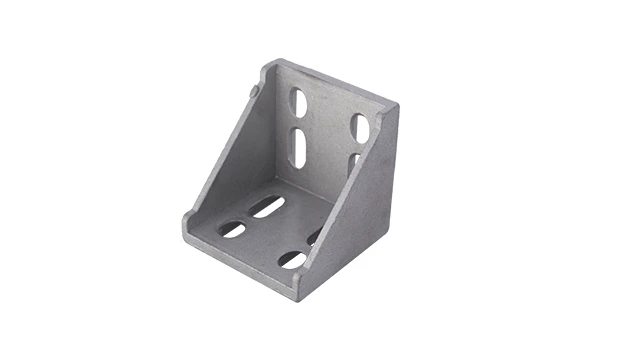
The 4040 bracket/Gusset is an external fastening method that creates a 90 degree connection. 4040 means this size is used for 40 series aluminum profile with a quick connection by bolt and nut. It is a lightweight bracket that requires no machining servic
If you've ever walked through a manufacturing plant, a warehouse, or even a small workshop, you've probably seen those sleek, modular structures holding up workbenches, material racks, or assembly lines. Chances are, those structures are built with aluminum extrusion profiles—and if they're built to last, they're using accessories like gussets to keep everything stable. Today, we're diving into two of the most common gusset accessories in the industry: Gusset ALP 4040 and Gusset ALP 3030. These small but mighty components play a huge role in determining how much weight a structure can handle and where it makes sense to use them. Whether you're setting up a home workshop, upgrading a factory floor, or just curious about industrial hardware, let's break down what makes these gussets tick, how much they can lift, and which one might be right for your project.
First Things First: What Are Gusset ALP 4040 and 3030?
Before we jump into comparisons, let's make sure we're on the same page. Gussets—specifically, Gusset ALP 4040 and 3030—are metal brackets designed to reinforce the joints where aluminum extrusion profiles meet. Think of them as the "backbone" of a modular structure. When you connect two aluminum profiles at a right angle (like the corner of a workbench), a gusset sits at that joint, distributing weight and preventing the connection from wobbling or bending under load.
The "4040" and "3030" numbers refer to the size of the aluminum extrusion profiles they're designed to work with. Aluminum extrusion profiles are named by their width and height in millimeters—so a 4040 profile is 40mm by 40mm, and a 3030 profile is 30mm by 30mm. Gusset ALP 4040 is made to fit 4040 profiles, and Gusset ALP 3030 pairs with 3030 profiles. That size difference might seem small, but when it comes to load capacity and where they're used, it's a game-changer.
Both gussets are part of the broader family of aluminum profile accessories , which includes everything from connectors and end caps to brackets and hinges. But unlike some accessories that just hold parts together, gussets are all about strength. They're usually made from stamped or machined aluminum (sometimes with a zinc coating for extra durability) and come with pre-drilled holes to bolt directly onto the profiles. Simple in design, but critical for structural integrity.
Quick Example: Why Gussets Matter
Imagine building a bookshelf with wooden planks. If you just nail two planks together at the corner, it might hold a few light books, but stack on heavy textbooks, and the joint could crack. Now, add a metal bracket (a gusset, essentially) to that corner, screwing it into both planks. Suddenly, the joint can handle way more weight because the bracket spreads the load across a larger area. That's exactly what Gusset ALP 4040 and 3030 do for aluminum structures—they turn "good enough" joints into rock-solid connections.
Load Capacity: How Much Can Each Gusset Handle?
Let's get to the heart of the matter: load capacity. At the end of the day, the question is, "How much weight can Gusset ALP 4040 and 3030 support before things start to go wrong?" To answer that, we need to look at both static load (weight that doesn't move, like a stack of boxes on a shelf) and dynamic load (weight that moves, like a conveyor belt carrying parts). We also need to consider factors like material thickness, design, and how the gusset is mounted.
Gusset ALP 3030: The Lightweight Workhorse
Gusset ALP 3030 is the smaller of the two, designed for 3030 aluminum profiles. These profiles are thinner and narrower than 4040s, so the gusset itself is also more compact. Typically, a standard Gusset ALP 3030 is made from 2-3mm thick aluminum, with a triangular or L-shaped design that wraps around the corner of the 3030 profile. The holes are spaced to align with the T-slots on 3030 profiles, making installation straightforward with bolts or T-nuts.
In terms of static load capacity, most manufacturers rate Gusset ALP 3030 for around 150-250 kg per joint, depending on the setup. That might sound like a lot, but remember: this is per joint. If you're building a workbench with four legs (four joints), each corner reinforced with a 3030 gusset, the total static load the bench could handle would be much higher—though you also have to account for the strength of the profiles themselves and the other connectors in the system. For dynamic load (like a small conveyor or a trolley rolling across a shelf), the 3030 gusset usually tops out around 100-180 kg, since moving weight adds stress from vibrations and sudden shifts.
What limits the 3030 gusset's load capacity? Size, mostly. The 3030 profile has less surface area than the 4040, so the gusset can't distribute weight as widely. The thinner material also means it's more prone to bending if pushed beyond its limits. But that doesn't make it "weak"—it's just optimized for lighter-duty tasks.
Gusset ALP 4040: The Heavy-Duty Champion
Now, enter Gusset ALP 4040. Designed for 4040 aluminum profiles, this gusset is bigger, thicker, and built to take a beating. Most 4040 gussets are 3-4mm thick (some heavy-duty versions go up to 5mm), with a wider, more robust shape that covers more of the 4040 profile's surface area. The mounting holes are spaced to match the T-slots on 4040 profiles, which are larger and can accommodate bigger bolts—another boost for strength.
When it comes to load capacity, the 4040 gusset leaves the 3030 in the dust. Static load ratings often range from 300-500 kg per joint, and dynamic load can hit 200-350 kg. Again, this is per joint—so a structure with 4040 gussets at key corners can support serious weight. For example, a material rack built with 4040 profiles and 4040 gussets might hold pallets of metal parts or heavy machinery components without breaking a sweat.
Why the big jump? The 4040 profile's larger size means the gusset has more metal to grip onto, and the thicker material resists deformation under pressure. Some 4040 gussets also have reinforced edges or extra flanges (small extensions) that add rigidity, making them even better at handling uneven or off-center loads.
Testing the Limits: Real-World Load Scenarios
Numbers on a spec sheet are one thing, but how do these gussets perform in real life? Let's look at a few common scenarios where load capacity matters most:
- Static Load Test: Workbench Surface – A typical workbench has a flat top supported by four legs (four corner joints). If we use 3030 profiles with 3030 gussets, the top might safely hold 600-800 kg (since each of the four gussets handles ~200 kg). That's enough for tools, parts bins, and a small assembly project. Swap in 4040 gussets and profiles, and that same bench could handle 1200-1500 kg—easily supporting heavy machinery like a drill press or a hydraulic lift.
- Dynamic Load Test: Conveyor Side Rails – Conveyors move parts along a track, so the side rails (held up by gussets) face constant dynamic load. A 3030 gusset might handle lightweight items like plastic components or small electronics (100-150 kg total), but if you're moving metal castings or engine parts, the 4040 gusset would be necessary to prevent the rails from bowing or collapsing under the repeated stress.
- Off-Center Load Test: Cantilever Racks – Cantilever racks (where one side extends out from a vertical frame) are tough on gussets because the weight hangs off-center. A 3030 gusset here might only support 50-80 kg before the joint starts to twist. The 4040 gusset, with its wider base and thicker material, could handle 150-250 kg off-center—useful for storing long items like pipes or lumber.
Of course, these are rough estimates. Actual load capacity depends on other factors too: how tight the bolts are, the quality of the aluminum profiles, and whether the structure is assembled correctly (a wobbly joint will fail faster than a properly aligned one). But in general, the 4040 gusset is the clear winner for heavy or dynamic loads.

Application Scenarios: Where Each Gusset Shines
Load capacity tells us how much they can handle, but application scenarios tell us where they make sense. Let's break down the typical uses for 3030 and 4040 gussets, from small-scale projects to industrial giants.
Gusset ALP 3030: Perfect for Light to Medium-Duty Tasks
If your project doesn't involve lifting cars or stacking pallets of bricks, Gusset ALP 3030 is probably more than enough. Its sweet spot is in applications where weight is moderate, space is limited, and cost or portability matters. Here are some common places you'll find it:
1. Small Workbenches and Hobby Shops
Home workshops, electronics repair stations, or craft studios often use 3030 profiles and gussets for workbenches. These setups don't need to hold tons of weight—maybe a laptop, a few tools, and some parts bins. A 3030-reinforced bench is lightweight, easy to assemble, and affordable. Plus, the smaller profiles look less bulky in tight spaces, which is a bonus for home use.
Case Study: A Home Electronics Workshop
Mark, a hobbyist who builds custom audio equipment, needed a workbench for soldering, testing, and storing small components. He went with 3030 profiles and 3030 gussets because he only needed to support a soldering iron, a multimeter, and a shelf of resistors and capacitors (total load ~150 kg). The 3030 setup was easy to adjust—he added a small shelf halfway up using 3030 brackets—and cost half what a 4040 system would have. "It's sturdy enough for my needs, and I can take it apart if I move," he says.
2. Retail Displays and Pop-Up Stands
Retailers love modular aluminum structures because they're easy to reconfigure for sales or new products. Gusset ALP 3030 is ideal here because displays rarely hold heavy items—think clothing racks, shoe shelves, or small product stands. The 3030 gusset keeps the structure stable but lightweight enough for employees to move around. Plus, the smaller profiles look sleeker, which matters for customer-facing setups.
3. Lightweight Material Racks and Trolleys
In warehouses or factories where workers need to move small parts or tools around, lightweight trolleys and material racks are a must. A trolley built with 3030 profiles and gussets can carry 100-200 kg (like boxes of screws, cleaning supplies, or small components) without being too heavy to push. The 3030 gussets keep the trolley's frame from flexing when it's rolled over uneven floors, and the smaller size means the trolley can fit through narrow doorways.
Gusset ALP 4040: Built for Heavy-Duty and Industrial Use
Gusset ALP 4040 is the go-to when "good enough" isn't enough. It's designed for environments where weight, durability, and safety are non-negotiable. Here are the scenarios where it shines brightest:
1. Manufacturing Assembly Lines
Assembly lines in automotive, aerospace, or heavy machinery plants deal with massive loads daily. Workstations here might hold engine blocks, steel frames, or robotic arms—all weighing hundreds of kilograms. A lean pipe workbench (a modular workbench used in lean manufacturing) built with 4040 profiles and gussets can support these weights while staying stable, even when workers are bolting, welding, or lifting parts. The 4040 gussets ensure the bench doesn't shift during use, which is critical for precision assembly.
Case Study: Automotive Plant Assembly Line
A car factory in Michigan uses lean pipe workbenches along its transmission assembly line. Each bench holds a transmission (150-200 kg) plus tools and fixtures. The benches are built with 4040 profiles and Gusset ALP 4040, reinforced at every joint. "We run two shifts a day, and those benches take a beating—tools get dropped, parts get slammed down," says the plant manager. "In five years, we've never had a gusset fail or a bench collapse. The 4040 gussets are overkill for some tasks, but in this environment, overkill is peace of mind."
2. Heavy Material Racks and Storage Systems
Warehouses storing metal parts, construction materials, or bulk goods need racks that can handle pallet jacks, forklifts, and stacked loads. Gusset ALP 4040 is a staple here, used to reinforce the uprights and crossbeams of storage racks. A typical 4040-reinforced rack can hold 500-800 kg per shelf, with multiple shelves stacking up to 3-4 meters high. The gussets prevent the racks from swaying when pallets are loaded or unloaded, reducing the risk of collapse.
3. Outdoor and Harsh Environment Setups
Aluminum profiles are corrosion-resistant, but when used outdoors (like in a loading dock canopy or a construction site shelter), they face wind, rain, and temperature swings. Gusset ALP 4040 is better suited here because its thicker material and wider footprint can withstand the extra stress from wind gusts or freezing temperatures (which can make metal more brittle). A 3030 gusset might crack or loosen over time in these conditions, while the 4040 gusset stays rigid.

Side-by-Side: Gusset ALP 4040 vs 3030 Comparison Table
| Feature | Gusset ALP 3030 | Gusset ALP 4040 |
|---|---|---|
| Compatible Profile Size | 30mm x 30mm aluminum extrusion profile | 40mm x 40mm aluminum extrusion profile |
| Material Thickness | 2-3mm | 3-5mm |
| Static Load Capacity (Per Joint) | 150-250 kg | 300-500 kg |
| Dynamic Load Capacity (Per Joint) | 100-180 kg | 200-350 kg |
| Typical Applications | Small workbenches, retail displays, lightweight trolleys, electronics assembly | Heavy-duty workbenches, manufacturing assembly lines, material storage racks, outdoor structures |
| Weight (Per Unit) | 50-80 grams | 120-180 grams |
| Cost (Approx.) | $2-$5 per unit | $4-$8 per unit |
| Best For | Light to medium loads, tight spaces, budget projects | Heavy loads, dynamic stress, industrial environments |
Choosing Between Them: 3 Key Questions to Ask
Still unsure whether to go with Gusset ALP 3030 or 4040? Ask yourself these questions before deciding:
1. What's the Maximum Weight the Structure Will Need to Support?
Start with the numbers. If your project involves static loads under 200 kg per joint or dynamic loads under 150 kg, 3030 is probably sufficient. If you're pushing 250+ kg static or 200+ kg dynamic, go with 4040. When in doubt, overestimate—no one wants to rebuild a structure because the gussets failed.
2. How Will the Structure Be Used?
Is it a permanent setup (like a factory workbench) or something you'll reconfigure often (like a retail display)? 3030 is lighter and easier to take apart, making it better for temporary or mobile projects. 4040 is more durable for permanent, high-use structures. Also, consider the environment: outdoor or high-vibration areas need the extra strength of 4040.
3. What's Your Budget?
Gusset ALP 4040 costs roughly twice as much as 3030, and the 4040 profiles are also pricier. If you're on a tight budget and don't need the extra load capacity, 3030 will save you money. But if safety or longevity is critical, the investment in 4040 is worth it—repairing a collapsed structure is always more expensive than building it right the first time.
Final Thoughts: It's All About Balance
At the end of the day, Gusset ALP 4040 and 3030 aren't "better" or "worse"—they're just different tools for different jobs. The 3030 gusset is the practical choice for light to medium-duty tasks, offering enough strength without the bulk or cost of its bigger sibling. The 4040 gusset, on the other hand, is the workhorse, built to handle the heavy lifting (literally) in industrial settings where failure isn't an option.
Whether you're building a workbench in your garage or a material rack in a factory, the key is to match the gusset to the load. Take the time to calculate how much weight your structure will face, consider how it will be used, and don't skimp on quality—especially when safety is on the line. And remember: even the strongest gusset can't save a poorly assembled structure. Take the time to align the profiles, tighten the bolts, and double-check the joints. Your back (and your budget) will thank you.
So, which one will you choose? Let us know in the comments—but whatever you pick, happy building!