- Company Articles
- Products and Technology
- Product knowledge
- Gusset ALP 4040 vs Plastic Brackets: Durability and Heat Resistance Comparison

Gusset ALP 4040 vs Plastic Brackets: Durability and Heat Resistance Comparison
Related Product
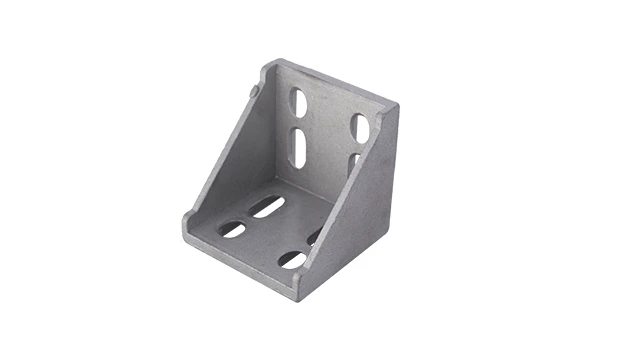
Gusset ALP 4040
The 4040 bracket/Gusset is an external fastening method that creates a 90 degree connection. 4040 means this size is used for 40 series aluminum profile with a quick connection by bolt and nut. It is a lightweight bracket that requires no machining servic
A Practical Look at Which Bracket Works Harder for Your Industrial Setup
Why the Right Bracket Matters More Than You Think
Walk into any manufacturing plant, warehouse, or assembly line, and you'll notice something critical but often overlooked: the brackets holding everything together. From the workbench where operators assemble electronics to the material racks storing components, brackets are the unsung heroes of industrial stability. They're not just metal or plastic bits—they're the difference between a smooth, efficient workflow and a setup that wobbles, breaks, or fails when you need it most.
In today's fast-paced industrial world, where lean systems and aluminum profile setups dominate, choosing the right bracket isn't just about cost. It's about durability, reliability, and how well it holds up under pressure—literally. Two options often land on the shortlist: the Gusset ALP 4040, a heavy-duty aluminum profile accessory, and standard plastic brackets. Both have their fans, but how do they really stack up when the going gets tough? Let's break it down.
First, Let's Get to Know the Contenders
Gusset ALP 4040: The Aluminum Workhorse
If you've ever worked with aluminum extrusion profiles, you've probably come across the Gusset ALP 4040. It's part of the family of aluminum profile accessories designed to reinforce connections between 4040 aluminum profiles—the backbone of most modern lean system workbenches and material racks. Made from high-grade aluminum alloy, this bracket is built with one goal in mind: to add rigidity and strength to joints where profiles meet, whether it's a corner, a T-junction, or a straight run.
What makes it stand out? Its design. The Gusset ALP 4040 isn't just a flat piece of metal; it's engineered with angles and thicknesses that distribute weight evenly, preventing stress points. It's typically used in setups where load capacity and long-term stability are non-negotiable—think heavy-duty workbenches, multi-tier material racks, or production lines where tools, parts, and even operators lean on the structure daily.
Plastic Brackets: The Lightweight Contender
Plastic brackets, on the other hand, are the budget-friendly, lightweight option. Made from materials like nylon, polypropylene, or ABS, they're molded into simple shapes—L-brackets, T-joints, or corner connectors—and are often used in lighter setups. You'll find them in small workshops, temporary workstations, or applications where weight is a priority, like mobile carts that need to stay easy to push.
Their appeal is obvious: they're cheap, easy to mold, and resistant to rust (at least on the surface). For low-load, low-stress jobs, they get the job done. But when the pressure turns up—when you're stacking heavy parts, dealing with temperature fluctuations, or just relying on them day in and day out—do they hold their own against aluminum?

Durability: Which Bracket Takes a Beating and Keeps Going?
Durability isn't just about not breaking on day one. It's about how well a bracket handles impact, supports weight, and resists wear over months (or years) of use. Let's put both to the test.
1. Impact Resistance: When Accidents Happen
In a busy facility, accidents are inevitable. A pallet jack bumps a rack, a tool slips off a workbench, or a cart slams into a bracket. How do these two hold up?
Plastic brackets? They're not known for toughness here. A hard impact can crack or shatter them, especially if they're made from brittle plastics like unreinforced nylon. Even reinforced plastic (with glass fibers) might flex but can still develop stress cracks over time. I've seen plastic corner brackets on a material rack snap clean off after a stray box fell against them—costing hours of downtime to replace.
The Gusset ALP 4040? Aluminum is ductile, meaning it bends before it breaks. A hard impact might leave a dent, but the bracket itself stays intact. I visited an automotive plant last year where a forklift accidentally grazed a workbench supported by Gusset ALP 4040 brackets. The aluminum bent slightly, but the bench didn't collapse, and the bracket was easy to straighten back into place. No replacement needed—just a quick fix.
2. Load Capacity: How Much Weight Can They Handle?
This is where the Gusset ALP 4040 really shines. Aluminum's inherent strength means it can support far more weight than plastic. Let's look at numbers:
| Bracket Type | Typical Max Load (Per Bracket) | Long-Term Load (Sustained Weight) |
|---|---|---|
| Gusset ALP 4040 (Aluminum) | Up to 500 lbs (depending on installation) | 300-400 lbs (no deformation over time) |
| Standard Plastic Bracket | 50-150 lbs (varies by material/thickness) | 50-100 lbs (risk of warping above 75 lbs) |
In real terms, this means a workbench using Gusset ALP 4040 brackets can safely hold heavy machinery, while a plastic-bracketed bench might start sagging if you place a 200-lb tool chest on it. Over time, plastic's tendency to creep (slowly deform under constant load) makes it a risky choice for anything beyond light-duty use.
3. Wear and Tear: The Daily Grind
Industrial brackets don't get weekends off. They're exposed to dust, moisture, oils, and constant vibration. How do they age?
Plastic brackets can degrade over time, especially if exposed to UV light (from windows or overhead lights) or harsh chemicals. They might become brittle, discolor, or lose strength. Even indoors, the oils from human hands or machine lubricants can seep into plastic, causing it to swell or crack.
Aluminum, though, is a survivor. The Gusset ALP 4040's aluminum alloy resists corrosion (thanks to a natural oxide layer), and it doesn't degrade from oils or UV light. I've seen 10-year-old aluminum brackets in a food processing plant—still solid, no rust, no cracks. They might look a bit scuffed, but they work like the day they were installed.

Heat Resistance: When Things Get Hot (or Cold)
Temperature swings are another hidden enemy. From the sweltering heat of a summer warehouse to the chill of a refrigerated facility, brackets must maintain their shape and strength. Here's how they compare.
1. Operating Temperature Range
Plastic brackets have a narrow comfort zone. Most standard plastics start to soften around 140-180°F (60-82°C). At higher temps—like near ovens, welding stations, or machinery that generates heat—they can warp, melt, or lose structural integrity. Even in cold environments, plastic becomes stiffer and more prone to cracking.
Aluminum? It laughs at temperature extremes. The Gusset ALP 4040 can handle -40°F to 400°F (-40°C to 204°C) without breaking a sweat. I toured a foundry once where aluminum profile workbenches with Gusset ALP 4040 brackets sat near furnaces hitting 300°F. The brackets never warped, and the workbench stayed rock-solid.
2. Thermal Expansion: Keeping Joints Tight
All materials expand and contract with temperature changes, but plastic takes this to an extreme. When it heats up, plastic swells; when it cools, it shrinks. Over time, this constant movement can loosen screws, create gaps in joints, or even pop the bracket off entirely.
Aluminum expands too, but at a much slower rate (about 1/3 that of plastic). The Gusset ALP 4040's tight fit with aluminum profiles means even with temperature swings, the joint stays secure. No loose screws, no wobbly racks—just consistent stability.
Real-World Wins: Where Each Shines (and Struggles)
Let's ground this in real scenarios. When should you pick plastic, and when is the Gusset ALP 4040 the clear choice?
Plastic Brackets: Best For…
- Light-duty setups: Think small hobby workbenches or temporary displays.
- Low-budget projects: If you're building something disposable or short-term, plastic saves cash upfront.
- Cold, dry environments: Where heat and impact risks are minimal (e.g., a home workshop).
Gusset ALP 4040: Best For…
- Heavy-duty lean systems: Production lines, material racks, and workbenches that see daily use.
- High-temperature areas: Near machinery, ovens, or in hot warehouses.
- Long-term investments: When you want a setup that lasts 5+ years without replacement.
- High-load applications: Storing heavy parts, supporting machinery, or multi-tier racks.
The Verdict: Which Bracket Earns Its Keep?
At the end of the day, it's about value—not just cost. Plastic brackets are cheap upfront, but they'll cost you in replacements, downtime, and potential accidents. The Gusset ALP 4040, as an aluminum profile accessory, costs more initially, but it pays for itself in durability, heat resistance, and peace of mind.
If you're building a lean system that needs to work as hard as your team does—through impacts, heavy loads, and temperature swings—aluminum is the way to go. The Gusset ALP 4040 isn't just a bracket; it's an investment in reliability. And in manufacturing, reliability is everything.
So next time you're planning a setup, ask yourself: Do I want something that lasts, or something that just gets by? The answer will point you straight to the right bracket.