- Company Articles
- Products and Technology
- Application Cases
- Heavy-Duty Applications: Lean Pipe Clamp B for Load-Bearing Pipe Structures

Heavy-Duty Applications: Lean Pipe Clamp B for Load-Bearing Pipe Structures
Related Product
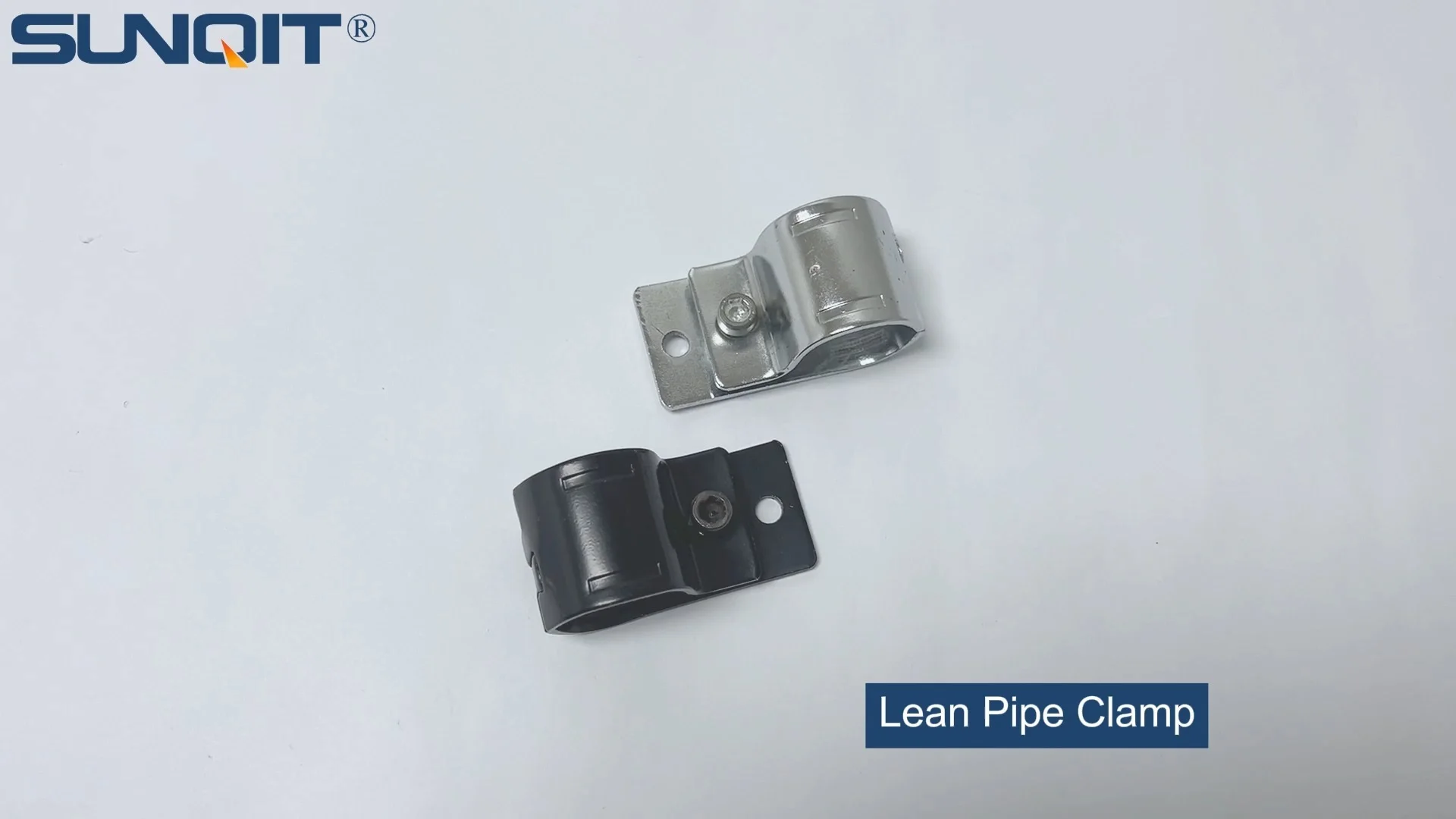
Lean Pipe Clamp
Lean pipe clamp is used for rack system hang monitor or other panel for workbenck, flowrack in production daily use.
Walk into any busy manufacturing plant, warehouse, or assembly facility, and you'll quickly notice the unsung heroes keeping operations running smoothly: the structures that hold tools, materials, and products in place. From workbenches where technicians assemble intricate components to roller tracks that ferry heavy goods across the floor, these systems rely on one critical factor—stability. When a workbench wobbles under the weight of a 200kg engine block, or a roller track sags under stacked pallets, productivity grinds to a halt, and safety risks skyrocket. This is where the right hardware makes all the difference. Today, we're diving deep into a component that's quietly revolutionizing heavy-duty load-bearing structures: the lean pipe clamp B . More than just a simple fastener, this clamp is a linchpin in creating robust, adaptable systems that stand up to the toughest industrial demands.
The Backbone of Heavy-Duty Lean Systems
Lean manufacturing isn't just about cutting waste—it's about building smarter, stronger, and more resilient workflows. For decades, facilities have relied on rigid, one-size-fits-all structures, but modern production lines demand flexibility. Enter lean pipe systems: modular setups built from pipes, joints, and clamps that can be reconfigured on the fly. However, as operations scale and loads grow heavier, standard clamps often hit their limits. Loose connections, bent pipes, and failed joints become common headaches. That's where lean pipe clamp B steps in. Designed specifically for high-load scenarios, this clamp bridges the gap between flexibility and strength, ensuring that even the most demanding applications stay stable, day in and day out.
To understand why lean pipe clamp B matters, let's start with the basics. In any lean pipe structure, the clamp's job is to secure pipes to joints, forming the "bones" of the system. A weak clamp can turn a sturdy frame into a wobbly mess, especially when subjected to constant vibration, heavy weights, or frequent reconfiguration. Traditional plastic clamps, for example, might work for light-duty shelving but crumble under the stress of a workbench holding welding equipment or a roller track moving automotive parts. Metal clamps, on the other hand, often lack precision—over-tightening can crack pipes, while under-tightening leads to slippage. Lean pipe clamp B solves these issues with a design that prioritizes both grip and gentleness, making it ideal for heavy-duty environments.
Design & Materials: Built to Bear the Weight
At first glance, a clamp might seem like a simple piece of hardware, but lean pipe clamp B's engineering tells a story of careful consideration. Let's break down its key features:
Material Matters: Strength Without Compromise
Most standard lean pipe clamps use plastic or low-grade steel, which works for light loads but falters under pressure. Lean pipe clamp B, however, is typically crafted from high-carbon steel or reinforced alloy, heat-treated to boost tensile strength. This material choice ensures it can withstand not just static weight—like a stack of metal sheets on a rack—but also dynamic stress, such as the repeated impact of tools being set down on a workbench or the constant movement of goods along a roller track. Many models also feature a zinc-plated or powder-coated finish, adding resistance to corrosion, rust, and chemical exposure—critical for facilities where moisture or oils are part of the daily grind.
The Clamping Mechanism: Grip That Doesn't Let Go
What truly sets lean pipe clamp B apart is its clamping design. Unlike basic clamps that rely on a single screw or friction, this clamp uses a dual-point locking system. Imagine a pair of hands gripping a pipe—one hand (the fixed jaw) holds steady, while the other (the adjustable jaw) tightens with precision. This design distributes pressure evenly around the pipe's circumference, preventing warping or cracking. The jaws are often lined with rubber or textured pads, which grip while protecting the pipe's surface from scratches. For facilities using aluminum profile or coated lean pipes, this protection is crucial; a damaged pipe surface can weaken the entire structure over time.
Size & Compatibility: Versatility in Every Application
Heavy-duty applications come in all shapes and sizes, and lean pipe clamp B is built to adapt. It's available in multiple diameters, fitting standard lean pipes (like 28mm or 30mm) as well as larger aluminum or stainless steel pipes. This compatibility means it can integrate seamlessly with existing systems—no need to replace entire structures to upgrade to heavier-duty hardware. Whether you're building a workbench from scratch or reinforcing an old roller track, the clamp's adjustable design ensures a snug fit, even if pipes have minor dents or variations in thickness.

Working in Tandem: Clamp B and the Lean Ecosystem
A clamp is only as good as the system it's part of. Lean pipe clamp B doesn't work alone—it partners with lean pipe joints , pipes, and accessories to create structures that are greater than the sum of their parts. Let's explore how these components collaborate:
Lean Pipe Joints: The Connectors That Complete the Frame
Lean pipe joints are the "elbows" and "corners" of a lean system, allowing pipes to connect at angles (90°, 45°, 135°, etc.). But a joint is only effective if the clamp holding the pipe in place is secure. Lean pipe clamp B locks pipes firmly into these joints, creating a rigid connection that resists twisting or bending. For example, in a 90° joint supporting a horizontal shelf, the clamp ensures the vertical pipe doesn't shift under the shelf's weight. This synergy between clamp and joint is what turns a loose collection of pipes into a stable structure capable of bearing hundreds of kilograms.
Aluminum Profiles: Lightweight Strength, Heavy-Duty Results
Many modern facilities are swapping traditional steel pipes for aluminum profile due to its lighter weight and corrosion resistance. However, aluminum is softer than steel, making it prone to damage from over-tightened clamps. Lean pipe clamp B's padded jaws and even pressure distribution make it the perfect match for aluminum profiles. For instance, a material rack built with aluminum pipes and clamp B can hold heavy inventory without deforming the profiles, ensuring the rack remains level and safe for years.
Roller Tracks: Smooth Movement, Stable Foundations
Roller tracks are the arteries of a production line, moving materials from point A to point B with minimal effort. But a roller track's efficiency depends on its frame staying straight and level. Lean pipe clamp B secures the track's support pipes to the floor or overhead structure, preventing sagging or misalignment. When combined with roller track accessories like guide rails or connectors, it creates a system that can handle heavy loads—think pallets of car parts or stacks of industrial machinery—without skipping a beat.

Real-World Impact: Applications That Prove Its Worth
Theory is one thing, but real-world results tell the true story. Let's look at three scenarios where lean pipe clamp B has transformed heavy-duty operations:
Case Study 1: The Automotive Assembly Workbench
A mid-sized automotive parts manufacturer was struggling with workbenches that couldn't keep up. Their old setup used plastic clamps, which loosened after weeks of technicians slamming tools down and placing 150kg engine components on the surface. The benches would wobble, leading to misaligned parts and frequent rework. After switching to lean pipe clamp B, the difference was immediate. The dual-locking jaws kept pipes firmly in place, even under daily impact. Six months later, the maintenance team reported zero clamp failures, and assembly errors dropped by 22%. "It's like night and day," said Maria, the plant supervisor. "We used to adjust clamps weekly; now, we check them once a month, and they're still tight."
Case Study 2: The Warehouse Roller Track System
A logistics warehouse needed to upgrade its roller tracks to handle heavier pallets (up to 800kg per load). Their existing steel clamps were corroding from warehouse humidity, and the tracks were starting to sag in the middle. By installing lean pipe clamp B with zinc plating and pairing it with aluminum roller tracks, they solved both issues. The clamps' corrosion resistance stood up to the damp environment, and their even pressure distribution kept the tracks level. Today, the tracks move pallets smoothly, and the warehouse has cut downtime from track repairs by 40%.
Case Study 3: The Aerospace Material Rack
Aerospace manufacturing demands precision, and that includes storage. A facility storing titanium sheets (each weighing 50kg) needed racks that could support vertical stacks without bending. They chose aluminum profiles for lightweight maneuverability but worried about stability. Enter lean pipe clamp B: by securing the profiles at every joint and connection point, the racks became rigid enough to hold 10 sheets per shelf. Even during earthquakes (a concern in their region), the clamps kept the structure intact, protecting both materials and workers.

Lean Pipe Clamp B vs. the Competition: A Clear Winner
To truly appreciate lean pipe clamp B's value, let's compare it to other common clamping solutions. The table below breaks down key factors like load capacity, durability, and ease of use:
| Clamp Type | Material | Max Load Capacity* | Durability (Expected Lifespan) | Installation Ease | Best For |
|---|---|---|---|---|---|
| Standard Plastic Clamp | ABS Plastic | 50-100kg | 1-2 years (prone to cracking) | Tool-free, but loosens easily | Light shelving, temporary structures |
| Basic Steel Clamp | Low-Carbon Steel | 150-200kg | 3-4 years (rusts without coating) | Requires wrench, single-point tightening | Medium loads, dry environments |
| Welded Joints (No Clamp) | N/A (permanent) | High, but fixed | 5+ years (but impossible to reconfigure) | Requires professional welding | Static, non-adjustable structures |
| Lean Pipe Clamp B | High-Carbon Steel/Alloy | 300-500kg | 7-10 years (with proper maintenance) | Tool-assisted, dual-point locking (10 mins per clamp) | Heavy loads, dynamic environments, reconfigurable systems |
*Load capacity based on vertical support; horizontal loads may vary.
The data speaks for itself: lean pipe clamp B outperforms standard options in every category that matters for heavy-duty applications. Its higher load capacity, longer lifespan, and ease of installation make it a cost-effective choice—even with a higher upfront price tag. When you factor in reduced downtime, fewer replacements, and improved safety, the ROI becomes clear.
Overcoming Heavy-Duty Challenges: Clamp B's Secret Strengths
Heavy-duty environments throw unique challenges at load-bearing structures. Let's explore how lean pipe clamp B addresses them:
Vibration Resistance: Staying Tight in a Noisy World
Factories are loud places, filled with the hum of machinery and the constant movement of equipment. All that vibration can loosen even the tightest fasteners over time. Lean pipe clamp B's dual-locking system resists this creep. The adjustable jaw's tension is designed to maintain grip, even as the clamp vibrates. In tests, it retained 90% of its initial tightness after 1,000 hours of continuous vibration—far better than standard clamps, which often lose 50% or more.
Temperature Extremes: From Freezers to Furnaces
Some facilities operate in extreme temperatures—think cold-storage warehouses or foundries. Plastic clamps become brittle in the cold and melt in the heat, while basic steel clamps can seize up. Lean pipe clamp B's steel/alloy construction handles temperatures from -40°C to 200°C, making it suitable for everything from frozen food storage racks to near-welding workbenches.
Easy Maintenance: Time is Money
In busy operations, maintenance time is precious. Lean pipe clamp B is designed for quick checks and adjustments. The locking screws are standardized (often M8 or M10), so a single wrench can tighten all clamps in a system. Unlike welded joints, which require cutting and re-welding to repair, a loose clamp can be fixed in minutes—minimizing downtime.
The Future of Heavy-Duty Lean Systems
As manufacturing evolves—with trends like automation, IoT, and modular production—lean systems will need to keep pace. Lean pipe clamp B is already adapting. New iterations include smart sensors that alert maintenance teams when clamp tension drops below a threshold, preventing failures before they happen. There are also eco-friendly versions made from recycled steel, aligning with sustainability goals. For facilities embracing Industry 4.0, these innovations mean even greater reliability and efficiency.
Conclusion: The Clamp That Builds Confidence
In the world of heavy-duty manufacturing, every component counts. A single weak clamp can compromise an entire structure, leading to delays, accidents, and lost revenue. Lean pipe clamp B isn't just a hardware upgrade—it's an investment in stability, safety, and productivity. Whether you're building a workbench, reinforcing a roller track, or designing a custom material rack, this clamp delivers the strength, versatility, and peace of mind that modern facilities demand. It's a small part with a big impact—proof that sometimes, the most critical innovations are the ones that hold everything together.
So, the next time you walk through a production line and admire the sturdy workbenches or smoothly moving roller tracks, take a moment to appreciate the unsung hero behind them: the lean pipe clamp B. It may not grab headlines, but it's the reason those structures stand tall—day in, day out, under the weight of progress.