- Company Articles
- Products and Technology
- Product knowledge
- Heavy-Duty Castor Fixed Plates: Ideal for Automotive Manufacturing Equipment

Heavy-Duty Castor Fixed Plates: Ideal for Automotive Manufacturing Equipment
Related Product
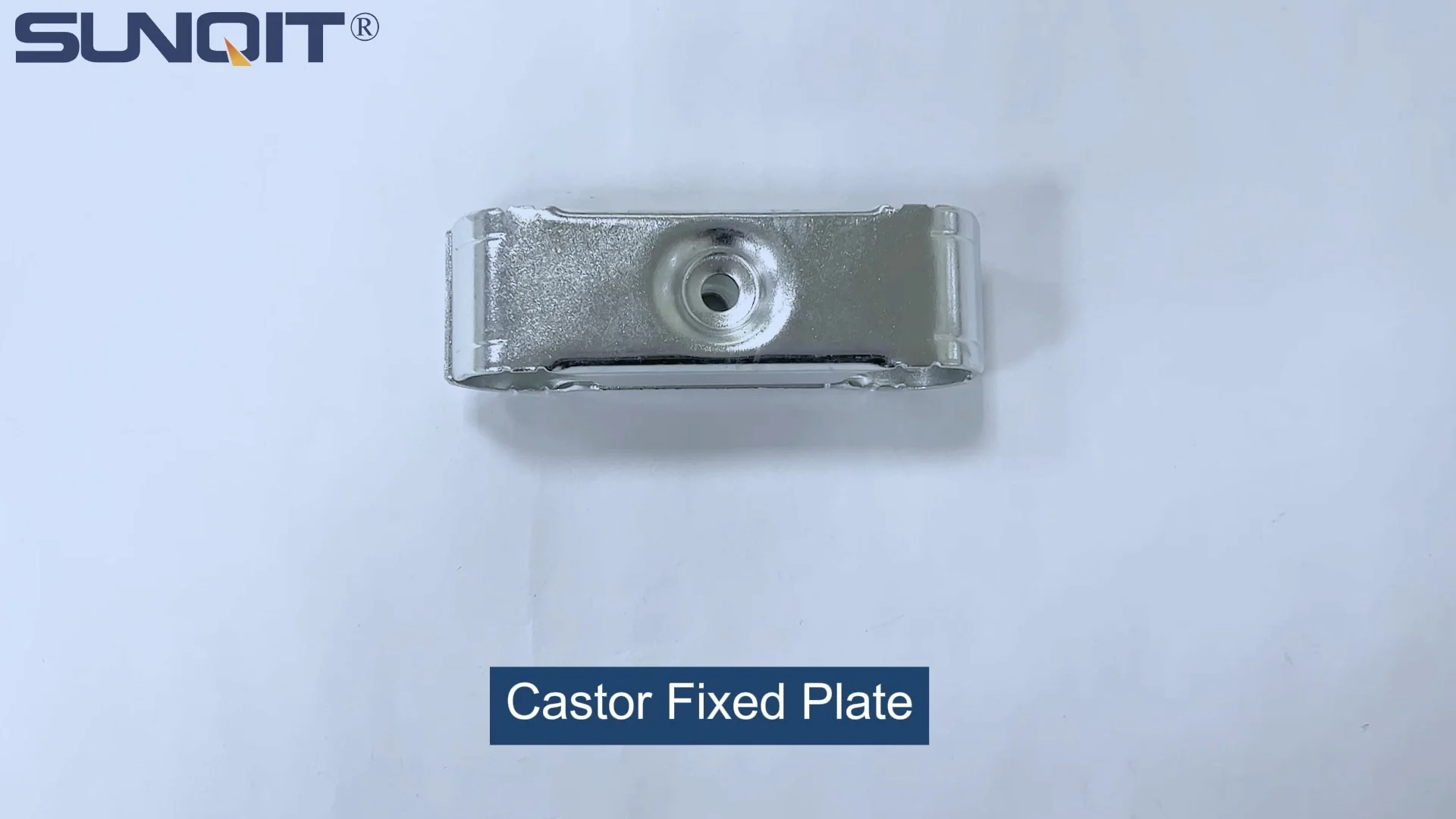
Castor Fixed Plate
Castor fixed plate, used for castor installation, one castor need two pcs castor plate to fix under the workbench, flow rack, and hand trolley.
The Rhythm of Automotive Manufacturing: Why Mobility Can't Be an Afterthought
Walk into any automotive manufacturing plant, and you'll immediately sense the energy—robots whirring, conveyor belts humming, and teams of technicians moving with purpose to assemble everything from intricate engine components to full vehicle frames. In this high-stakes environment, where deadlines are tight and precision is non-negotiable, every piece of equipment has a role to play. But there's one element that often flies under the radar, yet keeps the entire operation in sync: mobility.
Think about it: A workbench loaded with torque wrenches and diagnostic tools needs to shift from one assembly station to another as a vehicle moves down the line. A turnover trolley stacked with heavy brake calipers must glide smoothly from the warehouse to the production floor without slowing down the team. Even stationary-looking material racks might need to reposition overnight to accommodate a new production schedule. In short, the ability to move equipment quickly, safely, and reliably isn't just a convenience—it's the backbone of efficient manufacturing.
But here's the catch: Mobility in automotive settings isn't as simple as slapping wheels on a cart. The equipment in these facilities carries serious weight—we're talking hundreds, even thousands of pounds of metal, tools, and parts. Add to that the demands of a 24/7 operation, where equipment is used repeatedly, often in environments with oil, grease, and occasional impacts, and you've got a recipe for wear and tear. That's where the unsung heroes of factory mobility come into play: heavy-duty castor fixed plates. These unassuming metal components might not grab headlines, but they're the critical link between your casters and your equipment, ensuring that even the heaviest loads move with stability and precision.
What Are Heavy-Duty Castor Fixed Plates, Anyway? Breaking Down the Basics
Let's start with the fundamentals. A castor fixed plate—sometimes called a castor mounting plate—is a flat, rigid component designed to attach casters (those swiveling wheels you see on carts and workbenches) securely to the base of equipment. At first glance, it might look like just a simple metal plate with holes drilled into it, but that's a disservice to its engineering. Heavy-duty versions, specifically built for automotive manufacturing, are engineered to withstand extreme loads, resist corrosion, and maintain structural integrity even after years of use.
Here's why they matter: Imagine trying to attach a heavy-duty caster directly to the thin metal frame of a workbench. Over time, the constant stress of moving the bench—especially when loaded with tools or parts—would cause the frame to bend or crack at the attachment points. A castor fixed plate distributes that weight evenly across a larger surface area, turning a weak spot into a reinforced connection. It's like the difference between hanging a heavy mirror with a single nail versus using a sturdy mounting bracket—one might hold for a while, but the other is built to last.
In automotive manufacturing, where equipment is often custom-built to fit specific tasks, castor fixed plates also offer flexibility. They come in various sizes and hole patterns, allowing them to pair with different caster types (swivel, rigid, locking) and equipment frames (steel, aluminum, even wood for temporary setups). And because they're designed to work with caster and accessories—like brake mechanisms, stem adapters, or shock-absorbing pads—they ensure that the entire mobility system (caster + plate + equipment) works in harmony.

Built for the Grind: Key Features of Heavy-Duty Castor Fixed Plates
Not all castor fixed plates are created equal. In automotive manufacturing, where the margin for error is zero, "heavy-duty" isn't just a marketing term—it's a set of specific features that make these plates indispensable. Let's break down what sets them apart:
Material Matters: Steel, Aluminum, or Something Else?
The first thing to notice about a quality castor fixed plate is its material. Most heavy-duty options are made from either high-grade steel or aluminum profile, each with its own advantages. Steel plates are the workhorses—thick, rigid, and capable of handling loads up to 2,000 pounds per plate. They're ideal for equipment like engine hoists or large material racks that rarely move but need maximum stability when they do. Aluminum profile plates, on the other hand, are lighter without sacrificing strength, making them perfect for mobile workbenches or turnover trolleys that technicians move multiple times a day. Aluminum also resists corrosion, a big plus in automotive plants where oil and coolant spills are common.
Load Capacity: It's All About the Numbers
Every castor fixed plate comes with a load rating, and ignoring this number is a recipe for disaster. In automotive settings, where a single turnover trolley might carry 500 pounds of transmission parts, you need a plate rated for at least 125% of the maximum load you expect to carry (industry best practice to account for sudden jolts or uneven floors). For example, a plate rated for 600 pounds per caster would be a smart choice for a trolley that typically holds 400 pounds. This extra margin ensures the plate won't warp or fail under stress.
Hole Patterns and Compatibility
Ever tried to attach a caster to a plate only to find the holes don't line up? Frustrating, right? Heavy-duty castor fixed plates solve this with standardized hole patterns that match common caster stem sizes and bolt configurations. Many also include slotted holes, which allow for minor adjustments during installation—handy when your equipment frame isn't perfectly square (and let's be honest, in a busy factory, few things are). This compatibility extends to caster and accessories, too: If you need to add a brake to a caster later, the plate should have pre-drilled holes or enough space to mount the brake mechanism without weakening the plate.
| Feature | Steel Castor Fixed Plates | Aluminum Profile Castor Fixed Plates | Best For |
|---|---|---|---|
| Load Capacity (per plate) | Up to 2,500 lbs | Up to 1,200 lbs |
Steel: Engine hoists, heavy material racks
Aluminum: Workbenches, turnover trolleys |
| Weight | Heavier (5-10 lbs per plate) | Lighter (2-5 lbs per plate) | Aluminum: Equipment moved frequently |
| Corrosion Resistance | Requires coating (zinc, powder coat) | Natural resistance (anodized options available) | Aluminum: Oil/grease-prone areas |
| Flexibility | Limited (fixed hole patterns) | High (compatible with aluminum profile accessories) | Aluminum: Custom workbenches, modular setups |

From Workbenches to Trolleys: Real-World Applications in Automotive Plants
Now that we understand what makes heavy-duty castor fixed plates tick, let's look at how they're actually used on the factory floor. In automotive manufacturing, their applications are as diverse as the equipment itself, but three stand out as particularly impactful: workbenches, turnover trolleys, and material racks.
Workbenches: Where Precision Meets Mobility
A typical automotive workbench is a hub of activity. It might hold a technician's tools, a laptop for diagnostic software, and even a small parts bin with screws or washers. But when the next vehicle in line requires a different set of tools, that workbench needs to move—fast. Without a sturdy castor fixed plate, attaching casters to the bench's legs could lead to wobbling, which is dangerous when you're working with delicate components or power tools.
Here's how castor fixed plates solve this: By mounting the plates to the bottom of the workbench's frame (often made from aluminum profile for lightweight strength), the weight of the bench and its contents is evenly distributed across four casters (one at each corner). This stability means a technician can push the bench with one hand while carrying parts in the other, without worrying about tipping. Even better, many workbenches use locking casters paired with fixed plates; engage the locks, and the bench stays rock-solid during use, then releases easily when it's time to move. It's the best of both worlds: mobility when you need it, stability when you don't.
Turnover Trolleys and Racks: Hauling Heavy Loads Without the Headaches
Turnover trolleys are the workhorses of material transport in automotive plants. They ferry everything from door panels to suspension parts from storage areas to the assembly line, often navigating tight spaces and uneven concrete floors. A poorly mounted caster here isn't just an inconvenience—it's a safety risk. A trolley loaded with 800 pounds of engine blocks that suddenly veers off course could cause injuries or damage parts.
Heavy-duty castor fixed plates shine here by ensuring the trolley's base can handle the load. Many trolley manufacturers use steel frames for durability, paired with steel fixed plates to match. The plates are welded or bolted to the frame at reinforced points, creating a connection that won't budge even when the trolley hits a floor crack or is pushed up a slight incline. For added safety, some trolleys use swivel casters with brakes on the front and rigid casters on the back; the fixed plates for the swivel casters are often larger to accommodate the extra movement, preventing stress cracks over time.
And let's not forget about turnover racks—those tall, multi-shelf units used to store sheet metal or glass panels. When these need to be repositioned (say, to make room for a new machine), their height makes them prone to tipping. Fixed plates with wide bases and heavy-duty casters (rated for the rack's total weight, including contents) keep them stable, even when moved by a single operator.
Material Racks: Storing Smart, Moving Smarter
Material racks are another area where castor fixed plates add value. In automotive plants, space is always at a premium, so racks that can be moved to free up floor space during maintenance or retooling are a game-changer. But a rack loaded with boxes of fasteners or electrical components can weigh over a ton, so its mobility system needs to be bulletproof.
Here, fixed plates are often used in conjunction with heavy-duty rigid casters (which don't swivel, offering more stability for tall loads). The plates are mounted to the rack's base rails, which are themselves reinforced with cross-bracing to prevent flexing. This setup allows the rack to roll in a straight line with minimal effort, even when fully loaded. Some plants even use "rack trains," where multiple material racks are linked together and moved by a single operator—thanks in part to fixed plates that ensure each caster bears its share of the load, preventing any one rack from becoming overburdened.

Why Aluminum Profile is a Game-Changer for Castor Fixed Plates in Automotive Settings
We've mentioned aluminum profile a few times, and for good reason. In recent years, automotive manufacturers have increasingly turned to aluminum profile systems for building everything from workbenches to machine guards—and castor fixed plates are no exception. So why is aluminum profile such a good fit?
First, it's lightweight yet strong. Aluminum profile (think of those T-slot extrusions you see in modular furniture) has a high strength-to-weight ratio, meaning it can support heavy loads without adding unnecessary bulk. When paired with aluminum castor fixed plates, this makes for equipment that's easier to move (less strain on technicians) and more fuel-efficient if it's transported via forklift (though most mobility here is manual). For workbenches that need to shift between stations multiple times a day, this lightness translates to less fatigue and more productivity.
Second, it's infinitely customizable. Aluminum profile systems use slots and accessories (like brackets, nuts, and bolts) to connect components, which means you can design a workbench or trolley with castor fixed plates that fit your exact needs. Need a workbench with a wider base for extra stability? Just add longer profile rails and mount the fixed plates at the ends. Want to adjust the height of the casters later? Swap out the plates for taller ones—no welding or drilling required. This modularity is a huge advantage in automotive manufacturing, where production lines are constantly evolving to accommodate new vehicle models or processes.
Third, it's corrosion-resistant. Unlike steel, aluminum naturally forms a protective oxide layer that resists rust, making it ideal for use in areas where oil, coolant, or water might splash. This is especially important for castor fixed plates, which are close to the floor and more likely to come into contact with spills. Anodized aluminum profile takes this a step further, adding a durable, colored finish that resists scratches and fading—so your equipment looks professional even after years of use.
Choosing the Right Castor Fixed Plates: Tips for Automotive Manufacturers
With so many options on the market, how do you pick the right heavy-duty castor fixed plates for your facility? Here are a few key considerations to keep in mind:
Start with the Load: Calculate, Then Overcompensate
The single most important factor is load capacity. To calculate the required rating per plate, take the total weight of your equipment (empty) plus the maximum weight of the items it will carry, then divide by the number of casters. For example, a workbench that weighs 200 lbs empty and holds 300 lbs of tools would have a total weight of 500 lbs. With four casters, each caster (and its fixed plate) should be rated for at least 125 lbs (500 lbs ÷ 4). But remember the 25% rule: Always choose plates rated for 25% more than your calculated load to account for shocks, uneven floors, or accidental overloading. In this case, that would mean plates rated for at least 156 lbs each.
Match the Material to the Environment
If your plant has high humidity, frequent spills, or washdowns (common in areas where vehicles are painted or cleaned), opt for aluminum profile plates or steel plates with a zinc coating or powder finish to prevent rust. For dry areas with heavy loads, steel plates are a cost-effective choice. And if you're using aluminum profile equipment, stick with aluminum plates to avoid galvanic corrosion (a reaction that occurs when dissimilar metals are in contact with moisture).
Don't Skimp on Installation
Even the best castor fixed plate won't perform if it's installed poorly. Use the right size bolts (graded for the load) and tighten them to the manufacturer's specifications—over-tightening can strip threads, while under-tightening can lead to loosening over time. If welding the plates to steel equipment, ensure the welds are continuous and free of gaps (a quick visual inspection with a flashlight can catch weak spots). And always clean the mounting surface first; oil, grease, or paint can prevent the plate from seating properly, reducing its load-bearing capacity.
Think About Future Needs
Automotive manufacturing lines are always changing, so choose plates that can adapt. Slotted holes, universal hole patterns, and compatibility with a range of caster and accessories will save you time and money down the line. For example, if you think you might add brakes to your casters later, make sure the plates have the necessary mounting points. If you're building a modular workbench system, look for plates that can be easily removed and reinstalled on different sections as your needs evolve.
The Bottom Line: Castor Fixed Plates as a Foundation for Efficiency
In the fast-paced world of automotive manufacturing, every detail counts. From the robots on the assembly line to the tools in a technician's hand, each component plays a role in keeping production on track. Heavy-duty castor fixed plates might not be the most glamorous part of the process, but they're undeniably essential. By ensuring that your workbenches, turnover trolleys, and material racks move safely, smoothly, and reliably, they free your team to focus on what they do best: building high-quality vehicles.
So the next time you see a technician effortlessly gliding a loaded trolley across the factory floor, or a workbench that stays steady even when someone leans on it, take a moment to appreciate the castor fixed plate doing its job. It's a small part, but it's a big reason why modern automotive manufacturing is as efficient, safe, and adaptable as it is. And in an industry where every second and every dollar counts, that's more than worth celebrating.