- Company Articles
- Products and Technology
- Product knowledge
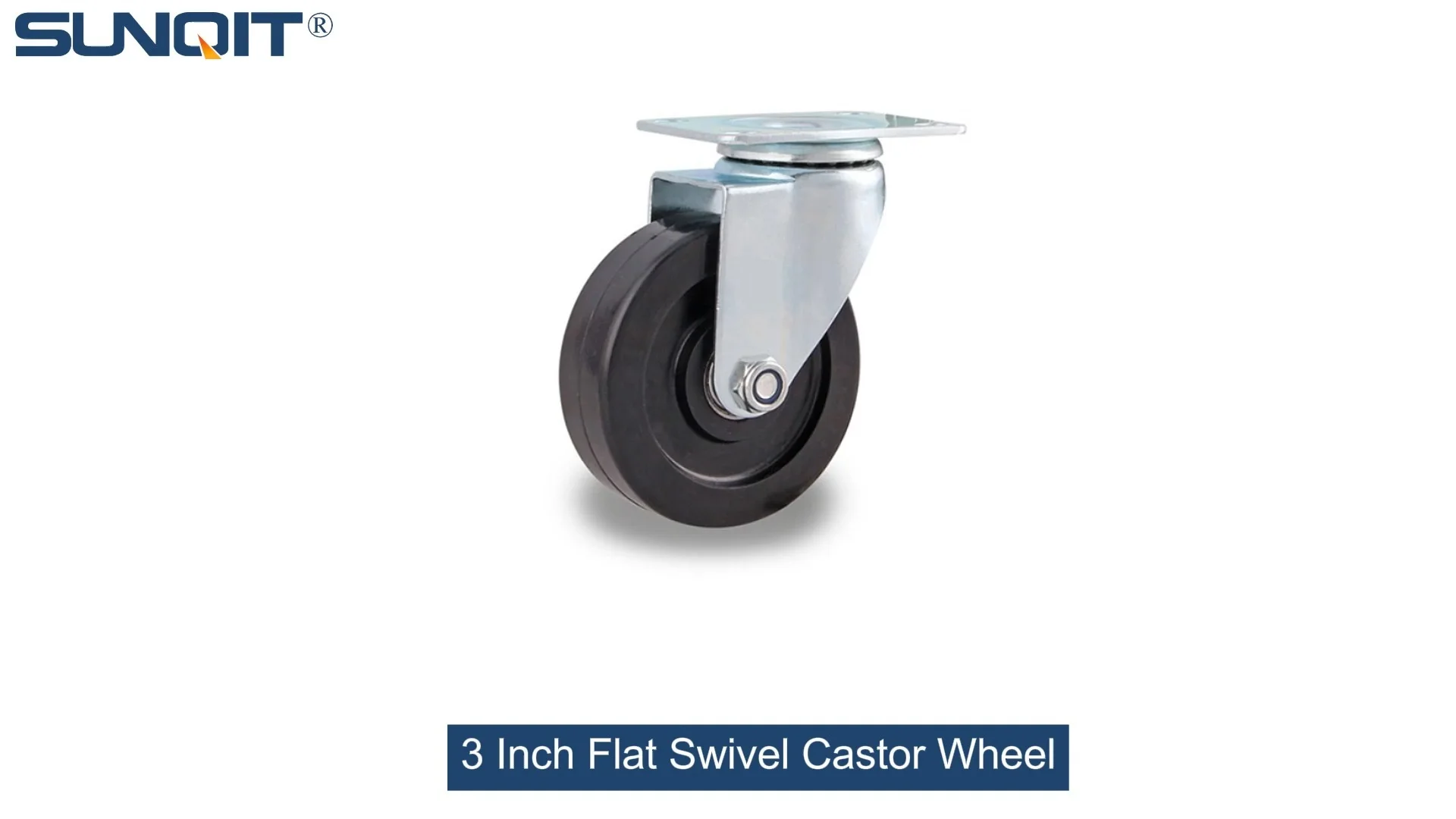
- Heavy Duty Flat Swivel Castor Wheels: Load Capacity Up to 500kg for Industrial Use

Heavy Duty Flat Swivel Castor Wheels: Load Capacity Up to 500kg for Industrial Use
Related Product
Flat Swivel Castor Wheel
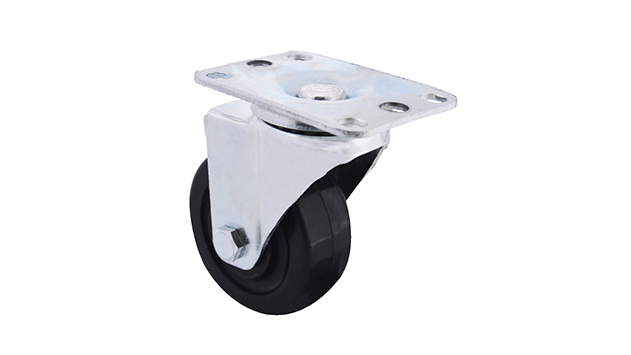
Chair Casters Ball Bearing Wheels Rubber Base. Resistant to abrasion, impact and corrosion. Heavy payload can hold 70-90Kgs per pcs,which can make it works at a stable and smooth status.
The Unsung Heroes of Industrial Mobility
Walk through any manufacturing plant, warehouse, or logistics hub, and you'll notice a silent force keeping operations moving: mobility. From the workstation where an assembler pieces together components to the trolley shuttling materials across the floor, the ability to move heavy loads smoothly and safely is the backbone of modern industrial efficiency. At the heart of this mobility lies a component so it's often overlooked—until it fails: the caster wheel. But not just any caster wheel. When the load climbs to 500kg or more, when precision maneuverability is non-negotiable, and when durability can't be compromised, heavy duty flat swivel castor wheels step into the spotlight. These robust, engineered solutions aren't just parts; they're the difference between a seamless workflow and costly downtime.
In industries where every minute counts, the wrong caster wheel can turn a simple task into a frustrating ordeal. Picture a team struggling to push a loaded turnover trolley across a factory floor, wheels sticking or wobbling under the weight. Or a workbench that needs to shift position to accommodate a new production line layout, only to tip or jam halfway. These scenarios aren't just inconvenient—they eat into productivity, increase the risk of workplace injuries, and undermine the very efficiency industrial operations strive for. That's why choosing the right heavy-duty caster wheel isn't an afterthought; it's a strategic decision that impacts daily operations, long-term costs, and overall workplace safety.
What Makes a "Heavy Duty Flat Swivel Castor Wheel"?
Let's start with the basics: what sets these caster wheels apart from the lighter, more common versions you might find on office chairs or shopping carts? At first glance, they might look similar—round wheels mounted on a bracket—but the devil is in the details. A heavy duty flat swivel castor wheel is defined by three key traits: load capacity, swivel mechanism, and mounting design.
First, the load capacity. These wheels are engineered to handle 500kg as a minimum, with some models rated for 800kg or more. This isn't just about using thicker metal; it's about precision engineering—distributing weight evenly, reinforcing stress points, and selecting materials that can withstand constant pressure without deforming. Second, the swivel mechanism. Unlike fixed casters that only roll forward and backward, swivel casters rotate 360 degrees, allowing for multidirectional movement. In heavy-duty applications, this mechanism must work smoothly even under full load, using high-quality bearings and robust construction to avoid seizing or sticking. Finally, the "flat" in the name refers to the mounting plate—a flat, solid base that attaches to the bottom of equipment (like a workbench or trolley). This design distributes the load across a wider surface area, reducing strain on both the caster and the equipment it's attached to.
But it's not just about raw strength. These casters are also designed with balance in mind. A 500kg load doesn't just need to be supported—it needs to be maneuverable. Imagine pushing a 500kg trolley down a narrow aisle with a 90-degree turn at the end. The caster wheels must pivot smoothly, respond to minimal force, and maintain stability to prevent tipping. This requires a delicate balance of weight distribution, wheel size, and swivel friction—all calibrated during the engineering process to ensure that even under heavy loads, the wheels feel "light" to operate.
Engineering for 500kg: The Anatomy of Durability
Materials: Beyond "Strong"—Built to Last
The secret to a caster wheel's load capacity starts with materials. For 500kg+ applications, manufacturers don't cut corners. Let's break down the most common materials and why they matter:
| Wheel Material | Typical Load Range (per wheel) | Best For | Key Benefits | Considerations |
|---|---|---|---|---|
| Polyurethane (PU) | 300kg – 800kg | Smooth concrete, warehouse floors, retail spaces | Quiet operation, non-marking, excellent grip, absorbs shocks | Less heat-resistant than steel; avoid prolonged exposure to extreme temperatures |
| Steel | 600kg – 2000kg+ | Rough concrete, outdoor yards, foundries | Maximum durability, high heat resistance, minimal deformation under load | Noisy on smooth floors; can scratch delicate surfaces (e.g., polished concrete) |
| Rubber (Heavy-Duty) | 250kg – 600kg | Tile, hardwood, uneven or wet surfaces | Superior traction, shock absorption, non-slip even in moist conditions | Prone to wear on rough surfaces; may degrade in oil or chemical-heavy environments |
Beyond the wheel itself, the swivel head and mounting plate are equally critical. Most heavy-duty models use high-grade steel for the bracket and swivel housing, often coated in zinc or nickel to resist corrosion. The swivel mechanism relies on precision ball bearings or roller bearings—small, hardened steel components that reduce friction, allowing the wheel to rotate smoothly even when supporting hundreds of kilograms. For example, a caster wheel rated for 500kg might use double-row ball bearings in the swivel joint, ensuring that weight is distributed evenly and rotation remains consistent over time.
Flat Plate Design: Stability in Every Mount
The "flat" in "flat swivel castor" refers to the mounting plate, and its importance can't be overstated. Unlike stem-mounted casters (which use a rod inserted into a socket), flat plate casters attach via screws or bolts through a solid, flat metal plate. This design does two key things: first, it distributes the load across a larger area of the equipment's base, reducing stress on individual attachment points. Second, it creates a lower center of gravity, which is crucial for stability when moving heavy loads. A stem-mounted caster might be sufficient for lighter equipment, but for 500kg+, the risk of the stem bending or pulling out of the socket is too high. The flat plate eliminates that risk, creating a secure, rigid connection that can withstand both vertical loads and the lateral forces of turning or stopping.

Why 500kg Matters: Real-World Applications
Numbers on a spec sheet only tell part of the story. To understand the value of a 500kg load capacity, let's look at the real-world scenarios where these casters shine. From workbenches to turnover trolleys and racks , these wheels are the unsung enablers of industrial efficiency.
Workbenches: Mobile Workstations That Mean Business
Modern manufacturing and assembly lines rarely stay static. A workbench that's fixed in one spot today might need to shift 10 feet tomorrow to accommodate a new machine or a revised workflow. But a fully equipped workbench—loaded with tools, fixtures, and even a small assembly project—can easily hit 300kg or more. Add a technician leaning on it, and suddenly you're approaching 500kg. A standard caster wheel would buckle under that weight, but a heavy-duty flat swivel model? It glides. Imagine a mechanic's workstation in an automotive plant: tools hang from the sides, parts bins line the surface, and a half-assembled engine component sits on top. With the right casters, moving that workstation to the next car on the line is as simple as a gentle push, no straining or struggling required. The result? Less time wasted on repositioning, more time focused on actual work.
Turnover Trolleys and Racks: Moving Inventory Without the Strain
In warehouses and distribution centers, turnover trolleys and racks are the workhorses of material handling. These trolleys might carry pallets of raw materials, stacks of finished goods, or bins of components destined for the assembly line. A typical loaded trolley can weigh 400kg or more—easily pushing into the 500kg range when fully stocked. Without heavy-duty casters, moving these trolleys becomes a two-person job (or worse, a risk of injury). But with flat swivel casters rated for 500kg, even a single worker can maneuver a fully loaded trolley through tight aisles, around corners, and up slight inclines with minimal effort. The swivel function is key here: in a crowded warehouse, being able to pivot 360 degrees means avoiding obstacles without having to backtrack or lift, saving precious time and reducing the risk of collisions.
Lean Systems: Efficiency Through Mobility
Lean manufacturing principles revolve around eliminating waste—whether it's time, materials, or unnecessary movement. A lean system thrives on flexibility: production lines that can reconfigure quickly, workstations that adapt to changing needs, and materials that flow seamlessly from one step to the next. Heavy-duty flat swivel casters are a cornerstone of this flexibility. For example, in a lean assembly line, a component might need to move from station A to station B, then to station C, with each station requiring precise positioning. Fixed equipment can't keep up with this pace, but mobile equipment on heavy-duty casters can. It's not just about moving things faster; it's about moving them smarter. When a caster wheel can handle 500kg without compromising on maneuverability, it becomes possible to design workflows that minimize downtime, reduce manual lifting, and keep production lines adaptable to change—all hallmarks of a successful lean system.

Beyond the Wheel: The Role of Caster Accessories
A heavy-duty caster wheel is only as good as its supporting cast. That's where caster accessories come in—small additions that enhance performance, safety, and versatility. For industrial applications, these accessories aren't optional; they're often the final piece that turns a good caster into a great one.
Take brakes, for example. A caster wheel that rolls smoothly is essential, but so is keeping it stationary when needed. Heavy-duty brake options include side brakes (which lock the wheel rotation) and total lock brakes (which lock both the wheel and the swivel mechanism). In a workbench application, a total lock brake ensures the station stays put while a technician works, preventing accidental movement. For a turnover trolley parked on a slight incline, a side brake adds an extra layer of safety, keeping the load from rolling away.
Another key accessory is the swivel lock, which fixes the caster in a straight-ahead position. This is invaluable for long-distance moves, like transporting a loaded trolley from one end of a warehouse to another. By locking the swivel, the trolley moves in a straight line, reducing the risk of veering off course or tipping. Similarly, floor protectors—often made of rubber or polyurethane—can be added to steel wheels to prevent scratching on polished concrete or tile floors, a common concern in facilities where aesthetics matter (like retail distribution centers or cleanrooms).
Even small details like grease fittings matter. Heavy-duty casters designed for industrial use often include zerk fittings (small grease nipples) that allow for easy lubrication of the swivel joint and wheel bearings. Regular lubrication extends the life of the caster, ensuring smooth operation even after months of heavy use. For facilities with strict maintenance schedules, this simple accessory turns a potential replacement into a routine service, saving time and money in the long run.
Choosing the Right Caster: What to Look For
With so many options on the market, selecting the right heavy-duty flat swivel castor wheel can feel overwhelming. But by focusing on a few key factors, you can narrow down the choices and find the perfect fit for your needs.
Start with load capacity—but go higher. Always choose a caster wheel rated for more than your expected maximum load. If your trolley typically carries 400kg, opt for a 500kg-rated caster (or higher). This "safety margin" accounts for unexpected weight spikes (like an extra bin of parts) and ensures the caster doesn't wear prematurely from being operated at maximum capacity.
Consider the floor surface. A steel wheel might be durable, but it will scratch a polished concrete floor. A rubber wheel offers great traction but might wear quickly on rough asphalt. Polyurethane wheels strike a balance for most indoor industrial settings—quiet, non-marking, and durable on concrete or tile.
Think about environment. Will the caster be exposed to oil, chemicals, or extreme temperatures? If so, look for corrosion-resistant materials (like stainless steel brackets) and chemical-resistant wheel materials (like polyurethane or specialized rubber). For food processing facilities, where hygiene is critical, choose casters with sealed bearings to prevent grease leakage and easy-to-clean surfaces.
Don't forget maneuverability. A caster might handle 500kg, but if it's hard to swivel, it's not doing its job. Look for models with precision bearings and a swivel head designed for low friction. Test if possible—even a small sample can reveal how easily the caster turns under load.
Investing in Reliability: The Long-Term Payoff
Heavy-duty flat swivel castor wheels aren't the cheapest option on the shelf. But in industrial settings, the cost of cutting corners far outweighs the initial savings. A low-quality caster might fail after a few months of heavy use, leading to downtime while you replace it, potential damage to equipment or products, and even workplace injuries. A high-quality, 500kg-rated caster, on the other hand, can last for years with minimal maintenance, paying for itself in reduced downtime and improved productivity.
Consider the math: if a cheap caster costs $50 but lasts 6 months, versus a heavy-duty model at $150 that lasts 5 years. The cheap option costs $100 per year, while the heavy-duty one costs $30 per year. Factor in the cost of downtime (estimated at $22,000 per hour for manufacturing facilities, according to some industry reports) when a caster fails, and the value of reliability becomes crystal clear. It's not just about the caster itself—it's about protecting the entire operation from unnecessary disruption.
Final Thoughts: Mobility That Moves the Needle
In the grand scheme of industrial equipment, heavy duty flat swivel castor wheels might seem small. But their impact is anything but. They're the reason a workbench can adapt to a new layout, a turnover trolley can move inventory without strain, and a lean system can live up to its promise of efficiency. For operations handling 500kg or more, these casters aren't just components—they're partners in productivity.
So the next time you see a loaded trolley gliding across a factory floor, or a workbench shifting position with ease, take a moment to appreciate the engineering beneath it. Those heavy-duty casters? They're not just rolling—they're keeping the industry moving forward.