- Company Articles
- Products and Technology
- Product knowledge
- Heavy Duty Split Foot Seat Design Trends in Modern Manufacturing

Heavy Duty Split Foot Seat Design Trends in Modern Manufacturing
Related Product
Heavy Duty Split Foot Seat
M10 aluminum heavy duty split foot deat with foot adjuster for workbench and flow rack.
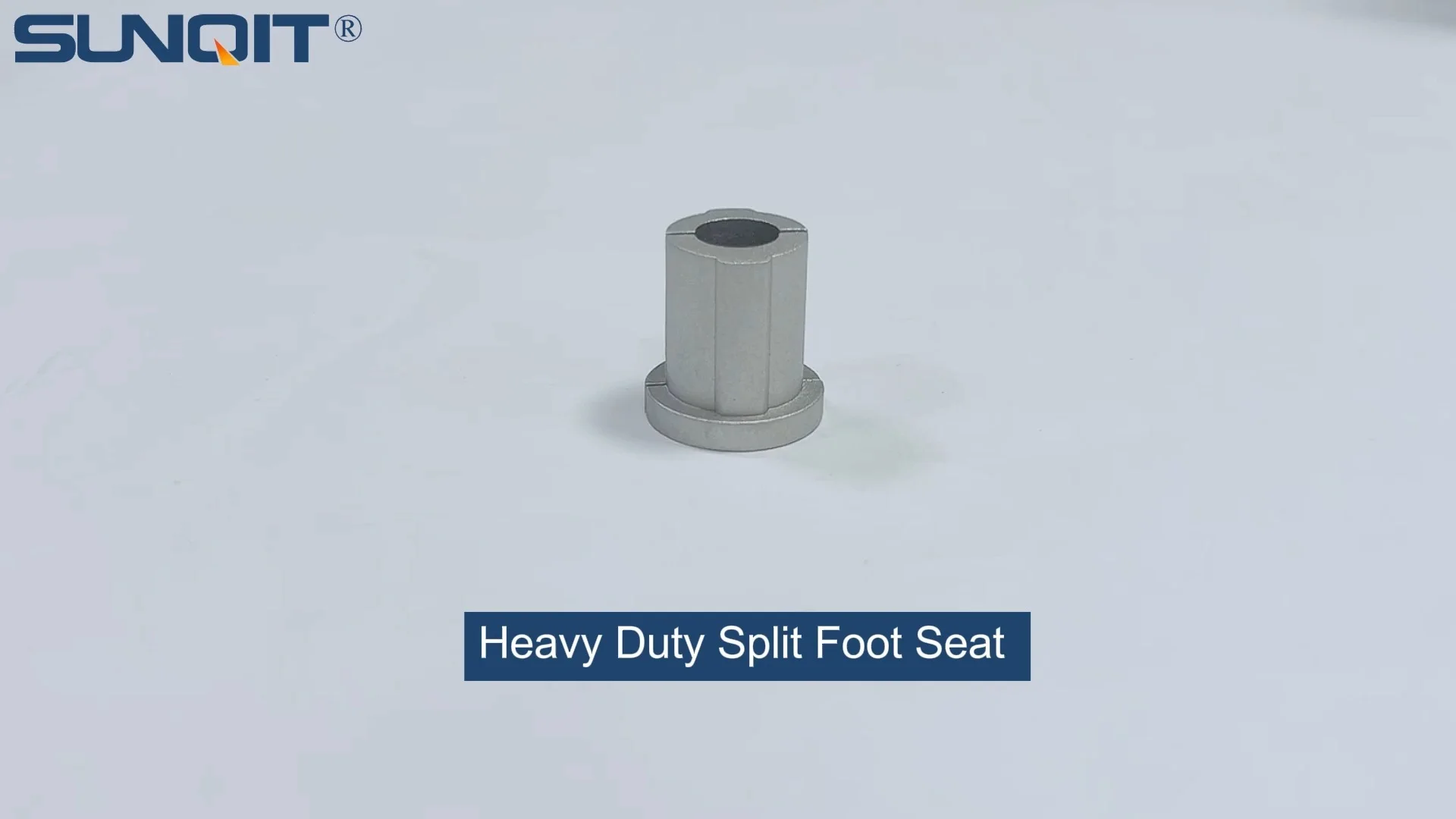
In the bustling landscape of modern manufacturing, where efficiency, flexibility, and worker well-being reign supreme, it's often the unsung components that hold the system together. Take, for instance, the Heavy Duty Split Foot Seat—a seemingly modest part that plays a foundational role in supporting everything from workbenches and material racks to conveyor systems and assembly lines. Far more than just a "footrest," this component is a linchpin of industrial infrastructure, ensuring stability, adaptability, and safety in fast-paced production environments. As manufacturing evolves to meet the demands of Industry 4.0, the design and functionality of Heavy Duty Split Foot Seats are undergoing a quiet revolution. Let's explore the key trends shaping their development, and why they matter more than ever in today's factories.
1. Material Evolution: From Steel to Smart Alloys
Traditionally, Heavy Duty Split Foot Seats were built to prioritize raw strength above all else. Cast iron and solid steel were the go-to materials, valued for their ability to bear heavy loads—think tons of machinery, stacked inventory, or continuous vibration from conveyor belts. But while these materials delivered on durability, they came with significant trade-offs: weight that made installation and reconfiguration cumbersome, susceptibility to rust in humid or chemical-heavy environments, and a rigidity that clashed with the need for agile, modular workspaces.
Today, the tide is turning toward aluminum profile and advanced alloys, marking a shift from "brute force" to "engineered efficiency." Aluminum, in particular, has emerged as a game-changer. Thanks to innovations in aluminum extrusion profiles—precision-engineered shapes created by forcing molten aluminum through dies—manufacturers can now produce split foot seats that are both lightweight and incredibly strong. Aluminum's natural corrosion resistance eliminates the need for heavy coatings, reducing maintenance costs and extending lifespans in harsh industrial settings. Its strength-to-weight ratio is a revelation: a 6-inch aluminum split foot seat can support the same load as a steel counterpart while weighing up to 40% less, making it easier to transport, install, and reposition as production needs change.
But it's not just about aluminum alone. Hybrid materials are also gaining traction: combining aluminum cores with reinforced composite outer layers to enhance impact resistance, or integrating carbon fiber additives to boost tensile strength without adding bulk. For example, in automotive manufacturing plants where split foot seats must withstand both heavy loads and occasional collisions from forklifts, these hybrid designs offer the best of both worlds—flexibility and toughness.
| Material Type | Traditional Examples | Modern Examples | Key Advantages |
|---|---|---|---|
| Metals | Cast iron, solid steel | Aluminum alloys, carbon steel-aluminum hybrids | Lightweight, corrosion-resistant, high strength-to-weight ratio |
| Composites | — | Fiber-reinforced polymers, glass-filled plastics | Impact absorption, chemical resistance, design flexibility |
| Recycled Materials | — | Recycled aluminum, reclaimed steel composites | Sustainability, reduced carbon footprint |
2. Ergonomics: Designing for the Human Element
Modern manufacturing isn't just about machines—it's about people. As companies recognize that worker health directly impacts productivity and retention, ergonomics has moved from a "nice-to-have" to a core design principle. Heavy Duty Split Foot Seats, which often form the base of workstations where operators stand for hours, are now being reimagined with human comfort in mind.
One of the most notable trends is the integration of caster and accessories that balance mobility with stability. In the past, fixed steel foot seats anchored workbenches in place, making it difficult to adjust layouts for different tasks or accommodate workers of varying heights. Today's split foot seats often pair with lockable casters, allowing teams to reposition workstations in minutes—say, shifting a assembly bench from one side of the line to another for a new product run—while the split design ensures the seat remains firmly grounded when locked. This hybrid approach eliminates the "either/or" of mobility vs. stability, a critical win for lean manufacturing environments where workflow optimization is constant.
Adjustability is another focus. New designs include height-modifiable split foot seats, where threaded rods or hydraulic lifts let workers tweak the base height by up to 4 inches, aligning work surfaces with their waist or elbow height to reduce strain. Some models even feature built-in vibration-dampening technology: rubberized inserts or spring-loaded cushions that absorb the constant hum of machinery, easing fatigue during long shifts. For example, in electronics manufacturing, where precision is key, a stable, vibration-free workstation base (supported by an ergonomically designed split foot seat) can reduce errors caused by hand tremors or muscle fatigue.

3. Lean Integration: Modularity for the Agile Factory
At the heart of modern manufacturing is the lean system —a philosophy centered on minimizing waste, maximizing value, and adapting quickly to change. Heavy Duty Split Foot Seats are no longer standalone components; they're now engineered to be "lean-ready," designed to fit seamlessly into modular, reconfigurable setups that align with just-in-time production and rapid prototyping.
Modularity is the name of the game here. Today's split foot seats often feature standardized mounting holes and compatibility with lean pipe joint systems—those versatile, easy-to-assemble connectors that allow workers to build custom workbenches, shelving, or flow racks in hours, not days. Imagine a scenario where a factory needs to pivot from producing smartphone components to medical devices overnight: with modular split foot seats, the existing workstations can be disassembled, reconfigured, and reassembled with new lean pipe structures, all without welding or specialized tools. This flexibility reduces downtime, cuts costs, and keeps production lines adaptable to market demands.
Another lean-driven trend is the focus on "right-sizing." Traditional split foot seats were often over-engineered, built to support hypothetical maximum loads that rarely materialized, resulting in wasted material and unnecessary weight. Modern designs use data-driven load calculations: sensors and simulation software analyze real-world usage (e.g., average weight on a workbench, frequency of repositioning) to determine the optimal size and material thickness. The result? A split foot seat that's strong enough for the job but not an ounce heavier—reducing material waste, shipping costs, and environmental impact.

4. Sustainability: Green by Design
Sustainability is no longer a buzzword in manufacturing; it's a business imperative. Customers, regulators, and even investors are demanding eco-friendly practices, and Heavy Duty Split Foot Seats are rising to the challenge. From raw materials to end-of-life disposal, every stage of their lifecycle is being reexamined through a green lens.
Aluminum's recyclability is a major asset here. Unlike steel, which loses strength when recycled repeatedly, aluminum can be melted down and repurposed indefinitely without compromising quality. Many manufacturers now use recycled aluminum (up to 70% in some cases) in their split foot seats, reducing reliance on virgin ore and cutting carbon emissions by up to 95% compared to producing new aluminum. Even the production process itself is getting greener: energy-efficient extrusion machines, water-based coolants, and solar-powered factories are becoming standard, shrinking the carbon footprint of each component.
Durability also plays a role in sustainability. A well-designed split foot seat made from aluminum or hybrid materials can last 15–20 years, far longer than traditional steel models that might rust out in a decade. This longevity reduces the need for frequent replacements, minimizing waste. And when the time does come to retire a split foot seat, modular designs make disassembly easy—separating aluminum, rubber, and composite parts for targeted recycling rather than sending the entire unit to a landfill.

5. Customization: Tailored to Industry Needs
Gone are the days of "one-size-fits-all" industrial components. Today's factories span industries as diverse as aerospace, food processing, and semiconductor manufacturing, each with unique demands. Heavy Duty Split Foot Seats are now being customized to meet these niche requirements, ensuring they don't just "work"—they excel.
Take the food and beverage industry, for example. Here, split foot seats must adhere to strict hygiene standards, with smooth surfaces that resist bacterial growth and are easy to sanitize. Manufacturers are responding with stainless steel or powder-coated aluminum models, featuring seamless welds and rounded edges to eliminate crevices where dirt can hide. In contrast, in automotive plants, where split foot seats are exposed to oils, greases, and harsh cleaning agents, chemical-resistant coatings and corrosion-proof alloys are prioritized.
Customization also extends to aesthetics, believe it or not. As factories embrace "visual management"—using color-coding to organize workflows—split foot seats are being offered in branded hues or safety colors (e.g., yellow for high-traffic areas, red for emergency stop zones). This small touch enhances workplace organization and reduces errors by making it easier for workers to identify equipment zones at a glance.
The Future: Smart Foot Seats and Beyond
Looking ahead, the evolution of Heavy Duty Split Foot Seats shows no signs of slowing down. One emerging trend is the integration of smart technology: sensors embedded in the seat to monitor load, temperature, or vibration in real time. Imagine a split foot seat that sends an alert to maintenance when it detects abnormal stress (e.g., a workbench overloaded beyond its capacity) or wear (e.g., a loose caster affecting stability). This predictive maintenance could prevent accidents and downtime, turning a passive component into an active participant in factory safety.
Another frontier is 3D printing. While still in its early stages for large-scale production, 3D-printed split foot seats offer unprecedented design freedom—complex geometries that optimize strength while minimizing material use, or custom shapes tailored to unique equipment. For low-volume, high-specialty applications (e.g., aerospace tooling), this could revolutionize how split foot seats are made, reducing lead times from weeks to days.
Why It All Matters
At first glance, Heavy Duty Split Foot Seats might seem like a minor detail in the grand scheme of manufacturing. But in reality, they're a microcosm of the industry's broader shift: from rigid, wasteful systems to agile, human-centric, and sustainable ones. A well-designed split foot seat reduces worker fatigue, cuts costs, speeds up production changes, and lowers environmental impact—all while keeping the lights on in factories that power our global economy.
As we move further into the age of smart manufacturing, it's clear that even the "smallest" components will play big roles. The next time you walk through a factory, take a moment to look down—you might just see the future of manufacturing, one split foot seat at a time.