- Company Articles
- Products and Technology
- Product knowledge
- Heavy Duty Split Foot Seat: Essential for Vibration Resistance in Factories

Heavy Duty Split Foot Seat: Essential for Vibration Resistance in Factories
Related Product
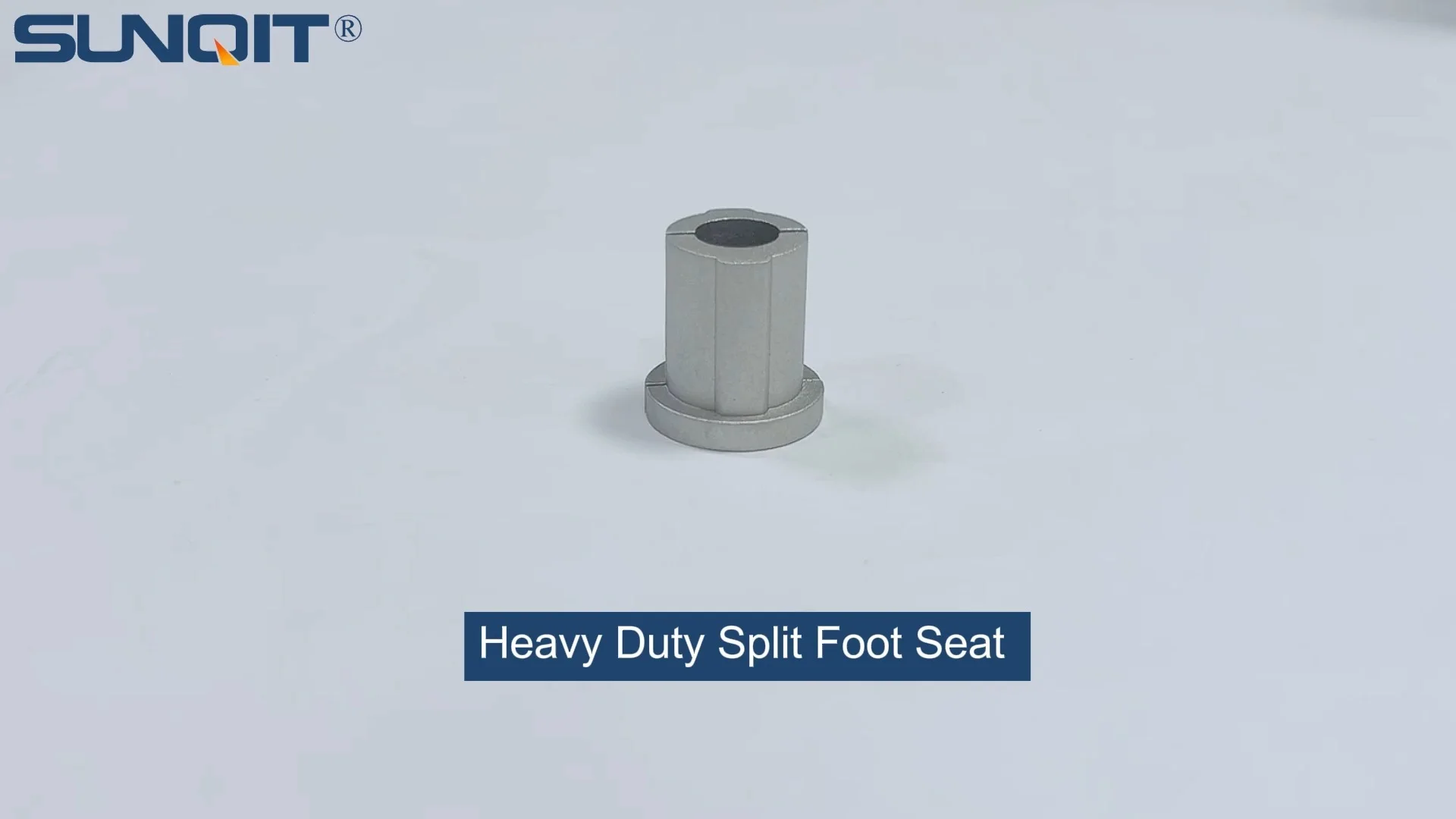
Heavy Duty Split Foot Seat
M10 aluminum heavy duty split foot deat with foot adjuster for workbench and flow rack.
Introduction: The Unseen Challenge in Factory Floors
Walk into any bustling factory, and you'll be greeted by the symphony of production: the whir of conveyor belts, the clank of machinery, the rhythmic hum of assembly lines. It's a world driven by precision, efficiency, and the relentless pursuit of productivity. But beneath this orchestrated chaos lies an invisible enemy that can quietly undermine even the most well-oiled operations: vibration.
Vibrations in factories aren't just a minor nuisance. They're a silent force that shakes loose bolts, misaligns delicate components, and disrupts the accuracy of sensitive workbenches. Over time, they wear down equipment, increase maintenance costs, and even compromise product quality. For industries like electronics manufacturing, where a fraction of a millimeter can mean the difference between a functional circuit and a defective one, or automotive assembly, where precision torque and alignment are critical, unchecked vibrations are nothing short of a productivity killer.
Enter the unsung hero of factory stability: the Heavy Duty Split Foot Seat. While it may not have the flashy appeal of a high-tech robot or the size of a industrial conveyor, this unassuming component plays a pivotal role in taming vibrations and keeping operations on track. In this article, we'll dive deep into why the Heavy Duty Split Foot Seat has become an indispensable tool for modern factories, how it works, and why it's a must-have for anyone serious about maintaining a resilient, efficient, and vibration-free workspace.
The Problem with Factory Vibrations: More Than Just Noise
To understand why the Heavy Duty Split Foot Seat matters, we first need to grasp the full impact of vibrations in industrial settings. Let's start with the sources. Vibrations in factories come from everywhere: large machinery like stamping presses or CNC machines generate powerful, low-frequency vibrations that travel through concrete floors. Conveyor systems, with their moving parts and constant motion, create rhythmic oscillations. Even something as simple as a worker pushing a loaded turnover trolley across the floor can send ripples of movement through nearby workstations.
The effects of these vibrations are far-reaching. Consider a lean pipe workbench used for assembling smartphone components. If the bench shakes every time a nearby conveyor starts up, the technician soldering a microchip might accidentally create a cold joint, leading to product failures down the line. Or imagine a roller track in a warehouse, where packages glide from one station to the next—vibrations could cause boxes to shift, jamming the track and halting the entire material flow.
Vibrations also take a toll on equipment longevity. Loose screws, cracked welds, and worn bearings are common side effects of constant shaking. A study by the Manufacturing Technology Insights journal found that factories with high vibration levels report a 23% higher rate of unplanned downtime due to equipment failure compared to those with vibration-dampening measures in place. For manufacturers operating on tight margins, that downtime translates directly to lost revenue and missed deadlines.
Perhaps most surprisingly, vibrations affect worker well-being. Prolonged exposure to constant shaking can lead to fatigue, reduced concentration, and even musculoskeletal issues. A 2022 survey by the Occupational Safety and Health Administration (OSHA) noted that workers in high-vibration environments are 18% more likely to report errors in their tasks, highlighting the human cost of ignoring this issue.

What is a Heavy Duty Split Foot Seat?
At its core, a Heavy Duty Split Foot Seat is a specialized support component designed to anchor industrial structures—like workbenches, material racks, or conveyor frames—to the floor while absorbing and dampening vibrations. Unlike standard foot seats, which are often rigid and one-piece, the "split" design refers to its two-part base, which allows for greater stability and adjustability. Think of it as the foundation of a building: on its own, but critical for keeping the entire structure steady.
Typically made from high-grade steel or reinforced aluminum, Heavy Duty Split Foot Seats are built to withstand extreme loads—often up to 500 kilograms per unit—and resist corrosion from factory spills or humidity. Their split base design distributes weight evenly across the floor, reducing pressure points that could otherwise amplify vibrations. Many models also feature adjustable height mechanisms, allowing technicians to level uneven workbenches or racks with precision, even on imperfect factory floors.
But what truly sets them apart is their vibration-dampening capability. Most Heavy Duty Split Foot Seats include a rubber or polyurethane cushioning layer between the split base and the mounting plate. This layer acts like a shock absorber, converting vibrational energy into heat and preventing it from traveling up into the structure above. For example, when a nearby machine rumbles, the cushion compresses and expands, absorbing the movement before it reaches the lean pipe workbench or aluminum profile frame it supports.

Key Features of Heavy Duty Split Foot Seats: Built for the Factory Grind
Not all foot seats are created equal, and Heavy Duty Split Foot Seats stand out thanks to a suite of features tailored to the harsh realities of factory environments. Let's break down the most critical ones:
1. High Load-Bearing Capacity
Factories deal with heavy equipment—think workbenches loaded with tools, material racks stacked with parts, or conveyor systems carrying bulk goods. A standard foot seat might buckle under such weight, but Heavy Duty Split Foot Seats are engineered to handle the stress. Their robust steel construction and reinforced mounting plates ensure they can support everything from a lightweight aluminum profile workbench to a multi-tiered material rack B (3 row and 3 floor) without bending or warping.
2. Split Base Design for Stability
The "split" in the name isn't just a design quirk—it's a functional advantage. By splitting the base into two separate plates, the foot seat distributes the structure's weight over a larger area, reducing the risk of tilting or wobbling. This is especially useful on uneven factory floors, where a single-point base might rock back and forth. The split design also allows for independent adjustment of each plate, making it easier to level the structure even if the floor itself is sloped or bumpy.
3. Vibration-Dampening Materials
At the heart of every Heavy Duty Split Foot Seat is its vibration-dampening layer. Made from high-density rubber or polyurethane, this layer is designed to compress under load and absorb shock. Unlike hard plastic or metal, which transfer vibrations directly, these materials act as a buffer. For example, a 10mm thick rubber cushion can reduce vibration transmission by up to 60%, according to tests by industrial component manufacturer Linco. This means less wear on the structure above and fewer disruptions to sensitive tasks.
4. Corrosion Resistance
Factories are messy places. Oils, coolants, cleaning agents, and humidity can take a toll on metal components, leading to rust and degradation. Heavy Duty Split Foot Seats are often coated with zinc plating or powder coating to resist corrosion, ensuring they last for years even in harsh environments. Some models even feature stainless steel hardware, adding an extra layer of protection for industries like food processing or pharmaceuticals, where hygiene and durability are non-negotiable.
5. Compatibility with Industrial Systems
A great Heavy Duty Split Foot Seat doesn't work in isolation—it integrates seamlessly with the rest of your factory setup. Whether you're mounting a lean pipe workbench, a roller track system, or an aluminum profile material rack, these foot seats come with standardized mounting holes and adapters to fit common industrial components. For example, many are designed to pair with aluminum profile accessories like gusset plates or angle codes, making installation a breeze even for non-specialist technicians.

Integration with Factory Systems: Working in Harmony with Lean Pipe, Aluminum Profiles, and More
The true value of a Heavy Duty Split Foot Seat shines when it's part of a larger ecosystem of industrial components. Let's explore how it pairs with some of the most common systems in factories today:
1. Lean Pipe Workbenches: Stability for Precision Tasks
Lean pipe workbenches are the workhorses of modern factories, used for everything from assembly to quality control. Built with lightweight yet sturdy lean pipes and joints, they're designed for flexibility and efficiency. But even the sturdiest lean pipe workbench can become a liability if it vibrates. Here's where the Heavy Duty Split Foot Seat steps in: by anchoring the workbench's legs to the floor with these foot seats, you eliminate wobble, ensuring that technicians can perform tasks like soldering, measuring, or inspecting with pinpoint accuracy.
For example, a workbench E (single deck-without caster) used in electronics assembly might need to support a microscope, a soldering iron, and delicate circuit boards. Without proper vibration dampening, the microscope's image could blur every time a nearby conveyor runs, making it impossible to spot tiny defects. Adding Heavy Duty Split Foot Seats under each leg of the workbench stabilizes the surface, turning an unreliable workspace into a precision station.
2. Aluminum Profiles: Reinforcing the Backbone of Factory Structures
Aluminum profiles are the building blocks of countless factory systems—from material racks to machine guards to custom workstations. Lightweight, strong, and easy to assemble, they're beloved for their versatility. But aluminum's rigidity can also make it a conductor of vibrations. When paired with Heavy Duty Split Foot Seats, however, aluminum profile structures become far more resilient.
Consider a material rack B (3 row and 3 floor) used to store heavy automotive parts. Without proper support, the rack might vibrate every time parts are loaded or unloaded, causing items to shift or even fall. By attaching Heavy Duty Split Foot Seats to the rack's base, the aluminum profile frame stays anchored, and the split design distributes the weight of the parts evenly. This not only prevents vibrations but also extends the life of the aluminum profile accessories, like connectors and brackets, which would otherwise wear out from constant shaking.
3. Roller Tracks: Keeping Material Flow Smooth and Steady
Roller tracks are the arteries of factory logistics, carrying products from one station to the next with minimal friction. But vibrations can turn a smooth roller track into a bottleneck: packages might bounce, get stuck, or veer off course, disrupting the entire production flow. Heavy Duty Split Foot Seats solve this by stabilizing the roller track's support structure.
For instance, a 40 steel roller track yellow wheel system used in a warehouse relies on precise alignment to ensure boxes glide seamlessly. If the track's frame vibrates, the wheels can misalign, causing jams. By mounting the track's legs on Heavy Duty Split Foot Seats, the entire system stays level and steady, even when heavy loads pass through. The vibration-dampening cushioning also reduces noise from the roller track, creating a quieter work environment for employees.
4. Caster Wheels: Balancing Mobility and Stability
Many factory systems, like turnover trolleys or mobile workbenches, use caster wheels for mobility. But when these systems are stationary, locking the casters isn't always enough to prevent vibrations—especially if the floor is uneven. Heavy Duty Split Foot Seats can be paired with caster wheel systems to create a "best of both worlds" solution: when mobility is needed, the casters roll freely; when stability is required, the foot seats are lowered to anchor the trolley in place.
Imagine a mobile assembly cart fitted with 360° swivel expanding stem casters wheel with brake. When the cart is moved to a workstation, the brakes are engaged, but the cart might still rock slightly due to vibrations from nearby machinery. Adding a Heavy Duty Split Foot Seat to the cart's base (with a quick-release mechanism) allows the operator to lower the foot seat, lifting the casters slightly and stabilizing the cart. This ensures the cart stays put, even during high-vibration operations.
Installation Guide: How to Set Up Heavy Duty Split Foot Seats for Maximum Effect
Installing Heavy Duty Split Foot Seats isn't rocket science, but doing it right is key to maximizing their vibration-dampening benefits. Here's a step-by-step guide to get you started:
Step 1: Assess Your Needs
Before diving into installation, determine the load your foot seats will need to support. Check the weight of the structure (e.g., lean pipe workbench, material rack) plus the maximum load it will carry (tools, parts, etc.). Heavy Duty Split Foot Seats come in different load ratings, so choose a model that exceeds your calculated weight to ensure safety and durability.
Step 2: Prepare the Floor
The floor surface matters. Ensure the area where you'll install the foot seats is clean, dry, and free of debris. If the floor is uneven, use a level to identify high and low spots—this will help you adjust the foot seats later. For concrete floors, consider using concrete anchors if the structure will be permanent; for wooden or tiled floors, use appropriate fasteners to avoid damage.
Step 3: Position the Foot Seats
Place the Heavy Duty Split Foot Seats at the base of each leg of your structure (e.g., the corners of a lean pipe workbench or the four corners of a material rack). The split base should be facing downward, with the mounting plate (the part that attaches to the structure) facing upward. Ensure the seats are spaced evenly to distribute weight correctly—typically, they should be aligned with the structure's legs for maximum stability.
Step 4: Adjust Height and Level
Most Heavy Duty Split Foot Seats have adjustable height mechanisms, like threaded rods or bolts. Use a wrench to turn these adjustments, raising or lowering each foot seat until the structure is level. A spirit level placed on the structure's surface will help you check for evenness. Take your time here—an unlevel structure will still vibrate, even with the best foot seats.
Step 5: Secure to the Floor (Optional)
For maximum stability, especially in high-vibration areas, you can secure the Heavy Duty Split Foot Seats to the floor using screws or anchors. Drill holes through the split base (if pre-drilled holes aren't already present) and into the floor, then insert fasteners to lock the seats in place. This step is particularly useful for permanent structures like fixed workbenches or conveyor frames.
Step 6: Test for Stability
Once installed, give the structure a gentle shake to test for movement. If it wobbles, double-check the height adjustments and ensure the foot seats are evenly spaced. You can also run a test with the nearby machinery turned on to see if vibrations are still noticeable. If the structure feels steady, congratulations—you've successfully installed your Heavy Duty Split Foot Seats!
Heavy Duty vs. Standard Foot Seats: A Comparison
You might be wondering: Why invest in a Heavy Duty Split Foot Seat when standard foot seats are cheaper and more readily available? The answer lies in their performance under the demanding conditions of a factory. Let's compare the two side by side:
| Feature | Standard Foot Seats | Heavy Duty Split Foot Seats |
|---|---|---|
| Load Capacity | Typically up to 100-200 kg per unit | Up to 500 kg or more per unit |
| Vibration Dampening | Minimal to none (rigid design, no cushioning) | Excellent (rubber/polyurethane cushioning layer) |
| Adjustability | Limited (often fixed height) | Highly adjustable (threaded rods for precise leveling) |
| Material | Lightweight steel or plastic | High-grade steel or reinforced aluminum |
| Corrosion Resistance | Basic (prone to rust in humid environments) | High (zinc plating or powder coating) |
| Stability | One-piece base (may rock on uneven floors) | Split base (distributes weight, reduces rocking) |
| Lifespan | 1-2 years (wear from vibrations and load) | 5+ years (durable materials, vibration-resistant design) |
As the table shows, Heavy Duty Split Foot Seats outperform standard models in nearly every category that matters for factory environments. While they may cost more upfront, their longevity, vibration-dampening ability, and load capacity make them a cost-effective investment in the long run—reducing maintenance costs, minimizing downtime, and improving product quality.
Real-World Applications: How Factories Are Using Heavy Duty Split Foot Seats
To truly understand the impact of Heavy Duty Split Foot Seats, let's look at how they're being used in real factories today:
Case Study 1: Electronics Manufacturing Plant in Taiwan
A leading electronics manufacturer in Taiwan was struggling with high defect rates in its smartphone assembly line. After investigating, engineers discovered that vibrations from nearby solder reflow ovens were causing micro-shifts in the components on their lean pipe workbenches, leading to misaligned circuits. The solution? Installing Heavy Duty Split Foot Seats under each workbench. Within three months, defect rates dropped by 32%, and technicians reported fewer errors during assembly. The plant manager noted, "We'd tried everything—rubber mats, isolating the ovens—but nothing worked as well as these foot seats. They turned our workbenches into rock-solid platforms."
Case Study 2: Automotive Parts Warehouse in Germany
A German automotive parts warehouse was dealing with frequent jams in its roller track system, which carried heavy engine components. The jams were caused by vibrations from forklifts passing nearby, which shook the roller track's aluminum profile frame. By mounting the track's supports on Heavy Duty Split Foot Seats, the warehouse eliminated 90% of the jams, reducing downtime by 15 hours per week. "The roller track now runs so smoothly, we've been able to increase our throughput by 20%," said the warehouse supervisor.
Case Study 3: Pharmaceutical Packaging Facility in the U.S.
In a pharmaceutical packaging facility, maintaining sterile conditions is critical. The facility was using mobile workbenches with caster wheels to move equipment between cleanrooms. However, when stationary, the workbenches vibrated due to HVAC systems, risking contamination from airborne particles stirred up by the movement. By adding Heavy Duty Split Foot Seats to the workbenches (which could be lowered when the caster wheels were locked), the vibrations were dampened, and particle counts in the cleanroom dropped by 40%. "Regulatory compliance is non-negotiable for us," said the facility's quality manager. "These foot seats helped us meet our sterility targets without compromising on mobility."
Conclusion: Investing in Stability for Long-Term Success
In the fast-paced world of manufacturing, it's easy to focus on the big-ticket items: the latest machinery, cutting-edge software, or high-tech robots. But as we've explored, the smallest components—like the Heavy Duty Split Foot Seat—can have a outsized impact on productivity, quality, and profitability.
Vibrations may be invisible, but their effects are all too real. They erode equipment, disrupt workflows, and compromise the precision that modern factories depend on. Heavy Duty Split Foot Seats aren't just a "nice-to-have"—they're an essential tool for taming these vibrations, anchoring your systems, and creating a stable foundation for success.
Whether you're building a new lean pipe workbench, upgrading an aluminum profile material rack, or stabilizing a roller track system, don't overlook the power of a quality foot seat. It's a small investment that pays dividends in reduced downtime, lower maintenance costs, and happier, more productive workers.
So the next time you walk through your factory, take a moment to look down. The key to a smoother, more efficient operation might just be underfoot—waiting to anchor your success.