- Company Articles
- Products and Technology
- Product knowledge
- Heavy Duty Split Foot Seat Material Innovation: Aluminum Alloys 101

Heavy Duty Split Foot Seat Material Innovation: Aluminum Alloys 101
Related Product
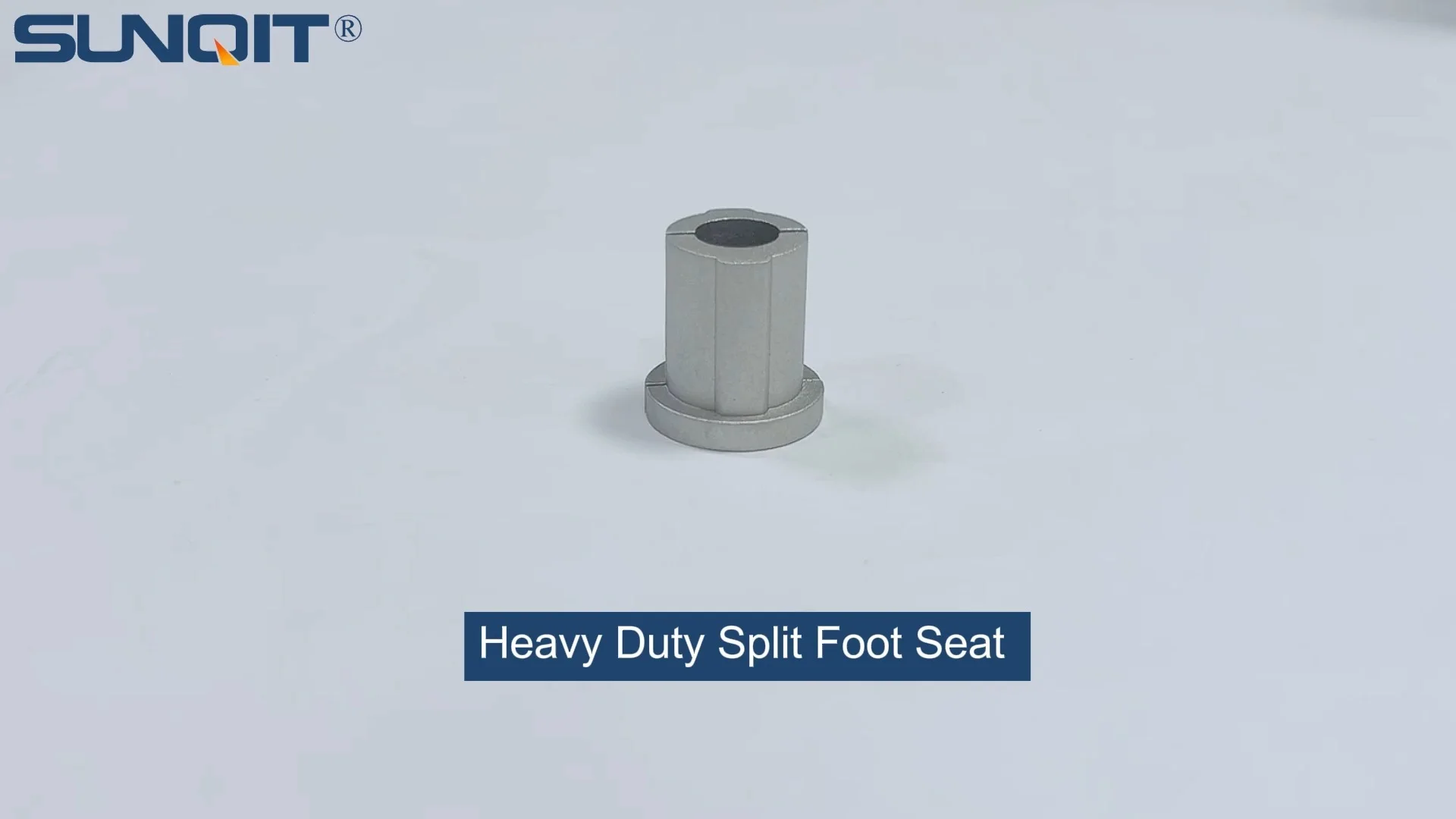
Heavy Duty Split Foot Seat
M10 aluminum heavy duty split foot deat with foot adjuster for workbench and flow rack.
Walk into any manufacturing plant, warehouse, or assembly line, and you'll notice hundreds of unsung heroes keeping operations running smoothly. They're not the flashy robots or high-tech machinery—they're the quiet workhorses like workbenches, material racks, and conveyors. And what keeps those workhorses steady? Often, it's something as simple yet critical as a foot seat. Today, we're diving deep into one of the most impactful material innovations in this space: the shift to aluminum alloys for heavy duty split foot seats. We'll explore why this matters, how aluminum extrusion profiles are changing the game, and why aluminum profile accessories are the unsung heroes of industrial stability.
What Even Is a Heavy Duty Split Foot Seat?
Before we get into the material science, let's make sure we're all on the same page. A heavy duty split foot seat is a component designed to anchor industrial equipment to the ground (or a surface) while distributing weight evenly. Think of it as the "feet" of a workbench or the "base" of a conveyor system. Split foot seats are split into two parts, which makes installation easier—you can adjust them to fit uneven floors, tighten them without removing the entire structure, and replace them individually if one wears out. "Heavy duty" means they're built to handle serious weight: we're talking hundreds, even thousands of pounds of machinery, tools, or materials stacked on top.
In factories, where precision and safety are non-negotiable, a wobbly workbench or a sagging conveyor isn't just an annoyance—it's a hazard. A poorly made foot seat can lead to equipment misalignment, which throws off production timelines, damages products, or worse, causes accidents. That's why choosing the right material for these components is so critical. For decades, the go-to materials were steel or cast iron. They're strong, sure, but they come with a laundry list of problems that have left manufacturers scratching their heads for better solutions.
The Problem with "The Old Way": Steel, Iron, and Plastic Shortcomings
Let's take a quick trip down memory lane. Steel and cast iron were once the darlings of industrial manufacturing for foot seats. Why? They're dense, which means they can support heavy loads without bending. But density has a downside: weight. A steel foot seat might weigh 10-15 pounds on its own. Multiply that by 4 (for a workbench with four feet) or 20 (for a long conveyor), and suddenly you're adding hundreds of pounds to your equipment. That makes installation a two-person job, increases shipping costs, and—here's the kicker—makes adjustments a nightmare. Try moving a steel-based workbench across the factory floor when you need to reconfigure your layout. Spoiler: It's not fun.
Then there's corrosion. Steel and iron rust. Even with coatings, over time, exposure to moisture (common in factories with washdowns or humid environments) or chemicals eats away at the material. A rusted foot seat doesn't just look bad—it weakens. A hairline crack from corrosion can turn into a catastrophic failure under load. And let's not forget about cost. Steel prices fluctuate with global markets, and casting iron requires high heat and specialized molds, driving up production expenses.
Plastic was briefly considered as a lighter alternative, but it quickly fell out of favor for heavy duty applications. While plastic is corrosion-resistant and lightweight, it lacks the rigidity needed for serious weight. Under constant stress, plastic foot seats warp or crack, especially in extreme temperatures (think summer warehouses or cold storage facilities). They're fine for lightweight shelving in an office, but not for a production line assembling car parts.
| Material | Weight (per unit) | Corrosion Resistance | Load Capacity | Installation Ease | Long-Term Durability |
|---|---|---|---|---|---|
| Steel | High (10-15 lbs) | Low (prone to rust) | High | Low (heavy, hard to adjust) | Medium (rust weakens over time) |
| Cast Iron | Very High (15-20 lbs) | Low (rusts easily) | Very High | Very Low (bulky, hard to move) | Medium (brittle, prone to cracking) |
| Plastic | Low (2-5 lbs) | High | Low (warps under stress) | High (light, easy to adjust) | Low (degrades in extreme temps) |
| Aluminum Alloy | Medium (4-7 lbs) | Very High (naturally resistant) | High (strength-to-weight ratio) | High (light, split design for adjustment) | High (no rust, minimal wear) |
Enter aluminum alloys. In the last decade, manufacturers have started swapping out steel and plastic for aluminum, and it's not just a trend—it's a revolution. Let's break down why.

Aluminum Alloys: The Sweet Spot of Strength, Weight, and Durability
Aluminum itself is a lightweight metal, but pure aluminum isn't strong enough for heavy duty applications. That's where alloys come in. By mixing aluminum with small amounts of other metals—like copper, magnesium, or silicon—engineers create a material that's both lightweight and incredibly strong. For foot seats, the most common alloys are 6061 and 6063. These are known as "structural alloys" because they balance three key traits: strength, weldability, and corrosion resistance.
Let's talk numbers. A typical aluminum alloy split foot seat weighs 4-7 pounds—about half the weight of steel, but with a strength-to-weight ratio that rivals it. That means you get the same load capacity (or better) without the back-breaking installation. And corrosion resistance? Aluminum naturally forms a thin oxide layer when exposed to air, which acts like a built-in shield against rust. Even in damp or chemical-heavy environments, it holds up better than steel. No more painting or coating to prevent rust—just a material that lasts longer with less maintenance.
But here's where it gets really interesting: aluminum's versatility. Unlike steel, which is often cut or welded into fixed shapes, aluminum can be shaped using a process called extrusion. This is where aluminum extrusion profiles come into play, and they're the reason aluminum is taking over the industrial foot seat market.

Aluminum Extrusion Profiles: Custom Shapes for Perfect Fit
Extrusion is like squeezing toothpaste out of a tube—but on an industrial scale. Here's how it works: a billet (a solid block of aluminum alloy) is heated to around 800°F (soft enough to shape but not melt), then forced through a die (a custom-made metal mold) under high pressure. The result? A long, continuous piece of aluminum with a cross-section that matches the die's shape. Want a foot seat with a hollow center to reduce weight? A die can do that. Need a T-shape to bolt onto a workbench leg? No problem. Extrusion lets manufacturers create exactly the shape they need, without wasting material or compromising strength.
For split foot seats, this is a game-changer. Traditional steel foot seats are often cast or cut from solid blocks, which limits design flexibility. If you need a foot seat with a specific hole pattern for bolts or a groove to fit a leveling adjustment, you'd have to drill or machine it afterward—adding time and cost. With extrusion, those features can be built right into the die. The profile comes out of the extrusion press ready to use, with holes, grooves, or slots already in place. This not only speeds up production but also ensures consistency: every foot seat from the same die is identical, which is crucial for industrial equipment that needs uniform stability.
Aluminum extrusion profiles also allow for hollow designs, which are a stroke of genius for foot seats. A hollow profile is lighter than a solid one but just as strong (thanks to the alloy's inherent strength). The hollow space can even be used to route cables or store small tools—though for foot seats, the main benefit is weight reduction. Imagine a workbench with four hollow aluminum foot seats versus four solid steel ones: the aluminum version is easier to move, cheaper to ship, and just as stable.
Why "Profile" Matters: Beyond Basic Shapes
When we talk about aluminum extrusion profiles, we're not just talking about simple squares or rectangles. Manufacturers can create complex profiles with flanges, lips, or T-slots. T-slots are especially useful for foot seats. These are grooves that run along the length of the profile, allowing you to slide in bolts, brackets, or other accessories without drilling new holes. Need to adjust the height of a foot seat? Slide a bracket along the T-slot and tighten it. Want to add a caster wheel for mobility? Bolt it directly into the T-slot. This flexibility makes aluminum profiles adaptable to changing needs—something steel, with its fixed holes and welds, can't match.
But even the best extrusion profile is only as good as the accessories that go with it. That's where aluminum profile accessories step in, turning a simple piece of aluminum into a fully functional, adjustable, and durable foot seat system.

Aluminum Profile Accessories: The Little Parts That Make a Big Difference
If aluminum extrusion profiles are the "bones" of a foot seat, then aluminum profile accessories are the "muscles and joints." These small, often overlooked components turn a basic profile into a system that can handle real-world industrial challenges. Let's break down the key ones:
1. End Caps: Protecting the Profile (and Your Fingers)
Extruded aluminum profiles have open ends, which can be sharp or collect dust and debris. End caps are plastic or rubber covers that snap or bolt onto the ends of the profile. They're simple, but they serve two important purposes: safety (no more scraped knuckles when handling the foot seat) and protection (preventing dirt from getting inside hollow profiles, which could weaken them over time). For heavy duty foot seats, you'll often see reinforced end caps made from impact-resistant plastic—tough enough to handle accidental bumps from forklifts or pallet jacks.
2. Leveling Feet: Conquering Uneven Floors
Factory floors are rarely perfectly flat. Concrete can crack, settle, or wear unevenly, leaving small gaps that make equipment wobble. Leveling feet (sometimes called adjustable feet) screw into the bottom of the foot seat, allowing you to tweak the height by turning a knob or bolt. Aluminum profile leveling feet are often made with a rubber or plastic base to grip the floor and prevent slipping. Some even have a split design, which is why they pair so well with split foot seats—you can adjust each side independently for maximum stability.
3. Brackets and Connectors: Building a Unified System
Foot seats don't work alone—they need to attach to the equipment they're supporting. Brackets and connectors link the aluminum profile to workbench legs, conveyor frames, or material rack posts. The beauty of aluminum profile accessories is that they're designed to work with T-slots. A bracket can slide into the T-slot, then be locked in place with a bolt, allowing for quick adjustments. No welding, no drilling—just a secure connection that can be reconfigured in minutes if you need to move the equipment.
4. Gaskets and Seals: Keeping the Elements Out
In environments with moisture, chemicals, or extreme temperatures, gaskets and seals add an extra layer of protection. These rubber or silicone strips fit into the T-slots or between profile sections, creating a barrier against water, dust, or fumes. For example, in a food processing plant where washdowns are common, gaskets prevent water from seeping into the foot seat's hollow profile and causing internal corrosion (though aluminum is already corrosion-resistant, why take chances?).
Together, these accessories transform a basic aluminum extrusion profile into a heavy duty split foot seat that's not just strong, but smart. It's adjustable, easy to install, and built to last in tough conditions. But don't just take my word for it—let's look at real-world applications where this matters.
From Workbenches to Conveyors: Where Aluminum Foot Seats Shine
Let's visit a hypothetical (but realistic) manufacturing plant to see how aluminum split foot seats are making a difference. Meet Acme Widgets, a mid-sized factory that produces small electronic components. A few years ago, their assembly line was struggling with two main issues: wobbly workbenches leading to defective products, and high costs from replacing rusted steel foot seats every 2-3 years.
Their solution? Switching to aluminum alloy split foot seats with 6061 extrusion profiles and T-slot accessories. Here's what changed:
- Assembly Line Workbenches: The old steel foot seats made the workbenches so heavy that reconfiguring the line (a monthly task) took a team of four workers and half a day. The new aluminum foot seats weigh half as much, so two workers can move a bench in 15 minutes. The T-slots let them attach tool holders, cable management clips, and even small shelves directly to the foot seats, reducing clutter on the work surface.
- Material Racks: Acme stores heavy component boxes on three-tier material racks. The steel foot seats on these racks would rust in the humid factory, weakening the base. After switching to aluminum, the racks have been rust-free for over five years. The leveling feet also helped—some parts of the factory floor had settled by half an inch, but the adjustable feet kept the racks perfectly level, preventing boxes from sliding off.
- Conveyor System: The conveyor that moves components between stations had a history of jamming because the steel foot seats would warp slightly under the constant vibration. Aluminum's rigidity (thanks to the extrusion profile's shape) eliminated the warping, reducing jams by 75%. The T-slot accessories also made it easy to add side guides to the conveyor, keeping components centered without welding new parts on.
At the end of the day, Acme saw a 30% reduction in maintenance costs and a 15% increase in production efficiency—all from upgrading a component as simple as the foot seats. That's the power of material innovation.
The Future of Aluminum Foot Seats: What's Next?
Aluminum alloys aren't standing still. Engineers are constantly tweaking alloy formulas to make them stronger, lighter, or more sustainable. One emerging trend is the use of recycled aluminum in extrusion profiles. Recycled aluminum uses 95% less energy to produce than new aluminum, making it both eco-friendly and cost-effective. As sustainability becomes a bigger priority for factories, we'll see more recycled content in foot seats without sacrificing performance.
Another trend is the integration of smart technology. Imagine foot seats with built-in sensors that monitor weight distribution or vibration. If a foot seat starts to loosen or a load becomes unbalanced, the sensor could send an alert to the maintenance team—preventing failure before it happens. While this is still in the early stages, the T-slot design of aluminum profiles makes it easy to add sensors or wiring, so we might see "smart foot seats" in mainstream factories within the next decade.
Finally, customization will continue to grow. With extrusion dies becoming cheaper and faster to produce, manufacturers can create hyper-specific profiles for niche applications. Need a foot seat for a medical device assembly line that meets strict cleanroom standards? A custom aluminum profile with smooth surfaces and sealed T-slots can be extruded in weeks, not months. This level of customization was unheard of with steel, but aluminum is making it the new norm.
Why This Matters: It's About More Than Just Foot Seats
At this point, you might be thinking, "Okay, foot seats are important, but why write a whole article about them?" Here's the thing: innovation in industrial components like foot seats is a ripple effect. When you make something stronger, lighter, and more durable, it impacts everything upstream. Workers are safer, equipment lasts longer, production lines run smoother, and costs go down. For small and medium-sized factories, these savings can mean the difference between staying competitive and falling behind.
Aluminum alloys, extrusion profiles, and profile accessories are also democratizing industrial design. Smaller manufacturers no longer need to invest in expensive welding equipment or custom steel fabrication to build sturdy workbenches or racks. With aluminum extrusion systems, they can design, assemble, and reconfigure equipment in-house, using basic tools and off-the-shelf accessories. This levels the playing field, allowing more businesses to innovate and grow.
Wrapping Up: The Quiet Revolution in Industrial Stability
Heavy duty split foot seats might not be the most glamorous topic, but they're a perfect example of how material science can transform industries. By swapping steel and plastic for aluminum alloys, manufacturers are building equipment that's lighter, stronger, and more adaptable. Aluminum extrusion profiles allow for custom shapes that fit specific needs, while aluminum profile accessories turn those shapes into fully functional systems that can handle the chaos of real-world factories.
So the next time you walk through a factory, take a second look at the feet of the workbenches or the bases of the conveyors. Chances are, they're made of aluminum—and there's a good reason for that. It's not just about a better foot seat; it's about building a more efficient, sustainable, and resilient industrial future. And that's a trend worth celebrating.