- Company Articles
- Products and Technology
- Product knowledge
- Heavy Duty Split Foot Seat Material Strength: Tensile & Compressive Testing

Heavy Duty Split Foot Seat Material Strength: Tensile & Compressive Testing
Related Product
Heavy Duty Split Foot Seat
M10 aluminum heavy duty split foot deat with foot adjuster for workbench and flow rack.
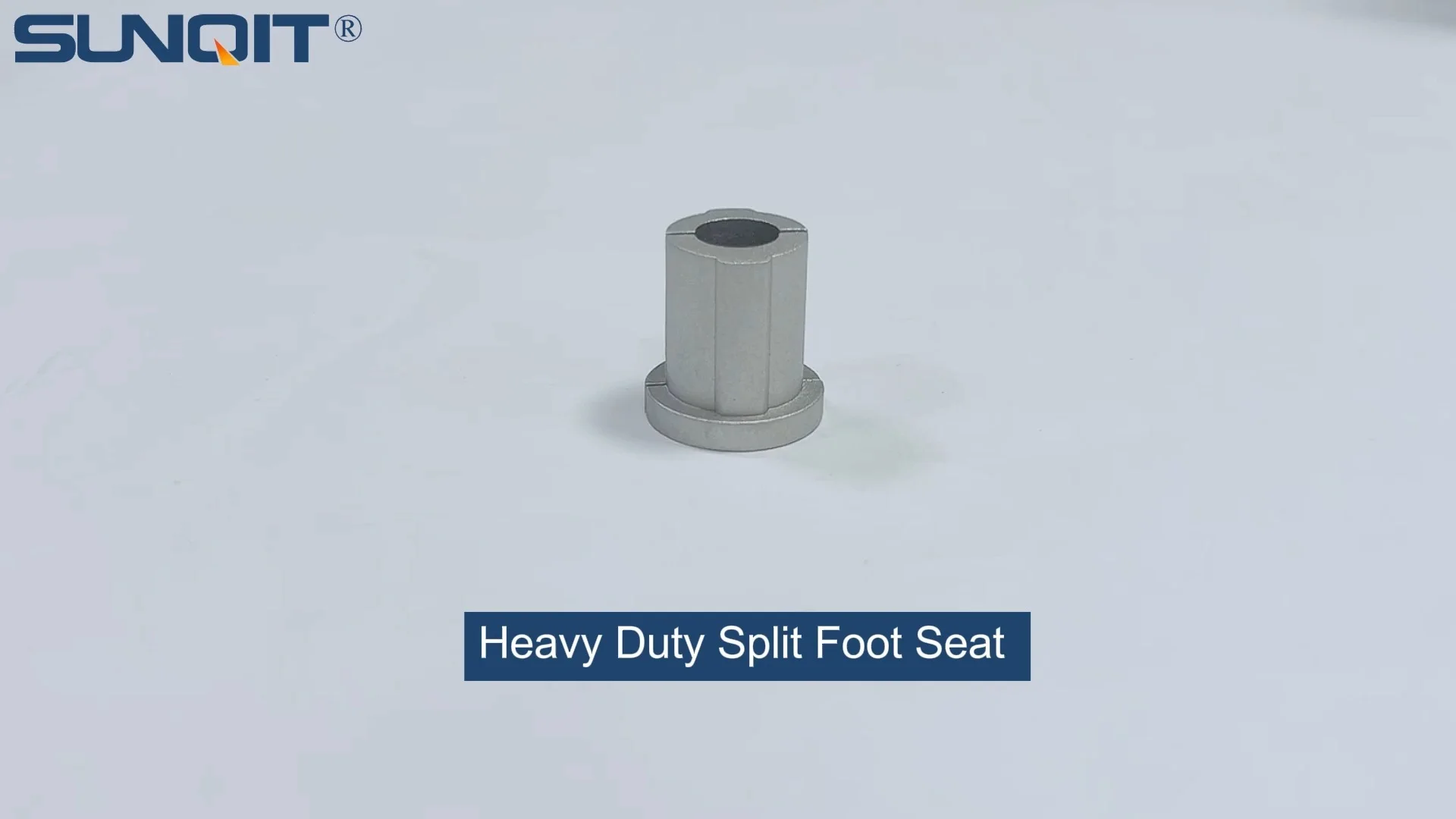
In the bustle of a manufacturing floor, where every second counts and precision is non-negotiable, the smallest components often carry the biggest responsibilities. Take, for instance, the unassuming heavy duty split foot seat —a part you might not notice at first glance, but one that quietly bears the weight of workbenches, material racks, and lean pipe structures day in and day out. It's the silent foundation that keeps your assembly line steady, your tools within reach, and your team safe. But what makes a split foot seat "heavy duty"? The answer lies in its material strength, tested rigorously through two critical assessments: tensile and compressive testing. Today, we're pulling back the curtain on these tests, why they matter, and how they ensure your workspace stays resilient—even when the pressure's on.
What Even Is a Heavy Duty Split Foot Seat, Anyway?
Before we dive into the science of testing, let's get clear on what we're talking about. A heavy duty split foot seat is a mechanical component designed to anchor structures like workbenches, lean pipe workstations, or material racks to the floor. Unlike basic foot pads, its "split" design allows for easy adjustment and secure mounting, even on uneven surfaces. Think of it as the bridge between your equipment and the ground—absorbing vibrations, distributing weight, and preventing wobbling that could throw off delicate assembly tasks or, worse, lead to accidents.
These foot seats are workhorses in industries from automotive to electronics. Picture a busy production line where an aluminum profile workbench holds sensitive circuit boards; the split foot seat underneath ensures the bench doesn't shift when technicians lean on it or when heavy tools are placed on top. Or consider a lean pipe material rack stacked with parts—without a sturdy foot seat, the entire rack could tip, risking damage to inventory and injury to workers. In short, this tiny component is the unsung hero of workplace stability.
Why Material Strength Isn't Just "Nice to Have"—It's Essential
When we talk about "material strength," we're referring to a material's ability to withstand forces without breaking, deforming, or failing. For heavy duty split foot seats, this isn't just a technical specification—it's a matter of safety, efficiency, and cost-effectiveness. A foot seat with subpar strength might hold up initially, but over time, under repeated stress, it could crack or bend. That leads to wobbly workbenches, which slow down production as workers adjust tools or reposition materials. In the worst cases, it could cause equipment to collapse, resulting in downtime, repairs, and even harm to employees.
That's where tensile and compressive testing come in. These tests don't just tell us if a material is "strong enough"—they reveal how it behaves under real-world conditions. Does it stretch too much when pulled (tension)? Does it crumple when squeezed (compression)? The answers to these questions help manufacturers choose the right materials, design better components, and give buyers confidence that what they're installing will last.

Tensile Testing: How Much Can It "Stretch" Before Giving Way?
Tensile testing is like giving a material a "tug of war" challenge—we pull it apart to see how much force it can handle before breaking. For heavy duty split foot seats, this test is crucial because, in the field, they're often subjected to lateral forces: think of a workbench being pushed or pulled as workers move around, or a material rack being loaded unevenly, creating tension on one side of the foot seat.
The Tensile Testing Process: Step by Step
Let's walk through how a typical tensile test works for a heavy duty split foot seat. First, a sample of the foot seat material (often steel, aluminum, or a high-grade alloy) is shaped into a standardized "dog bone" form—a narrow middle section that's designed to be the weakest point, ensuring the break happens where we can measure it. This sample is then clamped into a tensile testing machine, which slowly pulls the two ends apart at a constant speed (usually a few millimeters per minute).
As the machine pulls, sensors record two key things: the force applied (measured in Newtons or pounds-force) and the amount the material stretches (measured in millimeters or inches). This data is plotted on a graph called a stress-strain curve, which shows how the material deforms under increasing force. The goal? To find the "tensile strength"—the maximum stress the material can withstand before breaking—and the "yield strength"—the point at which it starts to deform permanently (meaning it won't spring back to its original shape).
| Test Parameter | What It Measures | Why It Matters for Split Foot Seats |
|---|---|---|
| Tensile Strength | Maximum force the material can withstand before breaking | Ensures the foot seat won't snap under sudden lateral stress (e.g., a workbench being pulled) |
| Yield Strength | Force at which permanent deformation starts | Prevents the foot seat from bending or warping over time, keeping workbenches level |
| Elongation | How much the material stretches before breaking | Indicates flexibility—too little, and it's brittle; too much, and it won't hold shape |
Key Tensile Test Parameters for Heavy Duty Split Foot Seats
For example, let's say we're testing a split foot seat made from high-carbon steel. During tensile testing, it might have a yield strength of 350 MPa (megapascals) and a tensile strength of 500 MPa. That means it can handle 350 MPa of force without permanently deforming, and up to 500 MPa before breaking. Compare that to a cheaper aluminum alloy with a yield strength of 200 MPa—over time, under the same stress, the aluminum seat might start to bend, leading to a wobbly workbench. Tensile testing helps us avoid that scenario by ensuring the material can take the "pull" of daily use.

Compressive Testing: When "Squeezing" Is the Real Test
If tensile testing is about pulling, compressive testing is about pushing—or, more accurately, squeezing. In the workplace, split foot seats spend most of their time under compressive stress: the weight of the workbench, tools, materials, and even workers leaning on the bench all push down on the foot seat, compressing it against the floor. Compressive testing measures how well a material resists this "squeezing" force without crumbling or collapsing.
Think of it like standing on a soda can. If you press down gently, it holds. Press too hard, and it crumples. Compressive testing for split foot seats is similar—we apply increasing force to the material and observe when it starts to deform or fail. This is critical because, unlike tensile stress (which is often sudden), compressive stress is constant. A workbench might weigh 200 kg empty, and add another 50 kg of tools—all that weight bears down on the foot seats 24/7. Over weeks or months, even a small amount of compressive deformation can add up, leading to uneven work surfaces or unstable equipment.
How Compressive Testing Works (And Why It's Different from Tensile)
Compressive testing uses a machine that applies axial force to a sample, squeezing it between two plates. The process is slower than tensile testing because we're looking for both immediate failure and "creep"—slow deformation over time under constant load. For split foot seats, we're interested in two key metrics: compressive strength (maximum force before failure) and compressive modulus (how stiff the material is—i.e., how much it deforms under a given load).
One key difference from tensile testing: materials often behave differently under compression than tension. For example, concrete is strong in compression but weak in tension (which is why it's reinforced with steel bars). For split foot seats, we need materials that excel in both—strong enough to resist squeezing from above and pulling from the sides.
Let's take an example. Suppose we test a split foot seat made from ductile iron, a common material for heavy-duty components. Its compressive strength might be 900 MPa, meaning it can withstand 900 MPa of downward force before cracking. Compare that to a plastic foot seat with a compressive strength of 150 MPa—under the weight of a fully loaded workbench, the plastic would compress, maybe even crack, leading to instability. Compressive testing ensures we choose materials that can "stand their ground" under constant pressure.

Material Showdown: Why Steel, Aluminum, or Ductile Iron?
Now that we understand the tests, let's talk about materials. Split foot seats are typically made from metals like steel, aluminum, or ductile iron—but why these? It all comes down to balancing strength, weight, and cost. Let's break it down:
- Steel: The gold standard for raw strength. High-carbon steel or alloy steel offers excellent tensile and compressive strength, making it ideal for heavy-duty applications (e.g., workbenches in automotive factories that hold heavy machinery). The downside? It's heavier, which can make installation trickier, and prone to rust if not coated.
- Aluminum: Lighter than steel but still strong, especially when alloyed with copper or magnesium. Aluminum profile foot seats are popular in industries where weight matters, like electronics manufacturing, where workbenches need to be moved occasionally. They're also corrosion-resistant, a plus in humid environments. However, aluminum has lower tensile strength than steel, so it's not always the best choice for ultra-heavy loads.
- Ductile Iron: A middle ground between steel and cast iron. It's strong in compression, flexible (resists brittle fracture), and cheaper than steel. Ductile iron foot seats are common in material racks or static workbenches where weight isn't a top concern.
But material choice isn't just about strength—it's about matching the seat to the job. A lean pipe workstation in a cleanroom might use aluminum for its lightweight and non-corrosive properties, while a steel mill's workbench would opt for high-carbon steel to handle extreme weight. Tensile and compressive testing help manufacturers recommend the right material for each scenario, ensuring you don't overpay for steel when aluminum works, or risk failure by choosing plastic for a heavy load.
Real-World Impact: How Testing Prevents Workplace Headaches
Okay, so we've talked about tests and materials—but how does this actually affect your day-to-day operations? Let's paint a picture. Imagine two factories: Factory A uses split foot seats that passed rigorous tensile and compressive testing, while Factory B cut costs with untested, generic seats.
In Factory A, the workbenches are rock-solid. Even when a technician leans on the edge to reach a tool, the foot seats don't budge. Material racks stay level, so parts glide smoothly on roller tracks, reducing jams and delays. Over time, there's no need to replace bent or cracked seats—they just keep working. Productivity stays high, and workers feel confident in their workspace.
In Factory B, the story is different. After a few months, the untested foot seats start to show wear. A workbench near the assembly line begins to wobble, causing a technician to misalign a component, leading to a defective product. A material rack, loaded with heavy parts, develops a lean because one foot seat compressed too much—one wrong move, and the whole rack could tip. Repairs and replacements eat into the budget, and downtime increases as workers adjust to unstable equipment. The "cheaper" seats end up costing far more in the long run.
This isn't just a hypothetical—it's why reputable suppliers (like lean pipe suppliers or workbench manufacturers) invest in testing. They know that a split foot seat isn't just a part; it's a promise of reliability. When you buy from a supplier who tests their components, you're not just paying for metal or plastic—you're paying for peace of mind.
What to Look for When Buying Split Foot Seats (Beyond "Heavy Duty")
So, you're in the market for split foot seats—how do you ensure you're getting the tested, reliable ones? Here are a few tips:
Remember, the cheapest option isn't always the best. A few extra dollars for a tested, high-quality split foot seat can save you thousands in repairs, downtime, and potential accidents later.
Conclusion: The "Small" Component That Makes a Big Difference
Heavy duty split foot seats might not get the same attention as flashy new machinery or high-tech automation tools, but they're the backbone of a safe, efficient workspace. Tensile and compressive testing ensure these unsung heroes can handle the daily grind—pulling, pushing, and supporting the weight of your operations without complaint. By understanding what these tests measure and why material strength matters, you can make smarter choices when outfitting your workspace, whether you're setting up a new lean pipe workstation or upgrading old material racks.
At the end of the day, it's the little things—the components you don't notice until they fail—that keep your production line moving. So the next time you walk past a steady workbench or a stable material rack, take a second to appreciate the split foot seat underneath. It might be small, but its strength? That's anything but.