- Company Articles
- Products and Technology
- Product knowledge
- Heavy Duty Split Foot Seat Structure: Understanding the Split Design

Heavy Duty Split Foot Seat Structure: Understanding the Split Design
Related Product
Heavy Duty Split Foot Seat
M10 aluminum heavy duty split foot deat with foot adjuster for workbench and flow rack.
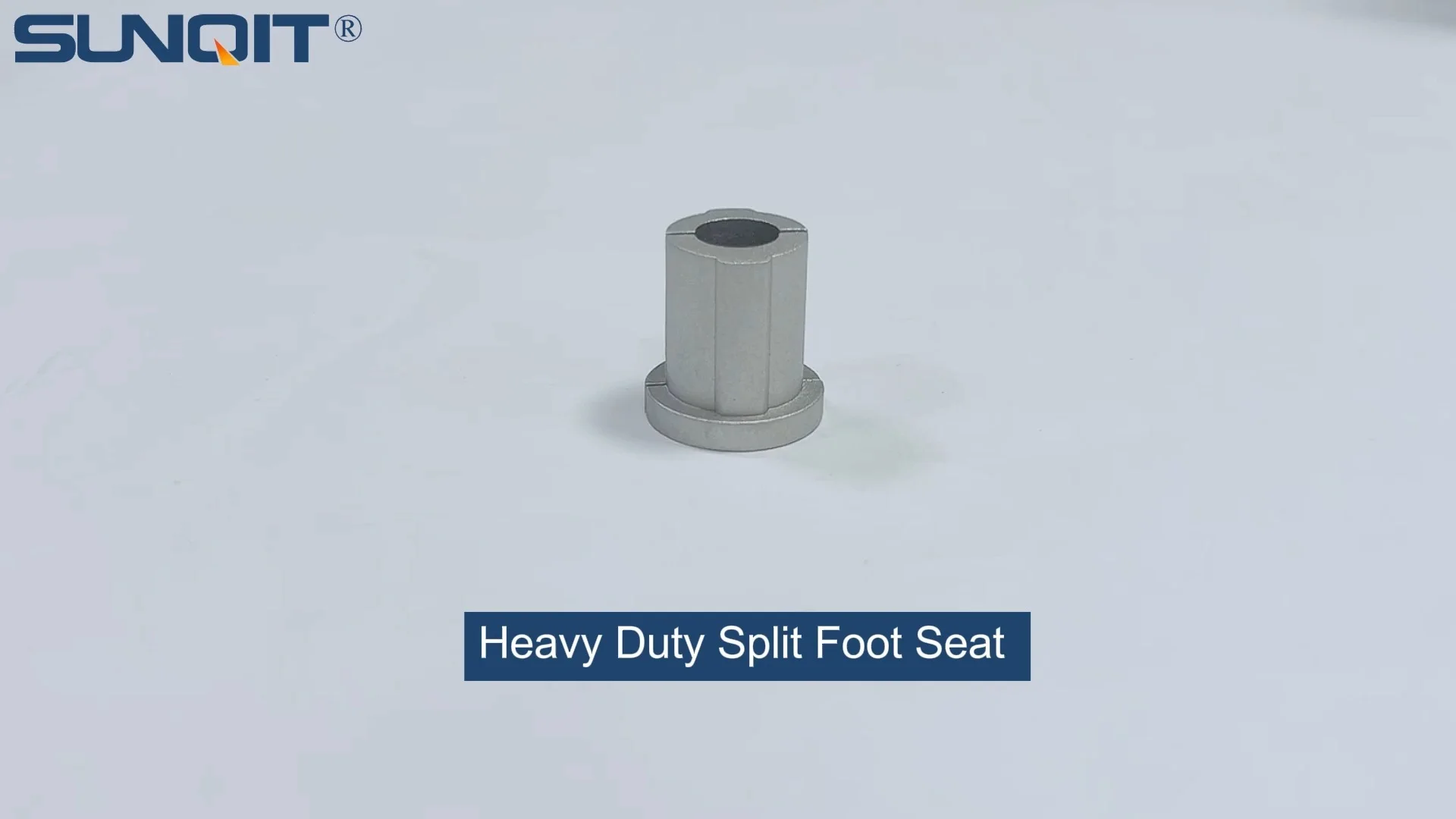
Walk into any bustling manufacturing facility, and your eyes might be drawn to the sleek assembly lines, the whir of conveyor belts, or the precision of robotic arms. But if you look a little closer—down at the base of those workbenches, material racks, and production stations—you'll find a component that's quietly keeping everything steady: the heavy duty split foot seat. It's not the flashiest part of the operation, but ask any plant manager or floor worker, and they'll tell you: stability here isn't just a nicety; it's the foundation of efficiency, safety, and reliability. Today, we're diving into the world of split foot seat structures—what they are, why their design matters, and how they've become an unsung hero in industrial setups, from small workshops to large-scale factories.
What Even Is a Heavy Duty Split Foot Seat?
Let's start with the basics. A foot seat, in industrial terms, is the component that connects a piece of equipment—like a workbench, a conveyor support, or a material rack—to the floor. Its job? To distribute weight evenly, absorb vibrations, and prevent the equipment from wobbling, shifting, or tipping over. Now, the "split" in "split foot seat" refers to a design where the base is divided into two separate, adjustable parts, rather than being a single solid block. Think of it like comparing a single-legged stool (unstable, right?) to a stool with two legs that can each be adjusted to fit uneven ground. That split makes all the difference.
But why "heavy duty"? These aren't your average desk feet. Split foot seats in industrial settings are built to handle serious weight—we're talking hundreds, even thousands of pounds. Whether it's a workbench loaded with tools and components, a conveyor belt moving heavy parts, or a material rack stacked with inventory, these foot seats need to stand up to constant use, varying loads, and the daily wear and tear of a busy factory floor. And unlike lightweight or non-split designs, they're engineered to do more than just "hold on"—they're designed to adapt .
The Engineering Behind the Split: Why Two Parts Are Better Than One
At first glance, a split foot seat might look like a simple piece of metal or aluminum with a gap down the middle. But there's clever engineering at work here. Let's break it down: the typical split foot seat has two independent plates or "feet," each with its own adjustment mechanism—usually a threaded bolt or a screw that allows you to raise or lower that side individually. These two feet are connected to a central bracket that attaches to the equipment above (like the legs of a workbench or the frame of a conveyor). When the floor is uneven—and let's be real, few factory floors are perfectly level—you can tweak each foot separately to level the entire setup. No more shimming with pieces of wood or metal, no more wobbly work surfaces, no more stress on the equipment's frame from uneven weight distribution.
To understand why this matters, imagine a scenario: A worker is assembling delicate electronics on a workbench. If the bench wobbles even slightly, they might misalign a component, leading to defects. Or consider a conveyor system with a non-split foot seat on a slightly sloped floor—the belt might drift to one side, causing jams or uneven wear on the rollers. With a split design, each foot can be adjusted to compensate for those floor imperfections. It's like having a built-in "leveling system" right at the base, ensuring that the equipment sits true, no matter what the ground throws at it.

Materials Matter: Why Aluminum Profile Takes Center Stage
Not all split foot seats are created equal, and a big part of their performance comes down to the materials used. While steel is strong, it's heavy and prone to rust if not treated. Plastic is lightweight but lacks the durability for heavy loads. That's where aluminum profile steps in—and it's a game-changer. Aluminum profile, with its combination of strength, light weight, and corrosion resistance, has become the go-to material for modern split foot seats, and for good reason.
Aluminum's natural resistance to rust means it holds up in damp environments, like factories where floors are regularly cleaned with water or chemicals. Its strength-to-weight ratio is impressive too: it's light enough to make installation easier (no need for a forklift to move a single foot seat!), but strong enough to support the heaviest workbenches and racks. Plus, aluminum profile is easy to machine and customize. Manufacturers can drill precise holes for adjustment bolts, add reinforcing ribs for extra stability, or shape the feet to distribute weight even more evenly—all without adding unnecessary bulk.
Take, for example, a split foot seat made from 4040 aluminum profile (a common size in industrial setups). Its T-slot design allows for easy attachment to other aluminum components, like the legs of a workbench, using simple bolts or brackets. This modularity means that if a foot seat gets damaged, you can replace just that part instead of the entire bench—saving time and money. And because aluminum is recyclable, it aligns with the growing push for sustainable manufacturing practices. It's no wonder that when you ask a lean pipe supplier or a workbench manufacturer about their most durable foot seats, aluminum profile is usually the first material they mention.

How Split Foot Seats Work with Other Industrial Components
A split foot seat doesn't exist in a vacuum. It's part of a larger ecosystem of industrial components, working alongside everything from workbenches and caster wheels to conveyor systems and material racks. Let's take a workbench, for example—the centerpiece of many assembly operations. A typical workbench might have a split foot seat at each corner, paired with adjustable legs made from aluminum profile. When the workbench is loaded with tools, parts bins, and maybe even a heavy vice, the split foot seats distribute that weight across four points, each of which can be adjusted to keep the surface level. If the workbench needs to be moved (say, to reconfigure the production line), you might attach caster wheels to the legs—but when it's time to settle in, you lower the split foot seats to take the weight off the casters, ensuring stability during use. It's a perfect partnership: caster wheels for mobility, split foot seats for stability.
Conveyor systems are another area where split foot seats shine. Imagine a long roller track conveyor moving heavy boxes from one end of the factory to the other. If the conveyor frame isn't level, boxes might get stuck or slide off track. Split foot seats along the conveyor's supports let technicians adjust each section independently, keeping the entire track aligned. Even small adjustments here can prevent big problems downstream—like a jam that halts production for hours. And because aluminum profile is compatible with roller track connectors and brackets, installing and adjusting these foot seats is a breeze, even for maintenance teams with minimal training.

Split vs. Non-Split: Why the Split Design Wins (Most of the Time)
You might be wondering: Do I really need a split foot seat, or will a traditional non-split design work? The answer depends on your needs, but in most industrial settings, the split design offers clear advantages. Let's break it down with a side-by-side comparison:
| Feature | Split Foot Seat Design | Non-Split Foot Seat Design |
|---|---|---|
| Stability on Uneven Floors | Excellent—each foot adjusts independently to level the equipment. | Poor—relies on shims or uneven weight distribution; prone to wobbling. |
| Weight Distribution | Even—split design spreads weight across two points per foot, reducing stress on the floor. | Concentrated—single point of contact can lead to indentations or damage on soft floors. |
| Adjustability | Highly adjustable—fine-tune height with threaded bolts; no need for extra tools. | Limited—often fixed height or requires swapping out shims/pads. |
| Durability Under Vibration | Better—split design absorbs minor vibrations, reducing wear on equipment joints. | Worse—vibrations transfer directly to the equipment frame, leading to loosened bolts over time. |
| Installation Time | Slightly longer (due to adjustment), but faster than shimming. | Faster to bolt down, but time adds up if shimming is needed. |
The table tells the story: split foot seats excel in the areas that matter most for industrial equipment. But there are cases where a non-split design might make sense—like in temporary setups where weight is minimal, or in perfectly level, controlled environments. For most factories, warehouses, and workshops, though, the split design is worth the small extra investment upfront. It pays off in reduced downtime, fewer repairs, and a safer, more efficient workspace.
Real-World Impact: How Split Foot Seats Improve Daily Operations
Let's step away from the specs and talk about real people. Maria, a production supervisor at a mid-sized electronics factory, recently switched all her assembly line workbenches to models with aluminum profile split foot seats. "Before, we were constantly fighting with wobbly benches," she recalls. "Workers would complain that parts rolled off the table, or that their tools slid around. We tried shimming with metal washers, but they'd fall out, and then the bench would wobble again. Now, with the split seats, each corner adjusts in seconds. The benches stay level, the workers are happier, and we've seen a drop in defects—probably because the work surface is steady enough for precise tasks."
Then there's Raj, a maintenance technician at a food packaging plant. "We have conveyors that run 12 hours a day, moving heavy cases of product," he says. "With non-split feet, the conveyors would vibrate so much that bolts would loosen overnight. We'd spend an hour each morning tightening them. After installing split foot seats, the vibrations are way down. Now I check the bolts once a week, not daily. That's time I can spend on other repairs, keeping the whole line running smoother."
These stories highlight a bigger point: split foot seats aren't just about hardware—they're about people. They reduce frustration, save time, and create a more reliable workspace. And in lean manufacturing, where every second and every detail counts, that reliability is gold.
Installation and Maintenance: Keeping Your Split Foot Seats in Top Shape
Installing a split foot seat is straightforward, but a little care goes a long way. Here's a quick guide to getting it right:
Installation Steps:
1. Prep the area: Clear the floor where the equipment will go, and check for debris or uneven spots (a quick sweep helps!).
2. Attach the foot seats: Bolt the split foot seats to the equipment legs (most aluminum profile foot seats use T-slot bolts or brackets for easy attachment).
3. Level the equipment: Place a spirit level on the workbench or conveyor frame. Adjust each split foot seat's bolts until the bubble is centered. Tighten the lock nuts to keep the adjustment in place.
4. Test it out: Apply some weight (like a toolbox or a box of parts) and check for wobbling. If it moves, tweak the adjustments until it's steady.
Maintenance Tips:
• Check adjustments monthly: Vibrations can loosen bolts over time. A quick check with a wrench ensures the foot seats stay level.
• Clean regularly: Wipe down aluminum profile foot seats with a damp cloth to remove dust and grime—this prevents corrosion and keeps adjustments smooth.
• Lubricate threads: A drop of machine oil on the adjustment bolts every few months keeps them easy to turn, even after heavy use.
• replace worn parts: If a bolt strips or a foot pad wears thin, replace it ASAP. Most suppliers (like your go-to aluminum profile supplier) carry replacement parts, so you won't need to buy a whole new foot seat.
The Future of Split Foot Seats: What's Next?
As manufacturing evolves, so do the tools that support it. Split foot seats are no exception. Here are a few trends we're seeing:
• Smart adjustments: Imagine split foot seats with built-in sensors that detect wobbling and automatically adjust the bolts to level the equipment. It sounds like sci-fi, but with the rise of IoT in factories, it might be closer than we think.
• Eco-friendly materials: Manufacturers are experimenting with recycled aluminum alloys and plant-based lubricants for adjustments, making split foot seats even more sustainable.
• Modular designs: Some companies are creating split foot seats that can be reconfigured for different equipment—swap out the foot pads for softer ones on delicate floors, or add extensions for extra stability on uneven ground.
• Integration with lean systems: As more factories adopt lean principles, split foot seats are being designed to work seamlessly with lean pipe setups, conveyors, and other lean tools—reducing waste and improving workflow.
Wrapping Up: Why the Split Design Deserves a Spot in Your Factory
At the end of the day, the heavy duty split foot seat is a reminder that great industrial design often lies in the details. It's not glamorous, but it's essential. Whether you're setting up a new workbench, upgrading a conveyor system, or just looking to make your factory floor a little more stable, the split design offers a simple, effective solution. And when paired with aluminum profile, it becomes a durable, low-maintenance workhorse that stands up to the demands of modern manufacturing.
So the next time you're in a factory, take a second to look down. Notice those split foot seats holding up the workbenches, the racks, the conveyors. They might not get the spotlight, but they're keeping the whole operation steady—one adjustment at a time. And in a world where efficiency and reliability are everything, that's more than enough reason to celebrate them.