- Company Articles
- Products and Technology
- Product knowledge
- Heavy Duty Split Foot Seat vs. Bolt-Down Base: Security & Mobility

Heavy Duty Split Foot Seat vs. Bolt-Down Base: Security & Mobility
Related Product
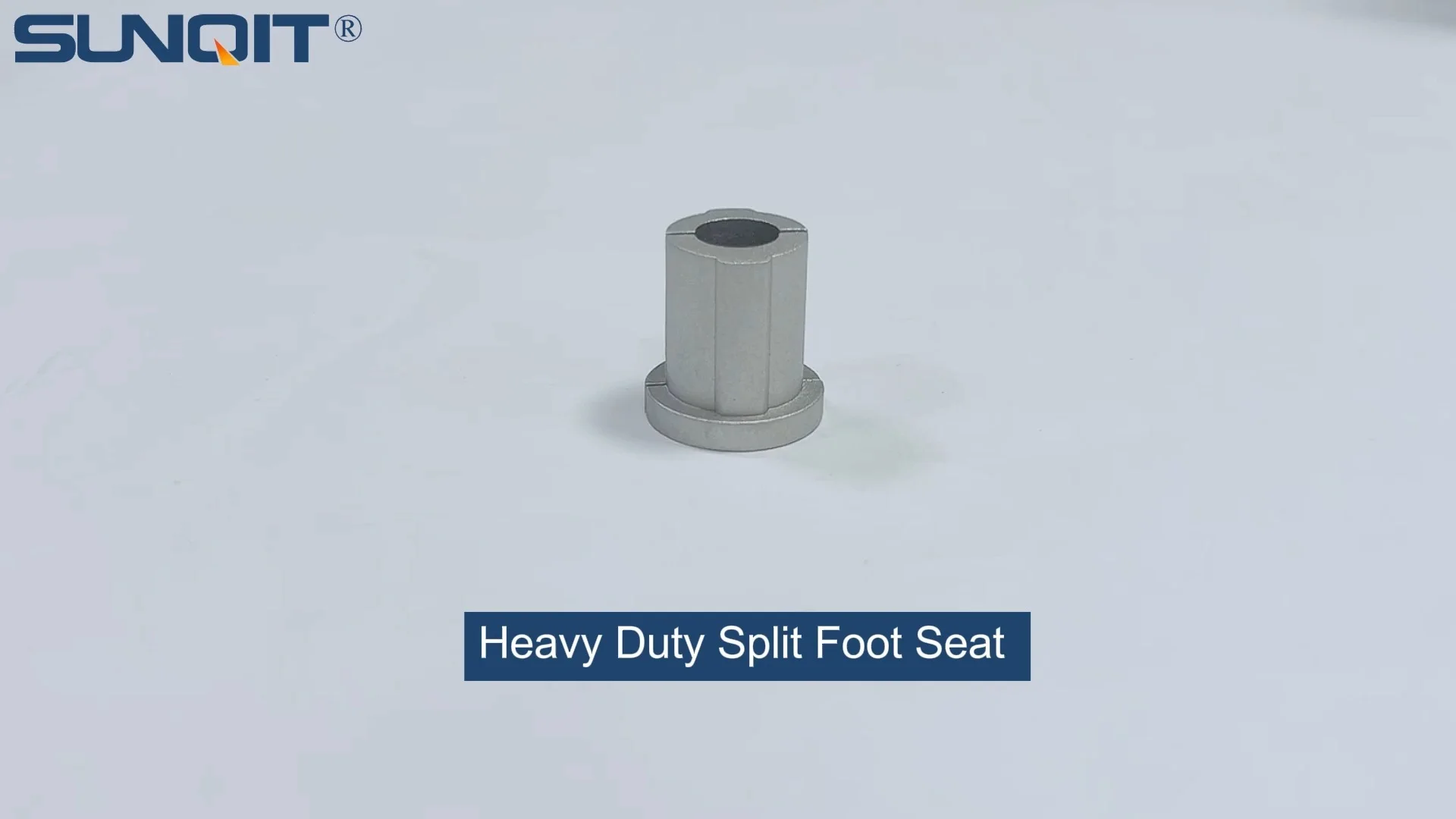
Heavy Duty Split Foot Seat
M10 aluminum heavy duty split foot deat with foot adjuster for workbench and flow rack.
Walk into any busy workshop, manufacturing plant, or lab, and you'll notice something critical: the workbenches. They're the unsung heroes of productivity—holding tools, parts, and equipment that keep operations running smoothly. But here's the thing: even the sturdiest workbench is only as reliable as its base. A wobbly foundation can throw off precision, slow down workflows, or worse, create safety hazards. That's why choosing between a Heavy Duty Split Foot Seat and a Bolt-Down Base isn't just a matter of preference; it's a decision that impacts security, mobility, and ultimately, your team's ability to get the job done right.
In this article, we're diving deep into these two popular workbench bases. We'll break down how they work, where they excel, and which one might be the best fit for your lean pipe workbench or industrial setup. Whether you're outfitting a new facility or upgrading old equipment, by the end, you'll have the clarity to choose a base that balances security and mobility for your unique needs.
Understanding Workbench Bases: Why the Right Choice Matters
Before we jump into the specifics of split foot seats and bolt-down bases, let's talk about why workbench bases are so important. Think of a workbench as a team player: its top surface handles the day-to-day tasks, but the base is its anchor. A good base does two key things: it keeps the workbench secure (so it doesn't tip, slide, or wobble) and, depending on your needs, allows for mobility (so you can reposition it when workflows change).
In industries like automotive manufacturing, electronics assembly, or logistics, where lean principles drive efficiency, the right base can make or break a workflow. For example, a lean pipe workbench—known for its flexibility and modular design—relies on its base to maintain stability while still allowing for the adaptability that lean systems demand. Choose a base that's too flimsy, and you risk damaging parts or tools. Choose one that's too rigid, and you might miss out on the agility needed to adjust to shifting production needs.
Heavy Duty Split Foot Seat: Stability Meets Adaptability
What is a Heavy Duty Split Foot Seat?
Imagine a workbench base with two wide, flat "feet" that split off from the main frame, spreading outward to distribute weight. That's the Heavy Duty Split Foot Seat in a nutshell. Designed for stability without permanent installation, it's a middle ground between fixed and mobile bases. Unlike a bolt-down base, it doesn't require drilling into the floor, but it's far more stable than a simple caster wheel setup (though we'll touch on casters later when contrasting mobility).
Most split foot seats are made from heavy-gauge steel or aluminum, with rubber or non-slip pads on the bottom to grip the floor. Some models even come with adjustable leveling feet—small, threaded knobs that can be twisted to raise or lower each foot independently. This might sound like a minor feature, but if you've ever worked in a facility with uneven concrete floors, you know how game-changing adjustable leveling feet can be. They turn a wobbly workbench into a rock-solid surface, even on the most unforgiving terrain.
Design and Construction: Built to Bear Weight
Split foot seats are engineered for durability. The "split" design isn't just for show—it's a deliberate choice to spread the workbench's load over a wider area. Think of it like standing with your feet shoulder-width apart versus together: the wider stance makes you more stable. For a workbench, this means it can hold heavier tools, bulkier materials, or even multiple workers without tipping.
Materials matter here, too. Steel split foot seats are common in industrial settings where weight capacity is critical—we're talking 1,000+ pounds in some cases. Aluminum versions, on the other hand, are lighter (great for situations where you might need to move the workbench occasionally) but still surprisingly strong. Both materials are often powder-coated to resist rust and scratches, ensuring the base holds up in dusty, humid, or messy environments.
Security Features: How It Keeps Your Workbench Steady
Security, in this context, is all about stability. A split foot seat excels here by minimizing movement in three key ways:
- Wide Weight Distribution: The split feet spread the workbench's weight across a larger surface area, reducing the pressure on any single point. This makes it harder for the bench to shift, even if someone leans on it or heavy tools are placed unevenly.
- Non-Slip Surfaces: The rubber pads on the bottom of the feet create friction with the floor, preventing sliding. This is especially useful in high-traffic areas where carts, forklifts, or workers might accidentally bump the bench.
- Adjustable Leveling Feet: As mentioned earlier, these little knobs are a secret weapon. If the floor dips or rises, you can tweak each foot to keep the workbench perfectly level. No more tools rolling off the edge or precision measurements being thrown off by a tilted surface.
I spoke with Mark, a production supervisor at a mid-sized electronics plant, who switched to split foot seats for his lean pipe workbenches last year. "Before, we had basic fixed bases, and whenever the floor settled (which it does in old factories), the benches would wobble," he told me. "With the split feet and adjustable leveling, we can tweak them in two minutes and get back to work. No more wasted time shimming with pieces of wood or worrying about sensitive circuit boards sliding off."
Mobility Considerations: Is It Meant to Move?
Here's the trade-off with split foot seats: they're stable, but they're not designed for frequent movement. Unlike a workbench on caster wheels, you can't just push them across the floor. That said, they're not permanently fixed, either. If you need to rearrange your workspace (say, for a new production line layout), you can tilt the bench back, slide dollies under the feet, and relocate it. It's not effortless, but it's doable—especially with a helper or two.
This makes split foot seats ideal for environments where workflows change occasionally but not daily. For example, a furniture workshop that switches between assembling chairs and tables might need to reposition workbenches every few weeks. A split foot seat allows for that flexibility without sacrificing the stability needed for precise cutting and joining.
Ideal Use Cases: Where Split Foot Seats Shine
So, when should you opt for a Heavy Duty Split Foot Seat? Here are a few scenarios where it outperforms other bases:
- Uneven Floors: If your facility has cracked concrete, sloped surfaces, or old floors that have settled, adjustable leveling feet make split foot seats a must.
- Medium-to-Heavy Loads: They handle weights up to 1,500 pounds (depending on the model), making them perfect for workbenches with power tools, welding equipment, or bulk material storage.
- Occasional Relocation: When you need stability 90% of the time but the flexibility to move the bench occasionally (e.g., seasonal workflow changes).
- Rental Spaces or Temporary Facilities: If you can't drill into the floor (due to lease restrictions), split foot seats let you set up secure workbenches without permanent modifications.

Bolt-Down Base: The Epitome of Stationary Security
What is a Bolt-Down Base?
If the split foot seat is the "adaptable stability" option, the Bolt-Down Base is the "never moving, no matter what" choice. As the name suggests, it's a base that's literally bolted directly to the floor, creating a permanent connection between the workbench and the building's structure. Think of it as nailing a bookshelf to the wall to prevent it from tipping—except on a much larger scale.
Bolt-down bases are typically made from thick steel plates with pre-drilled holes for anchor bolts. The bolts are driven into the floor (concrete is standard, but some models work with wood or metal subfloors), securing the base so tightly that even heavy vibrations or accidental impacts won't budge it.
Installation Process: Securing to the Floor
Installing a bolt-down base isn't a five-minute job, but it's straightforward if you have the right tools. Here's a rough breakdown of the steps:
- Mark the Floor: Place the base where you want the workbench, then mark the positions of the bolt holes with a pencil or marker.
- Drill Holes: Use a hammer drill with a masonry bit (for concrete) to drill holes into the floor at the marked positions. The depth and diameter depend on the anchor bolts—usually 3-4 inches deep for standard industrial setups.
- insert Anchors: Tap plastic or metal anchors into the holes (these grip the concrete and provide a thread for the bolts).
- Secure the Base: Place the base back over the holes, insert the bolts through the base's pre-drilled holes, and tighten them with a wrench until the base is snug against the floor.
Pro tip: If you're installing multiple bolt-down bases, use a laser level to ensure they're aligned—this is crucial for workflows that involve moving materials between benches (e.g., assembly lines with flow racks).
Security Benefits: Unmatched Stability for Heavy Loads
When it comes to raw security, bolt-down bases are unbeatable. Once installed, they don't budge. This makes them ideal for workbenches that hold extremely heavy loads (think 2,000+ pounds) or equipment that generates vibrations—like industrial grinders, hydraulic presses, or CNC machines. Even if a worker leans on the bench with full force or a pallet truck bumps into it, the base stays put.
Lisa, a lab manager at a pharmaceutical research facility, swears by bolt-down bases for her analytical equipment. "We have balances that measure down to micrograms—one tiny vibration or shift, and the results are useless," she explained. "Bolt-down bases eliminate that risk entirely. The benches are part of the floor now. Even when we run the autoclave next door, the scales don't waver."
Another perk? Bolt-down bases are tamper-proof. In facilities with high-security areas (e.g., warehouses storing valuable parts or labs with controlled substances), they prevent unauthorized movement of workbenches, adding an extra layer of security.
Mobility Limitations: When Movement Isn't an Option
The flip side of that security is zero mobility. Once bolted down, moving the workbench requires unbolting it (which can damage the floor if done repeatedly), patching the holes, and reinstalling elsewhere. For most facilities, this is a rare occurrence—maybe once every few years during major renovations. But if your workflows demand frequent reconfigurations, bolt-down bases will feel restrictive.
I once visited a startup manufacturing company that had bolted down all their workbenches in the early days, assuming they'd never need to move. Six months later, they landed a big client and needed to double their production space. "We spent two days unbolting, patching, and reconfiguring," the operations manager told me. "It cost us downtime and money we didn't have. Now, we mix bolt-down bases for our heavy machinery and split foot seats for everything else."
Ideal Use Cases: Environments That Demand Permanence
Bolt-down bases are the best choice when:
- Heavy Loads Are Non-Negotiable: Workbenches holding industrial machinery, large tool chests, or palletized materials (2,000+ pounds) need the ultimate stability.
- Precision is Critical: Labs, electronics assembly, or calibration stations where even minor movement can ruin measurements or products.
- Workflow is Static: Your facility layout rarely changes (e.g., a dedicated production line that runs the same product for years).
- Safety Regulations Require It: Some industries (e.g., aerospace, nuclear) have strict codes mandating permanent fixtures for heavy equipment to prevent accidents.

Head-to-Head Comparison: Split Foot Seat vs. Bolt-Down Base
Still trying to decide? Let's put the two bases side by side with a detailed comparison:
| Feature | Heavy Duty Split Foot Seat | Bolt-Down Base |
|---|---|---|
| Security/Stability | High: Distributes weight widely; adjustable feet for uneven floors. | Maximum: Permanently anchored to the floor; resists vibrations and impacts. |
| Mobility | Low to Moderate: Can be moved occasionally with help/dollies. | None: Requires unbolting and floor repair to relocate. |
| Installation Difficulty | Easy: Place and adjust leveling feet; no drilling required. | Moderate: Requires drilling into floor and securing with anchor bolts. |
| Weight Capacity | 1,000–1,500 lbs (standard models). | 2,000+ lbs (depending on bolts and floor material). |
| Floor Compatibility | Works on uneven, cracked, or temporary floors (adjustable feet). | Best on solid concrete; may damage wood or delicate floors if removed. |
| Cost | Moderate: More than basic fixed bases but less than bolt-down (no anchor bolts/tools). | Higher: Includes base, anchor bolts, and potentially professional installation. |
| Ideal For | Uneven floors, occasional relocations, medium-heavy loads. | Heavy machinery, precision work, static workflows, high-security areas. |

Real-World Applications: Stories from the Shop Floor
Case Study 1: Automotive Manufacturing Plant (Split Foot Seat Success)
A large automotive parts manufacturer in Michigan was struggling with workbench stability on their assembly line. The plant's concrete floor had settled over time, creating small dips and slopes. Their old fixed-base workbenches wobbled, causing workers to slow down when assembling delicate brake components (a task that requires pinpoint accuracy).
After consulting with a lean system supplier, they switched to lean pipe workbenches with Heavy Duty Split Foot Seats and adjustable leveling feet. The results were immediate: "Workers reported less eye strain from squinting to align parts, and we saw a 15% reduction in errors on the brake assembly line," said the plant manager. "Plus, when we retooled for a new model last quarter, we were able to move the benches in a morning instead of hiring contractors to unbolt and reinstall fixed bases."
Case Study 2: Aerospace Lab (Bolt-Down Base for Precision)
A government aerospace lab needed to install new workbenches for testing satellite components. The equipment included vibration sensors and laser measuring tools that required absolute stability—even tiny movements could invalidate test results. The lab's facilities team opted for bolt-down bases, securing the benches to six-inch-thick concrete with industrial-grade anchor bolts.
"We can run a jet engine test in the next bay, and the benches in here don't vibrate at all," said the lead engineer. "The bolt-down bases are overkill for some applications, but for us, precision is everything. We haven't had a single test fail due to bench movement since installation."
Choosing the Right Base for Your Lean Pipe Workbench
Assessing Your Needs: Security vs. Mobility
At the end of the day, the choice between a split foot seat and bolt-down base comes down to two questions: How much security do you need, and how often do you need to move the workbench? Here's a quick framework to help you decide:
- Choose Split Foot Seat if: You need stability but might reconfigure your workspace in the future; your floors are uneven; or you can't drill into the floor (rental, historic building, etc.).
- Choose Bolt-Down Base if: The workbench will hold extremely heavy loads or precision equipment; your layout is permanent; or safety regulations require permanent fixtures.
Questions to Ask Before You Buy
Still on the fence? Ask yourself these questions to narrow it down:
- What's the maximum weight the workbench will hold? (Check the base's weight capacity—don't guess!)
- How often do we rearrange our workspace? (Monthly? Yearly? Never?)
- Are the floors in my facility even? (Grab a level and check—you might be surprised!)
- Do we need to comply with any industry-specific safety standards? (Some require fixed bases for heavy equipment.)
- Is this a permanent facility, or could we relocate in the next 5 years? (Bolt-down bases are a long-term commitment.)
Expert Recommendations for Different Industries
To make it even easier, here are our top picks for common industries:
- Electronics Manufacturing: Split Foot Seat (adjustable for precision, occasional layout changes).
- Heavy Machinery Repair: Bolt-Down Base (supports heavy tools, minimal movement needed).
- Food Processing: Split Foot Seat (easy to clean around, can be moved for deep cleaning).
- Research Labs: Bolt-Down Base (stability for sensitive instruments).
- Warehousing/Logistics: Split Foot Seat (flexible for changing inventory layouts).
Maintenance and Care: Prolonging the Life of Your Workbench Base
Split Foot Seat Maintenance Tips
Split foot seats are low-maintenance, but a little care goes a long way:
- Check Leveling Feet Quarterly: Tighten any loose knobs and clean debris from the threads (dust and grease can cause them to stick).
- Inspect Non-Slip Pads: replace worn or cracked pads to maintain grip—this prevents the bench from sliding on smooth floors.
- Clean the Base: Wipe down steel or aluminum bases with a damp cloth to prevent rust; for food-grade facilities, use mild soap and water.
Bolt-Down Base Care: Checking Bolts and Floor Integrity
Bolt-down bases are durable, but the anchor bolts can loosen over time (especially in high-vibration areas):
- Tighten Bolts Annually: Use a torque wrench to ensure bolts are snug (follow the manufacturer's torque specs—over-tightening can strip threads).
- Inspect Floor Around Base: Look for cracks or crumbling concrete near the bolts—this could mean the floor is weakening, and you may need to reinforce it.
- Lubricate Threads (If Removable): If you think you might need to unbolt the base someday, apply anti-seize lubricant to the bolt threads to prevent rust buildup.
Conclusion: Finding Your Perfect Balance
Heavy Duty Split Foot Seats and Bolt-Down Bases both have their place in the world of workbenches. The split foot seat offers stability with adaptability—perfect for facilities that need to adjust workflows without sacrificing security. The bolt-down base delivers unshakable permanence, ideal for heavy loads, precision work, and static layouts.
As you shop, remember: there's no "best" base, only the best base for your needs. Consider your industry, floor conditions, weight requirements, and future plans. And if you're still unsure, talk to a lean pipe workbench supplier—they'll have seen it all and can guide you toward the right choice.
After all, a workbench base might not be the most exciting purchase, but it's one that will impact your team's productivity, safety, and peace of mind for years to come. Choose wisely, and your workbenches will be ready to tackle whatever your workflow throws at them.