- Company Articles
- Products and Technology
- Product knowledge
- Heavy Duty Split Foot Seat vs. Fixed Base: Pros & Cons for Lean Manufacturing

Heavy Duty Split Foot Seat vs. Fixed Base: Pros & Cons for Lean Manufacturing
Related Product
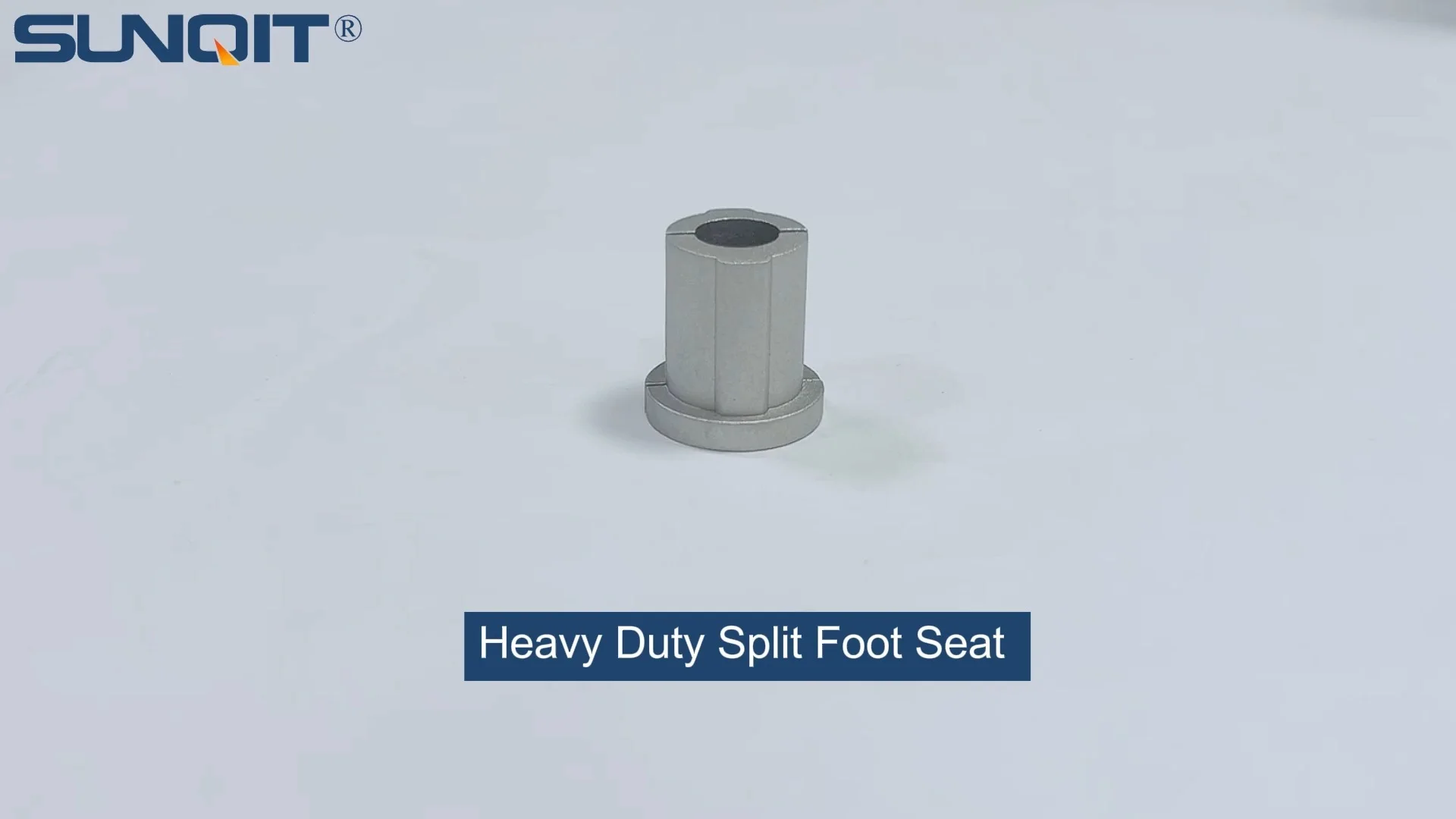
Heavy Duty Split Foot Seat
M10 aluminum heavy duty split foot deat with foot adjuster for workbench and flow rack.
In the world of lean manufacturing, where every second counts and waste is the enemy, even the smallest components of your workspace can make or break efficiency. From the roller tracks that guide materials to the caster wheels that move trolleys, every part plays a role—but few are as foundational as the bases that support your workbenches, flow racks, and assembly stations. Today, we're diving into two critical players in this space: the heavy duty split foot seat and the fixed base. Both have their place in lean setups, but choosing between them depends on your team's needs, workflow, and the unique demands of your production floor. Let's break down what they are, how they perform, and which one might be the better fit for your operation.
First Things First: What Are We Actually Comparing?
Before we jump into pros and cons, let's make sure we're on the same page. When we talk about a heavy duty split foot seat , we're referring to a type of adjustable support leg designed for workbenches, material racks, or lean pipe workbenches. As the name suggests, it "splits" into two or more parts, allowing for height adjustment, fine-tuning, or even minor repositioning without fully relocating the entire structure. Think of it as a sturdy yet flexible foundation—often made from aluminum profile or reinforced steel—that can adapt to uneven floors, worker height preferences, or changing task requirements.
On the flip side, a fixed base is exactly what it sounds like: a rigid, non-adjustable foundation. Typically bolted directly to the floor or welded into place, it's built for permanence. Made from thick steel or heavy-duty aluminum profile, fixed bases prioritize stability above all else. They're the "set it and forget it" option for workstations that never need to move, adjust, or reconfigure—think static flow racks in a warehouse or dedicated assembly stations on a production line that hasn't changed in years.
The Heavy Duty Split Foot Seat: Flexibility Meets Stability
Let's start with the split foot seat. This component has gained popularity in modern lean environments, and for good reason. Its design addresses some of the biggest pain points in dynamic workspaces. Here's why teams are choosing it:
Pros of the Heavy Duty Split Foot Seat
1. Adaptability to Uneven Floors (Because No Factory Floor is Perfect) If you've ever worked in a manufacturing facility, you know that "level ground" is often more of a suggestion than a reality. Concrete floors settle, equipment vibrations cause cracks, and over time, even the most well-maintained spaces develop slight slopes. Split foot seats solve this by letting you adjust each leg independently. Twist a knob, extend a bolt, or use a wrench to raise or lower one side—suddenly, your lean pipe workbench is stable, your roller tracks glide smoothly, and materials don't slide off tables. This isn't just about convenience; it's about safety. A wobbly workbench increases the risk of tools or parts falling, which can lead to injuries or damaged inventory.
2. Ergonomic Customization for Workers Lean manufacturing isn't just about efficiency—it's about people. Workers come in different heights, and tasks (like assembling small electronics vs. heavy machinery) require different workbench heights. Split foot seats let you tailor each station to the person using it. A 5'2" operator assembling circuit boards can lower their bench to avoid hunching, while a 6'4" colleague assembling car parts can raise theirs to reduce back strain. Over time, this reduces fatigue, cuts down on workplace injuries, and boosts productivity. When workers are comfortable, they focus better and make fewer mistakes—simple as that.
3. Easy Reconfiguration (Because Change is Inevitable) Maybe this month, you're producing 10,000 units of Product A, so your lean pipe workbenches are arranged in a U-shape for assembly. Next month, Product B comes along, and you need a linear layout to integrate a new conveyor. With split foot seats, you don't have to tear out the entire setup and start from scratch. Loosen the bolts, adjust the legs, and reposition the benches—no welding, no drilling new holes in the floor, no calling in contractors. This modularity is a game-changer for small-batch production or facilities that frequently switch between product lines. It's lean manufacturing in action: reducing waste (in this case, time and labor spent on reconfigurations).
4. Compatibility with Mobile Setups (When You Need a Little Movement) While split foot seats aren't casters, they pair surprisingly well with mobile systems. For example, some workbenches use a hybrid approach: split foot seats for stability when in use, and caster wheels that can be lowered (via a lever or pedal) when it's time to move the bench. This is perfect for teams that need a workstation to stay put during a shift but relocate to a cleaning area or storage space at the end of the day. The split foot seat ensures the bench doesn't roll around while workers are using it, but the casters make transportation a breeze. It's the best of both worlds for dynamic environments.
5. Durability Without the Weight Penalty You might assume "adjustable" means "flimsy," but modern split foot seats are built tough. Many are made from aluminum profile or high-grade steel, with reinforced joints that can support hundreds of pounds. Take the "Workbench E (Single Deck-Without Caster)" from many lean suppliers—it uses split foot seats rated to hold up to 500kg (over 1,100 lbs) without bending or warping. That's more than enough for most assembly tasks, including heavy machinery components. And because aluminum profile is lightweight compared to solid steel, the seats themselves don't add unnecessary bulk, making the workbench easier to move when needed (even without casters).
Cons of the Heavy Duty Split Foot Seat
1. Slightly Less Rigidity Than Fixed Bases While split foot seats are stable, they can't match the absolute rigidity of a fixed base. The adjustability comes from moving parts—bolts, threads, or sliding mechanisms—and over time, these can loosen with heavy use or vibration. For example, if you're using a split foot seat under a flow rack that's constantly loaded with heavy boxes (think 200+ lbs per shelf), the legs might shift slightly over months of use. This isn't a dealbreaker, but it does mean occasional maintenance: checking bolts, retightening knobs, or readjusting levels. Fixed bases, bolted to the floor, never have this issue—they're rock-solid from day one.
2. Higher Upfront Cost (But Maybe Worth It Long-Term) Split foot seats are more complex than fixed bases, and that complexity comes with a price tag. A basic fixed base might cost $20–$50 per leg, while a heavy-duty split foot seat can run $40–$100. For a workbench with four legs, that's an extra $80–$200. If you're outfitting an entire factory, those costs add up. However, many teams find the investment pays off in reduced downtime (from reconfigurations) and fewer ergonomic injuries, which are far more expensive than the initial seat cost.
3. Not Ideal for Ultra-Heavy Loads (Though "Heavy Duty" Has Limits) While split foot seats can handle a lot, there's a threshold. If you're supporting equipment that weighs over a ton—say, a large CNC machine or a fully loaded material rack with 10+ shelves of steel parts—a fixed base is still better. The moving parts in split seats can't distribute weight as evenly as a solid, welded base, which might lead to stress fractures or failure over time. Always check the load rating before choosing—most suppliers list this clearly (e.g., "300kg per leg" or "1200kg total per workbench").

The Fixed Base: When Stability is Non-Negotiable
Now, let's turn to the fixed base. It's the old reliable of manufacturing setups, and for good reason. When you need something that won't budge—no matter what—this is your go-to. Here's why it's still a staple:
Pros of the Fixed Base
1. Unbeatable Stability for Static Workstations If your workflow doesn't require moving or adjusting workbenches, fixed bases are king. Bolted directly to the floor (or even embedded in concrete), they eliminate all wobble, shake, or movement. This is critical for precision tasks: think electronics assembly, where a tiny tremor could ruin a circuit board, or quality inspection stations where measurements need to be exact. Fixed bases also shine with flow racks and roller tracks—when materials are sliding down rails at high speeds, a stable foundation ensures the rack doesn't shift, preventing jams or spills. One manufacturing plant we worked with reported a 30% reduction in roller track jams after switching their flow racks from adjustable feet to fixed bases—all because the rails stayed perfectly aligned.
2. Low Maintenance (Set It and Forget It) Fixed bases have no moving parts, which means no bolts to retighten, no knobs to adjust, and no threads to strip. Once they're installed, they require almost zero upkeep. Compare that to split foot seats, which need occasional checks to ensure legs haven't loosened. For busy facilities with limited maintenance staff, this is a huge win. You won't have to pull workers off production to tweak workbench levels or replace worn adjustment mechanisms—your bases just… work, year after year.
3. Cost-Effective for Large-Scale Installations While split foot seats have a higher per-unit cost, fixed bases are cheaper upfront—especially when you're buying in bulk. For example, outfitting 50 workstations with fixed bases might save you $1,000–$2,000 compared to split foot seats. This makes them ideal for facilities with static layouts that won't change for years (e.g., dedicated automotive assembly lines or warehouse storage areas). If you're confident your workflow won't need reconfiguration, fixed bases let you allocate that extra budget to other lean tools, like better caster wheels or upgraded roller tracks.
4. Superior Weight Capacity for Heavy Machinery When it comes to supporting extreme weight, fixed bases are the clear choice. A well-built fixed base (made from thick steel or reinforced aluminum profile) can handle tens of thousands of pounds. We've seen them used under industrial presses, large 3D printers, and even robotic arms—applications where split foot seats would buckle under the stress. Their rigidity distributes weight evenly across the floor, reducing the risk of structural damage to your facility (like cracked concrete from concentrated loads).
Cons of the Fixed Base
1. Zero Flexibility for Changing Workflows The biggest downside of fixed bases is their lack of adaptability. If your company pivots to a new product line, expands production, or rearranges the factory floor, fixed bases become a liability. To move a workbench with a fixed base, you'll need to drill out bolts, patch the floor, and reinstall elsewhere—costing time, labor, and money. One electronics manufacturer we consulted with spent $15,000 and lost three days of production when they had to relocate 20 fixed-base workbenches to make room for a new assembly line. If your business frequently adapts to market changes, fixed bases can trap you in outdated layouts.
2. Installation is a Hassle (And Permanent) Installing fixed bases isn't a DIY job. You'll need to mark floor positions, drill holes, anchor bolts into concrete, and ensure everything is perfectly level—all before you even place the workbench. And once they're in, they're there for good. If you make a mistake in placement (e.g., a workbench is 6 inches too far left), fixing it means more drilling, more patching, and more downtime. Split foot seats, by contrast, can be installed in minutes with basic tools—no concrete required.
3. No Adjustment for Ergonomics or Floor Issues Fixed bases are set to one height, which means they can't adapt to workers of different sizes or uneven floors. If your facility has a sloped section, a fixed-base workbench will tilt with it—leading to discomfort, inefficiency, or even safety risks. And if a new worker joins the team who needs a taller or shorter bench, you're out of luck unless you replace the entire base. This rigidity can hurt morale: workers stuck at ill-fitting stations are more likely to report fatigue or seek transfers, leading to higher turnover.

Side-by-Side: Split Foot Seat vs. Fixed Base
To make the choice clearer, let's put their key features head-to-head:
| Feature | Heavy Duty Split Foot Seat | Fixed Base |
|---|---|---|
| Stability | High (adjustable to floor conditions, but some minor movement possible with heavy vibration) | Maximum (no movement; rigidly anchored to floor) |
| Adjustability | High (height-adjustable per leg; adapts to uneven floors and ergonomic needs) | None (fixed height and position) |
| Installation Time | Fast (10–15 minutes per workbench with basic tools) | Slow (requires drilling, anchoring, and leveling; 1–2 hours per workbench) |
| Maintenance | Moderate (occasional bolt tightening; annual level checks) | Low (no moving parts; minimal upkeep) |
| Cost (Per Leg) | Higher ($40–$100) | Lower ($20–$50) |
| Best For | Dynamic workspaces, uneven floors, ergonomic customization, reconfigurable lines | Static workstations, precision tasks, heavy machinery, permanent layouts |
| Weight Capacity | High (up to 500kg per workbench; varies by model) | Very High (up to 2000kg+ per workbench; depends on materials) |

Real-World Scenarios: Which One Should You Choose?
The table above gives you a snapshot, but real-world decisions depend on your specific workflow. Let's walk through a few common scenarios to see how the choice plays out:
Scenario 1: A Small Electronics Assembly Shop with Frequent Product Changes This shop runs small batches (100–500 units) of different gadgets, so their lean pipe workbenches need to be rearranged every 2–3 weeks. Workers range in height from 5'1" to 6'3", and the concrete floor has a slight slope near the windows. Best Choice: Split Foot Seats The adjustability lets them reconfigure benches quickly, level out the sloped floor, and customize heights for each worker. The added cost is offset by reduced downtime and happier, more productive staff.
Scenario 2: A Large Automotive Plant with a Static Assembly Line This plant produces the same car model year-round, with fixed workstations for welding, painting, and inspection. Precision is critical (e.g., welding jigs must align to 0.1mm), and the floor is professionally leveled and maintained. Best Choice: Fixed Bases Stability is non-negotiable here, and since the line never changes, the lack of adjustability isn't an issue. Fixed bases ensure jigs stay aligned, reducing errors and rework.
Scenario 3: A Warehouse Flow Rack System for Bulk Material Storage This warehouse uses flow racks with roller tracks to move boxes of finished goods from receiving to shipping. The racks are loaded with 50–80 lb boxes, and materials slide down the tracks 24/7. Best Choice: Fixed Bases The constant motion of boxes could loosen split foot seats over time, leading to misaligned roller tracks and jams. Fixed bases keep the racks stable, ensuring smooth flow and fewer disruptions.
Final Thoughts: It's About Balance, Not Perfection
At the end of the day, there's no "better" option—only the right option for your workflow. Heavy duty split foot seats excel in dynamic, people-centric environments where flexibility and ergonomics matter most. They're the choice for teams that embrace change, value worker comfort, and need to adapt quickly to new products or processes. Fixed bases, on the other hand, are the workhorses of static, precision-driven setups—where stability, low maintenance, and long-term reliability are non-negotiable.
And here's a secret: many teams don't choose one or the other—they mix them. A factory might use fixed bases for their precision assembly stations and split foot seats for their lean pipe workbenches on the packaging line, where reconfigurations are common. The key is to assess each workstation individually: What tasks happen here? How often does it change? Who uses it? What's the load? Answering these questions will guide you to the right base.
Remember, lean manufacturing is about eliminating waste—and that includes the waste of choosing the wrong tools. Whether you go with split foot seats, fixed bases, or a mix, the goal is the same: to create a workspace that works for your team, not against them. After all, the best lean systems aren't just about efficiency—they're about empowering people to do their best work.