- Company Articles
- Products and Technology
- Product knowledge
- Heavy Duty Split Foot Seats: Compatibility with Lean Pipe Accessories

Heavy Duty Split Foot Seats: Compatibility with Lean Pipe Accessories
Related Product
Heavy Duty Split Foot Seat
M10 aluminum heavy duty split foot deat with foot adjuster for workbench and flow rack.
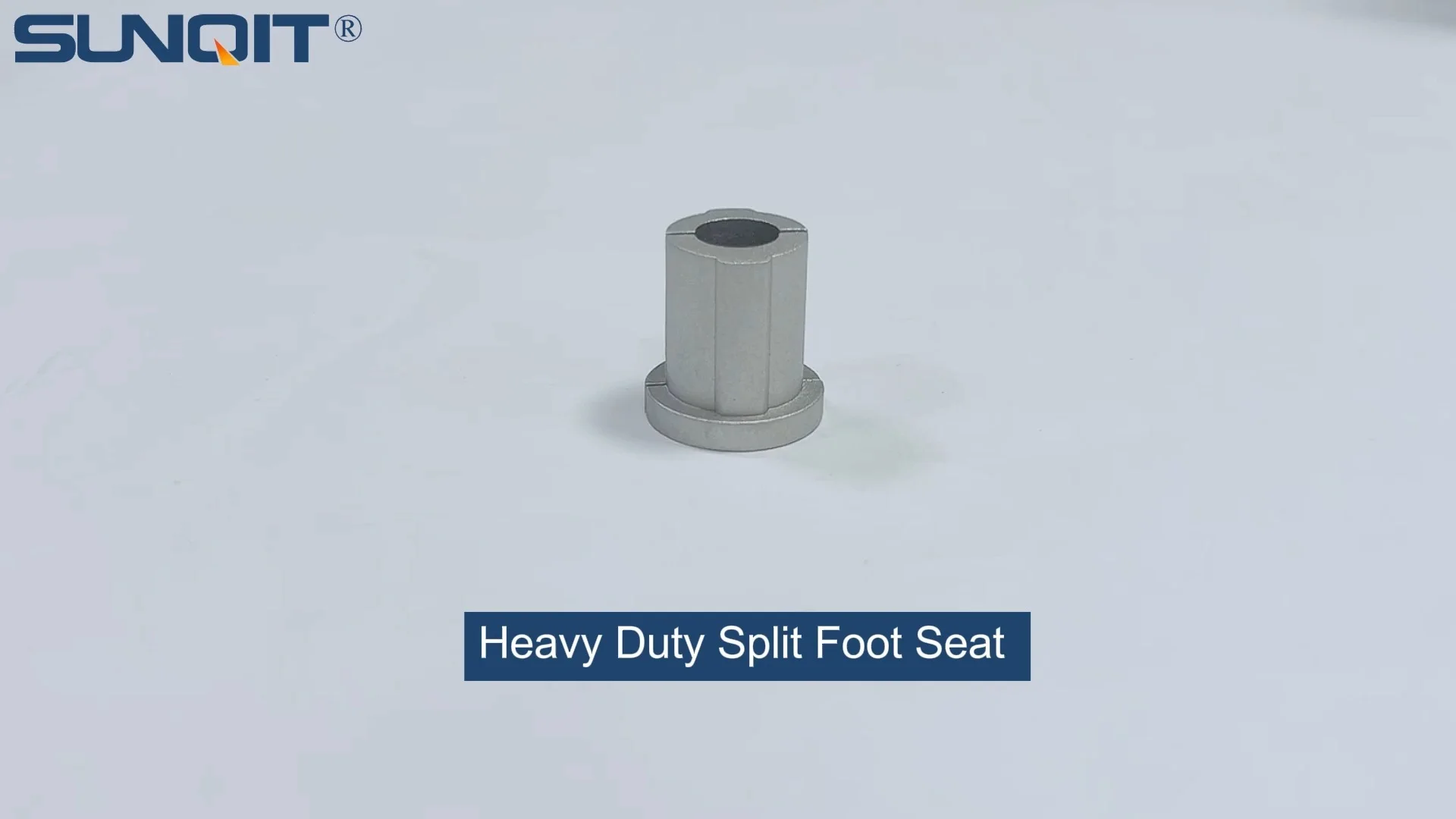
Walk into any well-run manufacturing facility, and you'll notice the little things that make a big difference: workbenches that stay steady during precision assembly, material racks that glide smoothly without wobbling, and production lines that hum with efficiency. Behind all of this lies a network of components working in harmony—many of which go unnoticed until something goes wrong. Today, we're shining a light on one such unsung hero: the heavy duty split foot seat . These unassuming metal components might not grab headlines, but they're the quiet force ensuring your lean pipe systems, workbenches, and material racks stand strong, day in and day out. Let's dive into how these foot seats bring compatibility, stability, and reliability to your lean pipe accessories, and why they deserve a spot in every production manager's toolkit.
What Are Heavy Duty Split Foot Seats, Anyway?
Before we jump into compatibility, let's get to know the star of the show. Heavy duty split foot seats are specialized support components designed to anchor and stabilize structures built with lean pipe, aluminum profile, and other modular systems. Think of them as the "feet" of your production equipment—they sit at the base of frames, workbenches, and racks, distributing weight evenly and preventing wobbling, tipping, or sinking. Made from robust materials like high-grade steel or reinforced alloy, they're built to handle heavy loads (we're talking hundreds, even thousands of pounds) without bending or warping. Unlike basic plastic or flimsy metal feet, these split-style seats are engineered with a two-piece design that clamps securely around pipes or profiles, creating a tight, non-slip connection that stands up to the vibrations and daily wear of busy factories.
Real Talk: Imagine a workbench in an electronics assembly line. It holds delicate circuit boards, tools, and testing equipment. If the bench wobbles even slightly, a technician might misplace a solder joint or drop a component. A heavy duty split foot seat under each leg eliminates that wobble, turning an unreliable workspace into a steady platform where precision work thrives. That's the difference these small components make.
Key Features That Make Them Indispensable
What sets heavy duty split foot seats apart from generic support feet? It's all in the details:
- Load-Bearing Muscle: Most models handle 500–2000 lbs per seat, depending on size and material. That means they can support everything from a lightweight workbench to a fully loaded material rack (like the material rack b (3 row and 3 floor) from your inventory).
- Adjustable Design: Many come with threaded bases or leveling screws, letting you tweak height to compensate for uneven floors—a common issue in older factories. No more shimming with cardboard or washers!
- Corrosion Resistance: Coated with zinc, powder, or other anti-rust treatments, they hold up in damp environments (like warehouses with humidity control) or areas prone to spills.
- Universal Fit: Their split design works with multiple pipe diameters and profiles, from standard lean pipe (1.2mm or 1.5mm PE coated) to aluminum profile (like 2020, 3030, or 4040 series).
- Quick Installation: No need for welding or specialized tools. Just clamp them around the pipe, tighten the bolts, and you're done—saving time during setup or reconfigurations.

The Heart of Compatibility: Working with Lean Pipe Accessories
The true magic of heavy duty split foot seats lies in how they play well with others—specifically, the lean pipe and accessories that make up your lean systems. Let's break down their compatibility with the components you rely on daily.
1. Lean Pipe Joints: The Connection That Holds It All Together
Lean pipe systems are built by connecting pipes with joints—think lean pipe joint models like 90° fixed, 180° swivel, or vertical joints. These joints are the "elbows and knees" of your structure, but they're only as strong as the support beneath them. Heavy duty split foot seats work hand-in-hand with these joints by:
- Reducing Stress on Joints: When a rack or workbench is loaded, weights at the joints. Split foot seats distribute that weight across the base, preventing joints from bending or cracking under pressure. For example, a three way lean pipe joint supporting a corner of a material rack will last years longer with a split foot seat stabilizing the leg below it.
- Enhancing Stability in Rotating Joints: Joints like the 180° internal rotation lean pipe joint allow parts of the structure to swivel (useful for adjustable workbenches). Without proper support, swiveling can cause the entire frame to shift. Split foot seats anchor the base, so rotation happens smoothly without instability.
- Adapting to Joint Placement: Whether a joint is at floor level, mid-frame, or near the top, split foot seats fit snugly around the pipe below, ensuring the joint has a solid foundation to work from.
2. Caster Accessories: When Mobility Meets Stability
Many lean systems use caster and accessories to make workbenches, trolleys, or racks mobile. But mobility without stability is a recipe for accidents—imagine a loaded turnover trolley tipping as it's pushed around a corner. Heavy duty split foot seats solve this by pairing with casters in two key ways:
Static vs. Mobile Support: Some setups use a mix of casters and fixed feet. For example, a workbench might have two casters (for moving) and two split foot seats (for stability when stationary). When the bench is in use, the split foot seats bear the weight, taking stress off the casters and preventing them from rolling accidentally. When it's time to reposition, just lift the bench slightly to take weight off the foot seats, and the casters glide smoothly.
Reinforcing Caster Mounts: Casters attach to frames via caster install base or plates. If the base is wobbly, the caster won't roll straight, and the frame might twist. A split foot seat mounted just above the caster base adds rigidity, ensuring the caster aligns properly and the frame stays square.
| Caster Type | How Split Foot Seats Enhance Performance | Best For |
|---|---|---|
| Swivel Casters with Brake | Brake holds the trolley in place; split foot seat adds extra stability, preventing "rocking" when someone leans on the trolley. | Assembly trolleys, tool carts |
| Heavy-Duty Rigid Casters | Distributes weight to prevent caster wheels from sinking into soft floors (like concrete with cracks). | Material racks, large turnover trolleys |
| ESD-Safe Casters | Works with ESD workbenches by maintaining ground continuity (some split foot seats are ESD-coated too), protecting sensitive electronics from static damage. | Electronics manufacturing lines |
3. Aluminum Profile: A Perfect Match for Modern Lean Systems
Aluminum profile systems (like 2020, 3030, or 4080 series) are growing in popularity for their lightweight strength and sleek look. Heavy duty split foot seats aren't just for steel lean pipe—they're right at home with aluminum too:
Fitting the T-Slot Design: Aluminum profiles have T-slots for attaching accessories. While split foot seats clamp around the profile (not into the slots), their adjustable clamps fit snugly on square or rectangular profiles, creating a stable base. This is crucial for aluminum structures, which are lighter than steel and more prone to tipping if not anchored properly.
Supporting Aluminum Workbenches: Take the workbench e (single deck-without caster) from your lineup. It's a lightweight aluminum bench, but when loaded with tools and parts, it needs solid support. Split foot seats under each leg prevent the aluminum frame from flexing, ensuring the bench stays level and sturdy for years.
Pairing with Aluminum Joints: Aluminum systems use joints like 90° aluminum profile connector or internal straight aluminum joint . These joints are strong, but they rely on the frame being stable. Split foot seats keep the frame from twisting, so the joints maintain their alignment and hold tension longer.
4. Roller Track and Material Flow: Keeping Things Moving Smoothly
Roller track systems (like roller track placon mount for aluminum profile flat or 40 steel roller track yellow wheel ) are the arteries of production lines, moving parts from one station to the next. But if the track itself is unstable, parts get stuck, jams happen, and efficiency plummets. Heavy duty split foot seats stabilize roller track frames in two ways:
Leveling the Track: Roller tracks need to be perfectly level to let gravity do the work. A split foot seat with adjustable height screws lets you fine-tune each section of the track frame, ensuring parts glide smoothly without getting hung up on uneven spots.
Absorbing Impact: When a heavy bin hits the end of a roller track, it sends a shock through the frame. Split foot seats act as shock absorbers, reducing vibration and preventing the frame from shifting over time. This is especially important for swivel roller balls 1 inch or plastic roller track guide rail yellow systems, which are designed for low-friction movement—any frame movement disrupts that flow.

The Ripple Effect: Benefits Beyond Stability
Stability is just the start. Heavy duty split foot seats create a chain reaction of benefits that boost your entire operation:
Happier, Safer Workers: A wobbly workbench or rack isn't just annoying—it's a safety hazard. Loose parts can fall, tools can slip, and workers might strain themselves trying to steady unstable equipment. Split foot seats reduce these risks, creating a workspace where employees feel confident and secure. And when workers feel safe, they're more focused, productive, and less likely to miss days due to injuries.
Longer Equipment Lifespan: Every time a frame wobbles or a joint takes uneven stress, it wears out faster. Split foot seats reduce that wear, extending the life of your lean pipe, aluminum profile, and accessories. That means you spend less on replacements and repairs, and more on growing your business.
Flexibility to Adapt: Lean manufacturing thrives on adaptability—reconfiguring lines, adding workstations, or repurposing racks. Split foot seats make these changes easier. Since they're easy to install and remove, you can disassemble a rack, move it, and set it up again with minimal hassle. No more wrestling with bent or broken feet during reconfigurations!
Consistent Quality: In industries like automotive or aerospace, even tiny variations in workflow can affect product quality. A stable production line, anchored by split foot seats, ensures processes are repeatable. Parts move the same way, workbenches stay level, and quality control checks are more reliable. That translates to fewer defects and happier customers.

Real-World Applications: Where They Shine Brightest
Let's look at three common setups where heavy duty split foot seats make a tangible difference:
1. Electronics Assembly Workbenches
Electronics manufacturing demands precision. A workbench holding circuit boards, microscopes, and soldering tools can't afford to move. By installing split foot seats on an esd workbench , you eliminate static (some seats are ESD-safe) and wobble. Technicians can focus on delicate work, knowing their workspace is steady. The result? Fewer errors, faster assembly times, and higher-quality products.
2. Heavy-Duty Material Racks
A material rack b (3 row and 3 floor) loaded with metal parts, automotive components, or heavy boxes can weigh thousands of pounds. Without proper support, the rack legs might sink into the floor or bend, causing the rack to lean. Split foot seats distribute that weight across a larger surface area, preventing sinking, and their rigid design keeps the rack upright. Even when workers load or unload from the top shelf, the rack stays stable—no more worrying about collapse.
3. Mobile Turnover Trolleys
Turnover trolleys (like hand trolley a or hand trolley b ) move parts between warehouses and production lines. A trolley with four casters can be tricky to control, especially when loaded. Adding two split foot seats (one on each side) creates a "parking brake" effect when stationary. Workers can load/unload without the trolley rolling, and when moving, the foot seats lift easily, letting the casters take over. It's a simple fix that makes material handling safer and more efficient.
Why Skimping on Support Costs You More
It's tempting to cut costs by using cheap plastic feet or generic metal brackets instead of heavy duty split foot seats. But here's the truth: those savings vanish quickly. A plastic foot might cost $2 instead of $10, but if it cracks under load, you'll replace it 5 times in a year. Worse, a wobbly rack could damage $500 worth of parts, or a fall could lead to a worker injury (and costly downtime). Split foot seats are an investment in reliability—one that pays for itself in fewer repairs, less waste, and safer operations.
Final Thoughts: The Quiet Force Behind Lean Success
In the world of lean manufacturing, we often focus on big-picture systems: workflow optimization, waste reduction, automation. But the small components—the ones you don't notice until they're missing—are what make those systems work. Heavy duty split foot seats are exactly that: quiet, reliable, and essential. They turn unstable frames into rock-solid structures, generic accessories into integrated systems, and frustrating workspaces into places where productivity and safety thrive.
So the next time you walk through your production floor, take a second look at the bases of your workbenches, racks, and trolleys. If they're using basic feet, imagine the difference split foot seats could make. Your workers will thank you for the steady workspaces. Your maintenance team will appreciate fewer repairs. And your bottom line will reflect the savings from reduced waste and downtime. After all, lean manufacturing isn't just about efficiency—it's about building systems you can trust. And trust starts from the ground up.