- Company Articles
- Products and Technology
- Product knowledge
- Heavy Duty Split Foot Seats for Flexible Production Lines: Adaptability

Heavy Duty Split Foot Seats for Flexible Production Lines: Adaptability
Related Product
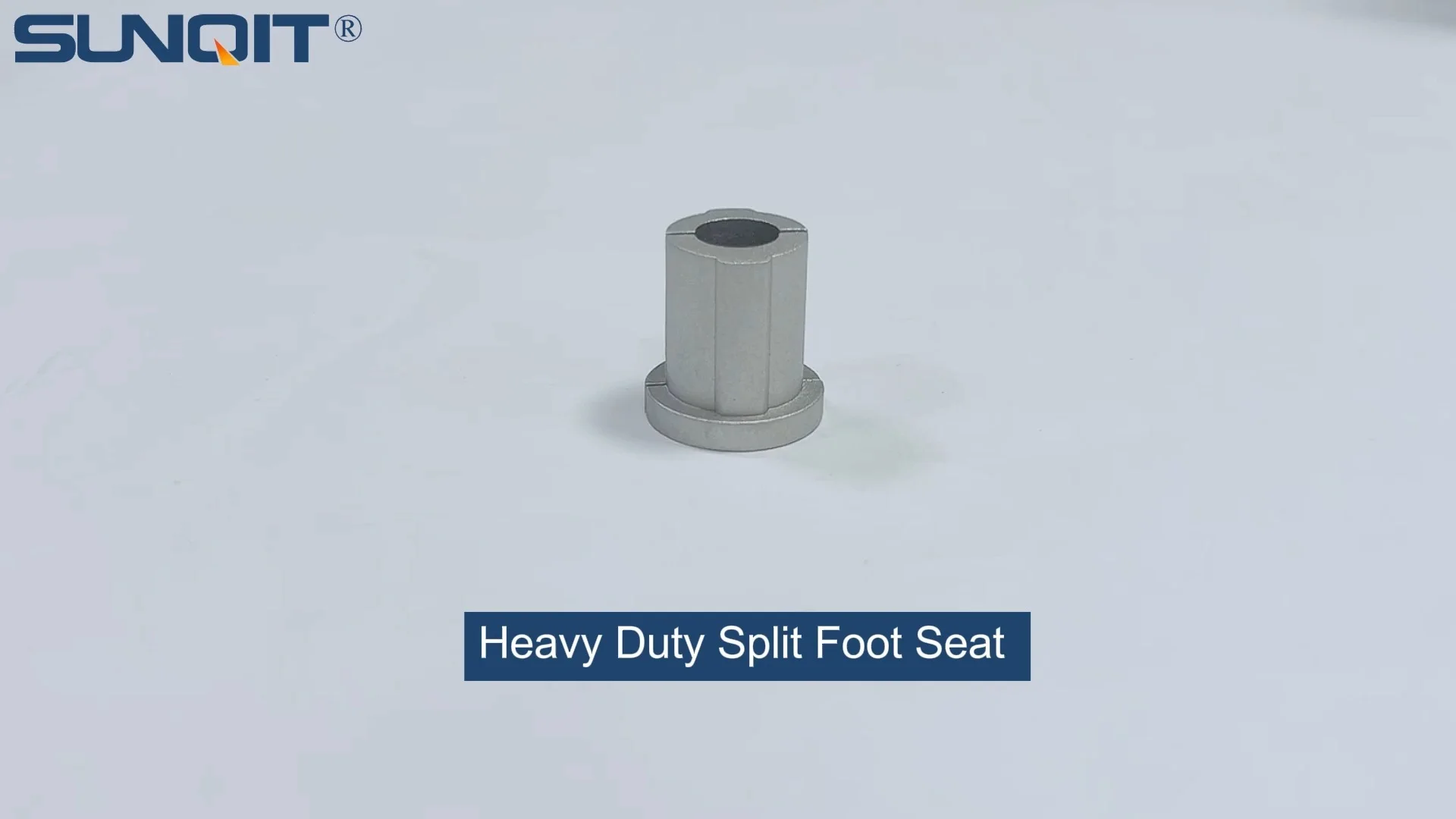
Heavy Duty Split Foot Seat
M10 aluminum heavy duty split foot deat with foot adjuster for workbench and flow rack.
In today's fast-paced manufacturing world, the ability to pivot quickly isn't just a luxury—it's a necessity. Production lines that once chugged along with rigid, one-size-fits-all setups are now being replaced by dynamic, flexible systems that can adapt to shifting customer demands, new product launches, and evolving industry standards. At the heart of this transformation lies a focus on lean system principles: maximizing efficiency, minimizing waste, and creating workflows that respond to change without skipping a beat. And while flashy technologies like automation and AI often steal the spotlight, it's the smaller, unsung components that truly make flexibility possible. Enter the heavy duty split foot seat—a humble yet powerful player in the quest for adaptable production lines.
You might not have noticed them before, but heavy duty split foot seats are the quiet workhorses holding up everything from assembly workbench es to material racks and roller tracks. They're the foundation that ensures stability even as production lines reconfigure, the adjusters that level out uneven floors, and the connectors that bridge the gap between modular components. In this article, we'll dive deep into what makes these unassuming parts so critical, how they integrate with key elements like aluminum profile s and roller track s, and why they're becoming a must-have for manufacturers aiming to stay competitive in a world that waits for no one.
What Are Heavy Duty Split Foot Seats, Anyway?
Let's start with the basics. A heavy duty split foot seat is a structural support component designed to anchor and stabilize equipment in industrial settings. Unlike standard fixed foot seats, which are often rigid and one-dimensional, split foot seats are engineered with adaptability in mind. Their "split" design refers to a base that can be separated or adjusted, allowing for greater flexibility in how they connect to other components—think workbenches, aluminum profiles, or even roller tracks that move materials across the factory floor.
Most heavy duty split foot seats are made from robust materials like high-grade steel or aluminum alloys, chosen for their strength-to-weight ratio. Aluminum is a popular choice here, especially when paired with aluminum profile s, because it offers corrosion resistance, durability, and just enough give to absorb vibrations from heavy machinery. The best ones also feature adjustable height mechanisms, often with threaded rods or knobs, so operators can tweak their elevation by fractions of an inch to compensate for uneven floors—a common headache in older factories or warehouses with concrete that's settled over time.
But what really sets them apart is their modularity. A standard foot seat might bolt directly into a workbench leg and stay there forever. A split foot seat, by contrast, can be detached, repositioned, and reused when a production line needs to shift. Maybe you're adding a new roller track to speed up material flow, or reconfiguring a workbench to accommodate a taller operator—split foot seats make these changes possible without having to replace the entire support structure. It's like having a Swiss Army knife for your factory's foundation: simple, versatile, and ready for whatever comes next.
The Adaptability Factor: Why Split Design Matters
Adaptability in manufacturing isn't just about moving equipment around—it's about doing so quickly, safely, and cost-effectively. Heavy duty split foot seats excel in all three areas, thanks to a few key design features that address real-world challenges faced by production managers every day.
Adjustability: Leveling the Playing Field (Literally)
Walk into any factory, and you'll notice that floors are rarely perfectly flat. Years of heavy machinery, temperature fluctuations, and general wear and tear leave cracks, dips, and uneven spots. For precision work—like assembling electronics or aligning parts on a roller track —even a tiny tilt can throw off measurements, slow down production, or worse, compromise product quality. Heavy duty split foot seats solve this with their built-in leveling mechanisms. By turning a knob or wrench, operators can raise or lower one side of the split base, ensuring the connected equipment sits perfectly flat, no matter the floor's condition. This isn't just about convenience; it's about consistency. When your workbench or roller track is level, parts slide smoothly, tools stay in place, and workers can focus on their tasks instead of fighting against a wobbly setup.
Compatibility: Playing Well with Others
In flexible production lines, no component works alone. A workbench might be built from aluminum profile s, connected to a roller track for material delivery, and mounted on casters for easy movement. Heavy duty split foot seats act as the glue that holds these pieces together. Their split design allows them to clamp onto aluminum profiles of different sizes—whether it's a 2020 profile for light-duty workbenches or a beefy 4080 profile for heavy machinery. They can also attach to roller track frames, ensuring the track stays aligned even when loaded with boxes or parts. And because they're often designed with standardized hole patterns or universal connectors, they play nice with other modular components, too—think caster wheels for mobile workstations or turnkey trolleys for transporting goods. This compatibility means you don't have to overhaul your entire setup to adopt new technology; you can mix and match, adding split foot seats where needed to bridge old and new systems.
Durability: Built to Outlast the Hype
Flexibility doesn't mean sacrificing strength. Heavy duty split foot seats are "heavy duty" for a reason: they're built to withstand the rigors of industrial environments. We're talking about supporting loads of up to 1,500 pounds per seat, enduring constant vibrations from machinery, and resisting scratches, dents, and corrosion from oils, coolants, or humidity. Many are treated with anti-rust coatings or made from aluminum alloys that naturally resist corrosion, ensuring they last for years—even decades—without needing replacement. This durability is key for lean system s, where reducing waste includes cutting down on frequent part replacements. A split foot seat that lasts 10 years instead of 2 isn't just a cost-saver; it's a sustainability win, too, keeping old parts out of landfills and minimizing the need for raw material extraction.

How Heavy Duty Split Foot Seats Support Lean System Goals
If you're familiar with lean manufacturing, you know its core principles revolve around eliminating waste, optimizing flow, and empowering workers to drive continuous improvement. Heavy duty split foot seats might not seem like a "lean tool" at first glance, but they align perfectly with these goals in ways that add up to big efficiency gains.
Take waste reduction, for example. In traditional setups, reconfiguring a production line often means cutting, welding, or replacing entire sections of the support structure. That's time wasted, materials wasted, and labor wasted. With split foot seats, reconfiguration is as simple as loosening a few bolts, adjusting the height, and reattaching to a new aluminum profile or roller track . No cutting, no welding, no throwing away perfectly good parts. A factory in Michigan that produces automotive components recently reported cutting reconfiguration time by 40% after switching to split foot seats—time that now goes toward making products instead of breaking down and rebuilding workbenches.
Then there's flow optimization. Lean system s thrive on smooth, uninterrupted workflows, and roller track s are a big part of that, moving parts from one station to the next with minimal effort. But if a roller track isn't level, parts get stuck, operators have to manually push them, and bottlenecks form. Split foot seats solve this by leveling the track, ensuring gravity does its job and materials glide seamlessly. Similarly, workbenches that wobble or sink into uneven floors force workers to adjust their posture, leading to fatigue and slower output. By stabilizing these work surfaces, split foot seats keep operators comfortable and focused, turning "good enough" productivity into "great" productivity.
Empowerment is another lean principle that split foot seats support. When workers can adjust their own workbenches or equipment without waiting for maintenance crews, they take ownership of their space. Imagine a line operator noticing a roller track is slightly off-kilter—instead of filing a request and waiting hours for a fix, they grab a wrench, tweak the split foot seat's height adjuster, and get back to work. That's empowerment in action, and it's a game-changer for morale and efficiency. Workers feel trusted, and small issues get resolved before they become big problems.

Real-World Applications: Where Split Foot Seats Shine
Enough theory—let's talk about how heavy duty split foot seats are making a difference on actual factory floors. Here are a few examples of industries where they're proving their worth:
Automotive Manufacturing: From Assembly Lines to Custom Kits
Automakers are no strangers to rapid change. One month, they're producing sedans; the next, they're shifting to electric SUVs with entirely different component layouts. A major auto plant in Ohio recently invested in split foot seats to support their modular assembly workbenches. These workbenches, built with aluminum profile s, need to reconfigure quickly to accommodate different car models. The split foot seats allow the benches to be raised, lowered, or moved sideways, while still supporting the weight of power tools, torque wrenches, and heavy part bins. They also integrated the seats with roller track s that feed parts to each station—when the line switches models, the tracks can be realigned in hours instead of days, thanks to the seats' adjustable bases. The result? A 30% reduction in changeover time and a 15% boost in on-time deliveries.
Electronics Production: Precision in a Tiny Package
In electronics manufacturing, precision is everything. A millimeter of misalignment on a circuit board assembly line can ruin a batch of smartphones or medical devices. A California-based electronics firm uses split foot seats under their static-sensitive workbenches (ESD workbenches, for the tech-savvy) to ensure absolute stability. The seats' adjustability is critical here—even a small dip in the floor could throw off a microscope or soldering station. By tweaking the split foot seats, operators keep their work surfaces level to within 0.01 inches, reducing defects by 22% in the first quarter after installation. They also paired the seats with aluminum profiles that hold lighting, cable management systems, and tool hooks, creating a fully customizable workspace that adapts to each operator's needs.
E-Commerce Warehousing: Faster Fulfillment, Less Stress
E-commerce warehouses are all about speed. Orders come in 24/7, and customers expect same-day shipping. To keep up, many warehouses use roller track s to move packages from picking stations to packing areas. But these tracks span long distances, and warehouse floors are rarely perfect. A split foot seat installation at a large fulfillment center in Texas solved this by allowing workers to level individual sections of track as needed. If a section starts to sag under the weight of heavy boxes, they adjust the seat's height instead of replacing the entire track. The seats also make it easy to add new track segments during peak seasons—like the holidays—without disrupting existing workflows. The warehouse manager reported a 25% reduction in package jams and a 10% increase in hourly throughput after the upgrade.

Traditional vs. Heavy Duty Split Foot Seats: A Side-by-Side Comparison
Still not convinced split foot seats are worth the investment? Let's put them head-to-head with traditional fixed foot seats in a table that breaks down their key features:
| Feature | Traditional Fixed Foot Seats | Heavy Duty Split Foot Seats |
|---|---|---|
| Adjustability | Fixed height; no leveling. Once installed, they can't be modified. | Height-adjustable (typically 4–8 inches); split base allows for angle adjustments to level uneven floors. |
| Load Capacity | Limited (often 500–800 lbs per seat). | Heavy duty (1,000–1,500 lbs per seat) with reinforced bases. |
| Compatibility | Works with specific equipment only; hard to integrate with modular components like aluminum profile s or roller track s. | Universal design fits most aluminum profile s, workbenches, and roller track s; often includes standard mounting holes for easy retrofitting. |
| Durability | Basic steel construction; prone to rust if not coated; lifespan of 2–3 years in heavy use. | Aluminum alloy or coated steel; corrosion-resistant; lifespan of 10+ years in heavy use. |
| Cost-Effectiveness | Cheaper upfront ($10–$20 per seat), but requires frequent replacement and limits reconfiguration options. | Higher upfront cost ($30–$50 per seat), but lower long-term costs due to durability and adaptability; reduces need for new equipment purchases. |
| Best For | Static production lines with no plans to reconfigure; low-budget operations with minimal machinery. | Dynamic lean system s; facilities with frequent reconfigurations; heavy machinery; uneven floors; modular setups. |
Overcoming Common Production Line Challenges
Manufacturing isn't without its headaches, and split foot seats are surprisingly good at solving some of the most stubborn ones. Let's tackle a few:
Problem: Uneven Floors
Solution: Split foot seats' adjustable height knobs let you tweak each seat individually, ensuring your workbench or roller track stays level even if the floor dips by half an inch. No more shimming with washers or plywood—just a quick twist of the knob.
Problem: Reconfiguring Lines Takes Too Long
Solution: Since split foot seats detach easily, you can move equipment in hours instead of days. A food packaging plant in Illinois recently reconfigured their entire line to accommodate a new cereal box size in just 4 hours—thanks in large part to split foot seats that let them reposition workbenches and roller track s without rebuilding the support structure.
Problem: Vibration from Machinery Causes Parts to Shift
Solution: The split design includes rubberized or padded bases that absorb vibrations, keeping sensitive equipment like electronics assembly workbenches stable. A semiconductor manufacturer in Arizona reported a 40% reduction in part slippage after switching to split foot seats with vibration-dampening pads.
The Future of Flexible Manufacturing: Why Split Foot Seats Are Here to Stay
As manufacturing continues to evolve—toward smaller batch sizes, more customization, and faster time-to-market—the demand for flexible infrastructure will only grow. Industry 4.0, with its smart factories and interconnected systems, relies on modularity to function. You can't have a "smart" production line if you have to tear it down and rebuild it every time a new order comes in. Heavy duty split foot seats are the foundation of that modularity, enabling the kind of quick, painless reconfigurations that make smart manufacturing possible.
Looking ahead, we'll likely see split foot seats integrate even more with digital tools. Imagine seats with built-in sensors that alert maintenance crews when they're starting to wear out, or Bluetooth-enabled adjusters that let operators level equipment from a tablet. But even without these bells and whistles, their core value—stability, adaptability, and durability—will remain irreplaceable. They're a reminder that in manufacturing, as in life, the best innovations often aren't the flashiest ones. Sometimes, it's the parts that hold everything together that make the biggest difference.
Final Thoughts: Small Part, Big Impact
Heavy duty split foot seats might not make headlines, but they're the unsung heroes of flexible production lines. They're the reason a lean system can live up to its name, the key that unlocks modularity with aluminum profile s and roller track s, and the stabilizer that keeps workbenches steady even as the world of manufacturing spins faster and faster. For manufacturers looking to future-proof their operations, investing in these small but mighty components isn't just a smart move—it's a necessary one.
So the next time you walk through a factory, take a second to look down. Chances are, under that workbench or beside that roller track, there's a heavy duty split foot seat doing its job quietly, reliably, and without fanfare. And that, in a nutshell, is the beauty of it: in a world that's always changing, sometimes the best way to stay ahead is to build a foundation that can change with it.