- Company Articles
- Products and Technology
- Product knowledge
- Heavy Duty Split Foot Seats for Workbench E: Enhanced Stability Features

Heavy Duty Split Foot Seats for Workbench E: Enhanced Stability Features
Related Product
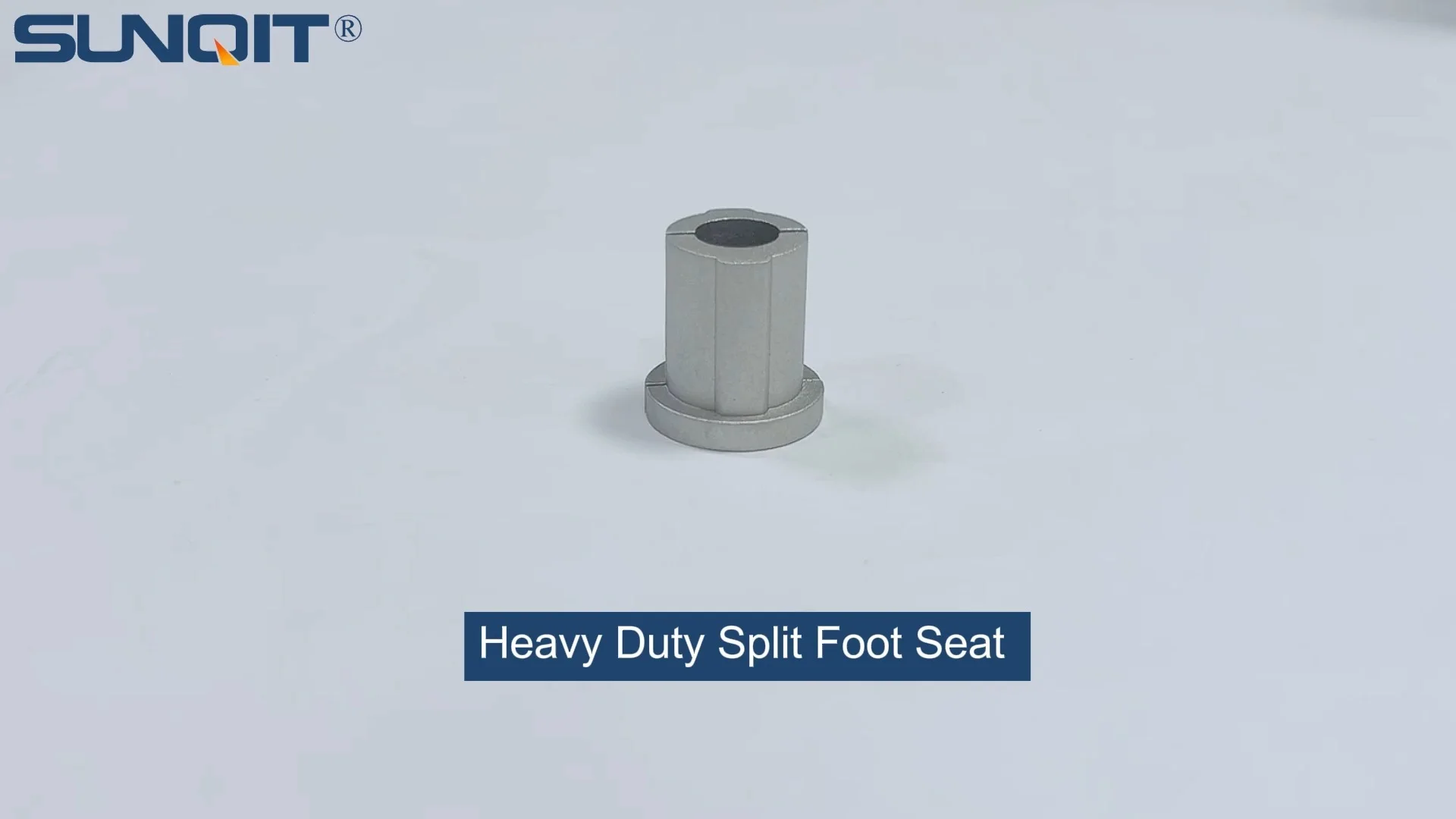
Heavy Duty Split Foot Seat
M10 aluminum heavy duty split foot deat with foot adjuster for workbench and flow rack.
Walk into any manufacturing plant, assembly line, or workshop, and you'll quickly notice something: the workbench is the unsung hero of the operation. It's where parts are assembled, tools are organized, and precision meets productivity. But here's the thing—no matter how sleek the design or how durable the materials, a workbench is only as good as its stability. A wobbly workbench isn't just an annoyance; it's a productivity killer, a safety risk, and a silent enemy of quality. That's where Workbench E steps in—and more specifically, its game-changing Heavy Duty Split Foot Seats. In this article, we're diving deep into why these unassuming components are the backbone of a stable workspace, how they solve common pain points, and why they've become a must-have for anyone serious about efficiency and reliability.
Meet Workbench E: The Caster-Free Workhorse Built for Precision
First, let's get to know the star of the show: Workbench E. Part of the aluminum profile workbench family, this model is defined by its single-deck design and intentional lack of casters. Unlike mobile workbenches that prioritize flexibility, Workbench E is all about staying put—firmly anchored to the floor to support tasks that demand zero movement. Think of it as the steady hand in a world of constant motion: ideal for assembly lines where precision is non-negotiable, labs where delicate instruments rest, or workshops where heavy tools are used daily.
But here's the catch with caster-free workbenches: without wheels to adjust for uneven floors or distribute weight, their stability hinges entirely on their base. A standard fixed workbench might use simple single-post feet, but anyone who's worked with one knows the struggle. Place a heavy tool on one corner, and suddenly the whole bench tilts. Sweep the floor and hit a small pebble under one foot, and now your work surface is uneven. Over time, these small annoyances add up—leading to tired wrists from compensating for wobble, misaligned parts from unstable surfaces, and even scraped knees from accidentally bumping a shifting bench.
Real Talk from the Floor: "I used to work on a bench that shook every time I tightened a bolt," says Raj, a production technician with 12 years in automotive manufacturing. "You'd think, 'It's just a little wobble,' but when you're installing sensors that need to be aligned within a millimeter, that wobble turns into rework. I'd spend extra minutes double-checking every part because I didn't trust the bench. Now, with Workbench E? It's like working on a rock. I don't even think about stability anymore—I just focus on the job."
Heavy Duty Split Foot Seats: What Are They, and Why "Split" Matters?
So, what exactly are Heavy Duty Split Foot Seats? Let's break it down. Unlike a traditional single-point foot—a simple post that connects the workbench frame to the floor—split foot seats are designed with a "split" base: imagine two short, sturdy "toes" instead of one thick "heel." This dual-contact design might seem minor, but it's a masterclass in engineering for stability. Let's unpack why this matters.
The Science of Distribution: Why Two "Toes" Are Better Than One
Stability, at its core, is about weight distribution. A single-post foot concentrates the bench's weight (and whatever's on it) onto a small area of the floor. If that area is uneven—say, a tiny dip in the concrete or a loose tile—the foot sinks, and the bench tilts. Split foot seats, by contrast, spread that weight across two points. It's like the difference between standing on one leg versus two: with two points of contact, you're far less likely to lose balance. Even if one "toe" hits a bump, the other stays grounded, keeping the bench level.
But it's not just about floor irregularities. Think about the forces at play during a typical workday: slamming a wrench down, placing a 50-pound toolbox on the edge, or leaning into the bench to reach for a part. Each action creates torque that tries to tip the bench. A split foot seat resists that torque by creating a wider base of support. Engineers call this the "stability triangle"—the wider the base, the more resistant the structure is to tipping. Split feet expand that triangle, turning a narrow support point into a stable platform.
Materials That Mean Business: Built to Last, Built to Bear
Of course, design alone isn't enough—materials matter too. Heavy Duty Split Foot Seats are typically crafted from reinforced cast iron or high-grade aluminum alloy, chosen for their strength-to-weight ratio. Cast iron provides unbeatable rigidity, while aluminum keeps the overall bench light enough to move (yes, even without casters—you can still relocate it with a team if needed). The feet are often topped with a rubber or polyurethane pad, which does double duty: it grips the floor to prevent sliding, and acts as a shock absorber to dampen vibrations from tools like drills or impact drivers.
Compare that to cheaper plastic feet, which crack under heavy loads, or hollow steel feet that dent when dropped. These split seats are built for the long haul—resisting corrosion, wear, and the daily abuse of a busy workspace. It's the kind of durability that turns a "workbench" into a "work partner" that lasts for years.

Stability Features That Make a Difference: Beyond "Just Not Wobbling"
Let's get specific: what exactly makes Heavy Duty Split Foot Seats so effective? It's not just about "not wobbling"—it's about enhancing the entire work experience. Here are the key features that set them apart:
1. Weight Capacity That Handles the Heavy Hitters
Workbench E isn't for light tasks—and neither are its feet. Heavy Duty Split Foot Seats are rated to support up to 1,200 pounds of evenly distributed weight, and even more in some configurations. That means you can load up the bench with power tools, metal parts, or bulky equipment without worrying about the base bending or the bench sagging. For context, a standard single-post foot might top out at 600 pounds before showing signs of stress. This extra capacity isn't just about "being tough"—it's about peace of mind. When you know the bench can handle whatever you throw at it, you focus on the work, not the limits.
2. Floor Friendliness: Conquering Uneven Surfaces Like a Pro
Let's be real: factory floors are rarely perfect. Cracks, dips, and uneven concrete are par for the course, especially in older facilities. Heavy Duty Split Foot Seats tackle this head-on with their split design. Each "toe" can independently adapt to small irregularities, ensuring the bench stays level even if the floor isn't. It's like having tiny shock absorbers at each corner—minimizing rocking and keeping the work surface flat. For anyone who's ever stuffed a folded napkin under a wobbly table leg (we've all been there), this is the grown-up solution.
3. Vibration Dampening: Keeping Precision Work Precise
Ever tried assembling a small circuit board while someone nearby is using a hammer? The vibrations travel through the floor, up the bench legs, and straight into your hands—making fine motor tasks nearly impossible. The rubberized pads on split foot seats act as a barrier, absorbing those vibrations before they reach the work surface. This is a game-changer for tasks like soldering, electronics assembly, or medical device manufacturing, where even the smallest tremor can ruin hours of work.
4. Anti-Slip Grip: No More "Oops, It Moved" Moments
It's one thing for the bench to stay level—it's another for it to stay put. The rubber pads on the split feet create friction with the floor, preventing the bench from sliding when you push, pull, or lean on it. This is especially important in high-traffic areas where carts or workers might brush against the bench, or when using tools that require force (think: torque wrenches or sanders). No more chasing a sliding bench across the floor mid-task—just solid, unwavering stability.

How Do They Compare? Split Foot Seats vs. Other Stability Solutions
You might be wondering: "Aren't there other ways to stabilize a workbench?" Absolutely. Let's stack Heavy Duty Split Foot Seats against two common alternatives: standard fixed feet and adjustable leveling feet.
| Feature | Heavy Duty Split Foot Seats | Standard Fixed Feet | Adjustable Leveling Feet |
|---|---|---|---|
| Weight Capacity | Up to 1,200 lbs (evenly distributed) | 600–800 lbs (varies by material) | 800–1,000 lbs (limited by adjustment mechanism) |
| Floor Adaptability | Excels on uneven surfaces (split design distributes pressure) | Poor—wobbles on cracks/dips | Good (height-adjustable for fine-tuning) |
| Installation | Simple bolt-on; no tools needed beyond a wrench | Simple, but requires precise alignment | More complex; needs leveling after installation |
| Maintenance | Minimal—wipe clean, check pads for wear | Minimal, but prone to bending if overloaded | Adjustment mechanism can jam with debris |
| Best For | Heavy-duty tasks, uneven floors, vibration-sensitive work | Light to medium tasks on perfectly level floors | Medium tasks where precise height alignment is key |
As the table shows, split foot seats shine in scenarios where durability and adaptability are non-negotiable. They're not just a "better" option—they're the right option for workbenches that need to perform, day in and day out, no excuses.

Installation: Simple, Straightforward, and Stress-Free
You might think a feature this effective would be complicated to install—but nope. Heavy Duty Split Foot Seats are designed with "plug-and-play" in mind, even for those who aren't DIY experts. Here's how it works:
1. Prep the Bench: Flip Workbench E onto its side (with help—safety first!) to expose the bottom of the frame. The legs will have pre-drilled holes designed to fit the split feet, so no measuring or drilling required.
2. Align and Attach: Place each split foot seat over the holes, ensuring the rubber pad faces downward. insert the included bolts (usually M10 size) through the foot and into the frame, then tighten with a wrench until snug. No need to over-tighten—just enough to secure the foot firmly.
3. Set It Down and Check: Carefully lower the bench back onto its feet. Give it a gentle shake—if it moves, check that all bolts are tight. If one corner feels high, the split design often self-adjusts as weight is applied, but you can also add a small shim under the rubber pad if needed (though we've rarely seen that necessary).
Total installation time? About 15 minutes with two people. No special tools, no confusing instructions—just straightforward, common-sense assembly. It's the kind of design that respects your time, because in a busy workspace, every minute counts.
Beyond Workbench E: Where Else Do Split Foot Seats Shine?
While Workbench E is their primary home, Heavy Duty Split Foot Seats aren't one-trick ponies. They're versatile enough to enhance other workspace essentials too. For example:
- Turnover Trolley and Rack: Even mobile trolleys need stability when loading/unloading. Adding split foot seats to the base of a turnover rack prevents tipping when stacked with heavy bins.
- Material Racks: Racks holding metal sheets or bulky parts often sway under load. Split feet add a wider base, reducing the risk of collapse.
- Assembly Stations: Custom workstations with multiple levels or attached shelves benefit from the extra stability split feet provide, especially when tools hang from the sides.
The bottom line? Any surface that needs to stay steady under pressure can benefit from the split foot design. It's a simple upgrade that transforms "good enough" into "great."
Final Thoughts: Stability as a Foundation for Success
At the end of the day, Heavy Duty Split Foot Seats are more than just parts—they're a commitment to quality. They're a recognition that the little things matter: the absence of wobble, the confidence to work faster, the peace of mind that comes from knowing your workspace is built to last. For anyone who's ever cursed a wobbly bench, wasted time fixing mistakes caused by instability, or worried about safety in a busy environment, these feet are a revelation.
Workbench E, with its single-deck design and focus on stability, was already a standout—but paired with Heavy Duty Split Foot Seats, it becomes something more: a workspace that works with you, not against you. It's the difference between "getting by" and "thriving."
So, if you're in the market for a workbench that won't let you down, don't just look at the surface. Look down—at the feet that hold it all up. Because when it comes to productivity, safety, and quality, stability isn't a bonus. It's the foundation.