- Company Articles
- Products and Technology
- Product knowledge
- Heavy Duty Split Foot Seats in 3C Assembly: Precision & Stability

Heavy Duty Split Foot Seats in 3C Assembly: Precision & Stability
Related Product
Heavy Duty Split Foot Seat
M10 aluminum heavy duty split foot deat with foot adjuster for workbench and flow rack.
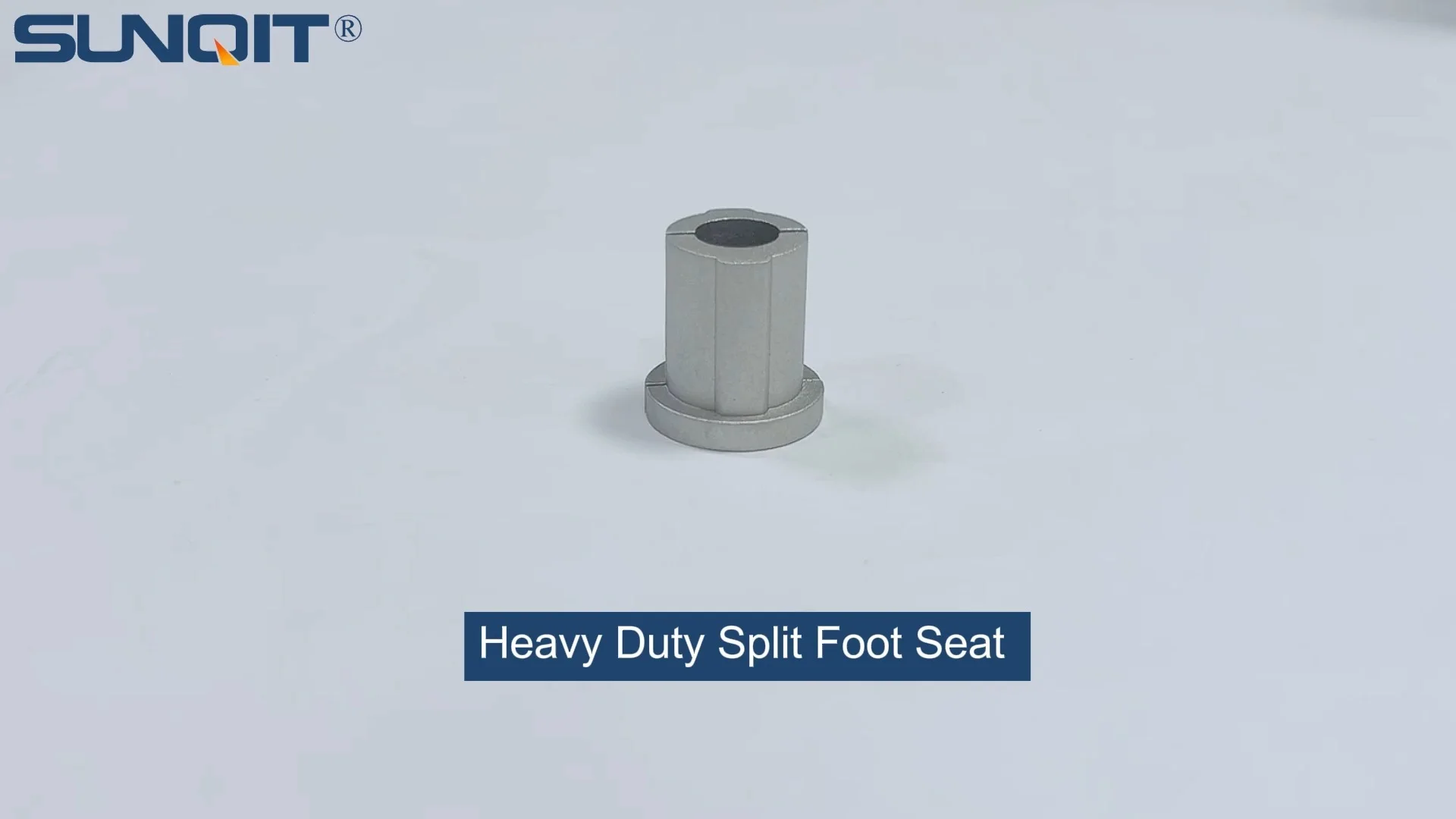
The Unsung Heroes of High-Precision Manufacturing
Walk into any 3C (computers, communications, consumer electronics) assembly plant, and you'll be hit by the hum of machinery, the rapid click of robotic arms, and the focused energy of workers hunched over workbenches, piecing together devices that fit in the palm of your hand. It's a world where precision isn't just a goal—it's the difference between a functional smartphone and a costly reject. But amid all the high-tech gadgetry and advanced robotics, there's a quiet component working behind the scenes to keep everything steady: the Heavy Duty Split Foot Seat . You might not notice it at first glance, but this unassuming part is the backbone of stability in 3C assembly lines, ensuring that workbenches, material racks, and production stations stay rock-solid even when the pressure is on.
In an industry where components shrink smaller than a grain of rice and tolerances are measured in microns, stability isn't optional. A workbench that wobbles by just 0.1mm can throw off a solder joint, misalign a circuit board, or ruin a delicate screen assembly. That's why manufacturers don't just invest in fancy tools—they invest in the foundational elements that keep their lines stable. And when it comes to foundational stability, Heavy Duty Split Foot Seats are in a league of their own. Let's dive into why these simple yet ingenious components matter, how they're changing the game in 3C assembly, and why they've become a must-have for any plant aiming to stay competitive in today's fast-paced market.
The 3C Assembly Challenge: Why Stability Can't Be Compromised
To understand the role of Heavy Duty Split Foot Seats, we first need to grasp the unique demands of 3C assembly. Unlike automotive or aerospace manufacturing, where parts are larger and tolerances are more forgiving, 3C production is a masterclass in miniaturization and speed. Think about the last smartphone you held: its internal components—chips, sensors, batteries—are packed into a space smaller than a deck of cards, with zero room for error. A single misplaced capacitor or a misaligned camera lens can render the entire device useless, costing manufacturers hundreds of dollars per unit in rework or scrap.
Add to that the pressure of high-volume production. Top-tier 3C plants can churn out thousands of devices per hour, meaning even a minor hiccup in stability can snowball into massive losses. And with consumer expectations rising—faster release cycles, better quality, lower prices—manufacturers are under constant pressure to optimize their lines for both speed and precision. This is where lean system principles come into play: eliminating waste, streamlining workflows, and ensuring every part of the production process adds value. But lean systems rely on consistency, and consistency starts with stability.
Consider a typical assembly line for smartwatches. Workers stand at workbench stations, attaching tiny OLED screens to metal frames. The screens are thinner than a credit card and damaged by vibration. The workbench must stay perfectly level and still, even as nearby conveyor belts hum and workers shift their weight. If the bench tilts or shakes, the adhesive bonding the screen might not set evenly, leading to bubbles or, worse, a screen that detaches after the device leaves the factory. Now multiply that risk across hundreds of workbenches and millions of units per year—it's clear why stability is the unsung hero of 3C manufacturing.
Traditional workbench feet, often simple fixed pads or basic adjustable glides, struggle to keep up with these demands. They might work in low-pressure environments, but in 3C plants, where floors are rarely perfectly level, equipment is moved and reconfigured regularly, and loads can shift unexpectedly, they fall short. Fixed feet can't compensate for uneven concrete, leading to wobbling. Basic adjustable feet might lack the durability to handle heavy loads over time, creeping out of position and throwing off alignment. And when stability fails, so does efficiency—workers slow down to compensate for shaky surfaces, rework rates climb, and deadlines slip.

What Are Heavy Duty Split Foot Seats, Anyway?
At first glance, a Heavy Duty Split Foot Seat looks like a simple metal bracket with a threaded rod and a wide, split base. But don't let its simplicity fool you—every design choice serves a purpose. Let's break down the anatomy of these stability stars:
The Split Base: Unlike traditional single-piece feet, the "split" design features two separate contact pads that spread outwards, increasing the surface area in contact with the floor. Imagine standing with your feet together versus shoulder-width apart—wider stance equals more stability. The split base does the same for workbenches, distributing the weight of the bench and its load across a larger area to minimize sinking, tilting, or sliding.
Adjustable Height Mechanism: Most models come with a threaded rod that screws into the workbench frame, allowing operators to tweak the height by turning a nut or handle. This adjustability is critical for two reasons: first, it lets workers level the bench on uneven floors, ensuring the surface stays perfectly horizontal. Second, it accommodates different load heights or line configurations—no need to replace the entire foot if the bench needs to sit an inch higher to align with a roller track .
Durable Materials: These aren't made from flimsy plastic or thin steel. Heavy Duty Split Foot Seats are typically forged from high-grade carbon steel or reinforced aluminum, coated with anti-corrosion finishes like zinc plating or powder coating. This makes them tough enough to handle the daily wear and tear of factory life—oil spills, chemical cleaners, and heavy loads (we're talking up to 500kg per foot in some models).
Anti-Slip Features: The bottom of the split base often includes rubber or polyurethane pads with textured surfaces. These grips prevent the foot from sliding on smooth factory floors, even when equipment is moved or bumped. Some models even add suction-cup-like features for extra hold on concrete or tile.
Put it all together, and you have a component that doesn't just "hold up" a workbench—it anchors it. Whether the bench is loaded with 200kg of assembly tools, vibrated by nearby machinery, or jostled during line reconfigurations, the Heavy Duty Split Foot Seat keeps it steady. It's the kind of reliability that 3C manufacturers can't afford to ignore.

Beyond Stability: How Split Foot Seats Boost Lean System Efficiency
3C manufacturers don't just care about stability—they care about lean stability. In a lean system , every component should add value without creating waste, and Heavy Duty Split Foot Seats excel here. Let's explore how they support lean principles in ways that go beyond just keeping things steady.
1. Reducing Rework and Waste
Rework is the enemy of lean manufacturing. Every time a defective unit is pulled off the line, it wastes time, materials, and labor. Heavy Duty Split Foot Seats slash rework by minimizing the root cause of many defects: instability. For example, at a major Chinese smartphone plant, after upgrading to split foot seats on their circuit board assembly benches, the rework rate for solder joint defects dropped by 22%. Why? Because the benches no longer wobbled during soldering, ensuring that the soldering iron hit the exact same spot every time. Over a year, that translated to savings of over $400,000 in rework costs alone.
2. Enabling Flexible Line Configurations
Lean systems thrive on adaptability. 3C product cycles are short—new models launch every 6–12 months, and assembly lines need to reconfigure quickly to keep up. Heavy Duty Split Foot Seats make reconfiguration a breeze. Unlike fixed feet, which might require shims or replacement to adjust for new layouts, split foot seats can be height-adjusted in minutes with a wrench. Need to raise a workbench by 5cm to align with a new roller track ? Twist the adjustment nut. Moving a bench to a new spot with uneven flooring? Level it on-site without calling in maintenance. This flexibility cuts downtime during line changes from hours to minutes, keeping production on track even when schedules are tight.
3. Extending Equipment Lifespan
Lean isn't just about reducing waste in production—it's about maximizing the life of your assets. A wobbly workbench doesn't just harm products; it strains the bench itself. Constant vibration and uneven weight distribution can loosen bolts, bend frames, and wear out hinges over time. Heavy Duty Split Foot Seats absorb shock and distribute weight evenly, reducing stress on the workbench frame and extending its lifespan by 30–50% in some cases. That means fewer replacements, lower capital costs, and less waste from discarded equipment.

The Perfect Partner: Split Foot Seats and Aluminum Profiles
In 3C assembly, Heavy Duty Split Foot Seats rarely work alone. They're often paired with another manufacturing staple: aluminum profile frames. Aluminum profiles—lightweight, modular, and strong—are the building blocks of modern workbenches, material racks, and production cells. When combined with split foot seats, they create a system that's both stable and adaptable, checking all the boxes for 3C manufacturers.
Aluminum profiles are popular in 3C plants because they're easy to assemble, reconfigure, and transport. But their lightweight nature can sometimes make them prone to flexing or vibrating under heavy loads. That's where split foot seats step in. By anchoring the aluminum frame to the floor with a wide, stable base, they counteract the profile's tendency to wobble, turning a lightweight structure into a rigid, rock-steady workstation. It's the best of both worlds: the flexibility of aluminum and the stability of steel.
Take, for example, a material rack used to store delicate camera modules. The rack is built from 40x40mm aluminum profiles to keep it light enough for workers to move (when needed). But loaded with 50kg of camera modules, the rack might sway when someone pulls out a shelf. Add Heavy Duty Split Foot Seats to the base, and suddenly the rack stands firm. The split feet distribute the weight, the adjustable height keeps it level, and the anti-slip pads prevent sliding. Workers can access modules without worrying about the rack tipping, and the aluminum frame stays protected from stress cracks caused by swaying.
The synergy between split foot seats and aluminum profiles is also evident in custom workbenches. Many 3C plants design workbenches with aluminum profile frames to accommodate unique tools—like magnifying lamps, ESD (electrostatic discharge) mats, or small conveyors. These benches need to support not just the weight of tools but also the precision of the work being done. A bench with an aluminum frame and split foot seats can handle both. For instance, at a Taiwanese laptop factory, engineers built a custom testing bench with aluminum profiles and split foot seats to hold sensitive diagnostic equipment. The result? The bench stayed stable enough to measure electrical signals with 0.001V accuracy, even when the factory's air conditioning kicked on and caused vibrations elsewhere in the line.
Comparing the Options: Why Split Foot Seats Beat Traditional Alternatives
You might be wondering: Why not just use regular adjustable feet or caster wheel s with brakes? It's a fair question. Let's break down how Heavy Duty Split Foot Seats stack up against common alternatives in key categories that matter for 3C assembly.
| Feature | Heavy Duty Split Foot Seats | Standard Adjustable Feet | Caster Wheels (with Brakes) |
|---|---|---|---|
| Load Capacity | Up to 500kg per foot | Typically 100–200kg per foot | Up to 300kg per caster (but brakes reduce stability under load) |
| Stability | Excellent—wide split base minimizes wobble | Good for light loads, but narrow base can tip under heavy weight | Poor—brakes can slip; wheels compress under load, causing movement |
| Floor Protection | Anti-slip rubber pads prevent scratches and sliding | Basic rubber pads; may mark floors under heavy loads | Wheels can scuff floors; brakes may leave indentations |
| Adjustability | Easy height adjustment (±20mm) with wrench | Adjustable, but limited range (±10mm) | Not height-adjustable (casters add fixed height) |
| Suitability for 3C Assembly | Ideal for high-precision, heavy-load stations | Best for light-duty, low-precision tasks | Only suitable for mobile stations (e.g., material trolleys), not fixed assembly |
The table tells the story: for fixed assembly stations where precision and stability are non-negotiable, Heavy Duty Split Foot Seats outperform the competition. Casters have their place—they're great for moving material trolleys or temporary workstations—but when you need a station to stay put, casters with brakes are a risky compromise. Brakes can wear out, wheels can flatten under constant load, and even locked casters allow for tiny movements that matter in 3C work. Standard adjustable feet are better than nothing, but their narrow base and lower load capacity make them a liability in high-pressure environments.
One plant manager at a South Korean electronics manufacturer put it bluntly: "We tried using caster wheels with brakes on our screen assembly benches to make them 'mobile.' Big mistake. Even with the brakes locked, the benches shifted when workers leaned on them. We had so many scratched screens from misalignment that we switched to split foot seats within a week. Now the benches don't move an inch, and our screen defect rate is down to 0.3%."
Real-World Impact: Case Studies from the Factory Floor
Numbers and specs tell part of the story, but real-world results speak louder. Let's look at how Heavy Duty Split Foot Seats have transformed operations at three different 3C plants.
Case Study 1: A Japanese Tablet Manufacturer Cuts Defects by 35%
A leading Japanese tablet brand was struggling with high defect rates in their touchscreen assembly line. The culprit? Their workbenches, which sat on standard adjustable feet, wobbled slightly when operators pressed down to attach screens to device bodies. The wobble caused the adhesive to spread unevenly, leading to "light bleed" (uneven backlighting) in 8.7% of units—way above their 2% target.
After consulting with their equipment supplier, they swapped out the standard feet for Heavy Duty Split Foot Seats on 12 assembly benches. The results were immediate: within two weeks, the defect rate dropped to 2.9%. By the end of the month, it stabilized at 2.1%—just above their target. The plant manager attributed the improvement to the split feet's ability to "lock the bench in place, even when operators apply pressure." The investment in split foot seats cost around $3,000, but the savings from reduced rework exceeded $120,000 in the first quarter alone.
Case Study 2: A Chinese Smartwatch Plant Slashes Setup Time by 60%
A Chinese smartwatch manufacturer faced a different challenge: frequent line reconfigurations. With new watch models launching every 8 months, they needed to rearrange assembly lines quickly to accommodate new tools and processes. Their old workbenches, with fixed steel feet, required workers to use shims to level them on uneven floors—a process that took 2–3 hours per line.
They upgraded to aluminum profile workbenches with Heavy Duty Split Foot Seats. The split feet's adjustable height feature allowed workers to level each bench in 10–15 minutes, instead of hours. What used to take a full day to reconfigure now took just 2 hours. Over a year, the time saved added up to 144 production hours—enough to assemble an extra 10,000 smartwatches. The plant also reported that worker satisfaction improved, as less time spent on setup meant more time focused on actual assembly work.
Case Study 3: A Vietnamese Headphone Factory Reduces Equipment Damage
A Vietnamese factory producing wireless headphones was losing money due to damaged equipment. Their material racks, which held expensive audio testing tools, were built with light steel frames and basic rubber feet. When workers moved tools on and off the racks, the racks would tip slightly, causing tools to fall and break. Over six months, tool replacement costs topped $25,000.
The solution? Adding Heavy Duty Split Foot Seats to the base of each rack. The split feet widened the rack's footprint, making it more stable, and the anti-slip pads prevented sliding. Tool falls dropped by 92%, and replacement costs plummeted to $2,000 over the next six months. "It was a no-brainer," said the plant's operations director. "For $800 in split foot seats, we saved $23,000 in tools. We should have done it sooner."
Choosing the Right Split Foot Seat: Key Considerations for 3C Plants
Not all Heavy Duty Split Foot Seats are created equal. To get the most out of your investment, you need to choose the right model for your specific needs. Here's what to look for when shopping around:
1. Load Capacity
Start with the basics: how much weight will the foot seat need to support? Calculate the total weight of your workbench, tools, materials, and any dynamic loads (like workers leaning on the bench). Then, choose a foot seat with a load capacity that exceeds that total by at least 30% to account for unexpected stress. For example, a bench that holds 150kg total should use foot seats rated for at least 200kg each.
2. Floor Type
Factory floors vary—concrete, tile, epoxy, etc. Choose anti-slip pads that match your floor type. For rough concrete, rubber pads with deep treads work best. For smooth epoxy floors, consider polyurethane pads, which offer better grip without leaving marks.
3. Adjustment Range
How much height adjustment do you need? If your factory floor is uneven, look for foot seats with a wider adjustment range (±25mm or more). If floors are relatively level, ±15mm should suffice. Also, check if the adjustment mechanism is easy to use—some models require special tools, while others can be adjusted with a standard wrench.
4. Material and Corrosion Resistance
3C plants can be harsh environments. Some use water-based cleaning agents; others have high humidity. Choose foot seats made from corrosion-resistant materials like zinc-plated steel or stainless steel. Powder-coated finishes add an extra layer of protection against scratches and chemicals.
5. Compatibility with Existing Equipment
Make sure the foot seats fit your current workbenches or racks. Check the thread size (M12, M16, etc.) to ensure they screw into your aluminum profile or steel frame. If you're using custom frames, ask the supplier for samples to test compatibility before ordering in bulk.
The Future of Stability: What's Next for Split Foot Seats?
As 3C manufacturing evolves, so too will the tools that support it. Heavy Duty Split Foot Seats are no exception. Here are a few trends we're seeing that could shape the next generation of these stability workhorses:
Smart Stability: Imagine split foot seats with built-in sensors that detect wobble or uneven weight distribution and send alerts to a factory management system. Early prototypes are already in testing, and they could revolutionize predictive maintenance—no more waiting for a defect to occur; you'll know when a foot seat needs adjustment before it causes problems.
Eco-Friendly Materials: With sustainability becoming a priority for manufacturers, we'll see more split foot seats made from recycled steel or aluminum, and pads made from plant-based rubber. Some suppliers are even experimenting with 3D-printed plastic bases for lightweight, low-load applications.
Integrated ESD Protection: ESD is a major risk in 3C assembly, as static electricity can damage sensitive electronics. Future split foot seats might include conductive materials in the pads or base to ground static charges, adding another layer of protection to workstations.
Tool-Free Adjustment: To make reconfiguration even faster, manufacturers are developing split foot seats with quick-adjust levers or knobs, eliminating the need for wrenches. This would allow workers to adjust heights in seconds, further reducing downtime during line changes.
Final Thoughts: Stability as a Competitive Advantage
In the high-stakes world of 3C assembly, every detail matters. From the robots that place components to the workers who inspect finished products, precision is the name of the game. But precision starts from the ground up—and that's where Heavy Duty Split Foot Seats shine. They're not flashy, they're not high-tech, but they're essential. They turn wobbly workbenches into pillars of stability, reduce defects, boost efficiency, and help manufacturers stay lean and competitive.
As 3C devices get smaller, more complex, and more in demand, the need for stability will only grow. Manufacturers that invest in foundational components like Heavy Duty Split Foot Seats aren't just fixing a problem—they're building a competitive advantage. They're ensuring that their lines can handle whatever the future throws at them, from tighter tolerances to faster production cycles.
So the next time you pick up your smartphone or tablet, take a moment to appreciate the unseen heroes that helped build it. Somewhere, in a factory far away, a Heavy Duty Split Foot Seat is standing steady, doing its job quietly and reliably. And in the world of 3C manufacturing, that's more than enough to make it a star.