- Company Articles
- Products and Technology
- Application Cases
- Heavy Duty Split Foot Seats in Automotive Parts Manufacturing: Use Cases

Heavy Duty Split Foot Seats in Automotive Parts Manufacturing: Use Cases
Related Product
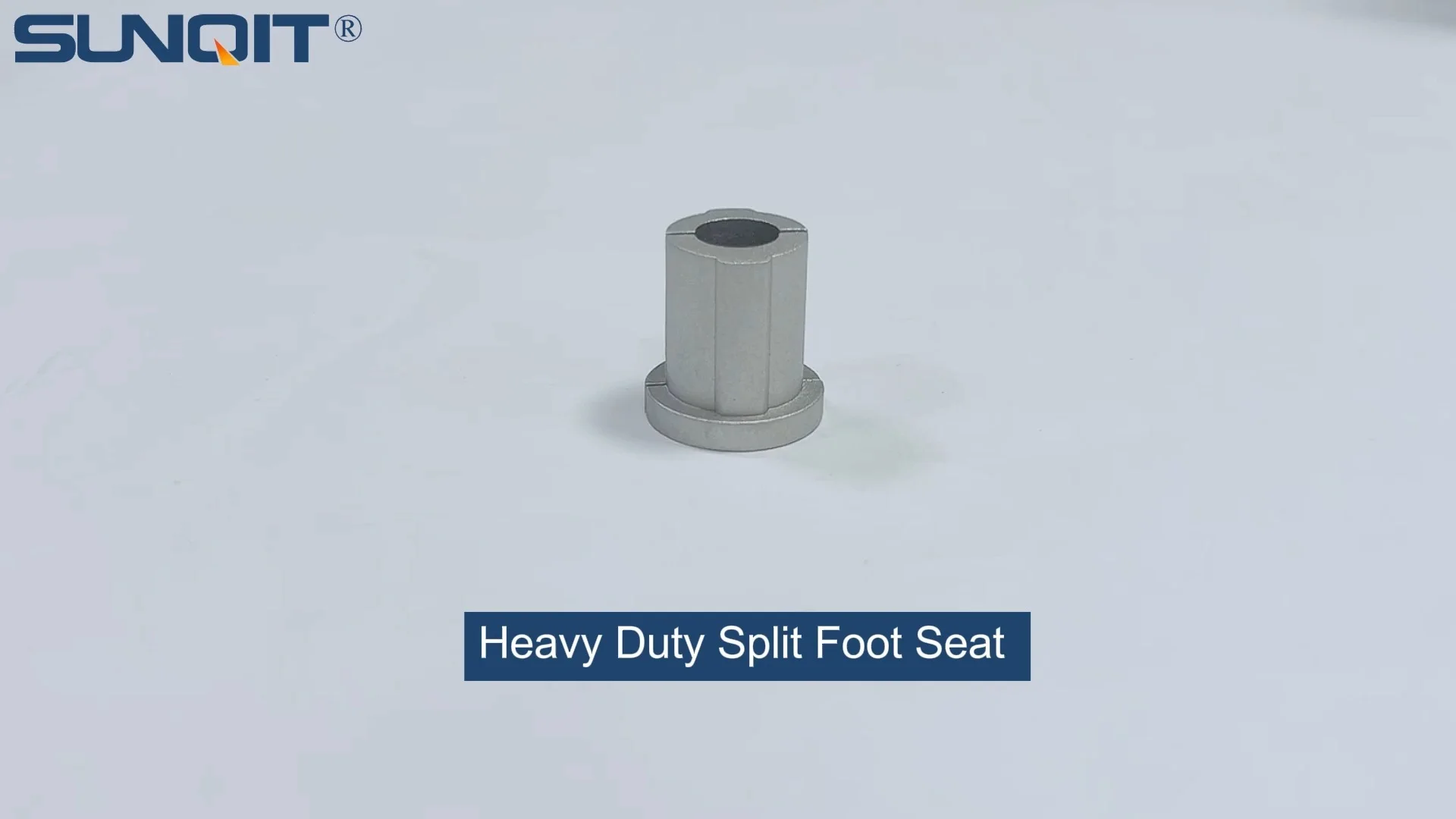
Heavy Duty Split Foot Seat
M10 aluminum heavy duty split foot deat with foot adjuster for workbench and flow rack.
In the high-stakes world of automotive parts manufacturing, where precision is measured in millimeters and production lines run 24/7, every component—no matter how small—plays a role in keeping operations smooth. From the largest conveyor belts to the tiniest fasteners, each piece contributes to the reliability, safety, and efficiency that define modern automotive production. Yet, some of the most critical components are the ones we rarely notice: the unsung heroes working quietly behind the scenes. One such hero? The heavy duty split foot seat.
Walk through any automotive manufacturing plant, and you'll see workbenches stacked with intricate engine parts, conveyor systems gliding with body panels, and material racks holding hundreds of kilograms of components. What keeps all these structures stable, level, and safe? Often, it's a set of heavy duty split foot seats, quietly bearing the load and ensuring that even the most demanding tasks proceed without a hitch. In this article, we'll explore what makes these foot seats indispensable, their key features, and the specific use cases where they shine brightest in automotive parts manufacturing.
What Are Heavy Duty Split Foot Seats?
At first glance, a heavy duty split foot seat might seem like a simple piece of hardware. But looks can be deceiving. Designed to provide stable, adjustable support for industrial structures like workbenches, conveyor frames, and material racks, these foot seats are engineered for the unique challenges of automotive manufacturing. Unlike standard fixed foot seats, which are often rigid and limited in adjustability, split foot seats feature a two-part "split" design that allows for precise leveling, even on uneven factory floors. They're typically made from high-strength materials like galvanized steel or aluminum alloy, chosen for their ability to withstand heavy loads, resist corrosion from oils and coolants, and endure the wear and tear of a busy production environment.
The "split" in their name refers to the base, which is divided into two separate plates connected by an adjustable mechanism (usually a threaded rod or bolt). This design lets operators (fine-tune) the height of each foot seat independently, ensuring that the structure it supports remains perfectly level—even if the floor beneath it has minor dips or slopes. For automotive manufacturers, where a misaligned workbench could lead to misassembled parts or a wobbly conveyor could cause jams, this level of precision is non-negotiable.
Key Features That Make Them Essential for Automotive Manufacturing
Heavy duty split foot seats aren't just "stronger" than standard foot seats—they're smarter, too. Let's break down the features that make them a go-to choice for automotive plants:
Exceptional Load Capacity
Automotive manufacturing involves heavy loads: workbenches holding 300kg engine blocks, material racks stacked with steel components, and conveyor systems moving thousands of parts daily. Heavy duty split foot seats are built to handle this. Most models can support 500kg or more per unit, with some industrial-grade versions rated for over 1,000kg. This strength ensures that even under maximum load, the structure remains stable, reducing the risk of collapse or damage to parts.
Precision Leveling
Factory floors are rarely perfect. Years of heavy equipment traffic, temperature fluctuations, and general wear can leave floors uneven—by as much as 10mm or more in some areas. Split foot seats solve this with their adjustable design. By turning the threaded rod between the split plates, operators can raise or lower each foot seat by up to 20mm, compensating for floor irregularities. This level of adjustability is critical for conveyor systems, where even a slight tilt can cause parts to slide off track, or for workbenches used in precision assembly, where a wobbly surface could lead to measurement errors.
Corrosion and Chemical Resistance
Automotive plants are harsh environments. Oils, lubricants, coolants, and cleaning agents are everywhere, and metal components can quickly rust or degrade if not protected. Heavy duty split foot seats are often coated with zinc plating, powder coating, or made from aluminum alloy to resist corrosion. This durability ensures they last for years, even in damp or chemical-exposed areas like engine assembly lines or parts washing stations.
Anti-Slip and Vibration Dampening
Vibration is a constant in manufacturing—from the hum of conveyor motors to the thud of robotic arms. Over time, vibration can loosen bolts, shift structures, and even damage sensitive components. Heavy duty split foot seats often feature rubber or polyurethane pads on their base plates, which absorb vibration and prevent slipping. This not only stabilizes the structure but also reduces noise, making the factory floor a safer, more comfortable place to work.

Use Cases in Automotive Parts Manufacturing
Now that we understand what heavy duty split foot seats are and why they're built the way they are, let's dive into the specific scenarios where they make the biggest impact in automotive parts manufacturing. From assembly workbenches to material handling systems, these foot seats prove their worth in some of the industry's most critical applications.
1. Supporting Assembly Workbenches
Assembly workbenches are the heart of automotive parts manufacturing. Here, technicians spend hours fitting together components like brake calipers, fuel injectors, and transmission parts—tasks that demand steady hands and a stable surface. A wobbly workbench isn't just frustrating; it's dangerous. A misplaced hand due to a sudden jolt could result in a scratched part, a damaged tool, or even an injury.
Heavy duty split foot seats are ideal for these workbenches, especially those built with aluminum profiles (a common choice for their lightweight strength and modularity). By attaching the foot seats to the base of the aluminum profile frame, manufacturers can ensure the workbench remains level and stable, even when loaded with tools, parts, and equipment. For example, a workbench used to assemble turbochargers might weigh 400kg when fully stocked. With split foot seats rated for 500kg each, the bench stays rock-solid, letting technicians focus on precision rather than fighting instability.
Adjustability is also key here. If the factory floor near the workbench has a slight slope, operators can tweak the foot seats to level the surface, ensuring that small parts like washers or bolts don't roll off the edge. This might seem like a minor detail, but in a industry where a single misplaced bolt can lead to a recall, every little bit of stability counts.
2. Stabilizing Conveyor Systems
Conveyor systems are the arteries of automotive manufacturing, moving parts from one station to the next with clockwork precision. Whether it's a roller conveyor carrying engine blocks or a belt conveyor transporting interior panels, these systems rely on a level, stable frame to function properly. A misaligned conveyor can cause parts to jam, leading to costly downtime, or worse, damage to expensive components.
Heavy duty split foot seats are often used to support the legs of conveyor frames, especially in long systems that span hundreds of meters. Over such distances, even minor floor irregularities can add up, causing the conveyor to sag or tilt. By placing split foot seats at intervals along the frame, manufacturers can adjust each section independently, ensuring the entire conveyor remains level. This is particularly important for "flow rack" conveyors, which use gravity to move parts down a slight incline. If the incline is too steep (due to an uneven floor), parts might slide too fast and collide; too shallow, and they might get stuck. Split foot seats let operators dial in the perfect angle, keeping parts moving smoothly.
Vibration resistance is another bonus. Conveyor motors generate constant vibration, which can loosen bolts over time. The rubber pads on split foot seats absorb this vibration, reducing wear on the frame and extending the life of the conveyor system.
3. Securing Material Racks and Storage Systems
Automotive plants store thousands of parts, from small screws to large suspension components, in material racks. These racks are often stacked high to save space, with each shelf holding hundreds of kilograms of inventory. A collapsing rack isn't just a safety hazard—it could destroy thousands of dollars in parts and halt production until the mess is cleared.
Heavy duty split foot seats provide the stability these racks need. By attaching foot seats to the base of the rack legs, manufacturers can distribute the weight evenly across the floor, reducing the risk of tipping (a common issue with top-heavy racks). The adjustable design also helps if the rack is placed on a sloped floor—say, near a loading dock. By leveling the rack with split foot seats, operators ensure that shelves remain horizontal, preventing parts from sliding off and keeping inventory organized.
Take, for example, a material rack used to store steel brake rotors. Each rotor weighs around 10kg, and a typical rack might have 5 shelves with 20 rotors each—adding up to 1,000kg. With split foot seats rated for 300kg per leg (four legs total), the rack stays grounded, even when fully loaded. And if the floor near the rack has a 5mm dip, a quick turn of the foot seat's adjustment bolt levels it out, keeping the rotors safely in place.
4. Enhancing Testing and Inspection Stations
Before parts leave the factory, they undergo rigorous testing and inspection. Whether it's a pressure test for fuel lines or a dimensional check for gear teeth, these tests require extreme precision. A shaky testing station can throw off measurements, leading to false failures (wasting time) or missed defects (risking unsafe parts). Heavy duty split foot seats ensure testing equipment stays stable, so results are accurate and reliable.
Consider a coordinate measuring machine (CMM), used to inspect the dimensions of engine cylinder heads. These machines are sensitive to vibration and require a perfectly level surface to work correctly. By mounting the CMM's base on split foot seats, operators can level the machine to within 0.1mm/m, ensuring measurements are precise. The anti-vibration pads on the foot seats also isolate the CMM from factory floor vibrations, preventing errors caused by nearby machinery.

Why Heavy Duty Split Foot Seats Outperform Traditional Alternatives
To truly appreciate the value of heavy duty split foot seats, it helps to compare them to the alternatives commonly used in automotive manufacturing: fixed plastic feet, standard metal foot plates, and adjustable but lightweight leveling feet. Let's see how they stack up:
| Feature | Fixed Plastic Feet | Standard Metal Foot Plates | Lightweight Leveling Feet | Heavy Duty Split Foot Seats |
|---|---|---|---|---|
| Max Load Capacity | 100-200kg | 300-400kg | 200-300kg | 500-1,000kg+ |
| Adjustability | None (fixed height) | None (fixed height) | 5-10mm adjustment | 15-20mm adjustment |
| Corrosion Resistance | Poor (prone to cracking) | Moderate (may rust without coating) | Moderate (plastic components degrade) | Excellent (galvanized steel/aluminum alloy) |
| Vibration Dampening | Poor (hard plastic transmits vibration) | Poor (metal-on-concrete contact) | Fair (thin rubber pad) | Excellent (thick anti-slip rubber pad) |
| Ideal For | Light shelving, temporary setups | Static, even-floor applications | Light workbenches, small racks | Heavy workbenches, conveyors, testing equipment |
As the table shows, heavy duty split foot seats excel in the areas that matter most for automotive manufacturing: load capacity, adjustability, durability, and stability. While alternatives may work for light or temporary setups, they can't match the split foot seat's ability to handle the industry's heaviest loads and toughest conditions.

Real-World Impact: A Case Study from a Tier 1 Automotive Supplier
To put these use cases into perspective, let's look at a real example from a Tier 1 automotive supplier that specializes in manufacturing transmission components. Before switching to heavy duty split foot seats, the company faced two recurring issues: unstable assembly workbenches and frequent conveyor jams, both leading to downtime and quality problems.
The Problem: The supplier's transmission gear assembly line used workbenches with standard metal foot plates. Over time, the factory floor near the line had developed small dips, causing the workbenches to wobble. Technicians complained that gears would slide while being assembled, leading to misalignments and rework. Meanwhile, the roller conveyor feeding parts to the line often jammed because the frame, supported by lightweight leveling feet, would tilt slightly, causing parts to get stuck between rollers.
The Solution: The supplier replaced the workbench foot plates and conveyor leveling feet with heavy duty split foot seats. For the workbenches, they chose steel split foot seats rated for 600kg each; for the conveyor, aluminum alloy split foot seats with anti-vibration pads.
The Results: Within a month, rework due to misaligned gears dropped by 35%, and conveyor jams decreased by 70%. Technicians reported the workbenches felt "rock solid," and the conveyor ran smoothly even during peak production. The supplier estimated the changes saved them 120 hours of downtime per year—equivalent to over $50,000 in lost production costs.
This case study highlights a key point: heavy duty split foot seats aren't just about "fixing" problems—they're about preventing them. By investing in stable, adjustable support, manufacturers can reduce downtime, improve quality, and keep production lines running at full speed.
Conclusion: The Quiet Foundation of Automotive Manufacturing Excellence
In the fast-paced world of automotive parts manufacturing, it's easy to focus on the flashy technologies—robotic arms, AI-powered quality checks, high-speed conveyors. But as we've seen, the industry's success also depends on the smaller, quieter components that keep everything stable and secure. Heavy duty split foot seats are a perfect example: simple in design, but profound in impact.
From supporting assembly workbenches and conveyor systems to stabilizing testing equipment and material racks, these foot seats ensure that automotive manufacturing plants run safely, efficiently, and reliably. They're a testament to the idea that in manufacturing, excellence lies in the details—and sometimes, the most important details are the ones you don't see.
So the next time you walk through a automotive plant, take a moment to look down. Chances are, beneath the workbenches, conveyors, and racks, a set of heavy duty split foot seats is hard at work—quietly, steadily, and (indispensably) keeping the industry moving forward.