- Company Articles
- Products and Technology
- Product knowledge
- Heavy Duty Split Foot Seats in Mechanical Engineering: Design Considerations

Heavy Duty Split Foot Seats in Mechanical Engineering: Design Considerations
Related Product
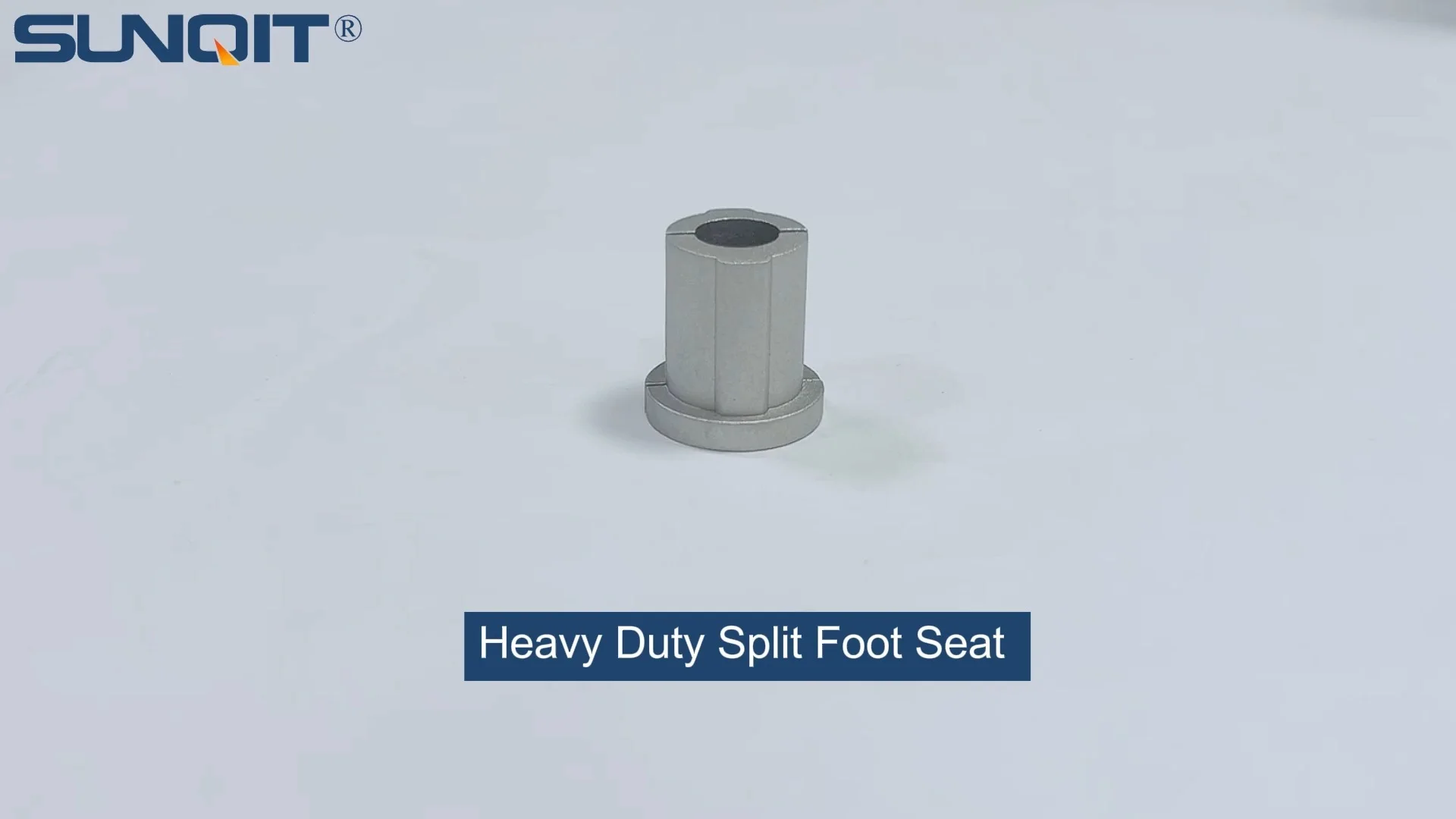
Heavy Duty Split Foot Seat
M10 aluminum heavy duty split foot deat with foot adjuster for workbench and flow rack.
Step onto a busy factory floor, and you'll witness a symphony of motion: conveyor belts gliding, robotic arms pivoting, workers maneuvering tools with precision. Yet beneath this orchestrated chaos lies a silent foundation—components so (unassuming) they're often overlooked, but so critical they can make or break productivity. Among these unsung heroes? The heavy duty split foot seat. These robust, unassuming parts anchor everything from workbenches to assembly lines, ensuring stability in a world of constant movement. In mechanical engineering, where precision and reliability are non-negotiable, the design of these foot seats isn't just a detail—it's a cornerstone of operational success.
What Are Heavy Duty Split Foot Seats, Anyway?
At first glance, a heavy duty split foot seat might seem like little more than a metal or plastic block. But look closer, and you'll see a thoughtfully engineered component designed to bridge the gap between equipment and the floor. Unlike fixed foot seats, which are rigid and immovable, split foot seats feature a divided base that allows for adjustability and compatibility with other hardware—think caster and accessories for mobility or adjustable leveling feet for stability. They're the multitaskers of the industrial world: sturdy enough to support tons of machinery, yet flexible enough to adapt to uneven floors, shifting loads, or the need to reposition equipment on a whim.
Commonly found beneath workbenches, flow racks, and conveyor systems, these foot seats play two vital roles: distributing weight evenly to prevent floor damage and minimizing vibration or wobble that could throw off delicate operations. Imagine a precision assembly line for medical devices—even a millimeter of instability could ruin a batch of products. Or a warehouse where a wobbly material rack threatens to topple, endangering workers and inventory. In these scenarios, the heavy duty split foot seat isn't just a part; it's a safeguard.
The Critical Role of Heavy Duty Split Foot Seats in Mechanical Systems
Why does a "simple" foot seat matter so much? Let's break it down. In mechanical engineering, every component serves a purpose, but some act as force multipliers—small parts that amplify the performance of the entire system. Heavy duty split foot seats are exactly that. Here's how:
Stability = Safety = Productivity
Unstable equipment is a triple threat: it risks worker injury, damages products, and grinds operations to a halt. A workbench teetering on uneven feet forces workers to compensate, leading to fatigue and mistakes. A conveyor system with wobbly supports vibrates excessively, wearing down motors and misaligning parts. Heavy duty split foot seats counteract this by creating a low center of gravity and distributing weight across a broader surface area. When paired with anti-slip adjustable leveling feet , they can even compensate for cracked or sloped warehouse floors—common nuisances in older facilities—turning a potential hazard into a non-issue.
Mobility Meets Stability
Modern factories aren't static. Lines reconfigure for new products; workstations shift to accommodate workflow changes. That's where the "split" in split foot seats shines. Many designs integrate seamlessly with caster wheel systems: when mobility is needed, the foot seat retracts or pivots, allowing the caster to take over. When stability is critical, the foot seat locks into place, bearing the load and preventing unwanted movement. It's a dance between flexibility and rigidity—one that keeps operations agile without sacrificing safety.
Protecting the Foundation (and the Bottom Line)
Industrial floors take a beating—constant traffic, heavy loads, chemical spills. A poorly designed foot seat can exacerbate this damage, scratching floors with sharp edges or concentrating weight in small areas, leading to cracks. Heavy duty split foot seats, however, are often fitted with rubberized or non-marring bases that cushion the impact between equipment and floor. Over time, this protection translates to lower repair costs and a longer lifespan for the facility itself.

Key Design Considerations for Heavy Duty Split Foot Seats
Designing a heavy duty split foot seat isn't a one-size-fits-all process. Engineers must balance load capacity, adjustability, durability, and compatibility with other components to create a part that thrives in harsh industrial environments. Let's dive into the critical factors that shape these unsung workhorses.
Load Capacity: Knowing the Limits
First and foremost, a split foot seat must bear weight—often a lot of it. Whether supporting a 500-pound workbench or a 5-ton conveyor system, engineers start by calculating both static loads (weight when equipment is stationary) and dynamic loads (weight during movement, which can include sudden shifts or vibrations). For example, a material rack loaded with metal parts might exert 2,000 pounds of static load, but during loading/unloading, dynamic forces could spike to 3,000 pounds. The foot seat must withstand these peaks without bending, cracking, or deforming.
Materials play a huge role here. Steel is a go-to for ultra-high loads, offering unmatched strength, but it's heavy. Aluminum profile , on the other hand, provides a lighter alternative with impressive strength-to-weight ratios, making it ideal for mobile equipment where every pound counts. Engineers often run finite element analysis (FEA) simulations to test stress points—ensuring welds, bolts, and the split mechanism itself won't fail under pressure.
Adjustability: Taming Uneven Floors
Few factory floors are perfectly level. Cracks, dips, and slopes are par for the course, especially in older facilities. That's where adjustable leveling feet come into play, and split foot seats must integrate with these features seamlessly. A typical design might include a threaded rod or bolt that extends or retracts, allowing the foot seat to "level" itself by a few inches. This adjustability isn't just about stability—it also prevents equipment from rocking, which can loosen bolts over time or damage sensitive components like circuit boards in electronic assembly lines.
Anti-slip features are equally important here. Many adjustable feet come with rubber or polyurethane pads that grip the floor, preventing the equipment from sliding even when vibrations occur. For split foot seats, this means ensuring the leveling mechanism doesn't compromise grip—e.g., by using locknuts to keep the adjusted height secure, or designing the base to maintain full contact with the floor regardless of adjustment.
Compatibility with Caster and Accessories
In facilities where equipment needs to move—say, a mobile workbench that shifts between assembly stations—the split foot seat must play well with caster and accessories . This requires careful engineering of the "split" mechanism: when mobility is needed, the foot seat might pivot upward, lifting off the floor and allowing the caster to bear the load. When stationary, it lowers back down, locking into place to prevent rolling.
The type of caster wheel matters too. Hard rubber wheels might work well on smooth concrete, but soft polyurethane wheels are better for sensitive floors like polished concrete or tile. The split foot seat must accommodate these variations, ensuring the transition between mobile and stationary modes is smooth and reliable. Engineers also consider clearance: the foot seat shouldn't hang too low, risking damage when the equipment is moved, nor too high, sacrificing stability when locked.
Material Selection: Balancing Strength, Weight, and Cost
The choice of material defines a split foot seat's performance. Let's compare the most common options:
| Material | Load Capacity | Weight | Corrosion Resistance | Best For |
|---|---|---|---|---|
| Steel | High (up to 10+ tons) | Heavy | Low (requires coating) | Fixed equipment, extreme loads |
| Aluminum Profile | Medium-High (2-5 tons) | Lightweight | High (naturally resistant) | Mobile equipment, cleanrooms |
| Reinforced Plastic | Low-Medium (up to 1 ton) | Lightest | High (resistant to chemicals) | Light duty workbenches, food/pharmaceutical industries |
Steel is the workhorse for heavy loads but adds bulk, making it less ideal for mobile setups. Aluminum profile , with its lightweight yet sturdy nature, is a favorite for equipment that needs to move without sacrificing strength—think automotive assembly lines where robots and workstations are reconfigured regularly. Reinforced plastic, while limited in load capacity, shines in industries like food processing or pharmaceuticals, where corrosion resistance and easy cleaning are priorities.
Durability: Thriving in Harsh Environments
Industrial settings are unforgiving. Oils, coolants, chemicals, and extreme temperatures (think foundries or freezers) can degrade even the toughest materials. Heavy duty split foot seats must stand up to these conditions. For steel components, this often means coatings like zinc plating or powder coating to prevent rust. Aluminum, naturally resistant to corrosion, might still benefit from anodization to (enhance) scratch resistance. Plastic foot seats, meanwhile, are often made from materials like nylon or polypropylene, which resist chemicals and moisture.
Another durability factor is the split mechanism itself. Pivots, bolts, and springs must withstand repeated use without wearing down. Engineers might use sealed bearings to prevent dirt from gumming up moving parts or stainless steel hardware for added corrosion resistance. After all, a foot seat that fails after six months isn't just a maintenance headache—it's a safety risk.

Case Study: Solving Instability in Automotive Assembly
To see these design considerations in action, let's look at a real-world example: a mid-sized automotive parts manufacturer struggling with unstable workbenches on its assembly line. The issue? The factory floor, laid decades ago, had developed subtle slopes and cracks, causing workbenches to rock slightly during use. Workers reported fatigue from compensating for the wobble, and quality control checks found a small but noticeable uptick in defects—parts misaligned during assembly due to the unstable surface.
The solution? Upgrading to heavy duty split foot seats paired with anti-slip adjustable leveling feet . The new foot seats, made from aluminum profile for lightweight mobility, featured a threaded adjustment rod that allowed workers to "tweak" each foot by up to 2 inches. Rubberized anti-slip pads ensured the benches stayed put, even during the vibrations of power tools. Within a month, the results were clear: defect rates dropped by 15%, worker complaints about fatigue decreased, and the maintenance team reported fewer requests to repair loose bolts (a byproduct of the previous rocking motion).
Perhaps most notably, the new foot seats integrated with the existing caster and accessories on the workbenches, allowing them to be easily moved for deep cleaning or line reconfigurations. "It's the little things," one production manager noted. "You don't realize how much a wobbly bench slows you down until it's fixed."

Future Trends: Where Heavy Duty Split Foot Seats Are Headed
As manufacturing evolves, so too will the design of heavy duty split foot seats. Here are a few trends shaping their future:
Lightweighting with Advanced Materials
The push for energy efficiency and easier mobility is driving demand for lighter foot seats without sacrificing strength. Enter advanced materials like carbon fiber composites or high-strength aluminum alloys, which offer steel-like load capacity at a fraction of the weight. These materials could revolutionize mobile equipment, making it easier to reconfigure lines while maintaining stability.
Smart Integration
The rise of Industry 4.0 is bringing sensors to even the most humble components. Future split foot seats might include load sensors that monitor weight distribution in real time, alerting maintenance teams if a foot is bearing too much (or too little) weight—potentially preventing equipment failure before it happens. Imagine a conveyor system that automatically shuts down if a foot seat detects an abnormal load spike, avoiding a catastrophic collapse.
Modular Design
To reduce downtime and simplify repairs, manufacturers are moving toward modular split foot seats. Instead of replacing the entire unit when a part wears out (e.g., a worn anti-slip pad or a stuck adjustment rod), workers can swap out individual components. This "plug-and-play" approach cuts maintenance costs and keeps equipment up and running longer.
Conclusion: The Power of the "Unseen" Component
Heavy duty split foot seats may not grab headlines, but they're the backbone of efficient, safe manufacturing. From adjusting to uneven floors with adjustable leveling feet to integrating with caster and accessories for mobility, these components embody the engineering principle that "the details matter." As factories grow more automated and dynamic, the demand for smarter, stronger, more adaptable split foot seats will only rise—proof that even the smallest parts can have the biggest impact.
So the next time you walk through a factory, take a moment to look down. Beneath the hum of machinery and the rush of workers, you'll see the quiet strength of split foot seats—holding it all together, one stable base at a time.