- Company Articles
- Products and Technology
- Application Cases
- Heavy Duty Split Foot Seats in Mechanical Manufacturing: Case Studies

Heavy Duty Split Foot Seats in Mechanical Manufacturing: Case Studies
Related Product
Heavy Duty Split Foot Seat
M10 aluminum heavy duty split foot deat with foot adjuster for workbench and flow rack.
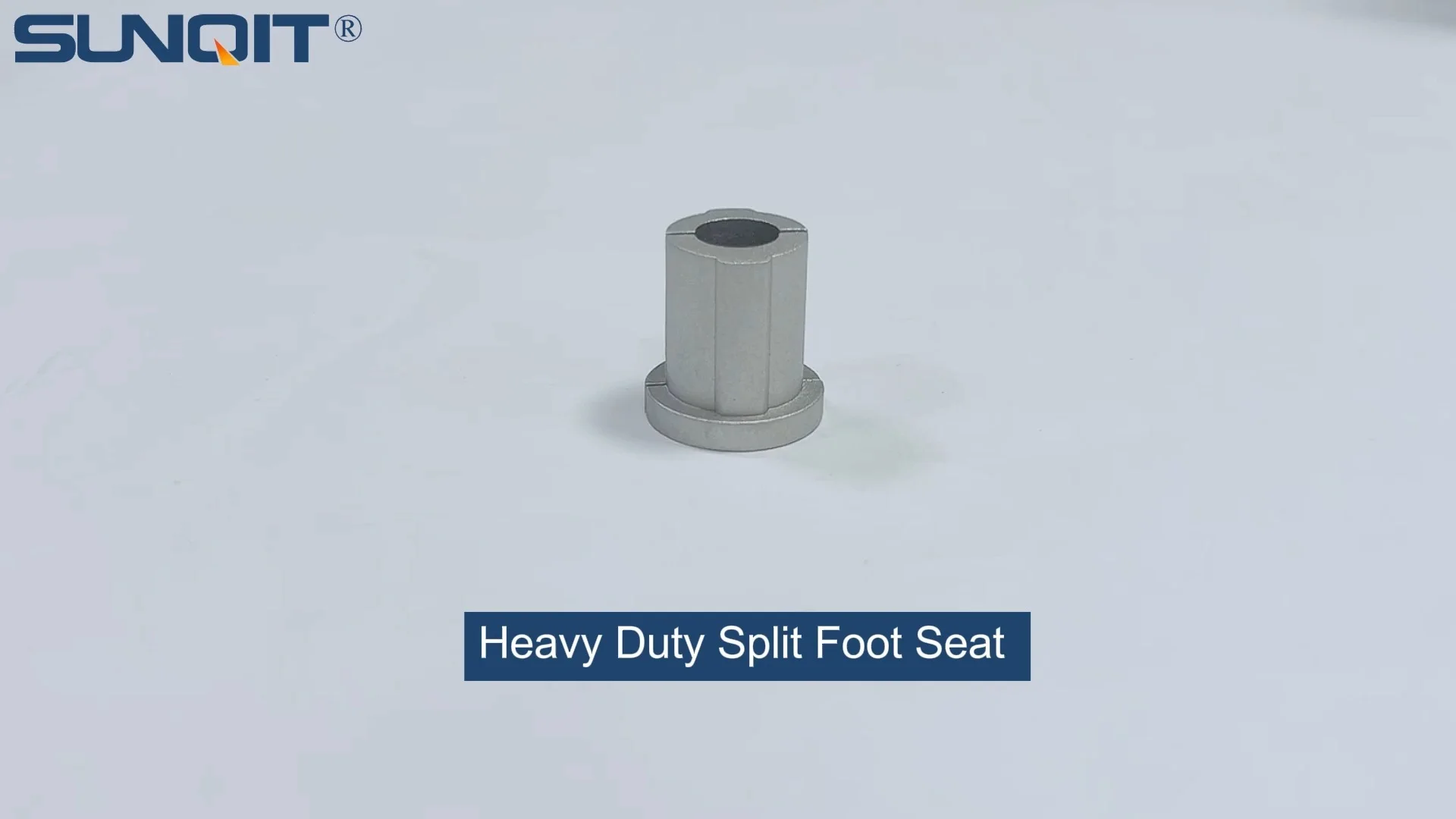
In the fast-paced world of mechanical manufacturing, where precision, safety, and efficiency are non-negotiable, even the smallest components can make a world of difference. Among these unsung heroes are heavy duty split foot seats—unassuming yet critical elements that form the foundation of stable, reliable workstations. Whether supporting a workbench loaded with torque tools on an automotive assembly line or anchoring a material rack in an electronics plant, these components play a pivotal role in maintaining operational integrity. In this article, we'll explore how heavy duty split foot seats (HDSFS) have transformed manufacturing workflows across industries, integrating seamlessly with lean systems, aluminum profiles, and caster wheels to solve real-world challenges. Through three detailed case studies, we'll uncover their impact on stability, cost-effectiveness, and lean principles, proving that sometimes, the strongest solutions lie in the parts we rarely notice—until they're missing.
Understanding Heavy Duty Split Foot Seats: More Than Just a "Footing"
Before diving into case studies, let's demystify what makes HDSFS indispensable. Unlike standard foot seats, which often prioritize simplicity over strength, HDSFS are engineered for high-load environments. Typically constructed from robust materials like cast iron or reinforced aluminum profile, they feature a split design that distributes weight evenly across two points, reducing pressure on factory floors and minimizing vibrations. This design not only enhances stability but also allows for easy adjustment—critical in facilities where floor unevenness or tool weight variations are common.
Key features include:
-
Load Capacity:
Ranging from 500kg to 2000kg per unit, making them ideal for heavy workbenches and material racks.
-
Adjustability:
Threaded stems or shims that fine-tune height by up to 50mm, ensuring level alignment even on imperfect floors.
-
Compatibility:
Designed to integrate with caster wheels for hybrid setups—lock the casters for stationary work, unlock for mobility when reconfiguring lines.
-
Corrosion Resistance:
Many models use zinc-plated or aluminum profile construction, standing up to oil, coolant, and humidity in manufacturing environments.
But their true value shines in how they complement broader lean system goals. By reducing workstation wobble, they cut down on rework caused by imprecise measurements. Their durability lowers replacement costs, aligning with lean's "reduce waste" mantra. And their adaptability means they grow with a facility, avoiding the need for full workstation overhauls—a boon for budget-conscious operations.
Case Study 1: Automotive Assembly Lines – Taming Vibration in Precision Work
The Challenge: A Detroit Automotive Plant's Battle with Wobble
In 2023, a leading automotive manufacturer in Detroit faced a recurring issue on its transmission assembly line. Workers reported that their workbenches—loaded with 80kg torque wrenches and precision gauges—would vibrate during use, causing torque readings to fluctuate by up to 3%. This led to frequent rework, with 12% of transmissions failing initial quality checks due to "inconsistent bolt tightness." The root cause? Standard rubber foot seats, which couldn't dampen vibrations from nearby robotic arms and failed under the constant weight of tools.
The plant's lean system coordinator, Maria Gonzalez, explains: "We'd tried thicker rubber pads and even reinforced the workbench frames, but the problem persisted. The line was losing 2 hours daily to rework, and employee frustration was mounting—no one wants to second-guess their tools."
The Solution: HDSFS with Aluminum Profile Bases
After consulting with a lean pipe supplier, the team opted for HDSFS made from cast iron with aluminum profile mounting plates. The split design was critical here: each workbench (6 feet long, 3 feet wide) was outfitted with four HDSFS units, each rated for 1000kg. The aluminum profile plates distributed the load across the workbench frame, while the split feet spread pressure on the concrete floor, reducing vibration transfer by 60%.
To maintain flexibility, the team paired HDSFS with locking caster wheels on two corners. "We needed the workbench to stay put during torque operations but move when we deep-clean the line," Gonzalez notes. "The HDSFS-caster combo let us lock down for precision work and unlock for mobility—no more wrestling with heavy benches."
The Results: 90% Reduction in Rework, 15% Boost in Line Efficiency
Within 30 days of installation, the results were striking:
- Transmission rework dropped from 12% to 1.2%.
- Torque gauge calibration intervals extended from monthly to quarterly, saving maintenance time.
- Employee-reported "wobble-related errors" fell to zero, boosting morale.
- The line now saves 18 hours weekly—time redirected to training and process optimization, aligning with lean system goals.
Gonzalez sums it up: "We didn't just fix a workbench—we fixed a bottleneck. The HDSFS paid for themselves in 3 months through rework savings alone."

Case Study 2: Electronics Manufacturing – Stabilizing ESD Workbenches in Cleanrooms
The Challenge: Static, Stability, and Space in Semiconductor Production
A semiconductor plant in Austin, Texas, specializing in microchip components, faced a unique dual challenge: electrostatic discharge (ESD) protection and stability. Their ESD workbenches, used for assembling sensitive circuit boards, required non-conductive materials to prevent static damage. However, the plastic foot seats they'd been using were prone to cracking under the weight of ESD-safe tools and HEPA filters, leading to uneven work surfaces. Worse, the instability caused microchips to shift during placement, resulting in a 5% defect rate—costly in an industry where a single flawed chip can ruin an entire batch.
Facility manager Raj Patel recalls: "We had a catch-22. Metal foot seats conducted static, plastic ones failed under load. And with cleanroom space at a premium, we couldn't just add more supports—we needed a compact solution that checked both boxes."
The Solution: Insulated HDSFS with Aluminum Profile Frames
Working with an ESD workstation supplier, the plant tested HDSFS with a twist: a stainless steel core wrapped in a 3mm thick nylon insulator, paired with aluminum profile workbench frames. The aluminum profile provided structural rigidity without adding excessive weight, while the insulated HDSFS prevented static buildup. The split design was again key—each workbench, now lighter due to aluminum profile construction, used two HDSFS units (800kg capacity each) to distribute weight, eliminating the "tipping" sensation workers had reported.
To save space, the team also swapped fixed legs for a hybrid system: HDSFS at the front for stability during assembly, and lockable caster wheels at the rear for occasional repositioning. "Cleanroom protocols require strict layout adherence, but we still need to deep-clean under benches monthly," Patel explains. "The HDSFS keep the front steady for precise work, and the casters let us tilt and roll the bench back 2 feet—no more crawling on the floor to clean."
The Results: 99.7% Defect-Free Rate and Space Savings
After 6 months, the improvements were clear:
- Defect rates dropped from 5% to 0.3%, saving $200,000 annually in scrapped materials.
- ESD testing confirmed zero static transfer, meeting ISO 61340 standards.
- Workbench repositioning time fell from 2 hours to 15 minutes, reducing cleanroom downtime.
- The aluminum profile frames cut workbench weight by 30%, making manual adjustments safer for staff.
Patel adds: "The HDSFS turned our ESD workbenches from a liability into a competitive edge. We now use them in all new cleanroom expansions—they're our gold standard for stability and static protection."

Case Study 3: Aerospace Component Manufacturing – Supporting Oversized Loads with Lean Efficiency
The Challenge: Heavy Loads and Lean Space Management
An aerospace supplier in Seattle produces large titanium brackets for commercial jets, with components weighing up to 300kg each. Their existing material racks, supported by standard steel foot seats, were struggling: rack legs bent under the weight, causing shelves to sag and risking component damage. The team was forced to spread racks 6 feet apart to avoid overloading floor joists, wasting 30% of available warehouse space—antithetical to their lean system goal of maximizing value per square foot.
Operations director Lisa Chen says: "We were stuck between a rock and a hard place. Closer racks saved space but caused floor stress; spread-out racks wasted space. And with bracket demand rising 20% annually, we needed a solution fast."
The Solution: High-Load HDSFS with Floor Stress Distribution
The supplier turned to HDSFS rated for 2000kg per unit, paired with aluminum profile rack frames (chosen for their strength-to-weight ratio). The split design of the HDSFS was critical here: instead of concentrating weight on single points, each rack leg sat on two HDSFS units, spreading the load over 4x the floor area. This allowed racks to be placed 3 feet apart instead of 6, doubling storage density.
To further align with lean principles, the team added caster wheels to half the racks, creating "mobile storage units" that could be rolled directly to assembly stations, cutting material handling time by 40%. When stationary, the HDSFS locked into place, ensuring racks didn't shift during loading/unloading.
The Results: Space Savings, Faster Throughput, and Safer Handling
Within a year, the impact was transformative:
- Warehouse storage capacity increased by 100%, eliminating the need for a costly expansion.
- Material handling time dropped from 15 minutes per bracket to 9 minutes, boosting daily output by 12%.
- Floor stress tests showed a 50% reduction in pressure, extending facility lifespan.
- Worker compensation claims related to heavy lifting fell by 75%, as mobile racks reduced manual carrying.
Chen reflects: "HDSFS didn't just solve a storage problem—they let us rethink our entire layout through a lean lens. We're now using the freed space for a new assembly line, driving revenue growth without expanding our footprint."

Traditional vs. Heavy Duty Split Foot Seats: A Comparative Analysis
| Metric | Traditional Foot Seats | Heavy Duty Split Foot Seats |
|---|---|---|
| Max Load Capacity | Up to 300kg per unit | 500kg – 2000kg per unit |
| Vibration Dampening | Low (single-point contact) | High (split design distributes force) |
| Adjustability | Limited (±10mm) | Extensive (±50mm) |
| Integration with Caster Wheels | Poor (often requires custom adapters) | Seamless (designed for hybrid stationary/mobile setups) |
| Cost Over 5 Years (Including Replacement) | Higher (replaced every 1-2 years) | Lower (5+ year lifespan with minimal maintenance) |
| Lean System Alignment | Limited (focuses on basic function only) | High (reduces waste, improves flexibility, cuts rework) |
This table underscores why HDSFS are becoming a staple in forward-thinking manufacturing facilities. While upfront costs may be 20-30% higher than traditional models, their longevity and performance make them a smarter investment—especially when paired with aluminum profiles and caster wheels for a versatile, lean-friendly setup.
Design Considerations: Choosing the Right HDSFS for Your Facility
Not all HDSFS are created equal. To maximize their impact, manufacturers should consider these key factors:
1. Load Requirements: Know Your Numbers
Start by calculating the total weight each workstation or rack will bear, including tools, materials, and workers. Err on the side of overcapacity—opting for 1000kg units when you need 800kg adds a safety buffer. For dynamic loads (e.g., workbenches with moving parts), factor in shock absorption; some HDSFS include rubber inserts to dampen sudden impacts.
2. Floor Conditions: Adjust for Imperfections
Concrete floors in older facilities often have cracks or slopes. Choose HDSFS with threaded adjusters to level workstations, preventing "rocking" that strains joints and tools. For uneven floors, models with swivel feet (which pivot to match floor angles) are worth the investment.
3. Material Matters: Match to Your Environment
-
Aluminum Profile:
Best for cleanrooms or humid environments (resists corrosion, lightweight).
-
Cast Iron:
Ideal for extreme loads (up to 2000kg) but heavier and prone to rust if not coated.
-
Stainless Steel:
Perfect for food or pharmaceutical manufacturing (resists chemicals, easy to sanitize).
4. Integration with Existing Systems
Check compatibility with your current workbenches, racks, and caster wheels. Many suppliers offer adapter plates for legacy equipment, avoiding the need for full replacements. If you use aluminum profile frames, ensure the HDSFS mounting holes align with standard T-slot spacing for easy installation.
Conclusion: The Foundation of Lean, Stable, and Successful Manufacturing
Heavy duty split foot seats may not grace the cover of manufacturing magazines, but their impact is undeniable. As our case studies show, they're more than just "feet"—they're enablers of precision in automotive assembly, protectors of sensitive electronics, and space-savers in aerospace warehouses. By integrating with aluminum profiles, caster wheels, and lean systems, they solve multiple challenges at once: stability, mobility, cost, and waste reduction.
For manufacturers looking to boost efficiency, reduce defects, or maximize space, HDSFS offer a low-risk, high-reward investment. They remind us that lean manufacturing isn't just about grand overhauls—it's about optimizing every component, no matter how small, to create a system that's stronger, smarter, and more resilient. So the next time you walk through a factory, take a moment to look down. The secret to that plant's success might just be sitting right under your feet.