- Company Articles
- Products and Technology
- Solution
- Heavy Duty Split Foot Seats in Warehousing Automation: Integration Tips

Heavy Duty Split Foot Seats in Warehousing Automation: Integration Tips
Related Product
Heavy Duty Split Foot Seat
M10 aluminum heavy duty split foot deat with foot adjuster for workbench and flow rack.
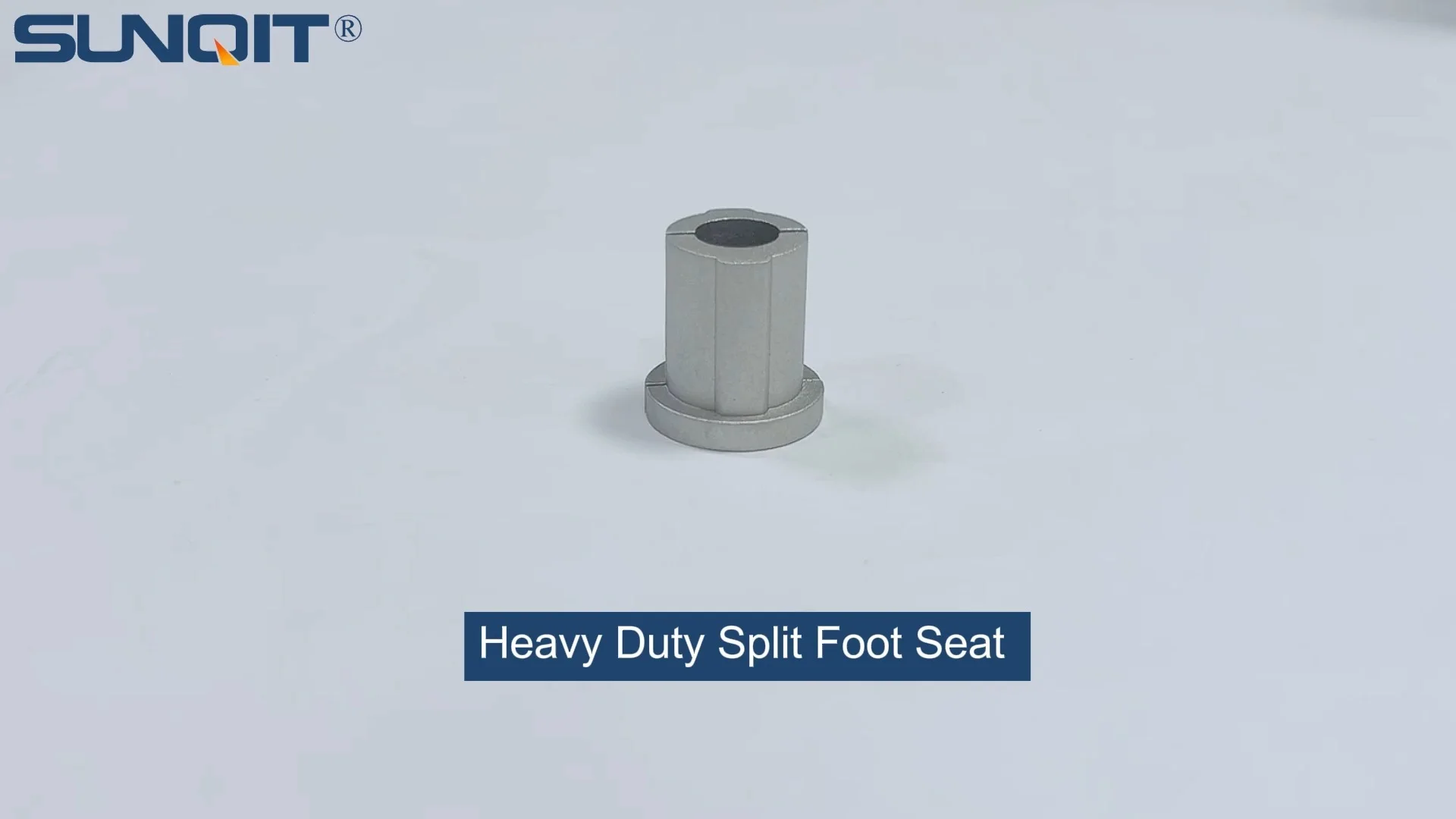
In the fast-paced world of warehousing automation, where robots zip through aisles and conveyor belts hum with activity, it's easy to fixate on flashy technologies. But behind every smooth operation lies a network of unsung components—small, sturdy parts that keep everything stable, aligned, and efficient. Among these, heavy duty split foot seats (HDSFS) stand out as quiet powerhouses. These unassuming metal or aluminum bases might not feature in tech demos, but they're the backbone of stable workbenches, material racks, and automated systems. In this guide, we'll dive into why HDSFS matter, how to integrate them effectively with key warehouse components like caster wheels, aluminum profiles, and roller tracks, and share tips to avoid common pitfalls.
What Are Heavy Duty Split Foot Seats, and Why Do They Matter?
At their core, heavy duty split foot seats are adjustable, load-bearing bases designed to anchor equipment to the floor or mounting surfaces. Unlike basic foot pads, they're engineered with split, bolt-through designs that distribute weight evenly, resist torque, and accommodate minor floor irregularities. Think of them as the "feet" of your warehouse setup—if they're weak or misaligned, everything from workbenches to material racks wobbles, risking equipment damage, product spills, or even worker injuries.
Modern warehouses deal with heavier loads than ever: pallets stacked with electronics, bulk components for automotive assembly, or medical supplies that demand precision. A standard plastic foot seat might buckle under 500 lbs, but a quality HDSFS can handle 2,000 lbs or more. They're also adjustable, with threaded stems that let you tweak height by 10-20mm—critical for leveling workbenches on uneven concrete or aligning roller tracks with conveyor systems. And because they're often made from galvanized steel or aluminum alloy, they resist rust and wear, even in dusty or humid warehouse environments.
Key Benefits of Heavy Duty Split Foot Seats
- Load Distribution: The split design spreads weight across two contact points, reducing stress on floors and preventing indentations in concrete.
- Stability for Dynamic Systems: In automated setups with moving parts—like roller tracks or conveyor belts—vibration is inevitable. HDSFS dampen these vibrations, keeping racks and workbenches steady.
- Compatibility with Mobility: When paired with caster wheels (yes, they work together!), HDSFS let you lock equipment in place after moving it. For example, a turnover trolley might use caster wheels for mobility and HDSFS for stationary loading/unloading.
- Longevity: Unlike plastic alternatives that crack under UV exposure or heavy use, metal HDSFS last for years, reducing replacement costs.

Integrating HDSFS with Critical Warehouse Components
The real value of HDSFS lies in how well they play with other equipment. Let's break down integration tips for four key components: caster wheels, workbenches, aluminum profiles, and roller tracks.
1. Pairing HDSFS with Caster Wheels: Mobility + Stability
Warehouse equipment often needs to be both mobile and stationary. A material cart, for example, should roll smoothly to a packing station (thanks to caster wheels) then stay put while workers load boxes (thanks to HDSFS). The trick is balancing these two needs.
Start by matching weight capacities. If your caster wheels are rated for 300 lbs each, your HDSFS should handle at least that—preferably more, since they'll bear the load when the cart is stationary. Look for HDSFS with threaded stems that fit caster wheel mounting plates; many suppliers design them to work with standard "caster install base" accessories, making swapping between mobility and stability quick.
Pro tip: For equipment that moves frequently (like a hand trolley a), install two HDSFS and two swivel caster wheels. When moving, tilt the trolley to lift the HDSFS off the floor, using the casters. When stationary, lower it so the HDSFS bear the weight. This "two-and-two" setup is cheaper than locking casters and more durable over time.
2. Building Stable Workbenches with HDSFS
Workbenches are the workhorses of warehouses—used for assembly, packaging, and quality checks. A wobbly workbench isn't just annoying; it can throw off measurements or cause tools to slide. HDSFS are the foundation of a stable workbench, especially models like "workbench e (single deck-without caster)" that rely entirely on fixed bases.
When integrating HDSFS into a workbench, start by checking the workbench's frame material. If it's built with aluminum extrusion profiles (common in modern setups), choose HDSFS with "aluminum profile accessories" like T-slot nuts or bolts that fit the profile's grooves. This ensures a secure, rattle-free connection.
Adjustability is key here. Warehouse floors are rarely perfectly level—even new concrete can have 1-2mm dips. Use HDSFS with hex-key adjusters to tweak each foot individually until the workbench top is level. A quick way to test: place a marble on the bench. If it rolls, adjust the HDSFS until it stays put. This simple step prevents tools from sliding and reduces eye strain for workers hunched over uneven surfaces.
3. Securing Aluminum Profiles with HDSFS
Aluminum extrusion profiles are the building blocks of modular warehouse systems—used for racks, guards, and machine frames. They're lightweight, strong, and infinitely customizable, but they need solid anchoring to avoid swaying under load. HDSFS are the ideal anchors, especially when paired with "aluminum profile accessories" like angle brackets or mounting plates.
For vertical profiles (like the legs of a material rack b (3 row and 3 floor)), use HDSFS with wide bases to resist tipping. The split design of HDSFS is crucial here: it prevents the profile from rotating under lateral stress (e.g., when a pallet is slid onto a rack). Look for HDSFS with "parallel fixation aluminum pipe joint" compatibility if your profiles are part of a larger framework—this ensures the entire structure stays square.
Installation note: Always torque the HDSFS bolts to the manufacturer's specs. Over-tightening can strip the aluminum threads; under-tightening leaves room for movement. A torque wrench is worth the investment here—aim for 25-30 Nm for most aluminum profile setups.
4. Stabilizing Roller Tracks for Smooth Material Flow
Roller tracks are the arteries of material handling, moving boxes, components, and packages between stations. But even the best "roller track placon mount for aluminum profile" accessories won't perform if the track itself is unstable. HDSFS keep roller tracks aligned, preventing jams and ensuring consistent product flow.
When integrating HDSFS with roller tracks, focus on two areas: support spacing and alignment. For long tracks (over 6 feet), install an HDSFS every 2-3 feet to prevent sagging. Use a laser level to ensure the track is flat before securing the HDSFS—even a 1-degree slope can cause products to speed up or slow down unexpectedly.
For curved roller tracks or those with "swivel roller balls 1 inch" (used for omnidirectional movement), HDSFS with swivel bases can help. These allow minor adjustments to match the track's curvature, ensuring the balls rotate smoothly without binding. Pro tip: Check the track's load rating and multiply by 1.5—this is the minimum load capacity your HDSFS should have, accounting for dynamic forces when products start/stop moving.

HDSFS vs. Standard Foot Seats: A Quick Comparison
| Feature | Heavy Duty Split Foot Seat | Standard Plastic Foot Seat |
|---|---|---|
| Max Load Capacity | 1,000–5,000 lbs (varies by size) | 200–500 lbs |
| Adjustment Range | 10–30mm (threaded stem) | 0–5mm (fixed or minimal) |
| Compatibility with Caster Wheels | Yes (often uses shared mounting plates) | Rarely (requires custom adapters) |
| Material Durability | Galvanized steel/aluminum (resists rust, UV damage) | PVC/plastic (prone to cracking, warping) |
| Installation Complexity | Moderate (requires torque wrench, alignment) | Simple (peel-and-stick or basic bolts) |

Common Integration Mistakes to Avoid
Even with the right components, HDSFS integration can go wrong. Here are three pitfalls and how to steer clear:
1. Ignoring Floor Condition
Concrete floors with cracks or unevenness are common in older warehouses. Installing HDSFS without addressing these issues is like building a house on sand. Use a floor leveler tool to map out high and low spots first. For minor dips, stack thin metal shims under the HDSFS; for major issues, consider epoxy leveling compound before installation.
2. Overlooking Corrosion Risks
Warehouses with high humidity (e.g., food storage) or chemical exposure (e.g., automotive parts cleaning) need HDSFS with corrosion-resistant coatings. Stainless steel HDSFS are ideal here—avoid plain steel unless you're willing to repaint them annually. Also, apply anti-seize lubricant to threaded stems to prevent rust from locking adjustments.
3. Rushing Alignment Checks
It's tempting to tighten HDSFS bolts and move on, but a 5-minute alignment check can save hours of troubleshooting later. Use a bubble level on the equipment (e.g., workbench top, roller track) and adjust each HDSFS until it's perfectly flat. For automated systems, run a test load through the track or workbench—if products shift or jam, recheck the HDSFS alignment.
Real-World Success: How One Warehouse Boosted Efficiency with HDSFS
A mid-sized electronics distributor in Ohio recently upgraded their packaging area with HDSFS, and the results were striking. Previously, their "material rack b (3 row and 3 floor)" wobbled under the weight of circuit boards, causing workers to slow down to avoid spills. They replaced standard plastic feet with aluminum HDSFS rated for 2,000 lbs, aligned the racks with laser levels, and added "caster accessories" for occasional repositioning.
Within a month, two key metrics improved: packing errors dropped by 18% (fewer spills meant fewer damaged components), and worker complaints about "unsteady surfaces" vanished. The warehouse manager noted, "We didn't realize how much time we wasted adjusting racks or cleaning up spills until the HDSFS fixed it. It was a small investment with a huge payoff."
Future-Proofing Your HDSFS Integration
As warehouses adopt more automation—like collaborative robots (cobots) or AI-driven material handling—HDSFS will play an even bigger role. Here's how to future-proof your setup:
- Choose Modular Designs: Opt for HDSFS with universal mounting holes that fit multiple equipment types (e.g., "aluminum profile a" and "aluminum profile b"). This makes it easier to repurpose equipment as workflows change.
- Leave Room for Sensors: Some suppliers now offer HDSFS with built-in load sensors that alert managers when weight limits are exceeded. Even if you don't need this today, for retrofits.
- Document Everything: Keep records of HDSFS torque specs, alignment measurements, and load tests. This helps with troubleshooting and ensures consistency when scaling up.
Final Thoughts: Don't Overlook the Foundation
Heavy duty split foot seats might not be the sexiest part of warehousing automation, but they're proof that success lies in the details. By integrating them thoughtfully with caster wheels, aluminum profiles, roller tracks, and workbenches, you'll create a setup that's stable, efficient, and ready to handle whatever the future throws at it. Remember: a warehouse is only as strong as its weakest component—and with HDSFS, that component won't be the feet.