- Company Articles
- Products and Technology
- Product knowledge
- Heavy Duty Split Foot Seats: Key to Stable Material Handling in Logistics

Heavy Duty Split Foot Seats: Key to Stable Material Handling in Logistics
Related Product
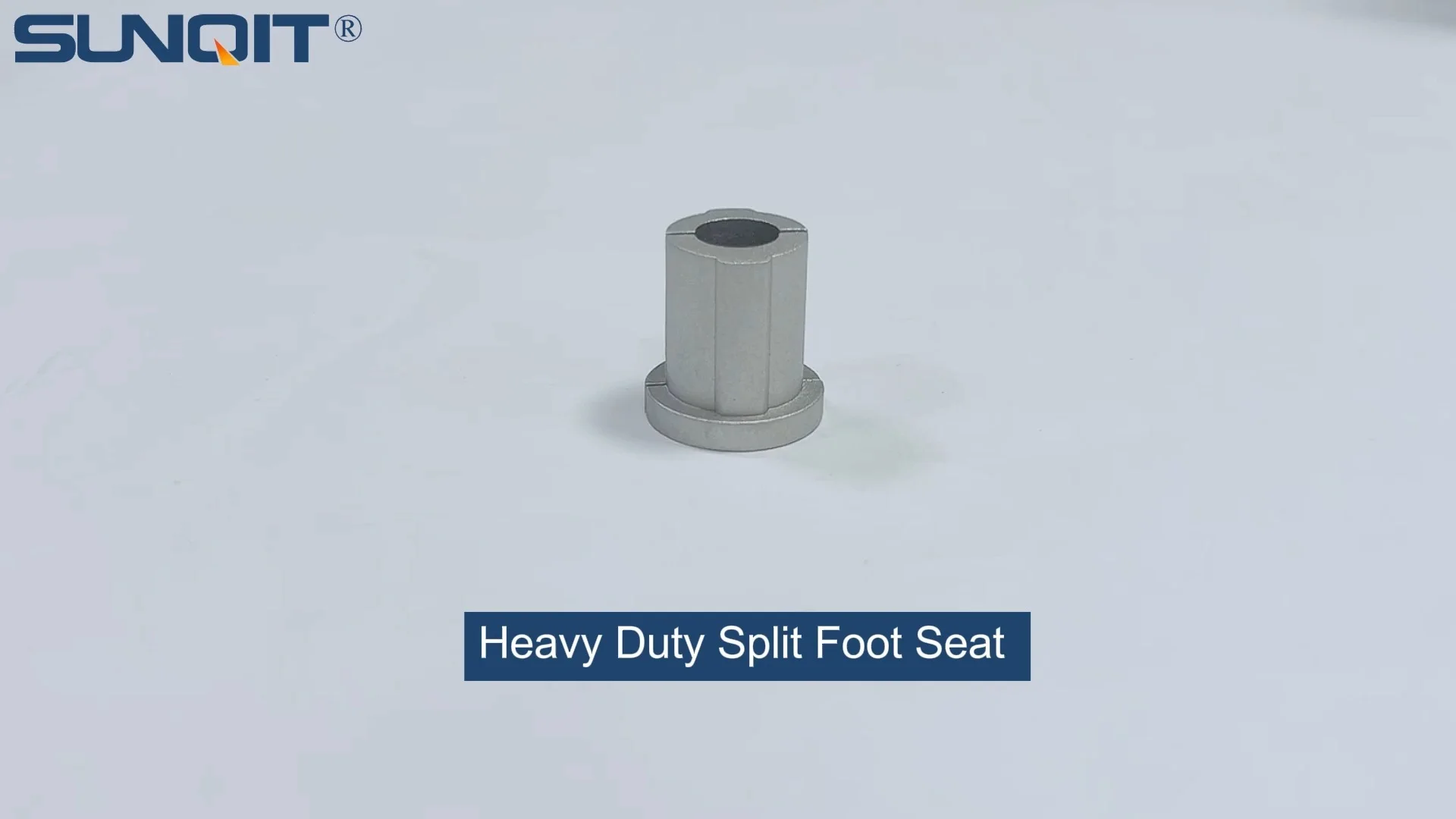
Heavy Duty Split Foot Seat
M10 aluminum heavy duty split foot deat with foot adjuster for workbench and flow rack.
Introduction: The Unsung Hero of Logistics Stability
In the fast-paced world of logistics and material handling, every second counts. Warehouse managers, production supervisors, and frontline workers alike know that efficiency isn't just about speed—it's about consistency. When a flow rack wobbles mid-pick, when a lean pipe workbench shifts during assembly, or when a material trolley teeters under a heavy load, the ripple effects are immediate: delays mount, errors creep in, and worst of all, safety risks rise. Yet, for all the focus on high-tech tracking systems and automated conveyor belts, one foundational element often gets overlooked: stability.
Think about the last time you tried to work on a wobbly table. Maybe it was a café with uneven floorboards, or a home desk that never quite leveled right. Your movements slowed, you second-guessed every placement, and frustration built with each spill or misaligned paper. Now multiply that by a hundred—by the thousands of daily tasks in a bustling warehouse or manufacturing plant. Instability isn't just an annoyance; it's a silent productivity killer.
This is where heavy duty split foot seats enter the picture. They're not the flashiest components in a logistics setup—you won't find them in glossy brochures for "smart warehouses"—but they're the backbone that holds everything else together. From supporting the weight of a fully loaded flow rack to keeping a precision assembly workbench steady, these unassuming devices play a critical role in turning chaotic operations into streamlined, reliable systems. In this article, we'll dive into why stability matters, the hidden costs of cutting corners on it, and how heavy duty split foot seats are changing the game for logistics teams worldwide.
The Hidden Cost of Instability: When "Good Enough" Isn't Enough
To understand the value of heavy duty split foot seats, we first need to grasp the true cost of instability in material handling. It's easy to dismiss a wobbly workbench as a minor inconvenience, but the numbers tell a different story. Let's break it down.
Lost Time, Lost Money
Imagine a busy distribution center where pickers are racing to fulfill orders. A flow rack in the middle of the aisle has been slightly tilted for weeks—nothing catastrophic, just enough that when a worker slides a box onto the roller track, it catches instead of gliding smoothly. To fix it, they pause, adjust the box, and push harder. That 5-second delay per pick might seem trivial, but multiply it by 500 picks a day, and suddenly you're looking at over 40 minutes of lost productivity. Over a month, that's 1600 minutes—nearly 27 hours—wasted on a problem that could have been solved with better stability. Or consider a manufacturing line where assemblers use a lean pipe workbench. If the workbench shifts even a fraction of an inch mid-task, components misalign, leading to rework. A study by the Manufacturing Institute found that rework due to unstable work surfaces accounts for up to 8% of production time in some facilities. For a plant producing 10,000 units daily, that's 800 units needing correction—costing labor, materials, and missed deadlines.Product Damage: The Silent Profit Eater
Instability doesn't just slow things down; it breaks stuff. A flow rack that sways when loaded can cause boxes to tip, crushing fragile items. A material trolley with uneven feet might jostle components, damaging sensitive electronics or precision parts. In the food and beverage industry, a tilted storage rack could lead to spills, contaminating entire batches. The numbers here are staggering: the Warehouse Education and Research Council (WERC) estimates that product damage due to handling issues costs U.S. warehouses over $15 billion annually. A significant portion of that? Traceable to unstable equipment.Safety Risks: The Human Cost
Most critically, instability endangers workers. A leaning rack could collapse under heavy loads, causing injury. A wobbly workbench might lead to a slip or fall when someone overreaches to steady it. The Occupational Safety and Health Administration (OSHA) reports that over 20% of workplace injuries in logistics are related to unstable or improperly secured equipment. These aren't just statistics—they're preventable tragedies that disrupt lives and businesses.
Real-Life Scenario:
A mid-sized electronics manufacturer was struggling with a 12% error rate on their circuit board assembly line. After weeks of investigation, they discovered the root cause: the lean pipe workbenches, which lacked proper stabilizing feet, were shifting by up to 2mm during soldering tasks. This movement threw off component alignment, leading to faulty connections. Switching to workbenches equipped with heavy duty split foot seats reduced the error rate to 3% in just two weeks.
The message is clear: instability isn't a minor issue—it's a systemic problem that eats into profits, wastes time, and puts people at risk. So, how do we fix it? The answer lies in building stability from the ground up—and that starts with the right foundation: heavy duty split foot seats.

Enter Heavy Duty Split Foot Seats: What Are They, Anyway?
At first glance, heavy duty split foot seats might seem like simple pieces of hardware. They're not flashy, they don't have buttons or sensors, and they rarely get mentioned in "innovation" meetings. But their design is anything but simple—it's a masterclass in practical engineering, tailored to solve the specific stability challenges of logistics environments.
Design Basics: Built for the Grind
So, what exactly is a heavy duty split foot seat? In essence, it's a specialized support component designed to anchor equipment like lean pipe workbenches, flow racks, material trolleys, and conveyor systems to the floor. Unlike standard fixed feet (which are rigid and often struggle with uneven surfaces) or adjustable leveling feet (which are great for fine-tuning but can lack load capacity), split foot seats combine two key features: a split, dual-contact base and robust construction. The "split" design is critical. Instead of a single point of contact with the floor, these feet have two separate, wide surfaces that distribute weight. Imagine standing on one foot versus two—your balance improves dramatically. Similarly, a split foot seat spreads the load of the equipment across a larger area, reducing pressure on the floor and minimizing sinking or tilting, even on rough or cracked concrete. Materials matter too. Most heavy duty split foot seats are made from high-grade steel, reinforced plastic, or cast iron—materials chosen for their ability to withstand heavy loads (often up to 2,000kg per foot) and resist wear from constant use, moisture, and industrial chemicals. Many also feature anti-slip pads on the bottom, ensuring they grip the floor even in dusty or slightly wet conditions.Adjustability: The Secret Sauce
While some split foot seats are fixed-height, the most versatile models include an adjustable thread or bolt mechanism. This allows users to raise or lower each foot by a few centimeters, compensating for uneven floors. Think of it like leveling a table with wobbly legs—twist the foot to fine-tune the height, and suddenly the entire structure stabilizes. This adjustability is a game-changer in older warehouses with uneven concrete or facilities where floors settle over time.How They Differ from Casters and Standard Feet
It's worth clarifying when to use split foot seats versus other support options. Casters are ideal for mobile equipment—trolleys, movable workbenches—since they allow for easy transport. But when equipment needs to stay put (like a permanent flow rack or assembly line workbench), casters can be a liability. Even locked casters have some play, leading to subtle movement during use. Standard fixed feet are rigid and cheap, but they lack adjustability. If the floor is uneven, the equipment will wobble unless shimmed (which is a temporary, error-prone fix). Adjustable leveling feet solve the height issue but often have a small contact area, making them less stable for very heavy loads. Split foot seats bridge the gap: they offer the adjustability of leveling feet with the load distribution and stability of a wider base. They're the Goldilocks solution for fixed or semi-fixed equipment that needs to stay rock-steady, even under stress.
Key Benefits of Heavy Duty Split Foot Seats: More Than Just Stability
Now that we understand what heavy duty split foot seats are, let's dive into why they're becoming a staple in modern logistics and manufacturing facilities. Their benefits go far beyond just "stopping the wobble"—they're a strategic investment in efficiency, durability, and safety.
1. Superior Load Distribution: No More Sinking or Tilting
The split design is a genius solution to one of the biggest stability challenges: uneven weight distribution. When you place a heavy load on a standard single-foot support, all the pressure on a small area. On soft or damaged floors, this can cause the foot to sink, tilting the equipment. With a split foot seat, the load is spread across two contact points, reducing pressure per square inch. For example, a flow rack holding 1,000kg with four split foot seats would exert half the pressure on the floor compared to the same rack with standard single feet. This not only prevents sinking but also protects the floor from damage—saving on costly repairs down the line.2. Adaptability to Real-World Floors (Because No Floor Is Perfect)
Let's be honest: most warehouse floors are far from perfect. Cracks, dips, and unevenness are par for the course, especially in older facilities. Heavy duty split foot seats shine here. Their adjustable design allows for micro-leveling—twisting each foot to compensate for floor irregularities. Some models even include swivel bases, letting the foot pivot slightly to match the floor's angle. This adaptability ensures that equipment stays level, whether it's placed on a smooth concrete slab or a patchwork of repaired sections.3. Compatibility with Lean Systems: A Perfect Partner for Lean Pipe Workbenches and Flow Racks
Lean manufacturing and logistics rely on modular, flexible systems—think lean pipe workbenches, flow racks, and aluminum profile structures that can be reconfigured as needs change. Heavy duty split foot seats integrate seamlessly with these setups. Most are designed to fit standard lean pipe diameters (like 28mm or 30mm) and aluminum profile systems, making them easy to install on existing equipment. This means facilities don't have to replace entire systems to improve stability—they can upgrade incrementally, reducing costs and downtime. For example, a lean pipe workbench built with 28mm pipes can have split foot seats attached to the base joints, instantly stabilizing the structure without altering its modular design. Similarly, flow racks constructed with aluminum profiles can use split foot seats at the corners, ensuring the entire rack stays level even when loaded with heavy cartons.4. Longevity: Built to Outlast the Equipment They Support
Logistics equipment takes a beating. Daily use, heavy loads, and industrial environments (dust, moisture, chemicals) all take their toll. Heavy duty split foot seats are built to withstand this abuse. High-grade steel models resist rust and bending, while reinforced plastic versions stand up to corrosion and impact. Many manufacturers offer warranties of 5+ years, a testament to their durability. In fact, it's common for split foot seats to outlast the equipment they support—when a workbench or flow rack is retired, the seats can often be reused on the replacement.5. Safety First: Reducing Slips, Trips, and Collapses
At the end of the day, the most important benefit is safety. By stabilizing equipment, split foot seats reduce the risk of collapses, tip-overs, and slips. A study by the National Institute for Occupational Safety and Health (NIOSH) found that facilities using stabilized work surfaces saw a 35% reduction in workplace injuries related to equipment instability. For workers, this means coming home safely at the end of the day. For employers, it means lower workers' compensation costs, fewer disruptions, and a more engaged team (since employees feel valued when their safety is prioritized).
Integration with Essential Logistics Components: Making the Whole System Stronger
Heavy duty split foot seats don't work in isolation—they're part of a larger ecosystem of logistics components. Let's explore how they enhance the performance of some of the most critical equipment in warehouses and manufacturing plants.
Lean Pipe Workbenches: Precision Starts with Stability
Lean pipe workbenches are the workhorses of assembly lines, packing stations, and quality control areas. They're lightweight, modular, and customizable, but their flexibility can make them prone to wobbling—especially when extended with shelves or loaded with tools and components. Adding heavy duty split foot seats to the base of a lean pipe workbench transforms it from a "good enough" surface to a precision platform. Consider an electronics assembly line where workers solder tiny components onto circuit boards. The workbench must remain perfectly still—even a 0.5mm movement can misalign the soldering iron, leading to cold joints or damaged traces. By installing split foot seats at each corner of the workbench, the team ensures that the surface stays rock-steady, even when workers lean on it or place heavy tools down. The result? Fewer defects, faster assembly times, and less eye strain from squinting to align components.Flow Racks: Keeping the Flow Smooth
Flow racks are designed to maximize picking efficiency by using gravity to feed products toward the front. But for gravity to work, the rack must be tilted at a precise angle (usually 5-10 degrees). If the rack isn't level, some lanes will flow too fast (causing spills) while others flow too slow (requiring manual pushing). Heavy duty split foot seats solve this by allowing precise adjustment of each rack leg. By leveling the rack with split feet, every lane flows at the optimal speed, ensuring a steady stream of products to pickers and reducing the need for constant lane adjustments.
Case Study:
A large retail distribution center was struggling with inconsistent flow in their pick modules. Some flow rack lanes were emptying too quickly, leading to stockouts, while others were backing up, causing congestion. After installing adjustable split foot seats and re-leveling the racks, they saw a 15% increase in picking speed and a 40% reduction in lane jams. The pickers reported less frustration, and the warehouse manager noted that the racks required far less maintenance.
Material Trolleys and Racks: When Mobility Meets Stability
Not all equipment is fixed—material trolleys and movable racks need to be both mobile and stable when parked. Here, split foot seats can complement casters. Many trolleys are designed with a "four corners" system: two casters (for movement) and two split foot seats (for stability when parked). When the trolley is in use, the casters roll freely. When it's time to load or unload, the split foot seats are lowered (via a foot pedal or lever) to contact the floor, locking the trolley in place. This prevents the trolley from rolling away or wobbling during loading, making tasks safer and more efficient.Conveyors: Aligning for Seamless Material Flow
Conveyor systems rely on precise alignment to move products smoothly from point A to point B. A misaligned conveyor can cause products to jam, tip, or fall off, leading to downtime and damage. Heavy duty split foot seats are used to stabilize conveyor frames, ensuring that the belt or roller track remains level across its entire length. This is especially critical for long conveyor lines, where even a small dip in the middle can disrupt flow. By adjusting the split feet at intervals along the conveyor, maintenance teams can keep the system aligned, reducing jams and extending the life of belts and rollers.Adjustable Leveling Feet: A Dynamic Duo
While split foot seats offer excellent stability, they're often used alongside adjustable leveling feet for even greater precision. For example, a large assembly table might use split foot seats at the corners (for load distribution) and smaller adjustable feet along the sides (for fine-tuning). This combination ensures that the table is both stable and perfectly level, even under uneven loads. It's a testament to the flexibility of split foot seats—they play well with others, enhancing the performance of existing components rather than replacing them.Choosing the Right Heavy Duty Split Foot Seats: A Buyer's Guide
Not all split foot seats are created equal. To get the most out of your investment, you'll need to choose the right model for your specific needs. Here are the key factors to consider:
Load Capacity: Match the Foot to the Job
The first question to ask is: How much weight will the equipment support? Split foot seats are rated by maximum load capacity (per foot), which can range from 500kg to 5,000kg or more. As a rule of thumb, aim for a seat with a capacity 20-30% higher than the expected load. For example, a flow rack holding 1,000kg total (250kg per leg) should use seats rated for at least 300kg each. This provides a safety buffer for unexpected overloads (like a pallet being placed off-center).Floor Type: Grip Matters
The surface of your warehouse floor will influence the type of split foot seat you need. For smooth concrete, a standard anti-slip pad (rubber or polyurethane) will suffice. For rough or dusty floors, look for seats with serrated or textured bases that dig in slightly, preventing slipping. In wet environments (like food processing plants), choose seats with non-marking, chemical-resistant pads to avoid staining floors or deteriorating in harsh conditions.Adjustability Range: How Much Can You Level?
Measure the worst-case unevenness in your floor before buying. If your facility has a floor dip of 20mm in one area, you'll need split foot seats with at least 25mm of adjustability (to be safe). Most adjustable models offer 10-50mm of range—choose the smallest range that covers your needs to avoid unnecessary bulk.Compatibility: Fit with Your Existing System
Check the diameter or mounting style of your equipment's legs. Lean pipe workbenches often use 28mm or 30mm pipes, while aluminum profiles might have M10 or M12 threaded holes. Make sure the split foot seat's mounting hardware (bolt size, thread pitch) matches your equipment. Many suppliers offer adapters, but it's easier to buy seats that fit directly.Material: Durability for Your Environment
- Steel: The most common choice for heavy loads. Look for powder-coated steel to resist rust in humid environments. - Cast Iron: Extremely durable but heavy. Ideal for stationary equipment in high-traffic areas. - Reinforced Plastic: Lightweight, corrosion-resistant, and non-marking. Great for cleanrooms, food facilities, or areas where metal might scratch floors.| Feature | Steel Split Foot Seats | Cast Iron Split Foot Seats | Reinforced Plastic Split Foot Seats |
|---|---|---|---|
| Load Capacity | High (1,000-5,000kg) | Very High (2,000-10,000kg) | Medium (500-2,000kg) |
| Corrosion Resistance | Good (with powder coating) | Fair (prone to rust without coating) | Excellent |
| Weight | Medium | Heavy | Light |
| Best For | General warehouse, manufacturing | Heavy machinery, outdoor use | Cleanrooms, food processing, light loads |
Cost: Investing in Long-Term Savings
Heavy duty split foot seats cost more than standard feet—usually $15-$50 per seat, depending on material and capacity. But consider the ROI: if a single seat prevents $100 in product damage or saves 10 hours of labor annually, it pays for itself in months. For high-traffic areas or critical equipment, the investment is a no-brainer.Installation and Maintenance: Keeping Your Stability Solution Strong
Even the best split foot seats won't perform if installed or maintained poorly. Here's how to ensure your seats deliver maximum stability for years to come.
Installation: Getting It Right the First Time
Installing split foot seats is usually a straightforward process, but attention to detail matters: 1. Clean the Floor: Sweep or vacuum the area where the equipment will stand. Debris under the feet can cause instability, even with adjustable seats. 2. Assemble the Equipment First: Build the lean pipe workbench, flow rack, or other structure before attaching the seats. This ensures the frame is square, making leveling easier. 3. Attach the Seats: Screw or bolt the seats to the equipment legs, hand-tightening first. Don't fully tighten yet—you'll need to adjust them. 4. Level the Equipment: Place a spirit level on the equipment surface. Adjust each split foot seat by turning the threaded bolt until the bubble is centered. Tighten the lock nut (if included) to secure the height. 5. Test for Stability: Push gently on all corners of the equipment. It should not rock or shift. If it does, recheck the leveling and ensure all seats are making full contact with the floor.Maintenance: Simple Steps for Longevity
Heavy duty split foot seats require minimal maintenance, but a little care goes a long way: - Inspect Regularly: Check seats monthly for loose bolts, cracks, or worn anti-slip pads. Tighten bolts and replace pads as needed. - Clean Debris: Sweep or wipe under the seats to prevent dirt buildup, which can throw off leveling over time. - Lubricate Threads: If the seats are adjustable, apply a small amount of machine oil to the threads annually to prevent rust and ensure smooth adjustment. - Re-Level After Floor Work: If your facility resurfaces the floor or makes repairs, recheck the leveling of equipment with split foot seats—floor height can change slightly.Troubleshooting Common Issues
Even with proper installation, you might encounter problems: - Rocking Equipment: Check if one seat is not making contact (debris under it) or if the floor has a new dip. Adjust the affected seat. - Seat Slipping: replace worn anti-slip pads or add a rubber mat under the seat for extra grip. - Threaded Bolt Sticking: Clean the threads with a wire brush and apply lubricant. If it's bent, replace the seat—damaged threads compromise adjustability.Conclusion: Stability as a Foundation for Success
In the world of logistics, where every decision impacts the bottom line, heavy duty split foot seats are a reminder that sometimes the most powerful solutions are the simplest. They don't have flashy screens or complex software, but they address a fundamental truth: without stability, efficiency, safety, and profitability all suffer.
From lean pipe workbenches that support precision assembly to flow racks that keep products moving smoothly, split foot seats provide the foundation upon which successful operations are built. They reduce waste—of time, materials, and money—by ensuring that equipment does what it's supposed to do: stay steady, so your team can stay focused.
As warehouses and manufacturing plants continue to evolve, embracing automation and advanced technologies, let's not overlook the basics. A stable workbench, a level flow rack, a secure conveyor—these are the building blocks of a resilient, efficient operation. And at the heart of that stability? Heavy duty split foot seats. They may not make headlines, but they make a difference—one steady step at a time.