- Company Articles
- Products and Technology
- Product knowledge
- Heavy Duty Split Foot Seats: Why They Outlast Standard Workbench Bases

Heavy Duty Split Foot Seats: Why They Outlast Standard Workbench Bases
Related Product
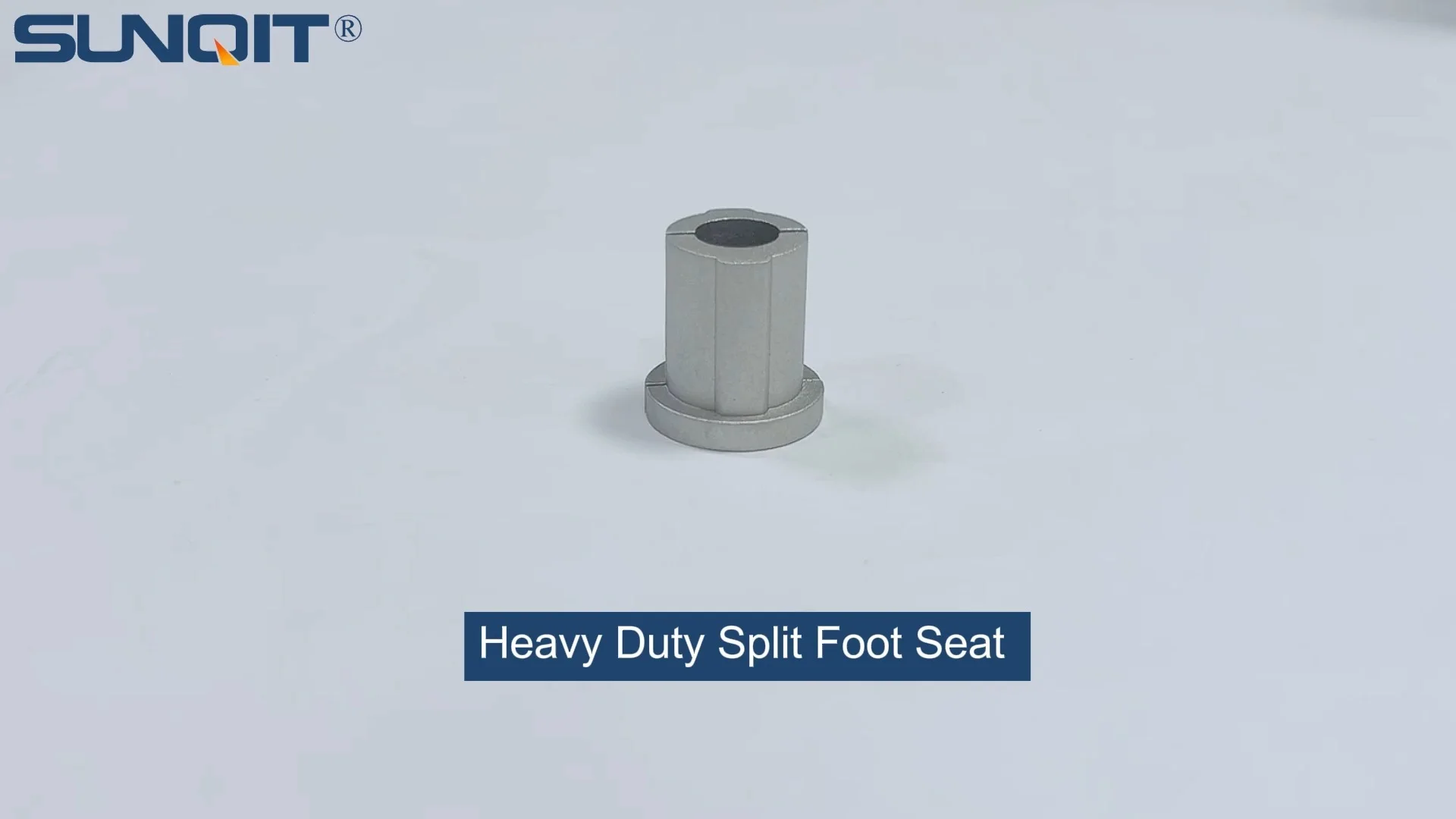
Heavy Duty Split Foot Seat
M10 aluminum heavy duty split foot deat with foot adjuster for workbench and flow rack.
The Hidden Backbone of Your Workbench: Why the Base Matters More Than You Think
Walk into any factory, workshop, or warehouse, and you'll see workbenches everywhere—quietly holding tools, parts, and products as teams hustle to meet deadlines. But here's the thing: most people focus on the workbench's surface or its storage features, barely sparing a glance at what keeps it standing: the base. It's the unsung hero, the foundation that determines whether your workbench wobbles during a critical assembly, sags under heavy loads, or lasts for years without a single complaint. And when it comes to bases that truly stand the test of time, one design stands head and shoulders above the rest: the Heavy Duty Split Foot Seat.
If you've ever dealt with a workbench that rocks back and forth, or watched as a standard base bent under the weight of machinery, you know the frustration. A weak base isn't just an annoyance—it's a productivity killer. It slows down tasks, increases the risk of accidents, and forces you to replace equipment far sooner than necessary. But what if there was a base designed to eliminate all that? A base that laughs at heavy loads, ignores uneven floors, and keeps your workbench steady for years on end. That's exactly what Heavy Duty Split Foot Seats bring to the table. Let's dive into why they're not just an upgrade, but a long-term investment in your workflow, safety, and bottom line.
If you've ever dealt with a workbench that rocks back and forth, or watched as a standard base bent under the weight of machinery, you know the frustration. A weak base isn't just an annoyance—it's a productivity killer. It slows down tasks, increases the risk of accidents, and forces you to replace equipment far sooner than necessary. But what if there was a base designed to eliminate all that? A base that laughs at heavy loads, ignores uneven floors, and keeps your workbench steady for years on end. That's exactly what Heavy Duty Split Foot Seats bring to the table. Let's dive into why they're not just an upgrade, but a long-term investment in your workflow, safety, and bottom line.
What Are Heavy Duty Split Foot Seats, Anyway?
Let's start with the basics. A Heavy Duty Split Foot Seat is a type of workbench base designed with a "split" structure—meaning instead of a single solid base or small feet, it features two separate, sturdy supports that distribute weight across a wider area. Think of it like comparing a stool with one leg to a stool with four legs: the more points of contact with the floor, the more stable it is. But split foot seats take this a step further by using reinforced materials, precision engineering, and smart design to handle extreme conditions.
These bases are typically made from high-grade materials like aluminum profile or thick-gauge steel, chosen for their strength-to-weight ratio and resistance to corrosion. Unlike flimsy plastic or thin metal bases, they're built to absorb shock, resist bending, and stand up to the daily grind of industrial use. Many also come with integrated features like mounting points for caster wheels (for mobility) or adjustable leveling feet (to compensate for uneven floors), making them versatile enough for any workspace.
But what really sets them apart is their "split" design. Instead of a single central column or narrow feet, the base splits into two broad, stable supports. Imagine placing a heavy box on a thin plank versus a wide, reinforced beam—the beam won't bend, right? That's the logic here. By spreading the workbench's weight across a larger surface area, split foot seats minimize stress on any single point, reducing wear and tear and dramatically extending the base's lifespan.
These bases are typically made from high-grade materials like aluminum profile or thick-gauge steel, chosen for their strength-to-weight ratio and resistance to corrosion. Unlike flimsy plastic or thin metal bases, they're built to absorb shock, resist bending, and stand up to the daily grind of industrial use. Many also come with integrated features like mounting points for caster wheels (for mobility) or adjustable leveling feet (to compensate for uneven floors), making them versatile enough for any workspace.
But what really sets them apart is their "split" design. Instead of a single central column or narrow feet, the base splits into two broad, stable supports. Imagine placing a heavy box on a thin plank versus a wide, reinforced beam—the beam won't bend, right? That's the logic here. By spreading the workbench's weight across a larger surface area, split foot seats minimize stress on any single point, reducing wear and tear and dramatically extending the base's lifespan.

The Problem with Standard Workbench Bases: Why They Fail Sooner
To understand why split foot seats are game-changers, let's first look at the flaws in standard workbench bases. Most run-of-the-mill workbenches come with one of two base designs: simple narrow feet or a basic frame with minimal support. Both might work for light-duty tasks, but they crumble under the demands of real-world industrial use. Here's why:
1. Poor Weight Distribution: Standard bases often concentrate weight on small contact points. A workbench loaded with 500 lbs of tools and parts will put enormous pressure on those tiny feet, causing the base to bend, crack, or even punch holes in concrete floors over time. It's like trying to balance a watermelon on a toothpick—sooner or later, something gives.
2. Vulnerability to Uneven Floors: Factory floors are rarely perfectly flat. Cracks, dips, and uneven concrete are par for the course. Standard bases, with their rigid, non-adjustable designs, wobble on these surfaces. That wobble isn't just annoying—it creates a safety hazard. A worker leaning on a wobbly workbench could lose balance; delicate parts placed on an uneven surface might roll off and break. Even adjustable leveling feet (a common "fix") can only do so much if the base itself isn't stable enough to support the adjustment.
3. Cheap Materials, Short Lifespan: To cut costs, many manufacturers use thin steel, plastic, or low-grade aluminum for standard bases. These materials corrode quickly in humid or chemical-heavy environments (like factories with oil or coolant spills). They also fatigue easily under repeated stress—bending slightly each time a heavy load is placed on the workbench until, one day, they snap.
4. Lack of Compatibility with Lean Systems: Modern manufacturing relies on lean systems —streamlined workflows that minimize waste and maximize efficiency. A wobbly, short-lived workbench base disrupts this flow. If your base bends, you have to stop production to repair or replace it. If it can't support mobility (via caster wheels), you're stuck with a stationary workbench, limiting how you arrange your workspace for optimal efficiency. Standard bases simply aren't built to keep up with the demands of a lean, dynamic operation.
1. Poor Weight Distribution: Standard bases often concentrate weight on small contact points. A workbench loaded with 500 lbs of tools and parts will put enormous pressure on those tiny feet, causing the base to bend, crack, or even punch holes in concrete floors over time. It's like trying to balance a watermelon on a toothpick—sooner or later, something gives.
2. Vulnerability to Uneven Floors: Factory floors are rarely perfectly flat. Cracks, dips, and uneven concrete are par for the course. Standard bases, with their rigid, non-adjustable designs, wobble on these surfaces. That wobble isn't just annoying—it creates a safety hazard. A worker leaning on a wobbly workbench could lose balance; delicate parts placed on an uneven surface might roll off and break. Even adjustable leveling feet (a common "fix") can only do so much if the base itself isn't stable enough to support the adjustment.
3. Cheap Materials, Short Lifespan: To cut costs, many manufacturers use thin steel, plastic, or low-grade aluminum for standard bases. These materials corrode quickly in humid or chemical-heavy environments (like factories with oil or coolant spills). They also fatigue easily under repeated stress—bending slightly each time a heavy load is placed on the workbench until, one day, they snap.
4. Lack of Compatibility with Lean Systems: Modern manufacturing relies on lean systems —streamlined workflows that minimize waste and maximize efficiency. A wobbly, short-lived workbench base disrupts this flow. If your base bends, you have to stop production to repair or replace it. If it can't support mobility (via caster wheels), you're stuck with a stationary workbench, limiting how you arrange your workspace for optimal efficiency. Standard bases simply aren't built to keep up with the demands of a lean, dynamic operation.

Why Heavy Duty Split Foot Seats Outlast the Competition: 5 Key Advantages
Now that we've covered the weaknesses of standard bases, let's dive into why split foot seats are built to last. These advantages aren't just incremental—they're transformative, turning a workbench from a replaceable tool into a long-term asset for your
lean system
.
1. Superior Weight Distribution = Less Wear and Tear
The split design is the star here. By spreading the workbench's load across two broad supports, split foot seats reduce the stress on any single component. For example, a standard base with 4-inch-wide feet might put 200 lbs of pressure per square inch on the floor; a split foot seat with 12-inch-wide supports reduces that to just 66 lbs per square inch. Less pressure means less bending, cracking, or warping over time. It's why construction cranes use wide tracks instead of narrow wheels—stability under stress.
2. Heavy-Duty Materials That Stand Up to Abuse Split foot seats are rarely made with cheap materials. Most manufacturers use high-grade aluminum (like aluminum profile ), stainless steel, or reinforced steel alloys. These materials resist corrosion, even in damp or chemical-exposed environments. Unlike plastic bases that crack in cold temperatures or thin steel that rusts, split foot seats stay strong for years. Some even come with powder-coated finishes to add an extra layer of protection against scratches and spills.
3. Built-In Flexibility for Real-World Floors Uneven floors? No problem. Many split foot seats come with adjustable leveling feet —screw-in pads that let you tweak each support's height to keep the workbench perfectly level. Unlike standard bases, where leveling feet are often an afterthought (and prone to stripping or breaking), split foot seats integrate these feet into their design, using reinforced threads and durable materials. Even better, the split supports mean you can adjust each side independently, ensuring stability even on severely uneven surfaces.
4. Compatibility with Mobility (Without Sacrificing Strength) Need a workbench that can move? Split foot seats often include pre-drilled mounting points for caster wheels . But unlike standard bases, where adding casters weakens the structure (since the weight is now on small wheel mounts), split foot seats distribute the rolling load across their broad supports. This means you can have mobility and stability—no more wobbly workbenches when moving heavy loads across the factory floor.
5. Reduced Maintenance, Lower Long-Term Costs Standard bases often require constant upkeep: tightening loose bolts, replacing broken leveling feet, or patching rust holes. Split foot seats, with their robust design and high-quality materials, need almost no maintenance. The heavy-duty joints don't loosen easily; the corrosion-resistant materials don't rust; and the reinforced supports rarely bend. Over time, this translates to lower repair costs and less downtime—critical for any lean system focused on efficiency.
1. Superior Weight Distribution = Less Wear and Tear
The split design is the star here. By spreading the workbench's load across two broad supports, split foot seats reduce the stress on any single component. For example, a standard base with 4-inch-wide feet might put 200 lbs of pressure per square inch on the floor; a split foot seat with 12-inch-wide supports reduces that to just 66 lbs per square inch. Less pressure means less bending, cracking, or warping over time. It's why construction cranes use wide tracks instead of narrow wheels—stability under stress.
2. Heavy-Duty Materials That Stand Up to Abuse Split foot seats are rarely made with cheap materials. Most manufacturers use high-grade aluminum (like aluminum profile ), stainless steel, or reinforced steel alloys. These materials resist corrosion, even in damp or chemical-exposed environments. Unlike plastic bases that crack in cold temperatures or thin steel that rusts, split foot seats stay strong for years. Some even come with powder-coated finishes to add an extra layer of protection against scratches and spills.
3. Built-In Flexibility for Real-World Floors Uneven floors? No problem. Many split foot seats come with adjustable leveling feet —screw-in pads that let you tweak each support's height to keep the workbench perfectly level. Unlike standard bases, where leveling feet are often an afterthought (and prone to stripping or breaking), split foot seats integrate these feet into their design, using reinforced threads and durable materials. Even better, the split supports mean you can adjust each side independently, ensuring stability even on severely uneven surfaces.
4. Compatibility with Mobility (Without Sacrificing Strength) Need a workbench that can move? Split foot seats often include pre-drilled mounting points for caster wheels . But unlike standard bases, where adding casters weakens the structure (since the weight is now on small wheel mounts), split foot seats distribute the rolling load across their broad supports. This means you can have mobility and stability—no more wobbly workbenches when moving heavy loads across the factory floor.
5. Reduced Maintenance, Lower Long-Term Costs Standard bases often require constant upkeep: tightening loose bolts, replacing broken leveling feet, or patching rust holes. Split foot seats, with their robust design and high-quality materials, need almost no maintenance. The heavy-duty joints don't loosen easily; the corrosion-resistant materials don't rust; and the reinforced supports rarely bend. Over time, this translates to lower repair costs and less downtime—critical for any lean system focused on efficiency.
| Feature | Standard Workbench Base | Heavy Duty Split Foot Seat |
|---|---|---|
| Weight Distribution | Concentrated on narrow feet (high stress per square inch) | Spread across broad split supports (low stress per square inch) |
| Materials | Thin steel, plastic, or low-grade aluminum | High-grade aluminum profile, stainless steel, or reinforced alloys |
| Adjustable Leveling Feet | Often flimsy, prone to stripping; added as an afterthought | Integrated, reinforced design with durable materials |
| Caster Wheel Compatibility | Weak mounting points; adds stress to base structure | Reinforced mounting points; load spread across supports |
| Typical Lifespan | 1–3 years (with heavy use) | 7–10+ years (with heavy use) |
| Maintenance Needs | Frequent (tightening bolts, replacing parts, rust repair) | Minimal (occasional cleaning, rare part replacement) |
| Safety Risk | Higher (wobbling, bending, or collapse under heavy loads) | Lower (stable design, reduced risk of failure) |

Real-World Impact: How Split Foot Seats Transform Workflows
Numbers and specs are great, but let's talk about real-world results. Take the example of a mid-sized electronics manufacturer we worked with last year. They were using standard workbenches with narrow steel bases in their assembly line. Within 18 months, nearly 40% of the bases had bent or developed cracks, forcing them to replace workbenches every 2–3 years. The wobbly workbenches also led to frequent dropped parts and slowed down assembly times—costing them an estimated $15,000 per year in wasted materials and downtime.
They switched to Heavy Duty Split Foot Seats with aluminum profile frames and adjustable leveling feet . Five years later, those workbenches are still in use. The split bases haven't bent or cracked, even under the daily load of heavy circuit board assemblies. The adjustable feet eliminated wobbling, reducing dropped parts by 75%. And because the bases include mounting points for caster wheels , the team can now reconfigure the assembly line in minutes (instead of hours), aligning perfectly with their lean system goals. The ROI? They saved over $60,000 in replacement costs alone, not counting the productivity gains.
Another example: a automotive repair shop that deals with heavy tools and engine parts. Their old workbenches had plastic bases that cracked under the weight of engine blocks. After switching to split foot seats with steel supports, they reported zero base failures in three years. "It's like night and day," one mechanic told us. "I don't worry about the bench giving way when I'm torquing a bolt anymore. It just feels solid."
They switched to Heavy Duty Split Foot Seats with aluminum profile frames and adjustable leveling feet . Five years later, those workbenches are still in use. The split bases haven't bent or cracked, even under the daily load of heavy circuit board assemblies. The adjustable feet eliminated wobbling, reducing dropped parts by 75%. And because the bases include mounting points for caster wheels , the team can now reconfigure the assembly line in minutes (instead of hours), aligning perfectly with their lean system goals. The ROI? They saved over $60,000 in replacement costs alone, not counting the productivity gains.
Another example: a automotive repair shop that deals with heavy tools and engine parts. Their old workbenches had plastic bases that cracked under the weight of engine blocks. After switching to split foot seats with steel supports, they reported zero base failures in three years. "It's like night and day," one mechanic told us. "I don't worry about the bench giving way when I'm torquing a bolt anymore. It just feels solid."
Choosing the Right Split Foot Seat: What to Look For
Not all split foot seats are created equal. To ensure you're getting a base that will outlast your workbench, keep these factors in mind:
Load Capacity: Check the manufacturer's weight rating. A good split foot seat should handle at least 1,000 lbs (and often more). Don't skimp here—overloading a base is the fastest way to shorten its lifespan.
Material Quality: Look for bases made from aluminum profile , stainless steel, or high-grade steel. Avoid plastic or thin, uncoated steel, which will rust or crack.
Adjustability: Ensure it has adjustable leveling feet with reinforced threads. The feet should be easy to turn and made from durable materials like nylon or steel.
Caster Compatibility: If you need mobility, check if the base has pre-drilled, reinforced mounting points for caster wheels . Avoid bases where caster mounts are added as an afterthought.
Warranty: A manufacturer that stands behind its product will offer a warranty of at least 5 years. If a split foot seat only comes with a 1-year warranty, it's probably not built to last.
Load Capacity: Check the manufacturer's weight rating. A good split foot seat should handle at least 1,000 lbs (and often more). Don't skimp here—overloading a base is the fastest way to shorten its lifespan.
Material Quality: Look for bases made from aluminum profile , stainless steel, or high-grade steel. Avoid plastic or thin, uncoated steel, which will rust or crack.
Adjustability: Ensure it has adjustable leveling feet with reinforced threads. The feet should be easy to turn and made from durable materials like nylon or steel.
Caster Compatibility: If you need mobility, check if the base has pre-drilled, reinforced mounting points for caster wheels . Avoid bases where caster mounts are added as an afterthought.
Warranty: A manufacturer that stands behind its product will offer a warranty of at least 5 years. If a split foot seat only comes with a 1-year warranty, it's probably not built to last.
Conclusion: Invest in the Base, Protect Your Workflow
Workbenches are the backbone of any productive workspace, but their bases are often overlooked—until they fail. Heavy Duty Split Foot Seats aren't just a "better" base; they're a long-term investment in your team's efficiency, safety, and bottom line. By combining superior weight distribution, heavy-duty materials, and smart design features like
adjustable leveling feet
and
caster wheel
compatibility, they outlast standard bases by years, reducing downtime, repair costs, and frustration.
Whether you're running a small workshop or a large manufacturing plant, upgrading to split foot seats is a decision that pays off. They align with lean system principles by minimizing waste (no more frequent replacements) and maximizing flexibility (easily adjustable, mobile when needed). And most importantly, they let your team focus on the work—not worrying about whether their workbench will hold up.
So the next time you're shopping for a workbench, remember: the base isn't just a supporting part. It's the foundation of your productivity. Choose wisely, and it will support you for years to come.
Whether you're running a small workshop or a large manufacturing plant, upgrading to split foot seats is a decision that pays off. They align with lean system principles by minimizing waste (no more frequent replacements) and maximizing flexibility (easily adjustable, mobile when needed). And most importantly, they let your team focus on the work—not worrying about whether their workbench will hold up.
So the next time you're shopping for a workbench, remember: the base isn't just a supporting part. It's the foundation of your productivity. Choose wisely, and it will support you for years to come.