- Company Articles
- Products and Technology
- Product knowledge
- Heavy-Duty vs. Standard Aluminum Pipe with Board Holder

Heavy-Duty vs. Standard Aluminum Pipe with Board Holder
Related Product
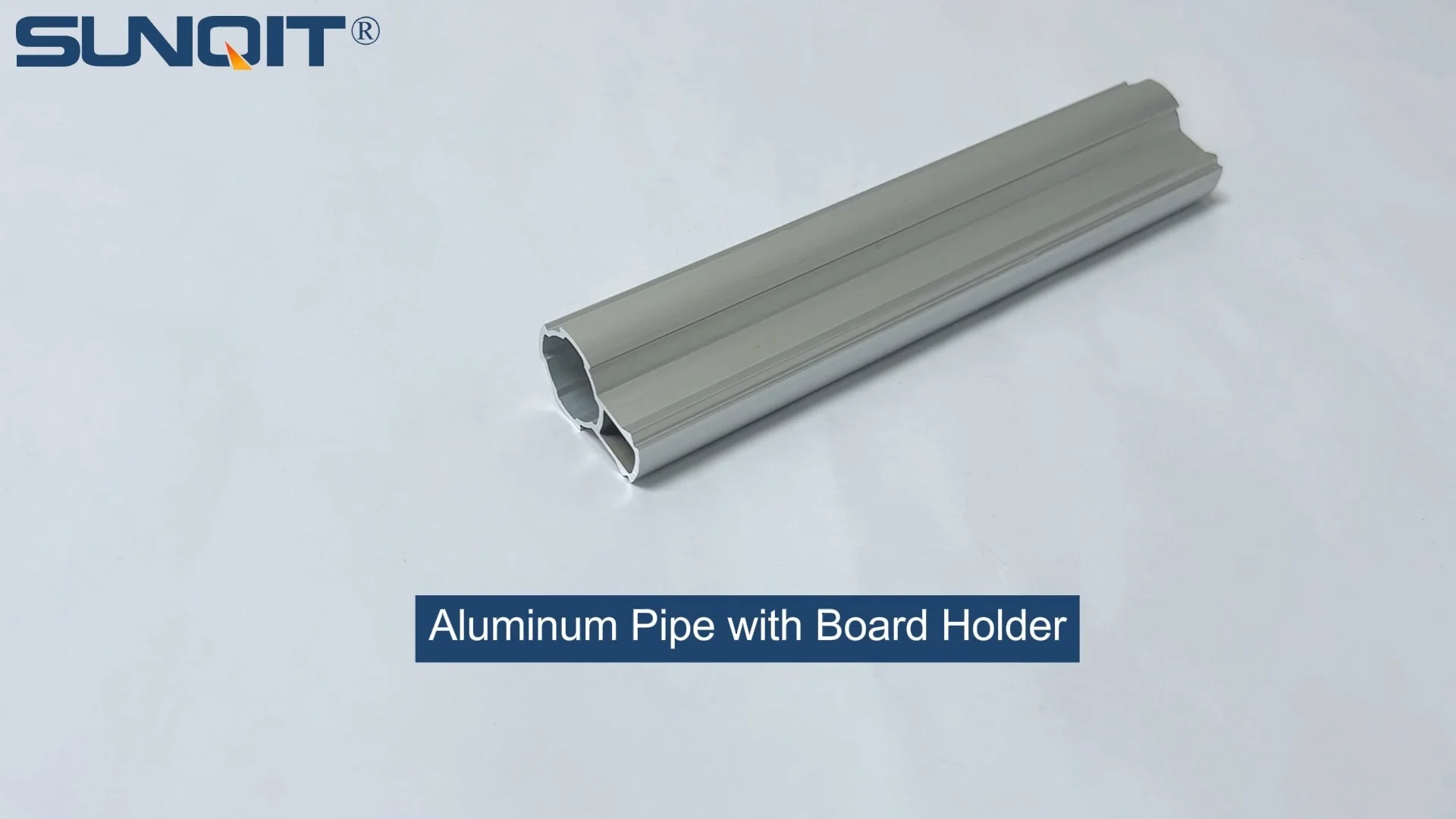
Aluminum Pipe with Board Holder
The linear rolling assembly can be arbitrarily connected in the protruding part of the card slot to increase the rigidity of the track.
Introduction: The Backbone of Modern Workspaces
Walk into any manufacturing plant, warehouse, or workshop today, and you'll likely spot a common element tying everything together: aluminum pipe . These unassuming cylindrical structures are the unsung heroes of efficient workflows, quietly supporting assembly lines, material racks, workbenches, and more. What makes aluminum pipes so indispensable? Their unique blend of strength, lightweight design, and adaptability. Unlike rigid steel or flimsy plastic, aluminum pipes strike the perfect balance—strong enough to bear significant loads, yet light enough to be reconfigured with minimal effort. And when paired with accessories like board holders, they transform from simple supports into fully functional workstations that keep tools, documents, and materials within arm's reach.
In this article, we'll dive deep into two critical variants: heavy-duty and standard aluminum pipes with board holders. Whether you're setting up a small electronics workshop or overhauling a large-scale automotive production line, understanding the differences between these two options is key to building a workspace that's efficient, durable, and tailored to your needs. We'll explore their design, load capacities, applications, and how to choose between them, with a focus on real-world usability and long-term value.
What Are Aluminum Pipes with Board Holders, Anyway?
Before we compare heavy-duty and standard options, let's clarify what we're talking about. An aluminum pipe with a board holder is a modular system consisting of two main parts: the pipe itself (the structural backbone) and the board holder (a, or aluminum pipe accessory , that attaches to the pipe to hold flat surfaces like wooden boards, plastic panels, or metal sheets). These boards serve as work surfaces, tool trays, document holders, or material staging areas—essentially, they turn a bare pipe into a multi-functional hub.
Board holders come in various designs: fixed-angle models for stable surfaces, swivel versions that adjust to different tilts, and clamp-on styles for quick installation. Some even feature built-in stops to prevent boards from sliding, or slots for securing tools with hooks. The magic lies in how seamlessly they integrate with aluminum pipes—thanks to standardized aluminum profile connectors and joints, you can assemble, disassemble, or reconfigure the system in minutes, no welding or specialized tools required.
Real-World Example: Imagine a mechanic's workstation. A standard aluminum pipe runs vertically beside the workbench, with a swivel board holder at chest height holding a parts catalog and a small tool tray. When the mechanic needs to reference a diagram, they tilt the board for better visibility; when done, they fold it back to save space. This flexibility is why aluminum pipes with board holders have become a staple in lean, adaptable workspaces.

Standard Aluminum Pipes with Board Holders: Lightweight and Versatile
Standard aluminum pipes are the workhorses of light to medium-duty applications. Let's break down their key characteristics:
Design and Specifications
Standard pipes typically have an outer diameter of 28mm to 38mm and a wall thickness of 1.2mm to 1.5mm. They're most commonly made from 6063-T5 aluminum alloy—a material prized for its excellent corrosion resistance, smooth finish, and moderate strength. This alloy is easy to machine and anodize, making it ideal for applications where aesthetics (e.g., clean, uniform workbenches) matter as much as functionality.
The board holders paired with standard pipes are usually lightweight, too. They're often made from plastic, nylon, or thin aluminum, with simple clamp-on or bolt-on attachments. Load capacities for the board holders themselves range from 5kg to 15kg, depending on size and design—enough to hold a laptop, a stack of documents, or a set of small hand tools.
Advantages of Standard Pipes
- Lightweight: Weighing 1.2kg to 2kg per meter (depending on diameter), standard pipes are easy to carry, mount, and reposition. This is a boon for small teams or workshops where layouts change frequently.
- Cost-Effective: Compared to heavy-duty options, standard pipes and their accessories are significantly cheaper. For startups or budget-conscious operations, this makes them an accessible entry point into modular workspace design.
- Easy Assembly: With simple aluminum pipe accessories like snap-on joints or threaded connectors, even someone with minimal DIY experience can assemble a basic system in under an hour. No need for power tools or professional installers.
- Low Maintenance: Aluminum's natural resistance to rust means standard pipes require little upkeep—just an occasional wipe-down with a damp cloth to remove dust or grease.
Ideal Applications
Standard aluminum pipes with board holders shine in environments with low to medium loads and moderate usage. Common scenarios include:
- Electronics Assembly Lines: Holding circuit boards, small components, and instruction manuals on lightweight workbenches.
- Home Workshops: Supporting tool racks, pegboards, or folding work surfaces for hobbies like woodworking or 3D printing.
- Retail Stockrooms: Organizing small inventory items, price tags, or packing slips near checkout counters.
- Office Spaces: Creating standing desk add-ons, monitor arms, or document holders for ergonomic workstations.
Case Study: A Small Electronics Startup
A team of 5 engineers at a mobile phone repair startup needed workstations that could adapt as they expanded. They chose standard aluminum pipes with swivel board holders. Each workstation features a 38mm pipe with two board holders: one for holding repair guides (tilted at 30°) and another for placing tools (horizontal). The total cost per workstation was under $200, and when the team moved to a larger space, they disassembled the systems in 20 minutes and reassembled them in the new location—no damage, no waste.

Heavy-Duty Aluminum Pipes with Board Holders: Built for the Toughest Tasks
If standard pipes are the workhorses, heavy-duty aluminum pipes are the draft horses—designed to tackle high loads, constant use, and harsh industrial environments. Let's explore their features:
Design and Specifications
Heavy-duty pipes are built for strength. They typically have larger diameters (40mm to 60mm) and thicker walls (2.0mm to 3.0mm), made from high-strength aluminum alloys like 6061-T6. This alloy undergoes heat treatment to enhance its tensile strength (up to 310 MPa, compared to 6063-T5's 215 MPa), making it resistant to bending, warping, or denting under heavy stress.
The board holders for heavy-duty systems are equally robust. They're often constructed from thick-gauge aluminum or steel, with reinforced joints and locking mechanisms. Load capacities here range from 20kg to 50kg or more—enough to hold power tools, large machinery parts, or stacks of heavy materials like metal sheets.
Advantages of Heavy-Duty Pipes
- Superior Load Capacity: The thick walls and strong alloy allow heavy-duty pipes to support 2–3 times the weight of standard pipes. A 60mm heavy-duty pipe, for example, can easily hold a 50kg tool chest mounted via a reinforced board holder.
- Durability: In industrial settings with constant vibration, impacts, or temperature fluctuations, heavy-duty pipes outlast standard options. They're resistant to wear and tear, making them a long-term investment.
- Stability: The larger diameter and thicker walls reduce flexing, even under uneven loads. This stability is critical for precision work, like assembling engine components or aligning large parts.
- Safety: Heavy-duty systems are less likely to fail under stress, reducing the risk of accidents in high-traffic areas. Many come with safety certifications for use in OSHA-regulated workplaces.
Ideal Applications
Heavy-duty aluminum pipes with board holders are designed for industrial environments where performance and reliability are non-negotiable. Key applications include:
- Automotive Manufacturing: Supporting workbenches for assembling car frames, where board holders hold heavy welding tools or metal panels.
- Aerospace Facilities: Storing and organizing large, delicate components like turbine blades, with board holders that lock into place to prevent movement.
- Warehouse Loading Docks: Creating staging areas for bulk goods, where board holders hold pallets or heavy boxes during sorting.
- Heavy Machinery Repair: Holding diagnostic equipment, replacement parts, and hydraulic tools near large machines like excavators or bulldozers.
Case Study: A Truck Assembly Plant
A commercial truck manufacturer needed workstations along its assembly line to hold 40kg transmission parts. They opted for 50mm heavy-duty aluminum pipes with fixed board holders (rated for 50kg). Each board holder is mounted with reinforced steel clamps and features rubberized edges to prevent parts from slipping. After 3 years of daily use—with parts being loaded and unloaded hundreds of times—the pipes show no signs of bending, and the board holders still lock securely. The investment in heavy-duty systems has reduced downtime from equipment failures by 90%.
Side-by-Side Comparison: Standard vs. Heavy-Duty
To help you visualize the differences, here's a detailed comparison table:
| Feature | Standard Aluminum Pipe with Board Holder | Heavy-Duty Aluminum Pipe with Board Holder |
|---|---|---|
| Outer Diameter | 28mm–38mm | 40mm–60mm |
| Wall Thickness | 1.2mm–1.5mm | 2.0mm–3.0mm |
| Material Alloy | 6063-T5 (moderate strength) | 6061-T6 (high strength) |
| Board Holder Load Capacity | 5kg–15kg | 20kg–50kg+ |
| Weight per Meter | 1.2kg–2.0kg | 2.5kg–4.0kg |
| Cost (per Meter + Holder) | $15–$30 | $35–$70 |
| Best For | Light assembly, small tools, low to medium loads | Heavy machinery, industrial workbenches, high loads |
| Assembly Difficulty | Easy (DIY-friendly, basic tools) | Moderate (may require two people for large pipes) |
| Longevity (Industrial Use) | 3–5 years | 10–15 years |
Choosing the Right Option: Key Factors to Consider
Now that you understand the differences, how do you decide between standard and heavy-duty aluminum pipes with board holders? Here are the critical factors to weigh:
1. Load Requirements
Start by calculating the maximum weight the board holder will need to support. If you're holding a laptop and a few hand tools (total 8kg), standard is more than enough. If you're mounting a 30kg power drill or a stack of 45kg metal sheets, heavy-duty is non-negotiable. Pro tip: Always factor in "shock loads"—sudden impacts from dropping tools or slamming materials onto the board. Heavy-duty systems handle these better than standard ones.
2. Usage Frequency and Intensity
How often will the system be used? A home workshop that's used weekends might get by with standard pipes, even for moderate loads. But a factory line running 3 shifts a day, 7 days a week, needs the durability of heavy-duty. Constant use wears down materials over time, and heavy-duty pipes are built to withstand the grind.
3. Space and Mobility
Standard pipes are lighter, making them easier to mount on walls, ceilings, or mobile carts (like workbench trolleys). If you need to move the system around—say, a mobile workstation for event setup—standard's lower weight is a advantage. Heavy-duty pipes, while stable, are bulkier; they're best for fixed installations where mobility isn't a priority.
4. Budget
Heavy-duty systems cost more upfront, but they offer better long-term value for high-intensity use. If you're on a tight budget and only need light functionality, standard is the way to go. However, skimping on heavy-duty for a high-load application can backfire—replacing bent pipes or broken board holders after a few months will end up costing more than investing in quality upfront.
5. Future Scalability
Think about whether your needs might grow. A small bakery using standard pipes for holding mixing bowls today might expand to industrial ovens tomorrow, requiring heavier loads. In such cases, choosing heavy-duty from the start can save you the hassle of replacing the entire system later. Many heavy-duty brands also offer modular expansion kits, so you can add more pipes or board holders as needed.
Beyond the Pipe: Essential Accessories for Optimal Performance
No aluminum pipe system is complete without the right accessories. Both standard and heavy-duty setups rely on aluminum pipe accessories to function seamlessly. Here are the must-haves:
Joints and Connectors
These attach pipes to each other or to surfaces (walls, floors, workbenches). For standard pipes, plastic or nylon joints (like 90° elbows or T-joints) work well. For heavy-duty, opt for metal joints with locking screws to prevent slipping under load.
Casters and Wheels
For mobile systems, casters (wheels) turn pipes into trolleys. Standard setups use lightweight plastic casters (2–3 inch diameter), while heavy-duty needs steel casters (4–5 inch) with brakes for stability.
Clamps and Locks
Board holders often come with clamps to secure boards, but additional locks (like lever clamps or cam locks) add extra safety for heavy loads. Heavy-duty systems may also use bolt-on clamps instead of snap-on for a tighter grip.
End Caps and Protectors
These cover the ends of pipes to prevent sharp edges (a safety hazard) and keep out dust or debris. Standard pipes use plastic end caps; heavy-duty may use rubber or metal caps for added durability.
Integrating with Lean Systems: Efficiency at the Core
Both standard and heavy-duty aluminum pipes align with lean system principles—maximizing value, minimizing waste, and continuous improvement. In lean manufacturing, for example, a standard pipe with a board holder can organize tools in a "5S" workspace (Sort, Set in Order, Shine, Standardize, Sustain), reducing time spent searching for items. Heavy-duty systems, meanwhile, support "just-in-time" production by providing stable, reliable staging areas for materials, ensuring parts arrive exactly when needed.
The modularity of these systems is key to lean efficiency. If a process changes—say, a new product line requires different tools—the pipes and board holders can be reconfigured in hours, not days. This adaptability reduces downtime and keeps workflows agile, a critical advantage in today's fast-paced manufacturing landscape.
Conclusion: Invest in the System That Grows With You
Aluminum pipes with board holders are more than just workspace tools—they're investments in efficiency, safety, and adaptability. Standard pipes excel in light to medium-duty settings, offering affordability and flexibility for small teams or evolving needs. Heavy-duty pipes, on the other hand, are the backbone of industrial environments, delivering unmatched strength and durability for high loads and constant use.
When choosing between them, focus on your current load requirements, usage intensity, and future goals. And don't forget the accessories—joints, casters, and clamps can make or break the system's performance. Whether you're setting up a home workshop or a factory floor, the right aluminum pipe with a board holder will not only meet your needs today but grow with you tomorrow.
In the end, it's not just about pipes and boards—it's about building a workspace that works as hard as you do.