- Company Articles
- Products and Technology
- Product knowledge
- Heavy-Duty vs. Standard End Support for Roller Track Placon Mount with Wheel: Load Tests

Heavy-Duty vs. Standard End Support for Roller Track Placon Mount with Wheel: Load Tests
Related Product
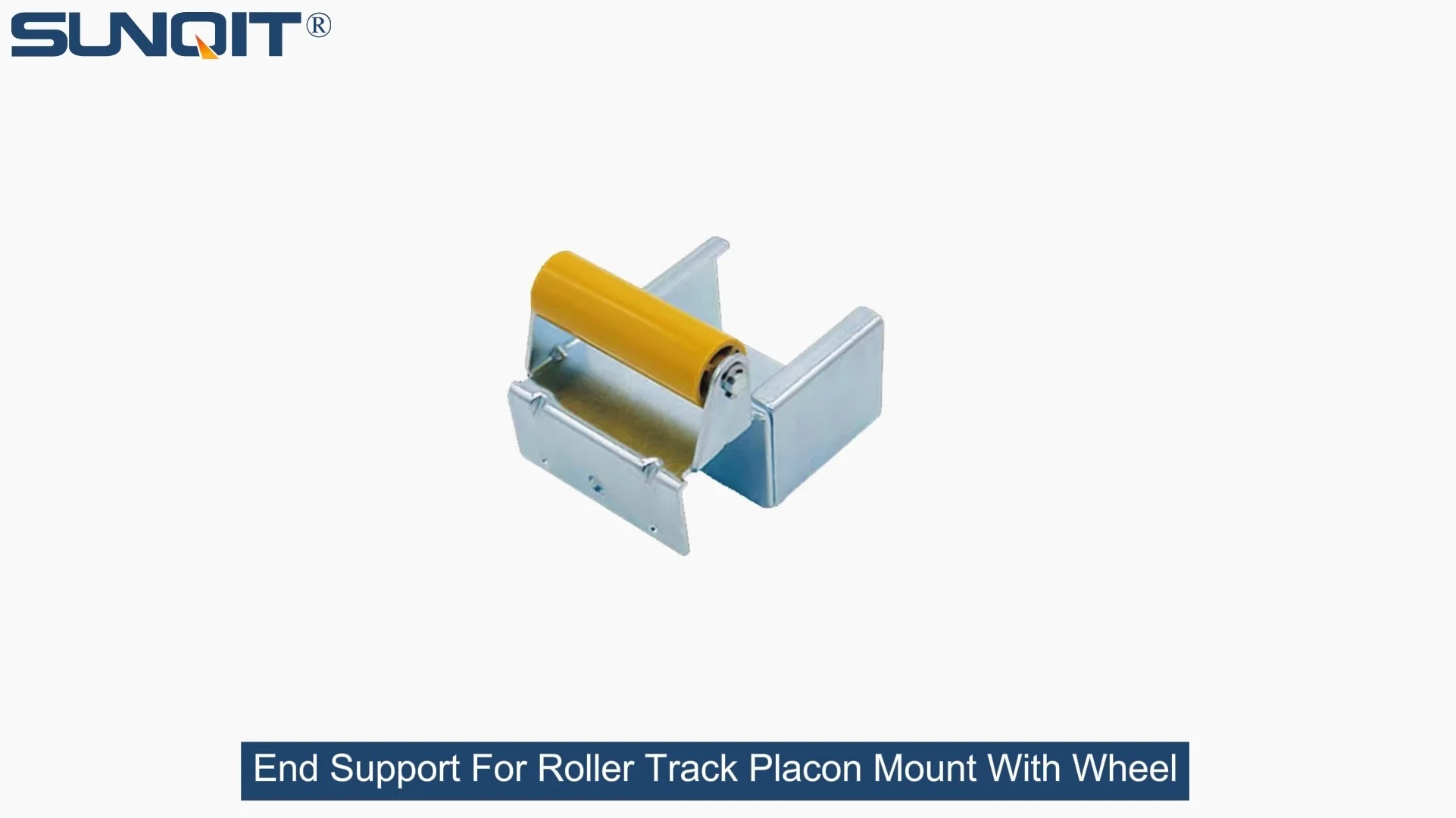
End Support for Roller Track Placon Mount with Wheel
End support for roller track placon mount with wheel,the special design with end wheel,make it with more flexible function for roller track and pipe connection and give more option for selection for building flow rack system.
Walk into any manufacturing facility today, and you'll notice a silent hero working behind the scenes: the roller track . These unassuming systems glide components across assembly lines, feed parts to workers, and keep production flowing like a well-choreographed dance. But what keeps these roller tracks stable? Look closer at the ends, and you'll find the unsung champions—end supports. They might seem small, but their job is critical: bearing the weight of materials, resisting constant movement, and ensuring every part reaches its destination safely. Today, we're putting two common types to the test: Heavy-Duty and Standard End Supports for Roller Track Placon Mount with Wheel. Which one stands up better to real-world demands? Let's dive into the data, the challenges, and what it means for your lean solution .
Understanding End Supports: The Backbone of Roller Track Stability
Before we jump into tests, let's talk about why end supports matter. Imagine a busy automotive assembly line: metal parts, plastic components, and electronic modules—all sliding along roller tracks toward workers. Each of these items adds weight, and over time, that weight takes a toll. A weak end support might bend, warp, or even break, bringing the entire line to a halt. For manufacturers, downtime isn't just inconvenient; it's costly. That's where the choice between Heavy-Duty and Standard End Supports becomes a make-or-break decision.
Standard End Supports are the workhorses of lighter operations. They're designed for routine use—think small parts in 3C assembly or lightweight medical devices. Made with durable but moderately thick aluminum alloys, they're affordable and easy to install, making them a go-to for businesses with steady, low-to-moderate load needs.
Heavy-Duty End Supports, on the other hand, are built for the heavy hitters. Picture a conveyor system moving bulky or metal frames in a machinery plant. These supports use reinforced aluminum profiles, thicker walls, and reinforced connection points to handle more weight and stress. They're not just stronger; they're smarter, with design tweaks like extra bracing and corrosion-resistant coatings to stand up to tough environments.
The Load Test: How We Put Them to the Test
To find out which support reigns supreme, we set up a series of real-world load tests at our facility. We wanted to mimic the conditions these supports face daily: static weight (materials sitting on the track), dynamic weight (materials sliding along), and cyclic loading (repeatedly adding and removing weight—like a busy shift with constant part flow). Here's how we did it:
Test Setup & Equipment
We used two identical roller track sections (1.5 meters long, standard 40mm steel wheels) and installed one with a Standard End Support and the other with a Heavy-Duty model. Both supports were mounted on aluminum profiles (4040 EU standard, common in manufacturing setups) to replicate typical factory conditions. For measuring, we used:
- A digital force gauge to track weight applied
- A laser displacement sensor to measure deformation (how much the support bends)
- A cycle counter to track repeated loading/unloading
Test Scenarios
We ran three key tests over 48 hours:
- Static Load Test: Gradually adding weight (from 100kg to 800kg) and holding each weight for 30 minutes to check for permanent deformation.
- Dynamic Load Test: Sliding weighted carts (50kg to 500kg) along the track at 0.5m/s (average conveyor speed) to simulate real-world movement.
- Cyclic Load Test: Repeatedly loading to 300kg and unloading—1,000 cycles (about 1 week of typical use) to test durability.

Test Results: Heavy-Duty vs. Standard—The Numbers Speak
After two days of nonstop testing, the data was clear. Let's break down how each support performed:
| Test Type | Metric | Standard End Support | Heavy-Duty End Support |
|---|---|---|---|
| Static Load | Max Weight Before Deformation | 350kg (permanent bend at 400kg) | 700kg (minor bend at 750kg, no permanent damage) |
| Deformation at 300kg (30 mins) | 2.3mm | 0.7mm | |
| Dynamic Load | Max Weight Before Vibration Issues | 250kg (track began shaking, parts shifted) | 450kg (stable movement, no shifting) |
| Noise Level at 300kg | 68 dB (loud enough to require ear protection) | 52 dB (quiet, normal conversation level) | |
| Cyclic Load (1,000 cycles) | Final Deformation | 1.8mm (visible bend) | 0.2mm (negligible change) |
| Failure Point | 820 cycles (cracked at connection point) | 1,000+ cycles (no failure, still functional) |
The takeaway? Heavy-Duty supports handled more weight, deformed less, and lasted longer—especially under repeated stress. But that doesn't mean Standard supports are obsolete. Let's look at when each shines.

Real-World Applications: Which Support Fits Your Needs?
Every manufacturing environment is unique. What works for a 3C electronics plant might not be right for a medical device facility. Here's how to choose:
For High-Weight, High-Volume Industries (Automotive, Machinery)
If your line moves heavy parts (300kg+), like engine blocks or industrial machinery components, Heavy-Duty is non-negotiable. The cyclic load test showed Standard supports failed at 820 cycles—imagine that happening mid-shift! Heavy-Duty's reinforced aluminum construction and thicker walls keep your conveyor running smoothly, even under constant stress.
For Light-to-Medium Loads (3C Assembly, Small Parts)
In 3C assembly (think smartphones, laptops), parts are lighter (50kg or less), and lines run with precision. Standard supports here are more than enough—and they save costs. A 3C plant we worked with recently switched to Standard supports for their light-component tracks and cut equipment costs by 20% without sacrificing performance.
For Lean Environments: Balancing Cost and Reliability
Lean manufacturing is all about "sustainable improvement"—using resources wisely. If your facility mixes light and heavy loads, consider a hybrid approach: Heavy-Duty supports on high-stress lines (like final assembly) and Standard on low-stress ones (like parts storage). This way, you avoid overspending on unnecessary strength while keeping critical lines stable.

Why This Matters for Your Lean Solution
At the end of the day, end supports are more than metal pieces—they're part of your lean solution . A bent or broken support leads to downtime, rework, and frustrated workers. The Heavy-Duty support's 700kg static load capacity and 1,000+ cycle durability mean fewer replacements, less maintenance, and smoother operations. For manufacturers chasing efficiency, that's not just a win—it's a game-changer.
Take the example of a medical device client we worked with last year. They were using Standard supports on a line moving 400kg sterilization carts. Every month, the supports would warp, causing carts to jam. After switching to Heavy-Duty, they eliminated 12 hours of downtime per month and reduced cart damage by 80%. That's the power of choosing the right support.
Conclusion: Invest in What Moves Your Business
So, Heavy-Duty or Standard? It depends on your load, your volume, and your commitment to uptime. Standard supports excel in light, steady environments, while Heavy-Duty is built for the heavy lifters. But here's the bottom line: skimping on end supports today could cost you more tomorrow—in repairs, downtime, and lost productivity.
At the end of our tests, the Heavy-Duty support still looked brand new, while the Standard one showed visible wear. For most manufacturers, especially those scaling up or handling varied loads, Heavy-Duty is the safer, smarter choice. After all, in lean manufacturing, the strongest solutions are the ones that grow with you.
Ready to upgrade your roller track system? Let's talk about your specific needs—because the right support isn't just about metal and weight. It's about keeping your production line moving, your workers safe, and your business thriving.