- Company Articles
- Products and Technology
- Product knowledge
- High-Strength 3060 Aluminum Angle Yards for Heavy-Duty Racks

High-Strength 3060 Aluminum Angle Yards for Heavy-Duty Racks
Related Product
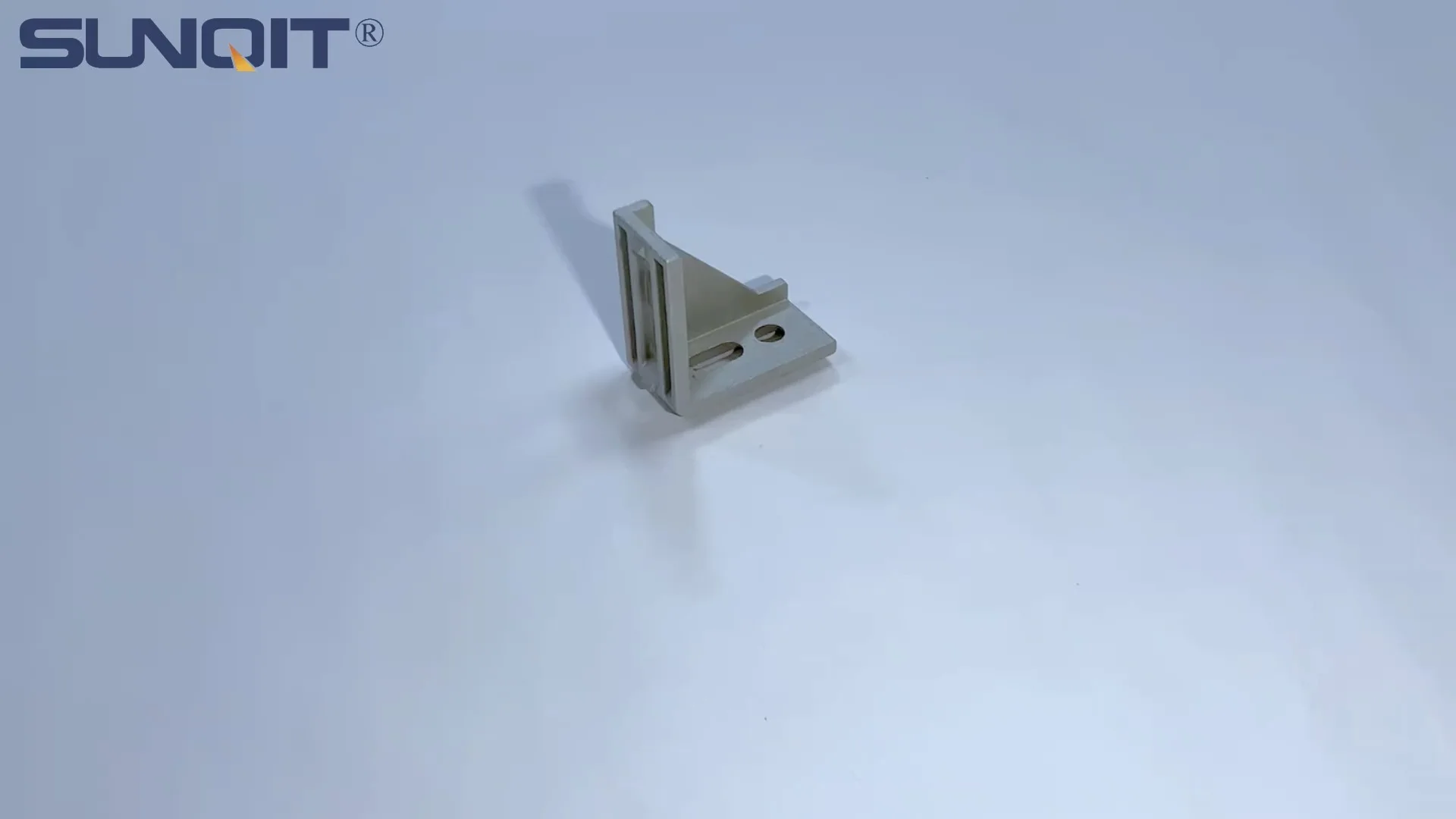
3060 Aluminum Angle Yards
It used for 90° flat connection for 20 series aluminum profile.
In the heart of every thriving warehouse, factory, or distribution center, there's a silent workhorse keeping operations on track: the heavy-duty rack. These structures don't just hold products—they hold the promise of efficiency, safety, and scalability. But what happens when the racks themselves become the bottleneck? When a sudden surge in inventory pushes them to their limits, or corrosion from a humid environment weakens their joints? For years, many businesses accepted these challenges as unavoidable. But today, there's a component that's changing the game: the 3060 aluminum angle yard.
If you've ever walked through a busy warehouse, you've probably seen the telltale signs of aging racks: bent steel corners, rust creeping along welds, or wobbly shelves that make you hesitate before stacking another box. These issues aren't just cosmetic—they're red flags for safety and efficiency. That's where 3060 aluminum angle yards come in. Crafted from high-grade aluminum extrusion profile, these unassuming L-shaped components are designed to reinforce rack frames, absorb stress, and turn ordinary storage systems into powerhouses of durability. Let's dive into why they're becoming the go-to choice for engineers, facility managers, and anyone who refuses to compromise on their storage infrastructure.
What Are 3060 Aluminum Angle Yards, Anyway?
Let's start with the basics. 3060 aluminum angle yards are structural components shaped like a right angle (think of the letter "L"), with dimensions roughly 30mm by 60mm along each leg—hence the "3060" in their name. But don't let the simple shape fool you. These aren't just bent pieces of metal; they're precision-engineered products of the aluminum extrusion process, where molten aluminum is forced through a die to create consistent, high-strength profiles.
What makes them special? Unlike generic steel angles, 3060 aluminum angle yards are made from alloys like 6061 or 6063—materials prized in industrial settings for their unbeatable combination of strength, lightweight, and corrosion resistance. The extrusion process itself enhances their structural integrity: the uniform grain structure of extruded aluminum gives these angle yards a tensile strength that rivals steel, but at a fraction of the weight. This means easier installation, lower shipping costs, and less strain on your facility's floor load limits.
Here's a key point: these angle yards aren't standalone solutions. They're part of a larger ecosystem of aluminum profile accessories—think brackets, connectors, and fasteners—that let you build modular, customizable racks. And when it comes to finishing the job right, nothing beats the 3060 aluminum profile end cap: a small but crucial accessory that seals the ends of the angle yards, protecting workers from sharp edges and preventing dust and debris from clogging the T-slots (those handy grooves along the length of the profile that make assembly a breeze).
The Science Behind the Strength: Why Aluminum Extrusion Profile Matters
To truly appreciate 3060 aluminum angle yards, you need to understand the magic of aluminum extrusion profile. Imagine squeezing toothpaste from a tube—the paste takes the shape of the nozzle, right? Aluminum extrusion works similarly, but on an industrial scale. Heated aluminum billets (cylindrical blocks) are pushed through a steel die under extreme pressure, emerging as long, continuous profiles with complex cross-sections. For 3060 angle yards, the die is shaped to create that signature L-shape, with T-slots running along both legs for easy attachment of accessories.
This process isn't just efficient—it's what gives the angle yards their strength. Unlike cast or welded components, extruded aluminum has a homogeneous structure, meaning there are no weak points from seams or uneven cooling. The result? A component that can withstand heavy loads without bending, even in high-stress areas like rack corners. Let's put this in numbers: a typical 3060 aluminum angle yard (6063 alloy) has a tensile strength of around 215 MPa (megapascals) and a yield strength of 180 MPa. For context, that's strong enough to support the weight of a small car distributed across a few meters of rack—though we don't recommend testing that!
Fun Fact:
The "3060" designation refers to the width of each leg in millimeters (30mm and 60mm). This size strikes a perfect balance: narrow enough to fit into tight rack corners, yet wide enough to distribute weight evenly across the frame. It's why you'll often find 3060 angle yards used in everything from
rack c
(a common 3-tier heavy-duty rack model) to custom-built storage systems for automotive parts and industrial machinery.

Why Choose Aluminum Over Steel or Plastic?
You might be thinking, "Steel has been the standard for racks for decades—why switch to aluminum?" It's a fair question. Let's break down the differences with a side-by-side comparison:
| Feature | 3060 Aluminum Angle Yards | Steel Angle Irons | Plastic Angle Brackets |
|---|---|---|---|
| Weight (per meter) | ~0.8 kg | ~2.5 kg | ~0.4 kg |
| Tensile Strength | 215 MPa | 370 MPa (mild steel) | 30-50 MPa |
| Corrosion Resistance | Excellent (natural oxide layer) | Poor (requires painting/galvanizing) | Good (but prone to UV damage) |
| Installation Ease | Lightweight; T-slots for tool-free adjustments | Heavy; requires welding or drilling | Lightweight but weak; limited load capacity |
| Maintenance | Minimal (occasional cleaning) | High (repainting, rust removal) | Moderate (replace if cracked/UV-damaged) |
| Cost (Initial vs. Long-Term) | Higher initial; lower long-term (no maintenance) | Lower initial; higher long-term (maintenance/replacement) | Lowest initial; highest long-term (frequent replacement) |
Steel might have higher raw tensile strength, but when you factor in weight (aluminum is 3x lighter!), corrosion resistance, and installation time, aluminum pulls ahead for most heavy-duty applications. Plastic, while cheap, simply can't handle the loads required for industrial racks—imagine stacking 50kg boxes on plastic brackets and watching them bow under the pressure. Aluminum, on the other hand, offers the "sweet spot" of strength, weight, and durability.

The Perfect Pair: 3060 Aluminum Angle Yards and Accessories
A 3060 aluminum angle yard is only as good as the accessories that bring it to life. That's where aluminum profile accessories shine—turning a single angle yard into part of a modular, adaptable system. Let's take a closer look at the unsung heroes of rack assembly:
3060 Aluminum Profile End Cap:
Think of this as the "polish" on your rack. After assembling the frame with angle yards, the ends of the aluminum profiles can be sharp or prone to collecting dust. The 3060 aluminum profile end cap snaps or screws into place, covering these exposed ends. Not only does it protect workers from cuts, but it also keeps debris out of the T-slots—ensuring your accessories (like brackets and shelves) slide in smoothly for years to come. Most end caps are made of durable nylon or aluminum, so they stand up to bumps and scrapes.
T-Slot Nuts and Bolts:
These tiny but mighty accessories are what make aluminum racks so flexible. T-slot nuts slide into the grooves of the angle yards, allowing you to attach shelves, cross-braces, or other components anywhere along the profile—no pre-drilled holes required. It's why you can reconfigure a
rack c
from holding small parts one month to bulky machinery the next, just by sliding the nuts to new positions.
Corner Brackets and Gussets:
When you need extra reinforcement at the joints of your angle yards, these accessories step in. Gussets (triangular plates) add rigidity to 90-degree angles, preventing rack sway when forklifts zoom by or heavy loads are placed. They're especially useful in high-traffic areas where racks take constant abuse.
Pro Tip: Always pair your 3060 aluminum angle yards with genuine aluminum profile accessories. Off-brand parts might save a few dollars upfront, but they often don't fit snugly in the T-slots, leading to loose connections and reduced load capacity. It's like putting cheap tires on a sports car—you're undermining the performance of the entire system.

Real-World Applications: How 3060 Angle Yards Transform Rack c and Beyond
Let's get practical. Where do 3060 aluminum angle yards make the biggest difference? One common scenario is upgrading
rack c
—a staple in warehouses worldwide.
Rack c
typically features three vertical uprights, three horizontal beams per tier, and a load capacity of 500-800kg per shelf. While functional, standard steel versions of
rack c
often struggle with:
- Corrosion in humid environments: Steel racks near loading docks or in food processing facilities often rust, weakening joints over time.
- Difficulty reconfiguring: Welded steel beams mean you can't adjust shelf heights without cutting and rewelding—a time-consuming hassle.
- Weight-related stress: Heavy steel components make installation and relocation labor-intensive, requiring forklifts or multiple workers.
By swapping steel angle irons with 3060 aluminum angle yards,
rack c
gets a complete makeover. Let's walk through a real example: a mid-sized electronics warehouse in Texas was struggling with their steel
rack c
units. The humid Gulf Coast air had caused rust to form on the corner joints, and they needed to reconfigure shelves to accommodate larger circuit board boxes. Their solution? Retrofitting the racks with 3060 aluminum angle yards and aluminum profile accessories.
The results were striking: installation time dropped by 40% (thanks to lightweight aluminum), and the rust problem vanished entirely. By using T-slot nuts, they could adjust shelf heights in minutes, not hours. Best of all, the load capacity actually
increased
—from 700kg to 900kg per shelf—because the aluminum angle yards distributed weight more evenly across the frame. "We used to hold our breath every time we stacked a pallet," said the warehouse manager. "Now? We don't think twice."
Installation 101: Putting 3060 Aluminum Angle Yards to Work
You don't need to be an engineer to install 3060 aluminum angle yards—just a few basic tools and a little patience. Here's a step-by-step guide to upgrading your rack (we'll use
rack c
as an example):
- Measure Twice, Cut Once: Start by measuring the length of the vertical and horizontal beams on your rack. Most 3060 aluminum angle yards come in standard lengths (1m, 2m, 3m), but you can cut them to size with a miter saw or hacksaw if needed. Always wear safety glasses—aluminum chips can fly!
- Clean the Surfaces: If you're retrofitting an existing rack, remove any rust, dirt, or old paint from the areas where the angle yards will attach. A wire brush or sandpaper works well here.
- Attach the Angle Yards: Slide T-slot nuts into the grooves of the angle yards. Position the angle yards at the corners of the rack (where vertical and horizontal beams meet), then secure them with bolts through the nuts. Tighten until snug—over-tightening can strip the threads.
- Add Reinforcements: For extra strength, attach gussets at the top and bottom corners. These triangular brackets bolt directly to the angle yards and rack beams, preventing lateral movement.
- Finish with End Caps: Snap 3060 aluminum profile end caps onto the exposed ends of the angle yards. This step is easy to skip, but it's crucial for safety and longevity.
- Test the Load: Start with a light load (50% of your target capacity) and gradually increase it. Check for wobbling or creaking—these are signs of loose connections that need tightening.
Pro Installation Hack:
Use a rubber mallet to tap T-slot nuts into place if they're tight. Avoid using a metal hammer, as it can dent the aluminum profile and damage the T-slots.
Maintenance Tips: Keeping Your Aluminum Racks in Top Shape
One of the best things about 3060 aluminum angle yards is how little maintenance they need. Unlike steel, aluminum doesn't rust, and the natural oxide layer on its surface actually protects it from corrosion. That said, a little care goes a long way:
- Inspect monthly: Check for loose bolts or T-slot nuts—vibration from forklifts or heavy loads can loosen them over time. Tighten with a hex key as needed.
- Clean with mild soap and water: For dusty or greasy racks (common in manufacturing), wipe down the angle yards with a damp cloth and mild detergent. Avoid harsh chemicals like bleach, which can damage the oxide layer.
- replace damaged end caps: If a 3060 aluminum profile end cap cracks or falls off, replace it immediately. Exposed profile ends are sharp and can collect debris.
- Lubricate moving parts: If your rack has sliding shelves or drawers that use the angle yards as tracks, apply a small amount of silicone lubricant to the T-slots every 6 months to keep things sliding smoothly.
With proper care, a rack upgraded with 3060 aluminum angle yards can last 15-20 years—nearly twice as long as a comparable steel rack. That's a lot of saved time, money, and headaches over the long run.
The Bottom Line: Why 3060 Aluminum Angle Yards Are Worth the Investment
At the end of the day, choosing 3060 aluminum angle yards isn't just about buying a component—it's about investing in a storage system that grows with your business. They're stronger than plastic, lighter than steel, and more flexible than either. Whether you're building a new
rack c
from scratch or breathing new life into an old steel system, these angle yards deliver:
- Safety: Corrosion-resistant aluminum and secure T-slot connections reduce the risk of rack collapse.
- Efficiency: Lightweight components make installation faster, and modular design lets you reconfigure shelves in minutes.
- Durability: With minimal maintenance, aluminum angle yards outlast steel in most environments.
- Sustainability: Aluminum is 100% recyclable, making it a greener choice than steel (which requires energy-intensive rust treatments).
So, if you're tired of dealing with rusted steel racks, struggling to reconfigure storage, or just want a system that keeps up with your business's growth, it's time to consider 3060 aluminum angle yards. Pair them with quality aluminum profile accessories, finish with 3060 aluminum profile end caps, and watch your heavy-duty racks transform from a source of stress into a foundation for success.
After all, in the world of warehousing and manufacturing, the best investments are the ones that work quietly in the background—letting you focus on what really matters: growing your business. And when it comes to quiet workhorses, 3060 aluminum angle yards are hard to beat.