- Company Articles
- Products and Technology
- Application Cases
- High-Temperature Applications: Flat Swivel Castor Wheel with Brake for Furnace & Oven Equipment

High-Temperature Applications: Flat Swivel Castor Wheel with Brake for Furnace & Oven Equipment
Related Product
Flat Swivel Castor Wheel With Brake
Chair Casters Ball Bearing Wheels Rubber Base with brake design. Resistant to abrasion, impact and corrosion. Heavy payload can hold 70Kgs per pcs,which can make it works at a stable and smooth status.
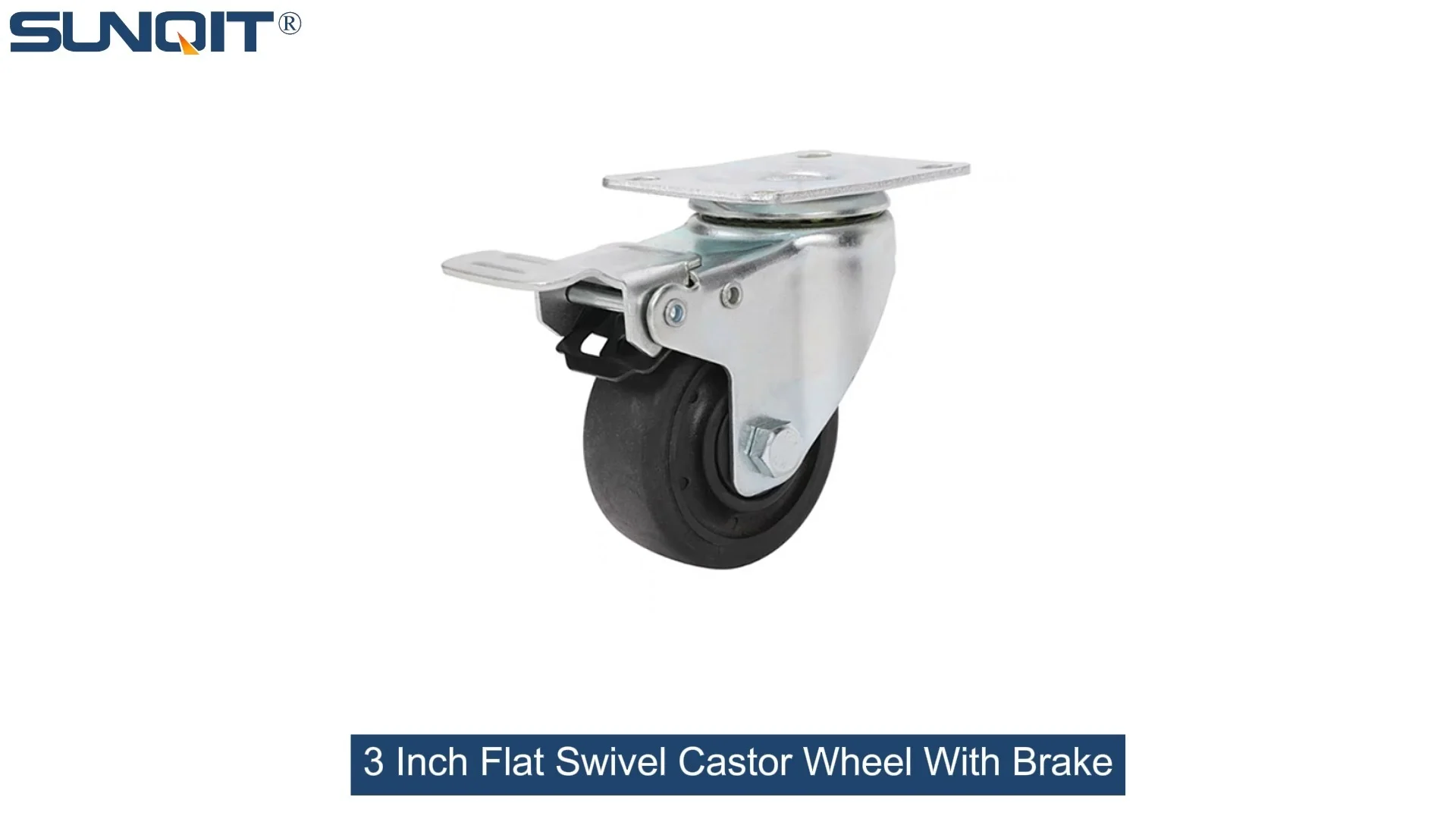
When we talk about furnace and oven equipment, the first thing that comes to mind is heat—blazing temperatures, industrial-grade insulation, and the critical role they play in manufacturing, baking, and heat-treating processes. But here's a detail that often flies under the radar: mobility. Think about it—those heavy oven racks, industrial furnace drawers, or lab annealing units don't just stay put. Technicians need to move them, adjust their positions, load and unload materials, and sometimes even reconfigure entire workstations. That's where the right caster wheel becomes more than a "nice-to-have"—it's a backbone of efficiency, safety, and reliability. And in high-temperature environments, not just any caster will do. Today, we're diving into the unsung hero of these settings: the flat swivel castor wheel with brake, designed specifically to thrive where heat, weight, and precision collide.
The Hidden Challenges of High-Temperature Environments
Let's start with the obvious: heat. Furnaces and ovens regularly hit temperatures north of 500°F (260°C), and some industrial models soar past 1,000°F (538°C). That kind of heat doesn't just warm the air—it warps materials, melts low-grade plastics, and turns standard lubricants into useless sludge. Then there's the weight. A loaded oven rack with metal parts or a furnace drawer full of ceramic molds can easily tip the scales at 500+ pounds. Add in the need for precise movement (you can't afford to jostle delicate heat-treated components) and sudden stops (imagine a heavy load rolling away from a hot furnace—disaster waiting to happen), and you've got a perfect storm of demands for any caster system.
But it's not just heat and weight. Many industrial environments also throw in chemicals, oils, or corrosive fumes—byproducts of manufacturing processes. A caster that rusts or seizes up in these conditions isn't just a maintenance headache; it's a safety risk. And let's not forget maneuverability. In busy workshops, space is often tight. Technicians need to swivel, pivot, and position equipment with inch-perfect accuracy, even when wearing heat-resistant gloves. A clunky caster that sticks or doesn't swivel smoothly? That's a productivity killer.
Why Flat Swivel Castor Wheels with Brakes Are a Game-Changer
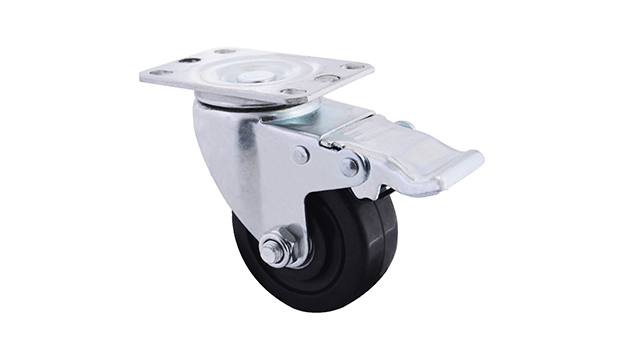
Enter the flat swivel castor wheel with brake. At first glance, it might look like any other caster, but its design is a masterclass in solving high-temperature headaches. Let's break down why it stands out:
- Flat Design for Stability: Unlike rounded or convex caster plates, the "flat" in flat swivel castor refers to the mounting plate—the part that attaches to the equipment. This flat, low-profile base distributes weight evenly, reducing stress on both the caster and the equipment frame. In high heat, where materials can expand or warp slightly, this even distribution prevents wobbling or tipping, even under heavy loads.
- Swivel for Maneuverability: The "swivel" feature lets the wheel rotate 360 degrees, making tight turns and precise positioning a breeze. In cramped spaces—like between ovens in a commercial bakery or around furnace arrays in a metal shop—this flexibility is invaluable. No more backtracking or struggling to "shuffle' equipment into place.
- Brake for Safety: The brake isn't an afterthought here. High-temperature brakes are engineered to engage firmly, even when hot, preventing accidental movement. Imagine loading a red-hot metal part into a furnace—you need that equipment to stay locked in place until you're ready. A faulty brake could mean damaged parts, injured hands, or worse.
Key Features That Make These Casters Heat-Ready
Not all flat swivel castors with brakes are built equal, especially when it comes to high temps. Here's what to look for in a model that can handle the heat:
1. Heat-Resistant Materials
The wheel itself is critical. Standard rubber or plastic wheels melt at high temps, so manufacturers turn to heat-tolerant options like stainless steel pipe series components, high-temperature polyurethane (rated for 500°F+), or even phenolic resin (which can handle up to 400°F). The swivel head and brake mechanism also rely on durable metals—often stainless steel or zinc-plated steel—to resist corrosion and thermal warping.
2. Heavy-Duty Brake Mechanisms
A brake that works in 70°F (21°C) weather but fails at 300°F (149°C) is useless. High-temperature brakes use heat-stable springs and friction materials (like brass or ceramic) to ensure a firm lock, even when the caster itself is hot to the touch. Many models also feature a "foot-operated" brake—easy to engage with a quick tap, even while wearing thick gloves.
3. Precision Swivel Bearings
Swivel casters rely on bearings to rotate smoothly, but heat can dry out standard lubricants. That's why quality high-temp casters use sealed, heat-resistant bearings—often pre-lubricated with silicone or graphite-based lubricants that stand up to extreme temps. No more squeaking, sticking, or "jerky" swivels mid-movement.
4. Reinforced Mounting Plates
The flat mounting plate isn't just about stability—it's about strength. Look for plates made from thick steel (1/4 inch or more) with reinforced corners. This prevents bending or cracking when the caster is under load, even as heat causes metal to expand slightly.

The Benefits: More Than Just "Rolling and Stopping"
So, what does all this design focus translate to for your operation? Let's get practical:
Safety First: A reliable brake means no unexpected movement. Whether you're loading a hot oven or adjusting a furnace drawer, you can trust the caster to stay put until you disengage the brake. This isn't just about avoiding accidents—it's about peace of mind for your team.
Durability That Saves Money: A cheap caster might work for a month in high temps before warping or seizing. A quality flat swivel castor with brake? It can last years, even with daily use. That means fewer replacements, less downtime, and lower long-term costs. Plus, many come with warranties—something to look for when choosing a caster supplier .
Efficiency Boost: Maneuvering equipment takes less time when the caster swivels smoothly and brakes lock instantly. Technicians aren't wasting energy wrestling with stuck wheels or chasing runaway loads. Over a shift, those saved minutes add up to big productivity gains.
Versatility: These casters aren't one-trick ponies. They work on concrete floors, metal shop surfaces, even slightly uneven terrain (thanks to their stable flat base). From commercial bakeries using conveyor ovens to aerospace factories with heat-treating furnaces, they adapt to almost any high-temperature setting.

How Do They Stack Up? A Quick Comparison
Still not convinced these casters are right for you? Let's compare them to common alternatives in high-temperature settings:
| Feature | Flat Swivel Castor with Brake (High-Temp) | Standard Fixed Caster | Swivel Caster Without Brake | Heavy-Duty Industrial Caster (Non-High-Temp) |
|---|---|---|---|---|
| Maneuverability | Excellent (360° swivel, tight turns) | Poor (only moves forward/backward) | Good (swivels, but no brake for safety) | Good, but may lack precision in tight spaces |
| Heat Resistance | Up to 1,000°F+ (depends on model) | Limited (plastics/ lubricants fail < 300°F) | Limited (same as above) | Low (not designed for sustained high heat) |
| Safety (Braking) | Excellent (heat-stable brake locks securely) | None (no brake; relies on friction alone) | None (risk of rolling loads) | Basic (brake may fail in high heat) |
| Best For | Ovens, furnaces, heat-treating equipment | Static or rarely moved heavy loads | Light, non-heated loads in open spaces | Cool warehouses, non-industrial settings |
Maintenance Tips to Keep Them Rolling (and Stopping) Strong
Even the toughest casters need a little TLC to stay in top shape. Here's how to extend their lifespan:
Clean Regularly: Heat can bake dust, grease, and debris onto the caster, causing it to stick. Wipe down wheels and swivel heads with a dry cloth after each shift (once cooled, of course!). For stubborn grime, use a wire brush—avoid harsh chemicals that might damage heat-resistant materials.
Lubricate Smartly: Over time, high heat can dry out even the best lubricants. Re-lubricate swivel bearings and brake mechanisms every 3–6 months (more often if used daily) with high-temperature grease (look for silicone or molybdenum disulfide-based formulas). Avoid standard petroleum-based lubricants—they'll break down in the heat.
Inspect Brakes and Wheels: Check brakes monthly to ensure they engage fully and release smoothly. Look for cracks in the wheel (especially if using polyurethane) or signs of warping in the mounting plate. replace caster accessories like brake pads or bearings at the first sign of wear—don't wait for a total failure.
Watch the Load: Every caster has a weight rating (e.g., 600 lbs per caster). Never exceed it! Overloading causes premature wear, bent plates, or even wheel failure—all dangerous in high temps.
Choosing the Right Supplier: It Matters More Than You Think
You've decided these casters are the way to go—now, where do you buy them? Not all caster suppliers are created equal, especially when it comes to high-temperature specialty products. Here's what to look for:
Experience in High-Temp Applications: Ask if they've worked with furnace, oven, or heat-treating clients. A supplier who understands your unique challenges (like chemical exposure or extreme heat) will guide you to the right model, not just sell you a generic caster.
Customization Options: Maybe you need a specific wheel material (stainless steel vs. phenolic) or a brake that's foot-operated instead of hand-levered. A good supplier offers customization to fit your exact needs.
Transparent Testing Data: Reputable suppliers will share heat-resistance test results (e.g., "tested at 800°F for 1,000 cycles with no failure"). If they can't prove their caster's performance, walk away.
Stock and Lead Times: Downtime is expensive. Choose a supplier with stock on hand for common models, and clear lead times for custom orders.
Wrapping Up: Small Part, Big Impact
At the end of the day, the flat swivel castor wheel with brake might not be the flashiest part of your furnace or oven setup. But it's the kind of component that makes everything else work better—safer, smoother, and more efficiently. In high-temperature environments, where every detail counts, cutting corners on casters is never worth it. Invest in quality, choose a supplier who understands your needs, and give your team the tool they deserve to do their best work.
So, the next time you walk through your workshop and see that oven rack gliding into place or that furnace drawer locking securely, take a second to appreciate the little caster making it all happen. It's not just a wheel—it's a partner in keeping your operation running hot, safe, and strong.