- Company Articles
- Products and Technology
- Product knowledge
- High-Temperature Flat Swivel Castor Wheels: Suitable for Industrial Ovens?

High-Temperature Flat Swivel Castor Wheels: Suitable for Industrial Ovens?
Related Product
Flat Swivel Castor Wheel
Chair Casters Ball Bearing Wheels Rubber Base. Resistant to abrasion, impact and corrosion. Heavy payload can hold 70-90Kgs per pcs,which can make it works at a stable and smooth status.
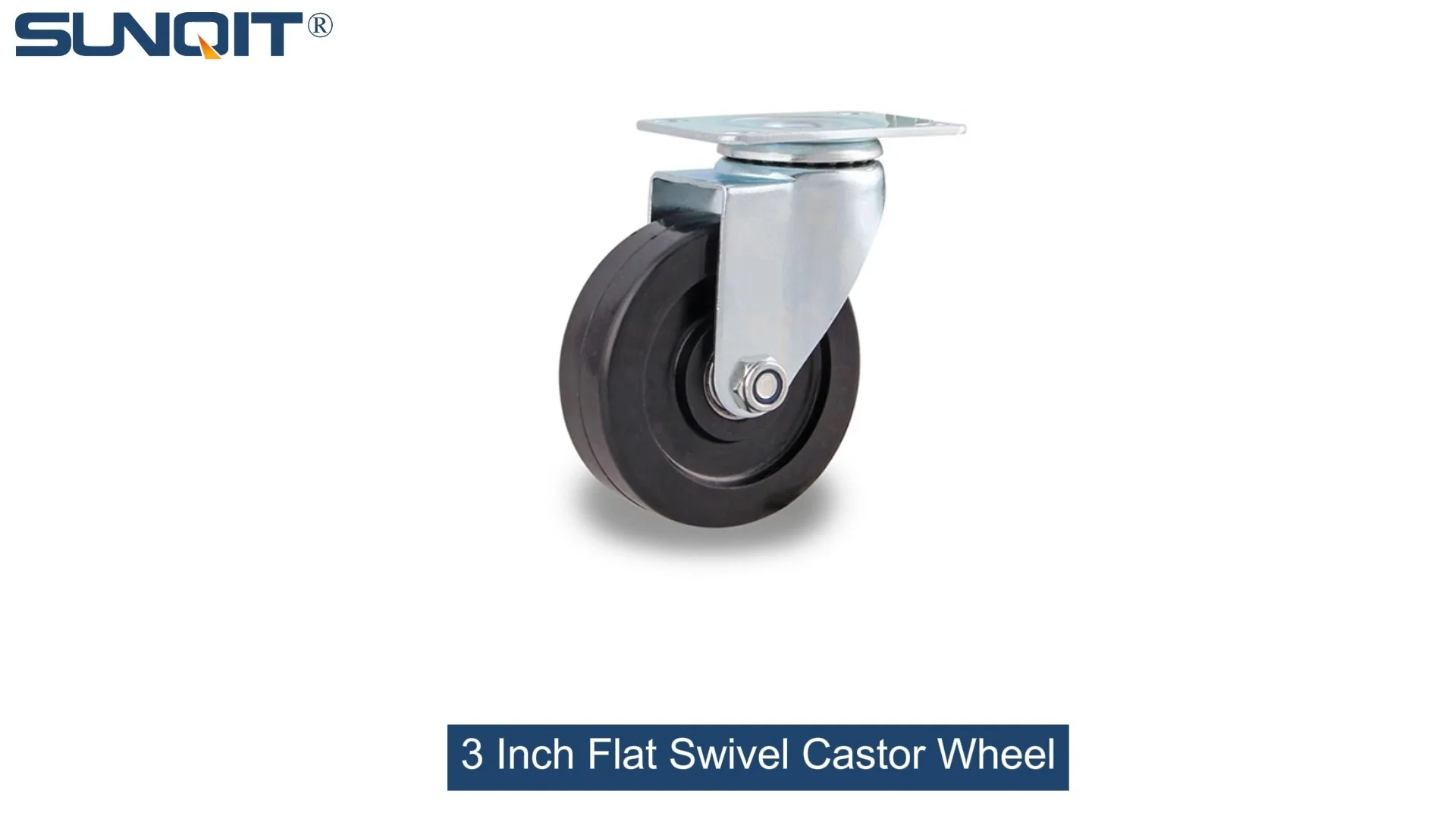
Walk into a large manufacturing facility, and you'll likely hear the steady hum of industrial ovens, their doors opening periodically to reveal trays of components undergoing heat treatment. Nearby, a worker pushes a heavy trolley loaded with parts toward an oven, the wheels gliding smoothly across the concrete floor. That trolley's mobility—and ultimately the efficiency of the entire operation—hinges on a small but critical component: the castor wheels. In high-heat environments like industrial ovens, not just any castor will do. Enter the high-temperature flat swivel castor wheel: a specialized solution designed to withstand extreme temperatures while maintaining maneuverability. But are these castors truly suitable for industrial ovens? Let's dive into the details.
1. Industrial Ovens: A Closer Look at the Heat and Mobility Needs
Industrial ovens are workhorses in sectors ranging from automotive and aerospace to food processing and electronics. They're used for curing coatings, drying materials, heat-treating metals, and even baking large-scale food products. Temperatures inside these ovens can range from 100°C (212°F) for drying applications to over 500°C (932°F) for advanced heat treatments like annealing or sintering. Some specialized ovens, such as those used in semiconductor manufacturing, can reach temperatures exceeding 1000°C (1832°F).
Mobility is often an afterthought in oven design, but it's a critical factor in operational efficiency. Many facilities use trolleys, racks, or carts to load and unload materials into ovens. These carts need to roll smoothly into tight spaces, stop securely during loading, and withstand the radiant heat that radiates from the oven's interior—even when the door is open. A standard castor wheel, designed for office chairs or warehouse dollies, would quickly fail here. Plastic wheels might melt, metal components could warp, and lubricants would degrade, leading to seized swivel mechanisms or wobbly, unsafe movement.
2. Understanding Castor Wheels: From Basics to Flat Swivel Designs
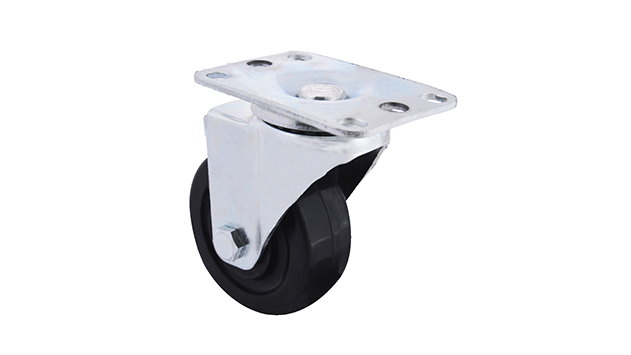
Before we focus on high-temperature variants, let's break down what a castor wheel is. At its core, a castor is a wheel assembly mounted on a swivel joint, allowing 360° rotation. This design lets the wheel follow the direction of the trolley or cart, making it easy to maneuver around corners or tight spaces. A "flat swivel castor wheel" refers to a specific type where the mounting plate (the part that attaches to the cart) is flat, providing a stable base for heavy loads. Unlike stem-mounted castors, which use a rod to attach to the cart, flat plate castors distribute weight more evenly, reducing stress on the cart's frame—an essential feature for industrial applications.
Castors come in two main types: swivel and rigid. Rigid castors don't rotate, offering straight-line movement, while swivel castors (like the flat swivel design) pivot, enabling multidirectional movement. For industrial ovens, swivel castors are preferred because they allow carts to be precisely positioned inside the oven, even when space is limited. Many flat swivel castors also come with a brake mechanism—a "flat swivel castor wheel with brake"—which locks the wheel or swivel joint to prevent accidental movement during loading or when the cart is stationary inside the oven.
Key components of a flat swivel castor wheel include: the wheel itself, the swivel head (housing the bearings that allow rotation), the mounting plate, and optional brakes. In high-temperature applications, each of these components must be engineered to resist heat-induced failure.
3. The High-Temperature Challenge: Why Standard Castors Can't Keep Up
Standard castor wheels are typically made from rubber, plastic, or mild steel, with lubricants like petroleum-based greases. In high-heat environments, these materials and components break down quickly:
- Rubber/Plastic Wheels: Natural rubber softens at 80–100°C and melts above 150°C. Polyurethane, a common synthetic rubber, can handle up to 90°C continuously but degrades at higher temps, becoming brittle or sticky.
- Mild Steel Components: While steel itself can withstand high temperatures, standard steel swivel heads may warp under prolonged heat, leading to uneven rotation or seizing.
- Lubricants: Petroleum-based greases oxidize and evaporate at high temps, leaving behind a sticky residue that clogs bearings and prevents smooth swiveling.
- Bearings: Standard ball bearings with low-grade steel races can expand unevenly at high temps, causing the bearing to lock up.
For example, a food processing plant using a standard rubber-castor cart to load baking trays into a 200°C oven might notice the wheels becoming misshapen after a few uses, leading to noisy, unstable movement. Over time, the swivel joint could seize, making the cart impossible to steer. In a metalworking facility, a mild steel castor exposed to 400°C radiant heat might warp, causing the wheel to wobble and risking damage to the oven or injury to workers.

4. High-Temperature Flat Swivel Castor Wheels: Key Features for Industrial Ovens
High-temperature flat swivel castor wheels are engineered to address these challenges. Let's explore the features that make them suitable for industrial ovens:
Heat-Resistant Materials
The wheel material is the first line of defense. Common options for high-temperature castors include:
| Wheel Material | Max Continuous Temp (°C) | Max Peak Temp (°C) | Load Capacity (per wheel, kg) | Pros | Cons | Ideal Oven Applications |
|---|---|---|---|---|---|---|
| Stainless Steel | 500–600 | 800 (short-term) | 300–1500 | Corrosion-resistant, durable, low-maintenance | Heavy, noisy on concrete, poor shock absorption | Metal heat-treating, automotive curing |
| Phenolic Resin | 180–200 | 250 (short-term) | 150–500 | Lightweight, quiet, chemical-resistant | Brittle at temps >200°C, not for sharp edges | Food baking, electronics drying |
| Ceramic | 1000+ | 1200 (short-term) | 200–800 | Extreme heat resistance, chemical inert | Brittle, heavy, expensive | Semiconductor, aerospace high-heat processes |
| Silicone | 200–260 | 300 (short-term) | 50–200 | Shock-absorbent, non-marking, FDA-compliant | Low load capacity, degrades above 260°C | Food processing, pharmaceutical drying |
Stainless steel is the most popular choice for industrial ovens because it balances heat resistance, load capacity, and durability. It doesn't rust, even in humid or chemical-exposed environments (like ovens used for curing paints with solvent-based coatings). Ceramic wheels are reserved for extreme temps but are less common due to their brittleness—they can crack under impact if the cart is dropped or hits a threshold.
Heat-Resistant Swivel Mechanisms and Bearings
The swivel head is the heart of a flat swivel castor. In high temps, the bearings inside the swivel head must resist expansion and seizing. High-temperature castors use bearings made from heat-treated steel, bronze, or even ceramic. Bronze bearings are self-lubricating, making them ideal for high temps where traditional greases fail. Some manufacturers also use graphite-impregnated bearings, where graphite acts as a dry lubricant that remains stable up to 500°C.
The swivel head housing is often made from cast iron or stainless steel, which maintain their shape and strength at high temps. To further protect against heat, some castors include heat shields—metal plates that reflect radiant heat away from the swivel joint and bearings. These shields are especially useful when the cart is parked near an open oven door, where radiant heat is most intense.
Brake Systems for Safety
A "flat swivel castor wheel with brake" is essential for industrial oven carts. Brakes prevent the cart from rolling while loading/unloading or when positioned inside the oven. High-temperature brakes are designed with heat-resistant materials: brake pads made from ceramic or asbestos-free friction materials (asbestos is banned in most industries due to health risks), and springs made from heat-treated steel that won't lose tension at high temps. Some brakes lock both the wheel and the swivel joint, ensuring the cart stays completely stationary—critical when workers are handling hot materials.

4. Design Considerations for Industrial Oven Castors
Beyond materials, several design features make a flat swivel castor wheel suitable for industrial ovens:
Load Capacity
Industrial oven carts often carry heavy loads: metal parts, stacked trays, or large machinery components. A castor's load capacity is the maximum weight it can support without failing. For ovens, it's crucial to calculate the total load (cart weight + materials) and divide by the number of castors (typically 4–6 per cart) to ensure each castor is not overloaded. High-temperature castors usually have load capacities ranging from 150kg to 1500kg per wheel, depending on materials and size.
Wheel Diameter and Tread Design
Larger wheels (6–8 inches in diameter) are better for industrial ovens because they roll more easily over uneven floors or thresholds (like the lip of the oven door). The tread (the outer surface of the wheel) should be smooth but non-slip. For stainless steel wheels, a flat tread works well on concrete floors, while phenolic wheels may have a slightly textured tread for better grip. In food processing, where floors are often wet, a non-marking tread is preferred to avoid leaving scuff marks.
Mounting Plate Strength
The flat mounting plate must be thick enough to withstand both the load and heat. Most high-temperature castors use mounting plates made from 4–6mm thick steel or stainless steel, with pre-drilled holes for secure attachment to the cart. A weak or thin mounting plate could bend under heat or load, causing the castor to tilt and the cart to become unstable.
5. Beyond Ovens: Other High-Temp Uses for Flat Swivel Castor Wheels
While industrial ovens are a key application, high-temperature flat swivel castors are used in other hot environments too: autoclaves (sterilization equipment), furnaces, kilns, and even outdoor settings like asphalt plants or foundries. In each case, the same principles apply: heat-resistant materials, durable swivel mechanisms, and reliable brakes. For example, in a hospital autoclave used to sterilize surgical instruments (operating at 134°C), phenolic castors with bronze bearings ensure carts can be safely moved in and out without wheel degradation.
6. Choosing the Right High-Temperature Flat Swivel Castor Wheel: A Buyer's Checklist
Selecting the right castor for your industrial oven involves answering these key questions:
- What is the maximum continuous temperature the castor will face? Don't just consider the oven's internal temp—factor in radiant heat from open doors or nearby heat sources.
- What is the total load of the cart (including materials)? Divide by the number of castors to get the per-wheel load, then choose a castor with a load capacity 20% higher than this number (to account for uneven loading).
- Is the environment corrosive or humid? If yes, opt for stainless steel over mild steel to prevent rust.
- Do you need brakes? For oven carts, the answer is almost always yes—look for "flat swivel castor wheel with brake" models with heat-resistant brake components.
- What is the floor surface like? Rough concrete may require larger, more durable wheels (like steel), while smooth floors can use phenolic or silicone wheels for quieter operation.
Don't forget to consider caster accessories, either. Heat shields, axle caps (to prevent debris from entering the wheel bearings), or mounting hardware made from heat-resistant bolts can extend the life of your castors. Some suppliers even offer custom solutions, like mounting plates or specialized brake levers for easy operation with heat-resistant gloves.
7. Maintenance: Keeping High-Temperature Castors Rolling Smoothly
Even the best high-temperature castors need maintenance to perform well long-term. Here's how to care for them:
- Inspect Regularly: Check for signs of wear, like cracked wheels, loose mounting bolts, or sticky swivel joints. Do this weekly if the castors are used daily.
- Lubricate Sparingly: For castors with grease fittings, use high-temperature lubricants like molybdenum disulfide or graphite-based greases. Avoid over-lubricating, as excess grease can attract dirt and burn off, leaving residue.
- Clean Debris: Wipe down wheels and swivel joints to remove dust, metal shavings, or food particles (in food processing ovens). Debris can scratch wheels or jam the swivel mechanism.
- replace Worn Parts: If a wheel is cracked or a bearing is seized, replace the entire castor (or the specific component, if available). Using damaged castors risks cart instability and worker injury.
8. Conclusion: High-Temperature Flat Swivel Castors—A Critical Oven Accessory
Industrial ovens demand precision, safety, and efficiency—and the right castor wheels are a small but vital part of that equation. High-temperature flat swivel castor wheels, with their heat-resistant materials, durable swivel mechanisms, and stable flat mounting plates, are uniquely suited to this challenge. By choosing a castor designed for your oven's temperature range, load, and environment, you can ensure smooth, safe mobility, reduce downtime from castor failure, and protect workers from accidents.
Whether you're moving metal parts into a 500°C heat-treating oven or baking trays into a 200°C food oven, remember: the castor wheel may be small, but its impact on your operation is huge. Invest in quality, and your ovens—and your workers—will thank you.