- Company Articles
- Products and Technology
- Product knowledge
- High-Temperature Performance of Gusset ALP 4040: Suitability for Manufacturing Processes

High-Temperature Performance of Gusset ALP 4040: Suitability for Manufacturing Processes
Related Product
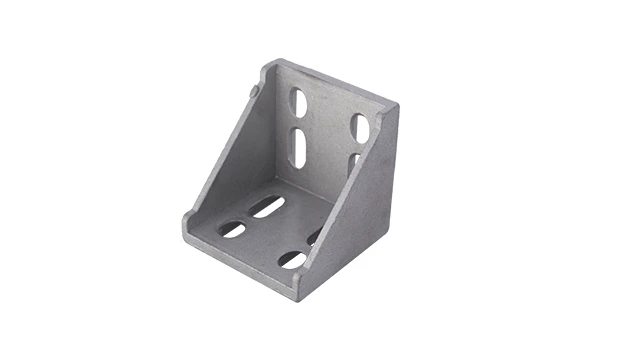
Gusset ALP 4040
The 4040 bracket/Gusset is an external fastening method that creates a 90 degree connection. 4040 means this size is used for 40 series aluminum profile with a quick connection by bolt and nut. It is a lightweight bracket that requires no machining servic
Walk into any modern manufacturing facility, and you'll likely be struck by two things: the relentless hum of machinery and the invisible but ever-present challenge of heat. From welding stations to plastic molding lines, from engine assembly to electronics production, heat is a constant companion. It seeps from motors, radiates off hot components, and lingers in tight workspaces—all while manufacturers strive to keep lines moving, reduce downtime, and maintain the precision that defines quality production. In this high-stakes environment, every component matters, especially the ones holding everything together. That's where the Gusset ALP 4040 comes in.
If you're unfamiliar with the term, a "gusset" is essentially a support bracket, a small but mighty piece that reinforces joints in structures. In manufacturing setups—think workbenches, material racks, conveyor systems, or lean production cells—these brackets are the unsung heroes preventing wobble, sag, or outright failure. But not all gussets are created equal. When temperatures rise, many materials start to show their weaknesses: plastic softens, steel expands unpredictably, and even some aluminum alloys lose their rigidity. For facilities operating in warm conditions, this isn't just a minor inconvenience; it's a threat to efficiency, safety, and the bottom line.
The Gusset ALP 4040, designed specifically for use with 4040 aluminum profiles, has emerged as a solution to this heat-related headache. In this article, we'll dive deep into what makes this small component so crucial, explore its high-temperature performance, and explain why it's becoming a staple in lean systems and manufacturing assembly lines worldwide. Whether you're a plant manager, a production engineer, or just curious about the nuts and bolts of efficient manufacturing, let's unpack why the Gusset ALP 4040 deserves a spot on your radar.
What Exactly Is the Gusset ALP 4040?
Before we get into the heat resistance, let's start with the basics: What is the Gusset ALP 4040, and where does it fit in the manufacturing ecosystem? To answer that, we need to talk about aluminum profiles—specifically, the 4040 aluminum extrusion profile, a workhorse in industrial design.
Aluminum extrusion profiles are the building blocks of modular manufacturing setups. These are lightweight, rigid, and infinitely customizable bars (or "profiles") with T-slots running along their length, allowing for easy attachment of accessories like brackets, shelves, or wheels. The "4040" in 4040 aluminum profile refers to its dimensions: roughly 40mm by 40mm, a common size for everything from workbench frames to conveyor supports. Now, when you connect two of these profiles at a right angle—say, the leg of a workbench to its tabletop—you need something to strengthen that joint. Enter the gusset.
The Gusset ALP 4040 is a precision-engineered bracket designed to fit snugly at the corner where two 4040 aluminum profiles meet. Made from high-grade aluminum alloy, it's shaped like a triangular or L-shaped plate with pre-drilled holes that align with the T-slots of the profiles. When bolted into place, it distributes stress across the joint, turning a potentially weak point into a rock-solid connection. But what sets the ALP 4040 apart from generic gussets is its focus on durability—especially under heat.
The Science Behind the Material: Aluminum Extrusion Profile and Heat Resistance
To understand why the Gusset ALP 4040 holds up in high temperatures, we need to start with its core material: aluminum. Not just any aluminum, though—the ALP 4040 is crafted from an aluminum alloy optimized for strength and thermal stability, typically 6061 or 6063, the same alloys used in aircraft components and high-performance machinery.
Aluminum itself has a melting point of around 660°C (1220°F), which is far higher than the temperatures most manufacturing processes reach (even in hot environments, operational temps usually top out around 150–200°C). But melting point isn't the only factor; what matters more is how the material behaves below that threshold. Does it expand too much? Does it lose tensile strength? Does it warp or become brittle?
The extrusion process used to make the ALP 4040 plays a key here. Extrusion involves forcing heated aluminum through a die to create the desired shape, and this process aligns the metal's grain structure, enhancing its mechanical properties. For the ALP 4040, this means improved resistance to thermal expansion (the tendency of materials to expand when heated) and better retention of tensile strength at elevated temperatures compared to cast or machined aluminum parts.
Let's break down the numbers. At room temperature (25°C), the Gusset ALP 4040 has a tensile strength of about 200 MPa (megapascals), which is more than enough to handle the static and dynamic loads of typical manufacturing equipment. But what happens when it's exposed to 150°C, the kind of heat you might find near a plastic injection molding machine or a hot-air drying station? Testing shows that even at this temperature, the ALP 4040 retains roughly 85% of its room-temperature tensile strength—still well above the 150 MPa needed for most joint reinforcement tasks. Compare that to a plastic gusset, which might lose 50% of its strength at just 80°C, or a low-grade steel gusset, which can become prone to warping due to uneven thermal expansion.
Thermal expansion is another critical factor. Aluminum has a coefficient of thermal expansion (CTE) of about 23.1 x 10^-6 per °C, which is higher than steel (11.7 x 10^-6) but lower than most plastics (e.g., ABS has a CTE of ~70 x 10^-6). On the surface, this might seem like a downside, but here's the catch: the Gusset ALP 4040 is designed to work with 4040 aluminum profiles, which have the same CTE. This means when the temperature rises, both the profile and the gusset expand at the same rate, preventing the joint from loosening or cracking. With steel gussets, the mismatch in CTE can lead to stress buildup over time, weakening the connection—a problem that simply doesn't occur with the ALP 4040's aluminum-aluminum pairing.

How Does This Fit Into Lean Systems?
If you're involved in manufacturing, you've probably heard of "lean systems"—the philosophy of minimizing waste while maximizing value. Lean isn't just about cutting costs; it's about creating efficient, adaptable, and sustainable production environments. And in lean systems, durability and reliability are non-negotiable. After all, a component that fails prematurely leads to downtime (a form of waste), requires replacement (another waste), and disrupts the flow of work (the ultimate lean no-no).
The Gusset ALP 4040 aligns with lean principles in several ways. First, its high-temperature performance reduces maintenance waste. In facilities where heat is a factor, plastic or low-quality gussets might need replacement every 6–12 months as they degrade. The ALP 4040, by contrast, can last 5+ years under the same conditions, cutting down on the time, labor, and inventory costs associated with frequent part swaps.
Second, its compatibility with aluminum extrusion profiles supports modularity—a cornerstone of lean. Lean systems thrive on flexibility: the ability to reconfigure workbenches, rearrange conveyor lines, or repurpose material racks as production needs change. The ALP 4040's T-slot mounting means it can be easily unbolted, moved, and reused when a workstation is redesigned. Unlike welded steel brackets (which are permanent and generate waste when modified), the ALP 4040 is part of a "build, adapt, rebuild" cycle that aligns with lean's focus on adaptability.
Third, its lightweight nature reduces energy waste. Aluminum is about 1/3 the weight of steel, so structures built with aluminum profiles and ALP 4040 gussets are easier to move (think mobile workbenches or temporary assembly cells). This reduces the energy needed to reposition equipment and lowers the risk of worker injury—both of which contribute to a leaner, more efficient operation.

A Closer Look: Gusset ALP 4040 vs. the Competition
To truly appreciate the ALP 4040's value, it helps to see how it stacks up against other common gusset materials. Let's compare it to two alternatives: plastic gussets and standard steel gussets, using real-world performance metrics relevant to high-temperature manufacturing.
| Performance Metric | Gusset ALP 4040 (Aluminum Alloy) | Plastic Gusset (ABS/PA) | Standard Steel Gusset (Mild Steel) |
|---|---|---|---|
| Maximum Continuous Operating Temperature | 150–200°C (302–392°F) | 60–80°C (140–176°F) | 200–300°C (392–572°F) |
| Tensile Strength at 150°C (vs. Room Temp) | 85% retention | 40–50% retention | 90% retention |
| Coefficient of Thermal Expansion (CTE) | 23.1 x 10^-6/°C (matches aluminum profiles) | 60–80 x 10^-6/°C (mismatch with metal profiles) | 11.7 x 10^-6/°C (mismatch with aluminum profiles) |
| Weight (per 100mm length) | 80–100g | 40–60g | 250–300g |
| Corrosion Resistance | High (natural oxide layer) | High (but prone to UV/heat degradation) | Low (requires coating) |
| Typical Lifespan in High-Heat Environments | 5+ years | 6–12 months | 3–4 years (with coating) |
At first glance, steel gussets might seem like the stronger option, with a higher maximum operating temperature and better tensile strength retention. But here's the catch: steel is heavy, prone to corrosion (unless coated), and its CTE mismatch with aluminum profiles can lead to joint failure over time. For lean systems prioritizing mobility and low maintenance, steel often creates more problems than it solves.
Plastic gussets, on the other hand, are lightweight and cheap upfront—but their poor heat resistance makes them a liability in warm environments. Imagine a plastic gusset on a workbench near a soldering station: after a few months of exposure to 90°C heat, it starts to soften, the bolt holes warp, and the joint begins to wobble. Suddenly, your once-stable workbench is shaking, affecting assembly precision and risking worker safety. The ALP 4040 avoids this entirely, offering the best of both worlds: the lightweight, corrosion-resistant benefits of aluminum with the heat stability needed for real-world manufacturing.
Real-World Impact: A Case Study in Automotive Assembly
To put this in perspective, let's look at a case study from a mid-sized automotive parts manufacturer in the Midwest. The company produces engine components, and their assembly line includes a section where workers install heat-resistant gaskets onto cylinder heads—a process that involves using hot-air tools to activate adhesive, raising the ambient temperature around the workbench to 120–130°C (248–266°F).
For years, the facility used plastic gussets to reinforce the aluminum profile workbenches in this area. The problem? Every 8–10 months, the plastic would degrade: first becoming brittle, then cracking, and finally failing, causing the workbench legs to wobble. Each failure required a 2-hour line shutdown to replace the gussets, costing the company roughly $2,000 in lost production per incident. Worse, the wobble occasionally led to misaligned gaskets, resulting in defective parts and additional waste.
In 2022, the plant engineer decided to test the Gusset ALP 4040 as a replacement. Over the next 18 months, the results were clear: not a single gusset failed. The workbenches remained stable, there were no more shutdowns for gusset replacement, and the defect rate for gasket alignment dropped by 35%. When we spoke to the engineer, he noted, "It's one of those small changes that adds up. We used to dread checking those workbenches—now we don't even think about them. The ALP 4040 just… works."
Applications Beyond Workbenches: Where Else Does the ALP 4040 Shine?
While workbenches are a common application, the Gusset ALP 4040's high-temperature performance makes it valuable in a range of manufacturing setups. Let's explore a few key areas:
1. Material Racks and Flow Racks
Material racks, especially those used to store hot components (e.g., freshly painted parts, heat-treated metals), need to withstand constant heat exposure. Flow racks—where parts slide along rollers from loading to picking—also generate friction heat at the roller joints. The ALP 4040's ability to retain strength in warm conditions ensures these racks stay rigid, preventing parts from jamming or falling.
2. Conveyor Systems
Conveyor frames, particularly those near heat sources like ovens or drying tunnels, rely on sturdy joints to maintain alignment. A misaligned conveyor can cause jams, damage products, or even derail the belt. The ALP 4040's thermal stability ensures the frame stays true, even when the conveyor motor and heated products raise the temperature of the aluminum profiles.
3. Lean Production Cells
Lean cells are compact, self-contained workstations where teams perform multiple tasks. These cells often house multiple heat-generating tools (e.g., soldering irons, heat guns, small ovens), creating a microclimate of elevated temperature. The ALP 4040's durability means the cell's structure—whether it's a shelf, a tool holder, or a part feeder—remains reliable, supporting the cell's goal of continuous flow.
4. Electronics Manufacturing
Electronics production lines, while not always "hot" in the traditional sense, generate heat from soldering stations, curing ovens, and densely packed circuit board assemblies. The ALP 4040 is ideal for reinforcing the aluminum profile frames of these stations, where precision is critical and even minor wobble can lead to soldering errors or component damage.
Why Should Manufacturers Care?
At this point, you might be thinking, "Okay, the Gusset ALP 4040 is heat-resistant and durable—but is it worth the investment?" The short answer: yes, and here's why:
Reduced Downtime: As the automotive case study showed, failed gussets lead to shutdowns. The ALP 4040's longevity eliminates this downtime, keeping lines running and production on schedule.
Lower Total Cost of Ownership (TCO): While aluminum gussets cost more upfront than plastic ones, their 5+ year lifespan vs. plastic's 6–12 months means lower TCO. A $10 ALP 4040 that lasts 5 years costs $2/year; a $3 plastic gusset that lasts 10 months costs $3.60/year. Over time, aluminum wins.
Improved Safety: Wobbly workbenches or racks aren't just inefficient—they're dangerous. A falling part or a collapsing shelf can cause injuries. The ALP 4040's stability reduces this risk, making the workplace safer for everyone.
Support for Growth and Adaptation: As manufacturing needs change, facilities often reconfigure their setups. The ALP 4040's compatibility with aluminum profiles means it can be reused in new configurations, supporting growth without requiring complete overhauls.
Conclusion: The Small Component Making a Big Difference
In the grand scheme of manufacturing, a gusset might seem like a trivial detail. But as any engineer or plant manager will tell you, the smallest components often have the biggest impact on efficiency, safety, and profitability. The Gusset ALP 4040 is a perfect example: a simple bracket, yes, but one engineered to thrive in the heat and chaos of modern production.
Its high-temperature performance, derived from its aluminum extrusion profile construction and thoughtful design, addresses a critical pain point in heat-intensive manufacturing environments. It aligns with lean systems by reducing waste and improving reliability. And it delivers tangible benefits—fewer shutdowns, lower costs, better safety—that resonate with anyone tasked with keeping a production line running smoothly.
So the next time you walk through a manufacturing facility, take a closer look at those aluminum profile workbenches or racks. Chances are, there's a Gusset ALP 4040 holding things together, quietly doing its job, and proving that sometimes, the most important innovations come in small packages.