- Company Articles
- Products and Technology
- Product knowledge
- High-Temperature Resistance: Aluminum Honeycomb Panels for Engine Component Manufacturing

High-Temperature Resistance: Aluminum Honeycomb Panels for Engine Component Manufacturing
Related Product
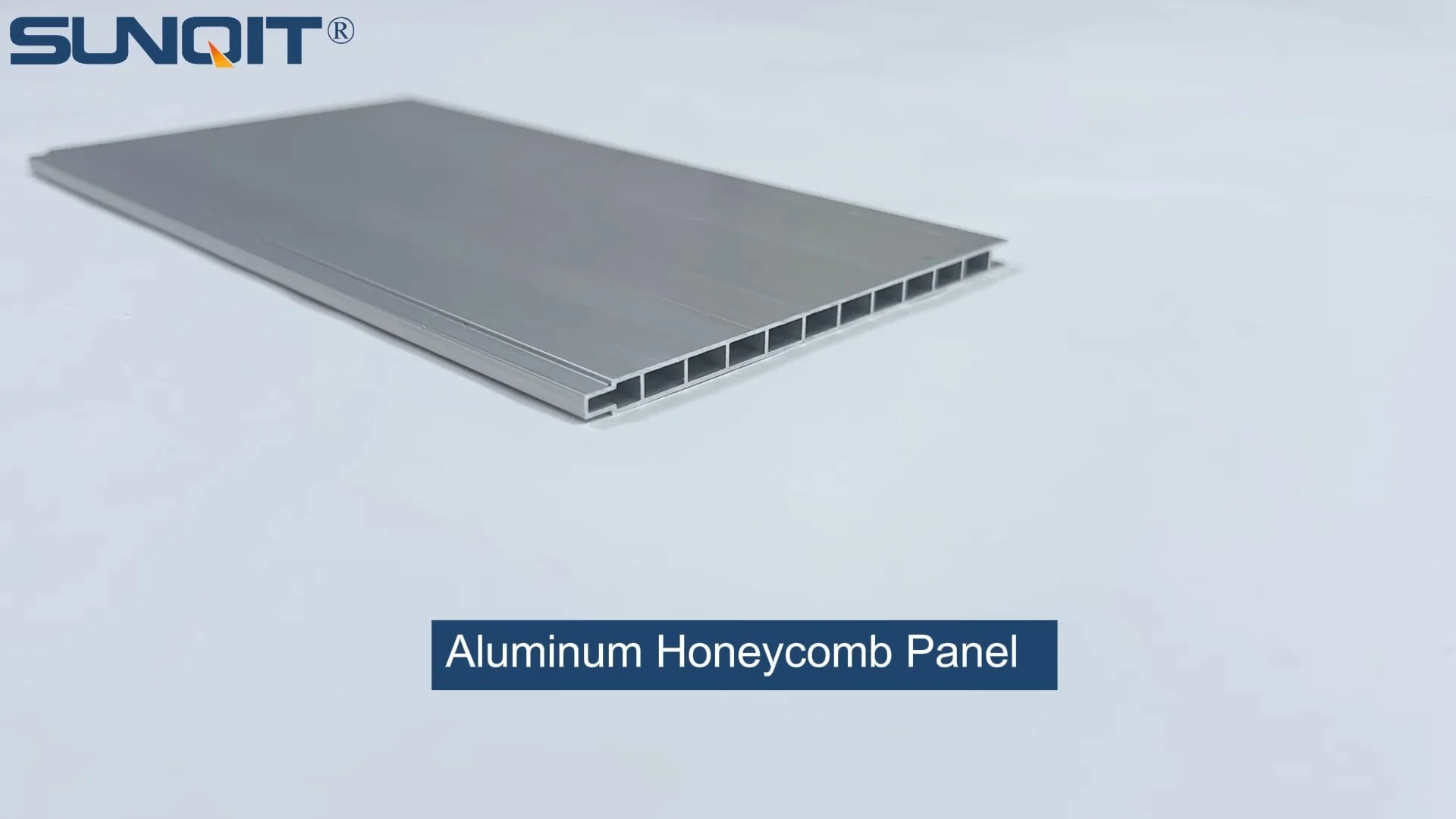
Aluminum Honeycomb Panel
Aluminum honeycomb panel used as table top, side wall, it is connected one pcs by one pcs from the side slot to make a full pieces.This panel width 105mm, 55mm, 35mm are optional for slection.
The Heat is On – Engine Manufacturing's Toughest Challenge
Walk into any automotive or aerospace manufacturing plant, and you'll quickly realize that engines are the beating hearts of the operation. But what you might not see is the invisible battle happening inside those engines: a relentless fight against extreme heat. Modern engines, whether for cars, planes, or industrial machinery, generate temperatures that can climb well above 1,000°C in their combustion chambers. Pistons, cylinder heads, heat shields, and exhaust components don't just "work" in these conditions—they endure a daily onslaught of thermal stress, expansion, and contraction. For manufacturers, choosing materials that can stand up to this heat isn't just a matter of performance; it's a question of safety, reliability, and long-term efficiency.
Think about it: if a critical engine component fails under high heat, the consequences can be catastrophic. A cracked heat shield might lead to heat damage to nearby wiring, a warped exhaust manifold could reduce fuel efficiency, and a compromised cylinder head gasket could result in engine failure. That's why material science has become such a cornerstone of engine innovation. Engineers aren't just looking for "strong" materials—they need materials that are strong and lightweight, durable and heat-resistant, and cost-effective and easy to manufacture. It's a tall order, and for decades, the industry has relied on heavy metals like steel or expensive composites like carbon fiber. But in recent years, a new contender has emerged: aluminum honeycomb panels. These unassuming structures, made from layers of aluminum and a honeycomb core, are quietly revolutionizing how we build engine components—starting with their ability to laugh in the face of extreme heat.
Why High-Temperature Resistance Can't Be Compromised
Let's get one thing straight: when it comes to engine components, "high-temperature resistance" isn't a nice-to-have feature—it's non-negotiable. Here's why: first, heat degrades materials. Over time, exposure to extreme temperatures can cause metals to lose strength, plastics to melt, and composites to delaminate. For an engine that's expected to last 100,000 miles or more, material degradation isn't just a maintenance issue; it's a safety risk. Second, heat affects performance. An engine's efficiency depends on how well it manages heat—too much heat in the wrong places, and fuel combustion becomes less efficient, power output drops, and emissions rise. Third, modern engines are getting smaller and more powerful. Turbocharging, direct injection, and hybrid technology mean even compact engines now generate more heat than ever before. To keep up, materials need to evolve.
Consider the example of exhaust heat shields. These components sit just inches away from exhaust manifolds, where temperatures can reach 800°C. A traditional steel heat shield might handle this for a while, but over time, it can rust, warp, or develop hot spots. Replacing it isn't cheap, and a failing shield can expose sensitive parts (like fuel lines or electrical wiring) to dangerous heat. What if there was a material that could handle those 800°C temperatures without rusting, without warping, and without adding extra weight? That's where aluminum honeycomb panels come into play. Their unique structure and aluminum composition make them inherently resistant to heat, but it's not just about withstanding high temps—it's about maintaining performance while doing so.

Enter Aluminum Honeycomb Panels: A Material Revolution
At first glance, aluminum honeycomb panels might look like nothing special—just thin sheets of aluminum with a hexagonal pattern sandwiched in between. But that "sandwich" is where the magic happens. The panels consist of three layers: two thin, rigid aluminum skins (often made from high-grade aluminum extrusion profiles) and a lightweight honeycomb core, usually made from aluminum foil or paper coated in resin. When bonded together under heat and pressure, these layers create a structure that's surprisingly strong, incredibly light, and—crucially—excellent at handling heat.
The honeycomb core is the star here. Its hexagonal cells distribute weight and stress evenly across the panel, giving it a strength-to-weight ratio that outperforms solid aluminum, steel, and even some carbon fiber composites. But when it comes to heat resistance, the core's design shines in another way: those tiny cells trap air, creating a natural barrier to heat transfer. Think of it like a thermos—air pockets slow down the movement of heat, keeping the panel's surface cooler even when one side is exposed to extreme temperatures. Combine that with aluminum's inherent ability to dissipate heat (it conducts heat 3x better than steel), and you've got a material that doesn't just resist heat—it manages it.
But the real beauty of aluminum honeycomb panels lies in their versatility. Unlike solid metal sheets, which are heavy and hard to shape, honeycomb panels can be cut, bent, and formed into almost any shape needed for engine components. Need a curved heat shield for a tight engine bay? No problem. Want a lightweight structural panel for an aircraft engine mount? Done. And because the outer skins are made from aluminum extrusion profiles—precision-engineered pieces created by pushing heated aluminum through dies—manufacturers can ensure consistent thickness, strength, and heat resistance across every panel. It's this combination of performance and flexibility that's making aluminum honeycomb panels a go-to choice for forward-thinking engine builders.

The Science Behind the Heat Resistance
Let's dive a bit deeper into why aluminum honeycomb panels excel in high-temperature environments. It starts with the aluminum itself. Pure aluminum melts at 660°C, but when alloyed with elements like magnesium, silicon, or copper, its melting point rises, and its strength increases. Most aluminum extrusion profiles used in honeycomb panels are made from 5000-series or 6000-series alloys—these alloys are known for their excellent thermal stability and resistance to corrosion, two key traits for engine components.
Then there's the honeycomb core's role in thermal management. When heat hits one side of the panel, the aluminum skin absorbs it and conducts it away from the heat source. The honeycomb core, with its air-filled cells, acts as an insulator, slowing the heat's progress to the other side. This "thermal break" is critical for components like engine covers, where the goal is to keep heat inside the engine bay (to speed up warm-up) or outside (to protect nearby parts). In tests, aluminum honeycomb panels have been shown to reduce heat transfer by up to 40% compared to solid aluminum sheets of the same thickness—meaning cooler surfaces, less energy loss, and longer component life.
Another factor is thermal expansion. All materials expand when heated, but aluminum honeycomb panels do so uniformly. The honeycomb core's flexibility allows the panel to expand and contract without warping or cracking, even under rapid temperature changes (like when an engine starts cold and quickly heats up). This is a huge advantage over rigid materials like steel, which can develop stress cracks if they can't expand freely. For engine components that cycle between hot and cold dozens of times a day, this resistance to thermal fatigue is a game-changer.
Beyond Heat: Strength, Lightweight, and More
While heat resistance is the headline feature, aluminum honeycomb panels bring a lot more to the table. Let's start with weight. A typical aluminum honeycomb panel weighs 30-60% less than a solid aluminum sheet of the same size and strength. For automotive engines, every pound saved translates to better fuel efficiency; for aircraft engines, it means lower emissions and longer range. Imagine replacing a 10kg steel heat shield with a 4kg aluminum honeycomb version—over the life of a vehicle, that weight reduction adds up to significant savings in fuel costs and carbon emissions.
Then there's strength. Don't let the lightweight fool you: aluminum honeycomb panels are surprisingly tough. The honeycomb core distributes impact forces across the entire panel, making it resistant to dents, cracks, and bending. In fact, in compression tests, honeycomb panels often outperform solid aluminum, especially in terms of stiffness. For structural components like engine mounts or gearbox covers, this combination of light weight and high strength is invaluable. It reduces the load on the engine itself, allowing it to run more efficiently, and makes installation easier for factory workers (no more struggling with heavy steel parts).
Corrosion resistance is another win. Aluminum naturally forms a thin oxide layer that protects it from rust, even in humid or chemical-rich environments (like engine bays, where oil, fuel, and coolants are present). Unlike steel, which needs to be painted or coated to prevent corrosion, aluminum honeycomb panels require minimal maintenance. This is a big plus for manufacturers, who can reduce production time and costs by skipping expensive finishing steps.
Crafting Excellence: How Aluminum Extrusion Profiles and Accessories Elevate Quality
A high-performance aluminum honeycomb panel is only as good as its components, and that starts with the aluminum extrusion profiles used for the outer skins. Extrusion is a process where raw aluminum billets are heated to 500-600°C, then pushed through a die to create long, uniform shapes. For honeycomb panels, the dies are designed to produce thin, flat sheets with precise thickness tolerances—often as little as ±0.05mm. This precision ensures that the skins bond evenly to the honeycomb core, creating a panel with consistent strength and heat resistance.
But extrusion profiles alone aren't enough. To turn these profiles into functional engine components, manufacturers rely on aluminum profile accessories like connectors, brackets, and fasteners. These small but critical parts ensure that honeycomb panels can be securely attached to engines, mounted in tight spaces, and integrated with other components. For example, a heat shield might use aluminum angle brackets to bolt to the engine block, or a structural panel could use T-slot nuts (a common aluminum profile accessory) to attach wiring harnesses. Without high-quality accessories, even the best honeycomb panel would fail in real-world use—loose connections, weak mounts, or misaligned parts can compromise heat resistance and structural integrity.
This is why choosing the right supplier matters. Reputable suppliers don't just provide extrusion profiles and accessories—they offer engineering support, helping manufacturers design panels that meet their specific heat, strength, and weight requirements. They also ensure consistent quality control, testing each batch of profiles for alloy composition, thickness, and thermal stability. For engine manufacturers, partnering with a supplier that understands both the science of aluminum and the demands of high-temperature environments is key to unlocking the full potential of honeycomb panels.
Comparing the Contenders: A Closer Look at Material Performance
| Material | Max Operating Temperature (°C) | Weight (kg/m²) | Tensile Strength (MPa) | Cost (Relative to Aluminum Honeycomb) | Durability in Cyclic Heat |
|---|---|---|---|---|---|
| Aluminum Honeycomb Panel | 400-600 (alloy-dependent) | 4-8 | 150-200 | 1x (Baseline) | Excellent (resists warping/cracking) |
| Solid Aluminum Sheet (3mm) | 300-400 | 8-10 | 100-150 | 0.8x | Good (prone to thermal stress over time) |
| Carbon Steel Sheet (3mm) | 500-600 | 25 | 300-400 | 0.5x | Poor (rusts, warps in cyclic heat) |
| Carbon Fiber Composite | 200-300 (resin-limited) | 3-5 | 300-400 | 3x | Very Poor (resin degrades in heat) |
The table above tells a clear story: aluminum honeycomb panels strike the perfect balance between heat resistance, weight, strength, and cost. While carbon steel can handle high temps, it's far too heavy. Carbon fiber is light but fails in heat. Solid aluminum is cheaper but lacks the honeycomb's thermal stability and weight savings. For engine components that need to perform in extreme conditions without breaking the bank, aluminum honeycomb panels are the clear front-runner.
Real-World Applications: Where Aluminum Honeycomb Panels Shine in Engines
Let's take a look at how aluminum honeycomb panels are being used in engine manufacturing today. One of the most common applications is heat shields. From automotive exhaust systems to aircraft engine nacelles, honeycomb heat shields are replacing steel and solid aluminum because they're lighter, cooler to the touch, and longer-lasting. For example, a major European automaker recently switched to aluminum honeycomb heat shields for its hybrid vehicles. The result? A 45% weight reduction, a 30% drop in underhood temperatures, and a 5% improvement in battery life (since cooler batteries perform better).
Another growing application is engine covers. Modern engines are often covered with plastic or composite panels to reduce noise and improve aesthetics, but these materials can melt or warp near hot components. Aluminum honeycomb panels, with their heat resistance and lightweight, are the perfect upgrade. They block noise (thanks to the honeycomb core's sound-dampening properties) and stand up to engine bay heat, all while adding minimal weight. Luxury car brands are especially fond of this use case, as it aligns with their focus on performance, comfort, and innovation.
Aerospace is another big adopter. Aircraft engine manufacturers use aluminum honeycomb panels for structural components like fan cowls and turbine blade shrouds. These parts need to be lightweight to reduce fuel burn, strong to withstand flight stresses, and heat-resistant to handle the high temps of jet exhaust. Honeycomb panels deliver on all three counts. In fact, some military aircraft now use honeycomb panels in their engine firewalls, where they act as both a structural barrier and a heat shield, protecting the cockpit from engine fires.
Even industrial machinery isn't left out. Large diesel engines used in construction equipment or generators generate massive amounts of heat, and their components need to be rugged enough to handle vibration, dust, and constant use. Aluminum honeycomb panels are being used here for oil cooler brackets, exhaust manifolds, and even fuel tank guards—proving that their benefits extend far beyond automotive and aerospace.
Case Study: How Delta Motors Boosted Efficiency with Aluminum Honeycomb Panels
To see the impact of aluminum honeycomb panels firsthand, let's look at Delta Motors, a mid-sized automotive manufacturer specializing in hybrid and electric vehicles. A few years ago, Delta was struggling with a common problem: their hybrid engine's heat shield was too heavy. Made from 2mm steel, it weighed 8.5kg and was prone to rusting in humid climates. Worse, the steel shield retained heat, causing the engine to take longer to cool down after use—a problem that reduced battery life in their hybrid models.
Delta's engineering team began searching for alternatives. They tested solid aluminum (lighter but still 5.2kg), carbon fiber (light at 3kg but too expensive), and finally aluminum honeycomb panels. Working with a supplier that specialized in aluminum extrusion profiles and accessories, they designed a custom honeycomb shield with 0.8mm aluminum skins and a 10mm honeycomb core. The result? A shield that weighed just 3.2kg—62% lighter than steel—and was 40% lighter than solid aluminum.
But the benefits didn't stop at weight. In road tests, the honeycomb shield reduced underhood temperatures by an average of 15°C, allowing the engine to cool down 20% faster. This translated to a 3% improvement in battery life for Delta's hybrid models—a significant gain in the competitive EV market. Plus, the aluminum shield was rust-resistant, meaning fewer warranty claims and happier customers. Delta estimates that over the life of a vehicle, the honeycomb shield saves about $120 in fuel costs (for hybrids) and $80 in maintenance (due to reduced rust and wear). For a company producing 50,000 vehicles a year, that's a savings of $10 million annually.
Today, Delta uses aluminum honeycomb panels in all their hybrid and EV models, and they're exploring applications in their gasoline engines too. "It's not just a material upgrade," says Maria Lopez, Delta's lead materials engineer. "It's a paradigm shift. We're now designing engines around the capabilities of honeycomb panels, not the other way around. And our customers are noticing the difference—in performance, in efficiency, and in reliability."
Future Trends: Innovations in Aluminum Honeycomb Technology
As impressive as today's aluminum honeycomb panels are, the future looks even brighter. Researchers and manufacturers are constantly finding ways to boost their performance, starting with the honeycomb core. New designs, like hexagonal cells with variable wall thickness, are being tested to improve heat dissipation and impact resistance. Some companies are even experimenting with "gradient cores," where the cell size changes across the panel to optimize strength in high-stress areas and insulation in high-heat areas.
Surface treatments are another area of innovation. While aluminum naturally resists corrosion, new coatings—like ceramic or thermal barrier coatings—can push its heat resistance even higher. Imagine a honeycomb panel that can handle 800°C instead of 600°C—that would open up applications in jet engine combustion chambers or industrial furnace liners. These coatings are also being designed to reflect heat, reducing the amount that's absorbed by the panel in the first place.
Integration with smart materials is on the horizon too. Some prototypes include thin, flexible sensors embedded in the honeycomb core to monitor temperature, stress, and vibration in real time. For engine components, this could mean predictive maintenance—alerting mechanics to potential issues before they become failures. Imagine an aircraft engine's honeycomb fan cowl sending data to the cockpit, letting the pilot know if a section is overheating or developing a stress crack. It's a step toward "self-aware" engines that can adapt and communicate, improving safety and reducing downtime.
Finally, sustainability is driving change. Manufacturers are developing honeycomb panels using recycled aluminum, reducing the environmental impact of production. Some are even exploring bio-based resins for the honeycomb core, making the panels fully recyclable at the end of their life. As the world moves toward greener manufacturing, aluminum honeycomb panels are poised to lead the way—proving that high performance and sustainability can go hand in hand.
Choosing the Right Partner: Why Quality Aluminum Profile Accessories Matter
If you're convinced that aluminum honeycomb panels are the future of engine components, the next step is finding the right supplier. Not all honeycomb panels are created equal, and much of their performance depends on the quality of the aluminum extrusion profiles and accessories used in their construction. Here's what to look for:
Expertise in Extrusion: A good supplier should have deep experience in aluminum extrusion, with state-of-the-art facilities to produce precise, consistent profiles. Ask about their alloy selection—do they use high-temperature alloys like 5052 or 6061? Can they customize profiles to your specific thickness or shape requirements?
Accessories That Match: Aluminum profile accessories might seem small, but they're critical. Look for suppliers that offer a wide range of brackets, connectors, and fasteners designed to work seamlessly with their extrusion profiles. Poorly made accessories can weaken the panel's structure or create heat points—defeating the purpose of using honeycomb in the first place.
Testing and Certification: Reputable suppliers test their panels for heat resistance, strength, and durability. Ask for certifications like ISO 9001 (quality management) or ASTM E119 (fire and heat resistance). If you're in aerospace, look for AS9100 certification, which ensures compliance with strict aviation standards.
Collaborative Design Support: The best suppliers don't just sell panels—they partner with you to design them. Whether you need help optimizing a heat shield's shape or selecting the right core density, a supplier with in-house engineers can save you time, money, and headaches down the line.
Remember, your honeycomb panel is only as strong as its weakest link. By choosing a supplier that prioritizes quality in both extrusion profiles and accessories, you're ensuring that your engine components will perform reliably, even in the hottest, toughest conditions.
Conclusion: The Heat-Proof Future of Engine Manufacturing
Engine manufacturing is at a crossroads. As engines become more powerful, more efficient, and more compact, the materials that build them need to evolve. Aluminum honeycomb panels represent that evolution—a perfect blend of heat resistance, strength, lightweight, and versatility that's changing the game for heat shields, structural components, and beyond.
From reducing vehicle weight and improving fuel efficiency to enhancing safety and lowering maintenance costs, the benefits of aluminum honeycomb panels are clear. And with ongoing innovations in core design, surface treatments, and smart integration, their potential is only growing. As companies like Delta Motors have shown, making the switch to honeycomb panels isn't just a technical upgrade—it's a strategic move that can drive competitiveness, customer satisfaction, and long-term success.
So the next time you start your car, fly in a plane, or operate a piece of industrial machinery, take a moment to appreciate the materials working behind the scenes. Chances are, there's an aluminum honeycomb panel in there—quietly withstanding the heat, keeping things running smoothly, and proving that when it comes to engine manufacturing, the future is lightweight, strong, and heat-proof.