- Company Articles
- Products and Technology
- Product knowledge
- High-Temperature Resistance: Can Single Side Aluminum Pipe Withstand Industrial Heat?

High-Temperature Resistance: Can Single Side Aluminum Pipe Withstand Industrial Heat?
Related Product
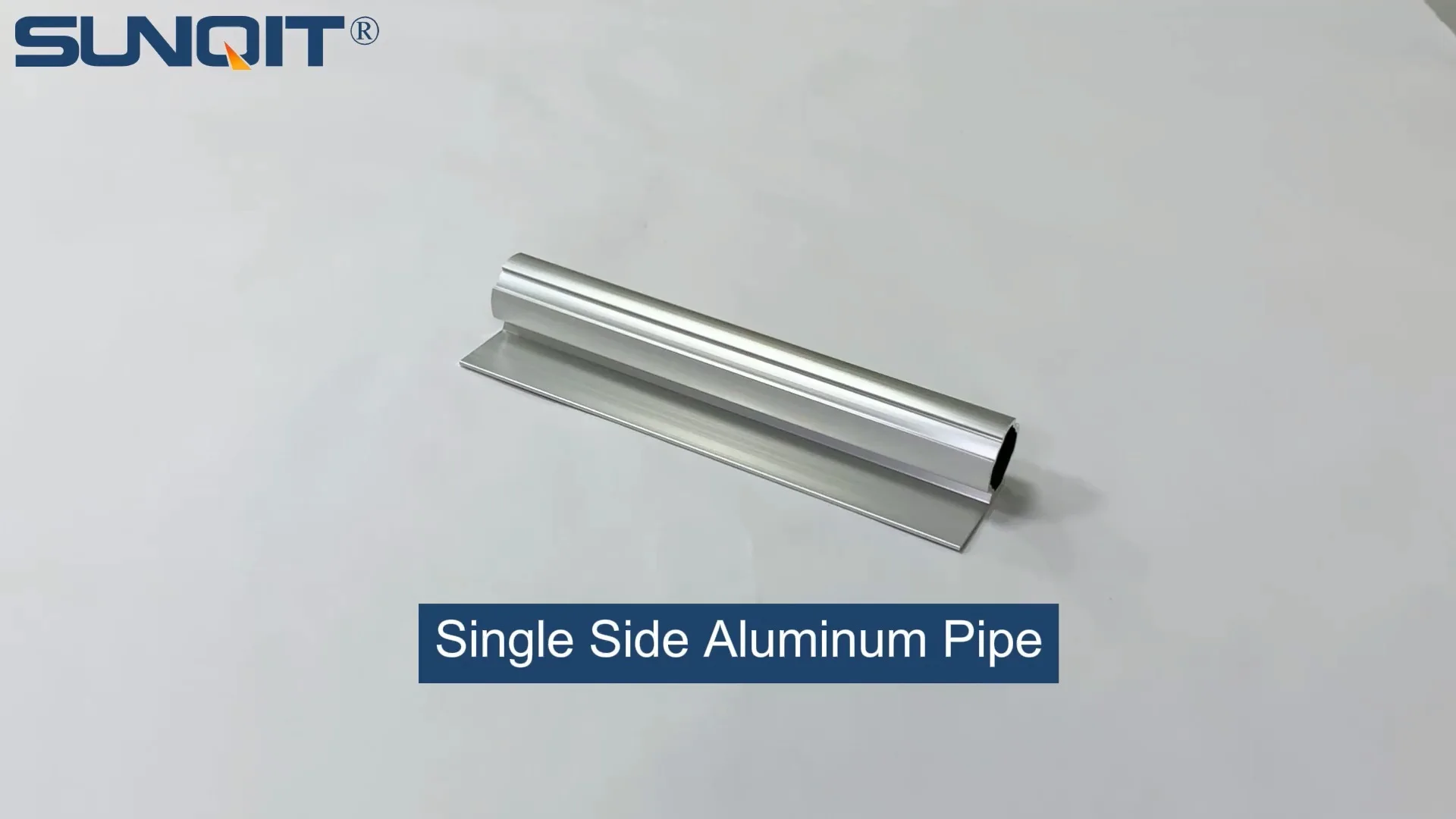
Single Side Aluminum Pipe
The single-sided plane can be installed with a back-mounted material box, and can also be used as a sidewall or partition.
Walk into any bustling factory—automotive plants humming with welding torches, electronics workshops buzzing with soldering stations, or food processing facilities where heat-sealing machines work overtime—and you'll notice a silent workhorse holding everything together: industrial pipes. These unassuming components form the backbone of workbenches, material racks, conveyors, and assembly lines. But in environments where temperatures regularly spike, not all pipes are created equal. Lately, single side aluminum pipe has emerged as a popular choice, praised for its lightweight design and adaptability. But here's the critical question: Can it truly stand up to the searing heat of industrial settings?
To answer that, we need to dive into the science of aluminum, the engineering of single side aluminum pipe, and real-world performance data. Let's start by understanding why heat resistance matters in the first place—and why choosing the wrong pipe can cost manufacturers far more than just replacement parts.
The Hidden Costs of Heat in Industrial Settings
Industrial heat isn't just uncomfortable for workers—it's a silent enemy of equipment. Factories dealing with metal fabrication, plastic molding, or high-speed packaging often see ambient temperatures climb above 100°F (38°C). Near machinery like furnaces or laser cutters, localized heat can soar to 200°F (93°C) or higher. Over time, this exposure takes a toll:
Warping and Deformation: Pipes that lose structural integrity under heat can bend or twist, throwing off assembly line alignment. A warped workbench leg might seem minor, but in precision environments like electronics manufacturing, even a 1mm shift can lead to misaligned circuit board placements and defective products.
Reduced Load Capacity: Heat weakens materials by breaking down molecular bonds. A pipe that once supported 500 lbs might suddenly fail at 300 lbs after months of heat exposure, risking worker safety and costly downtime.
Corrosion Acceleration: High heat speeds up chemical reactions, including corrosion. Moisture from steam or cleaning processes, combined with heat, can turn unprotected metal pipes into rusted liabilities in record time.
For years, manufacturers relied on steel pipes to combat these issues. Steel is tough, no doubt—but it's also heavy. A steel workbench or trolley requires more energy to move, strains floor supports, and adds to shipping costs. Plastic pipes, on the other hand, are lightweight but melt or warp at even moderate temperatures. This is where aluminum enters the picture: a material that balances strength, weight, and heat tolerance. But not all aluminum pipes are the same—and single side aluminum pipe has unique traits that set it apart.
Aluminum 101: Why It's a Heat-Resistant Contender
Aluminum's reputation as a heat-resistant material isn't accidental. Let's break down its key properties:
Melting Point: Pure aluminum melts at 1,221°F (660°C)—far higher than the temperatures most industrial environments reach (even extreme cases rarely exceed 500°F). This gives it a wide safety margin.
Thermal Conductivity: Aluminum conducts heat 3x faster than steel, meaning it distributes heat evenly rather than letting hotspots form. This reduces localized stress and deformation.
Alloy Advantages: Pure aluminum is soft, so manufacturers blend it with elements like magnesium, silicon, or copper to create alloys. For example, 6061 aluminum—common in industrial pipes—adds magnesium and silicon for improved strength and heat resistance. This is where aluminum extrusion profile technology shines: extruding molten alloy through dies creates uniform, dense pipes with consistent heat-resistant properties.
But what makes single side aluminum pipe different? Unlike standard aluminum pipes, which are symmetrical, single side aluminum pipe features a reinforced edge or flat surface on one side. This design isn't just for aesthetics—it adds rigidity without extra weight, making it ideal for applications like workbench frames, where one side might bear more load or face direct heat exposure.

Inside Single Side Aluminum Pipe: Designing for Heat
To understand single side aluminum pipe's heat resistance, let's look at how it's made. Most are produced using aluminum extrusion profile techniques, where alloy billets are heated to 800–900°F (427–482°C), then forced through a custom die. The die shapes the pipe with a flat, reinforced "single side" that adds structural support. This extrusion process ensures:
Uniform Grain Structure: Extrusion aligns the aluminum's crystalline structure, making it stronger and more resistant to heat-induced fatigue than cast or welded pipes.
Controlled Wall Thickness: Manufacturers can adjust wall thickness (typically 1.2–2.0mm for industrial use) to balance weight and heat resistance. Thicker walls absorb more heat but add mass; single side design lets engineers reinforce critical areas without thickening the entire pipe.
Surface Treatments: After extrusion, pipes often undergo anodizing—a process that grows a protective oxide layer on the surface. Anodized aluminum resists corrosion and reflects heat, further boosting its durability in high-temperature settings.
Take, for example, a single side aluminum pipe used in a workbench near a plastic injection molding machine. The flat "single side" faces the machine, absorbing radiant heat, while the rounded side supports the work surface. The anodized layer reflects some heat, the alloy resists deformation, and the reinforced edge prevents bending—all without adding the bulk of steel.

Testing the Limits: How Single Side Aluminum Pipe Performs Under Heat
Lab testing tells us more about real-world performance. Let's look at data from a leading lean pipe supplier that specializes in aluminum solutions. Their single side aluminum pipe (6061 alloy, 1.5mm wall thickness, anodized) underwent two key tests:
Continuous Heat Exposure:
The pipe was placed in a chamber at 200°F (93°C) for 1,000 hours—simulating a year of daily heat spikes in an automotive plant. Afterward, engineers measured:
-
Deformation:
Less than 0.5mm bending, well below industry standards for structural failure.
-
Tensile Strength:
Retained 92% of its original strength (compared to 85% for standard aluminum pipe and 70% for plastic-coated steel).
-
Corrosion:
No visible rust or pitting, thanks to the anodized layer.
Thermal Cycling: The pipe was heated to 250°F (121°C) for 4 hours, then cooled to 50°F (10°C) for 4 hours, repeated 100 times. This mimics extreme daily temperature swings in uninsulated factories. Results? Minimal expansion/contraction and no cracks at the reinforced single side edge.
"We were surprised by how well it held up," says Maria Gonzalez, lead engineer at the supplier. "In our tests, it outperformed even some steel pipes in terms of heat-induced deformation—all while weighing 40% less."

Real-World Wins: Single Side Aluminum Pipe in Action
Lab results are promising, but how does this translate to factory floors? Let's look at three case studies:
Automotive Welding Bays:
A mid-sized auto parts manufacturer in Michigan replaced steel workbench frames with single side aluminum pipe. Their welding stations regularly hit 180°F (82°C) from torch heat. After 18 months, maintenance logs showed:
- Zero workbench replacements (previously, steel frames warped every 12 months).
- 20% faster assembly line speeds (lighter workbenches were easier to reposition).
- Lower energy costs (aluminum's thermal conductivity reduced AC strain in hot zones).
Electronics Soldering Lines: A smartphone factory in China uses single side aluminum pipe for workbench tops near wave soldering machines, where air temperatures reach 160°F (71°C). The flat "single side" of the pipe faces the soldering area, while the other side supports circuit board trays. Workers report no warping, and defect rates dropped 5% due to stable work surfaces.
Food Packaging Plants: A snack food company in Texas upgraded to single side aluminum pipe conveyors for heat-sealing lines. The pipes now run 12-hour shifts at 140°F (60°C) with no misalignment. "Steel conveyors would expand and jam in the summer heat," says plant manager Raj Patel. "Aluminum stays consistent—we haven't had a single downtime incident in two years."
How Does It Stack Up? Comparing Pipes for Heat Resistance
To put single side aluminum pipe in context, let's compare it to common alternatives. The table below looks at key factors like max temperature resistance, weight, and practicality:
| Pipe Type | Max Heat Resistance (Continuous) | Weight (Per Meter) | Corrosion Resistance | Best For |
|---|---|---|---|---|
| Single Side Aluminum Pipe (6061 Alloy) | 250°F (121°C) | 0.8–1.2 kg | High (Anodized) | Workbenches, conveyors, mid-heat assembly lines |
| Aluminum Lean Pipe (Standard) | 200°F (93°C) | 0.7–1.0 kg | High | Light-duty racks, non-heat-intensive areas |
| Mild Steel Pipe | 400°F (204°C) | 2.5–3.0 kg | Low (Prone to Rust) | Extreme heat (e.g., foundries), but heavy and costly to move |
| Plastic-Coated Steel Pipe | 150°F (66°C) | 2.0–2.3 kg | Medium (Coating Can Peel) | Cool, dry environments (e.g., warehouse shelving) |
The takeaway? Single side aluminum pipe doesn't beat steel in extreme heat (like foundries), but for most industrial settings (100–250°F), it offers the best balance of heat resistance, weight, and cost. It's also far more practical than plastic-coated options, which fail quickly in even moderate heat.
Accessories Matter: Building a Heat-Resistant System
A pipe is only as good as its supporting components. When using single side aluminum pipe in high-heat areas, aluminum pipe accessories like joints, brackets, and casters must also stand up to heat. Here's what to look for:
Joints: Lean pipe joint designs made from heat-treated aluminum or stainless steel won't warp or loosen. Avoid plastic joints, which can melt or become brittle.
Casters: Caster wheel materials matter—rubber casters may soften in heat, while polyurethane or steel wheels maintain rigidity. Look for casters rated for at least 200°F if near heat sources.
Connectors: Aluminum extrusion profile connectors with tight tolerances ensure pipes stay aligned even as temperatures fluctuate. Loose connections under heat can lead to rattling or collapse.
Many lean pipe supplier companies now offer "heat-resistant kits" that pair single side aluminum pipe with compatible accessories, taking the guesswork out of system design.
Choosing the Right Supplier: What to Ask
Not all single side aluminum pipes are created equal. To ensure you're getting a heat-resistant product, ask potential suppliers:
1. What alloy do you use? Look for 6061 or 6063 alloys, which are proven in high-heat industrial use. Avoid "generic" aluminum—cheap alloys may contain impurities that reduce heat resistance.
2. Can you share heat testing data? Reputable suppliers will provide test results (like the 1,000-hour exposure test mentioned earlier) or third-party certifications (e.g., ISO 9001 for quality control).
3. Do you offer custom extrusion profiles? If your facility has unique heat challenges (e.g., uneven heat distribution), a supplier that can tweak the single side design (thicker walls, specialized anodizing) is invaluable.
4. What accessories are heat-rated? Ensure they can supply compatible aluminum pipe accessories (joints, casters) that won't fail under the same conditions as the pipe.
Maintenance Tips: Keeping Single Side Aluminum Pipe Strong
Even the most heat-resistant pipe needs care. Here's how to extend its lifespan in high-temperature environments:
Clean Regularly: Dust and grease absorb heat, so wipe pipes with a mild detergent monthly. Avoid abrasive cleaners that scratch the anodized surface.
Inspect Joints: Heat can loosen connections over time. Tighten lean pipe joint bolts quarterly, and replace any that show signs of wear.
Lubricate Moving Parts: For casters or adjustable components, use heat-resistant lubricants (e.g., silicone-based) to prevent seizing in hot conditions.
Shield When Possible: Near extreme heat sources (like furnaces), add heat shields (aluminum or ceramic) to reduce direct exposure. This isn't always necessary, but it adds extra protection.
The Verdict: Single Side Aluminum Pipe and Industrial Heat
So, can single side aluminum pipe withstand industrial heat? For most factories—those with temperatures up to 250°F (121°C)—the answer is a resounding yes. Its alloy composition, extrusion design, and reinforced single side edge make it a durable, lightweight alternative to steel and plastic. It won't replace steel in foundries or furnaces, but for workbenches, conveyors, and assembly lines, it's a game-changer.
As manufacturers push for faster, more efficient operations, the ability to reduce weight without sacrificing durability is critical. Single side aluminum pipe delivers that balance, backed by real-world testing and success stories. So, if you're tired of warped workbenches, heavy steel racks, or frequent replacements, it might be time to make the switch.
After all, in the world of industrial manufacturing, the best solutions aren't just tough—they're smart. And when it comes to heat resistance, single side aluminum pipe proves that sometimes, the smartest choice is also the lightest.