- Company Articles
- Products and Technology
- Product knowledge
- High-Temperature Resistance of 3030 Aluminum Profile End Caps: Testing Results

High-Temperature Resistance of 3030 Aluminum Profile End Caps: Testing Results
Related Product
3030 Aluminum Profile End Cap
The aluminum profile end cap adds a finishing touch to your project and closes off profile ends to limit dust and debris buildup, also it can avaid some scratch for material and labor during the assemble work.
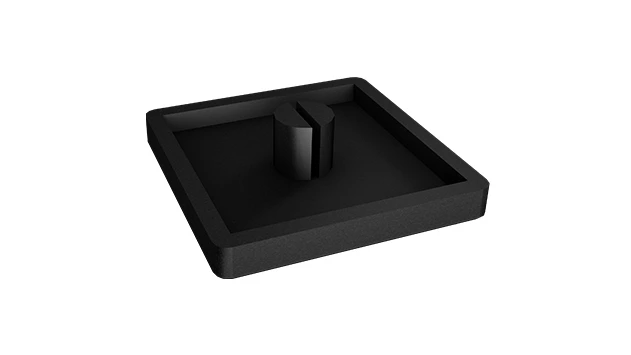
In the world of manufacturing and industrial setups, it's often the smallest components that hold the biggest impact. Take, for example, the unassuming end cap on an aluminum profile. At first glance, it might seem like little more than a finishing touch—something to cover sharp edges or hide unsightly openings. But in reality, these small accessories play a critical role in everything from safety to structural longevity, especially when exposed to challenging environments. Today, we're diving deep into one specific component: the 3030 aluminum profile end cap. More specifically, we're exploring how well it holds up under high temperatures—a factor that can make or break operations in factories, warehouses, and even outdoor settings where heat is a constant companion.
Why 3030 Aluminum Profiles and Their End Caps Matter
Before we get into the heat tests, let's take a step back and understand why 3030 aluminum profiles are such a staple in modern industry. If you've ever walked through a manufacturing plant, a workshop, or even a retail warehouse, chances are you've seen these profiles in action. They're the backbone of lean pipe workbenches, the framework for material racks, and the building blocks of conveyor systems. What makes them so popular? Their versatility. Thanks to their T-slot design, 3030 aluminum extrusion profiles can be easily customized with accessories—think brackets, shelves, and yes, end caps—to create everything from simple workstations to complex assembly lines.
Now, let's talk about those end caps. As as they may seem, 3030 aluminum profile end caps are far more than just cosmetic add-ons. For starters, they protect workers from sharp, unfinished edges on the ends of the profiles—an essential safety feature in busy environments where bumps and scrapes are all too common. They also seal off the hollow interior of the profiles, preventing dust, debris, and even moisture from getting inside. Over time, that debris can corrode the inside of the profile or interfere with the T-slot mechanisms, weakening the structure and reducing its lifespan. And let's not forget aesthetics: a clean, capped end gives a professional look, which matters when clients or auditors walk through your facility.
But here's the thing: not all end caps are created equal. When it comes to high-temperature environments—think factories with heat-generating machinery, foundries, or even outdoor setups in hot climates—the material and design of these end caps become critical. A cheap plastic end cap might hold up fine in a climate-controlled office, but expose it to sustained heat, and you could be looking at warping, melting, or even complete failure. That's why we set out to put 3030 aluminum profile end caps to the test, focusing specifically on their ability to withstand high temperatures without compromising performance.
The Testing Process: Putting End Caps Through the Fire (Literally)
To really understand how these end caps perform under heat, we needed a rigorous testing protocol. We partnered with a materials testing lab that specializes in industrial components, and together, we designed a series of experiments to simulate real-world high-temperature scenarios. Our goal? To answer three key questions: How much heat can these end caps take before deforming? Can they handle repeated temperature fluctuations? And do they maintain their structural integrity and grip after prolonged heat exposure?
First, we sourced samples. We wanted to test the most common types of 3030 aluminum profile end caps available on the market, so we gathered three variants: standard polypropylene (PP) end caps (the most widely used), reinforced polypropylene end caps (with added glass fiber for strength), and silicone end caps (touted as "heat-resistant" by some suppliers). For each sample, we also included the 3030 aluminum extrusion profile itself, to ensure the end caps were tested in the context of their actual use—after all, an end cap that sticks well to a profile at room temperature might behave differently when both the cap and the profile are heated.
The tests were divided into four main categories, each designed to mimic a different real-world scenario. Let's break them down one by one.
1. Continuous Heat Exposure Test
The first test was simple but telling: continuous exposure to high temperatures. We wanted to see how the end caps fared when left in a steady, hot environment—think a factory floor near a furnace or a warehouse in the middle of summer where temperatures can climb and stay high for hours. We placed samples of each end cap (attached to 3030 aluminum profiles) in a temperature-controlled oven, starting at 40°C (104°F)—a mild summer day—and gradually increasing the heat by 10°C every 2 hours, up to a maximum of 120°C (248°F). We checked the samples every hour for signs of deformation, melting, or detachment from the profile.
2. Thermal Cycling Test
Heat isn't always steady, though. In many environments, temperatures fluctuate—day to night, or even hour to hour as machinery turns on and off. That's where thermal cycling comes in. For this test, we exposed the end caps to rapid temperature changes: 30 minutes at 80°C (176°F), followed by 30 minutes at 20°C (68°F), repeated over 24 hours. This mimics a warehouse that heats up during the day (when machinery is running) and cools down at night (when operations stop). The goal? To see if the end caps could handle the expansion and contraction that comes with temperature swings without cracking or losing their grip.
3. Impact Resistance After Heating
Heat alone is one thing, but what happens when a heated end cap is bumped or knocked? In busy workplaces, impacts are inevitable—whether from a forklift brushing against a rack or a worker accidentally hitting a bench. To test this, we heated the end caps to 80°C (176°F) and held them at that temperature for 2 hours, then immediately dropped a 500g weight from a height of 30cm onto the end cap. We repeated this 10 times for each sample, checking for cracks, breaks, or detachment.
4. Long-Term Aging Test
Finally, we wanted to see how the end caps would perform over time, not just in short bursts of heat. For the long-term aging test, we placed samples in an oven set to 60°C (140°F)—a moderate but sustained heat—and left them there for 30 days. This simulates a year's worth of exposure to warm conditions (assuming a typical work year of 250 days). After 30 days, we removed the samples and tested their grip strength (how hard it was to pull them off the profile) and flexibility (whether they'd become brittle or soft).

The Results: Which End Caps Stood the Heat?
After weeks of testing, we had a mountain of data—but let's cut to the chase. Which end caps held up, and which ones faltered? The results were eye-opening, and they highlighted just how much material choice matters when it comes to high-temperature resistance. Below is a summary of the key findings, organized by test type and end cap material:
| Test Type | Temperature/Duration | Standard PP End Cap | Reinforced PP End Cap | Silicone End Cap |
|---|---|---|---|---|
| Continuous Heat Exposure | Up to 120°C for 12 hours | Failed at 80°C: Deformed, began melting at edges | Passed up to 100°C: Minor warping at 110°C, no melting | Passed all temperatures: No deformation, remained flexible |
| Thermal Cycling | 80°C ↔ 20°C, 24 hours | Failed after 12 cycles: Cracks formed at base, detached from profile | Passed 24 cycles: Slight loosening, but no cracks or detachment | Passed 24 cycles: No cracks, remained tightly attached |
| Impact After Heating | 80°C for 2 hours, then 10 impacts | Failed after 3 impacts: Shattered on 4th drop | Passed 10 impacts: Minor scuffing, no cracks | Passed 10 impacts: Flexible, absorbed impact without damage |
| Long-Term Aging | 60°C for 30 days | Failed: Became brittle, detached from profile when pulled | Passed: Slight hardening, but grip strength remained 85% of original | Passed: No change in flexibility or grip strength |
Let's unpack these results. The standard polypropylene (PP) end caps, which are the most affordable and commonly used, struggled across the board. They started deforming at 80°C, cracked under thermal cycling, and shattered when impacted after heating. After 30 days of aging, they became so brittle that they fell off the profile with minimal force. For environments where heat is a factor, these are clearly a risky choice—great for cool, controlled spaces, but not much else.
The reinforced PP end caps (with glass fiber) performed significantly better. They withstood higher temperatures (up to 100°C continuously), survived thermal cycling without cracking, and held up to impacts. The only minor issue was slight warping at 110°C and a small drop in grip strength after long-term aging. For most industrial settings where temperatures don't exceed 100°C, these would be a solid, cost-effective option.
The real star, though, was the silicone end cap. It aced every test: no deformation even at 120°C, no cracks during thermal cycling, and it absorbed impacts like a champ. After 30 days of aging, it was just as flexible and tightly attached as the day we started. The downside? Silicone end caps are pricier than PP—about 30% more expensive. But when you factor in the cost of replacing failed end caps (not to mention the safety risks of sharp, exposed profiles), the investment starts to make sense, especially in high-heat environments.

Real-World Implications: What This Means for Your Operations
Numbers and tables are helpful, but let's ground this in reality. What happens when you choose the wrong end cap for a high-temperature environment? Let's take a hypothetical (but all too common) scenario: A small electronics manufacturer in Arizona decides to build a series of lean pipe workbenches using 3030 aluminum extrusion profiles. To save costs, they opt for standard PP end caps. The workbenches are placed near a soldering station, where temperatures regularly hit 85°C (185°F) during the day. At first, everything seems fine. But after a few weeks, the end caps start to warp. By month three, some have melted around the edges, exposing sharp aluminum ends. A worker brushes against one and gets a cut, leading to a safety incident and a day of lost productivity. Meanwhile, dust and solder particles have started getting inside the profiles, gumming up the T-slots and making it hard to adjust the shelves. The manufacturer has to shut down production for a day to replace all the end caps—costing far more than the initial savings from buying cheap ones.
On the flip side, imagine the same manufacturer chooses silicone end caps. Six months later, the workbenches are still in top shape. The end caps haven't warped, the profiles are clean inside, and there have been no safety incidents. The initial extra cost? More than offset by the lack of replacements and downtime. That's the difference high-temperature resistance can make.
It's not just about manufacturing, either. Think about a warehouse in Florida that uses 3030 aluminum profile racks to store goods. In the summer, the warehouse can hit 90°C (194°F) inside during the day. If the end caps fail, rainwater (from occasional leaks or humidity) can seep into the profiles, leading to internal corrosion. Over time, that corrosion weakens the racks, making them unsafe to hold heavy pallets. Again, a small component failure leads to a big problem.
The Science Behind the Performance: Why Materials Matter
So, why did the silicone end caps outperform the others? Let's get a little technical (but keep it simple). Polypropylene is a thermoplastic, which means it softens when heated and hardens when cooled. Standard PP has a melting point around 160°C, but it starts to deform (lose its shape) at much lower temperatures—around 60-80°C. Add glass fiber reinforcement, and you raise that deformation point to 100-110°C, which is why the reinforced PP did better. But it's still a thermoplastic, so it can only take so much heat before breaking down.
Silicone, on the other hand, is a thermoset polymer. Unlike thermoplastics, it doesn't melt when heated—it chars or burns, but only at very high temperatures (silicone typically starts to degrade around 200°C). Instead of softening, it retains its flexibility, even at high heat. That's why it handled the continuous 120°C exposure and thermal cycling without a hitch. It also has better elasticity, which helps it absorb impacts and maintain a tight seal on the profile, even as both the cap and the aluminum expand and contract.
Another factor is adhesion. Silicone has natural tackiness, which helps it grip the aluminum profile better, especially when heated. PP, even reinforced PP, relies more on friction and a tight fit, which can loosen when the material expands. That's why the PP end caps started to detach during thermal cycling—their grip weakened as they expanded and contracted.
Choosing the Right End Cap: A Quick Guide
So, how do you decide which end cap is right for your needs? Here's a simple checklist based on our testing:
- For cool, controlled environments (temperatures below 60°C/140°F): Standard PP end caps are fine. They're affordable and get the job done if heat isn't a concern.
- For moderate heat (60-100°C/140-212°F) with occasional fluctuations: Reinforced PP end caps are a good balance of cost and performance. They'll handle most factory floors and warehouses.
- For high heat (above 100°C/212°F), frequent temperature swings, or high-impact areas: Silicone end caps are worth the investment. They'll save you time, money, and headaches in the long run.
And don't forget to check the specs! Not all "reinforced" or "heat-resistant" end caps are created equal. Look for suppliers who provide temperature resistance data (like the tests we did) and who use high-quality materials. A little research upfront can save you a lot of trouble later.
The Future of Aluminum Profile Accessories: What's Next?
As manufacturing and warehousing become more advanced, the demand for durable, heat-resistant components will only grow. We're already seeing suppliers experiment with new materials—like ceramic-infused PP or hybrid silicone-thermoplastic blends—to offer end caps that combine the best of both worlds: the affordability of PP with the heat resistance of silicone. There's also a push for more sustainable options, like end caps made from recycled materials that still meet high-temperature standards.
Another trend is smarter design. Some manufacturers are adding features like heat-dissipating ridges or better sealing lips to end caps, to help them stay cooler and grip tighter in hot environments. And as 3030 aluminum extrusion profiles become more widely used in outdoor settings (think solar panel racks or outdoor kiosks), we'll likely see end caps designed to withstand not just heat, but UV radiation and rain as well.
Final Thoughts: Small Component, Big Impact
At the end of the day, the 3030 aluminum profile end cap might not be the most glamorous component in your facility, but it's a critical one. Our testing showed that when it comes to high temperatures, cutting corners on end caps can lead to safety risks, downtime, and unnecessary costs. Whether you're building a lean pipe workbench, a material rack, or a conveyor system, taking the time to choose the right end cap for your environment is worth it.
So, the next time you're sourcing aluminum profile accessories, remember: the smallest parts often have the biggest job. And when heat is in the picture, don't settle for anything less than a end cap that can stand the test—literally.