- Company Articles
- Products and Technology
- Product knowledge
- High-Temperature Swivel Stem Caster Wheels: Suitable for Industrial Ovens?

High-Temperature Swivel Stem Caster Wheels: Suitable for Industrial Ovens?
Related Product
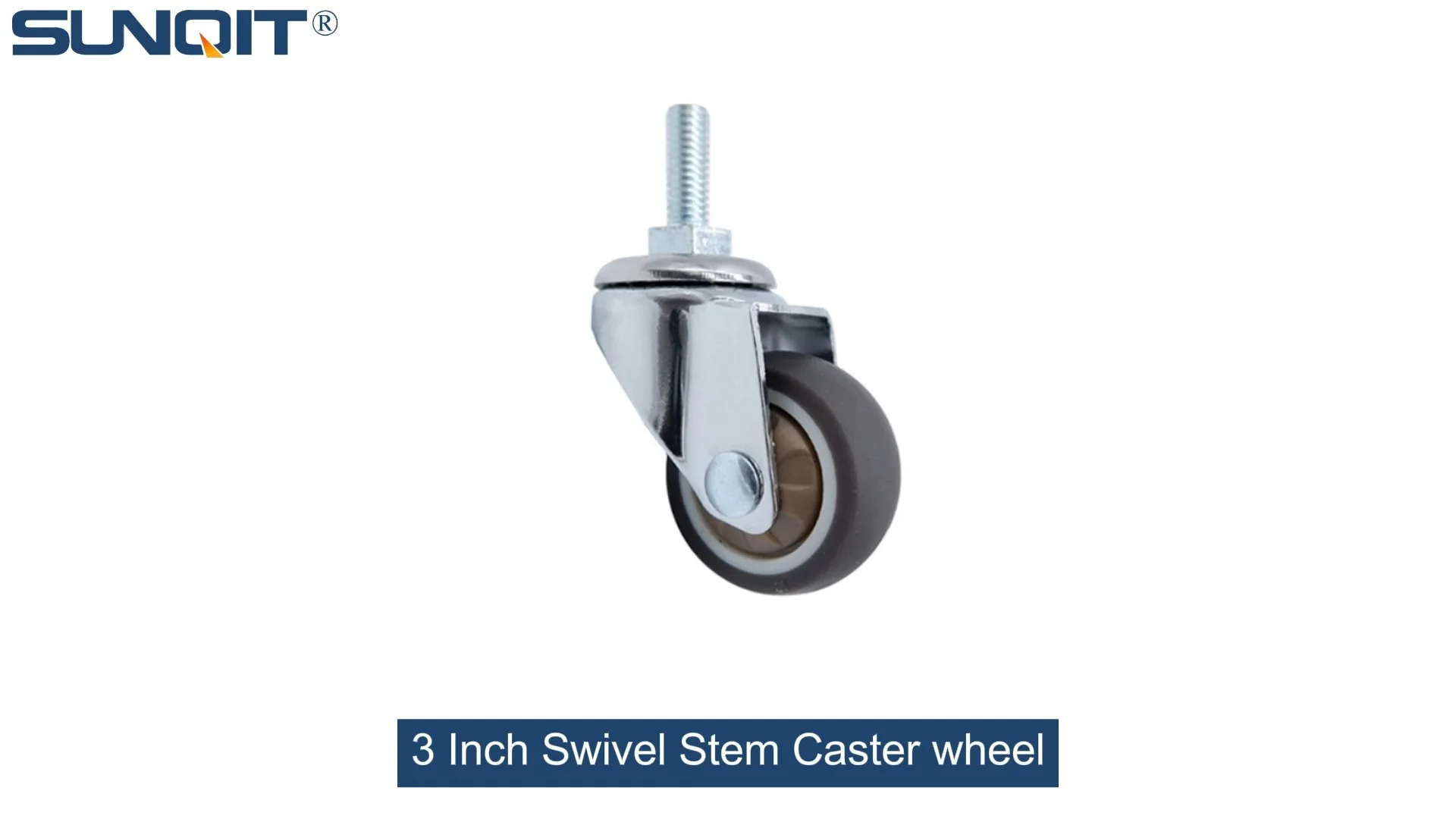
Swivel Stem Caster wheel
360 Degree Swivel Stem Caster. Threaded-post mount design, castors diameter 3 inch.Each swivel caster wheels loading 70KGS. Heavy enough and widely suit for carts, chairs, cabinet, flow rack, workbench, turnover rolley.
In the bustling world of industrial manufacturing, where precision and efficiency reign supreme, even the smallest components can make a monumental difference. Take, for example, the humble caster wheel. Often overlooked, these unassuming devices are the unsung heroes of mobility, enabling everything from heavy machinery to delicate workstations to move with ease. But when the environment turns extreme—think scorching temperatures, heavy loads, and tight spaces—ordinary caster wheels simply won't cut it. This brings us to a critical question: Are high-temperature swivel stem caster wheels suitable for industrial ovens? Let's dive in.
Understanding Industrial Ovens: A Hostile Environment for Mobility
Industrial ovens are workhorses in sectors like automotive, aerospace, electronics, and food processing. They're designed to subject materials to controlled high temperatures for processes such as curing, drying, baking, or heat treating. But not all ovens are created equal. Batch ovens, for instance, handle discrete loads, while conveyor ovens continuously process items as they move through a heated chamber. Regardless of type, one thing remains consistent: the conditions inside are brutal.
Temperatures can soar from 200°F (93°C) in low-heat drying ovens to over 1800°F (982°C) in specialized heat-treating furnaces. Add to that heavy loads—think metal racks loaded with engine parts or stacks of circuit boards—and you've got an environment where mobility solutions face their toughest test. Traditional caster wheels, with their plastic or rubber components and standard lubricants, would warp, melt, or seize up in minutes here. So, what makes high-temperature swivel stem caster wheels different?
What Are High-Temperature Swivel Stem Caster Wheels?
At first glance, a high-temperature swivel stem caster wheel might look similar to its standard counterpart, but under the hood (or rather, under the wheel), it's engineered for resilience. Let's break down its key components:
- Wheel Material: Unlike standard rubber or nylon wheels, these use heat-resistant materials. Options include cast iron (which handles up to 1200°F), stainless steel (ideal for corrosion resistance in high-heat, humid ovens), and phenolic resin (a thermoset plastic that withstands up to 350°F without deforming). For extreme temps, some wheels even feature ceramic inserts or heat-treated aluminum alloys.
- Swivel Mechanism: The "swivel" in the name refers to the 360-degree rotation capability, which is critical for maneuvering heavy racks in tight oven spaces. High-temperature models use sealed, heat-resistant bearings—often made of stainless steel or silicon nitride (a ceramic that thrives under heat)—to prevent jamming. The stem itself, a threaded metal rod that attaches the caster to the equipment, is typically forged from carbon steel or stainless steel to avoid warping under thermal stress.
- Load Capacity: Industrial ovens often require moving hundreds, if not thousands, of pounds. High-temperature swivel stem casters are built with reinforced frames and thick-walled wheels to handle loads ranging from 200 lbs to over 2,000 lbs per wheel.
But what truly sets them apart is their ability to maintain functionality when the mercury rises. Imagine a batch oven used to cure automotive paint: the interior hits 450°F, and the racks holding the car parts need to be rolled in and out daily. A standard caster wheel here would soften, lose traction, or even weld itself to the floor. A high-temperature swivel stem caster wheel, though? It keeps rolling—smoothly, safely, and reliably.

Key Features for Industrial Oven Compatibility
Not all high-temperature casters are created equal, and choosing the right one for your industrial oven requires scrutiny. Here are the non-negotiable features to prioritize:
1. Temperature Resistance Rating
This is the first line of defense. Always check the caster's maximum temperature rating, which should exceed your oven's peak operating temp by at least 50°F to account for fluctuations. For example, if your oven runs at 500°F, opt for a caster rated for 550°F or higher. Cast iron wheels, for instance, are great for 800°F+ environments, while phenolic wheels are better suited for lower ranges (250–350°F).
2. Swivel Stem Caster Wheel with Brake: Safety in Motion (and Rest)
Mobility is useless without control. That's where the swivel stem caster wheel with brake comes in. In industrial ovens, sudden movement during heating cycles can lead to uneven curing, damaged products, or even workplace accidents. A reliable brake system—typically a foot-operated lever that locks the swivel and/or the wheel—ensures the equipment stays put once positioned. Look for brakes made of heat-resistant metals (like brass or stainless steel) to avoid warping; plastic brakes will fail quickly in high temps.
3. Material Compatibility
Ovens aren't just hot—they can be chemically harsh. Some processes involve oils, solvents, or corrosive fumes (like in powder coating ovens). Stainless steel wheels and stems are a must here, as they resist rust and chemical degradation. Avoid plain carbon steel in humid or corrosive environments; it will pit and weaken over time.
4. Lubrication: The Unsung Hero of Heat Resistance
Even the best bearings will seize without proper lubrication, but standard grease melts at high temps. High-temperature swivel stem casters use specialized lubricants like molybdenum disulfide (moly) or silicone-based greases, which remain stable up to 500°F or more. Some premium models even feature "lubrication-free" bearings (ceramic or self-lubricating bronze) that eliminate the risk of grease breakdown entirely.
5. Floor Protection
Oven floors are often made of concrete, brick, or metal, and dragging heavy, unprotected caster wheels can scratch or crack them. Look for wheels with soft, heat-resistant treads (like silicone or rubberized phenolic) if floor preservation is a priority. For metal floors, hard wheels (cast iron, steel) are better, as they won't leave marks and offer superior traction at high temps.

The Case for Swivel Stem Casters in Industrial Ovens: Benefits Beyond Mobility
So, why bother with swivel stem casters specifically? Let's break down the advantages:
Flexibility in Tight Spaces
Industrial ovens are often tucked into crowded production lines, leaving little room for maneuvering. Swivel casters allow 360-degree rotation, making it easy to pivot heavy racks into position without having to lift or drag them. This is a game-changer for batch ovens, where loading and unloading require precision to maximize space inside.
Ease of Maintenance
Ovens need regular cleaning and repairs, and fixed equipment can make this a nightmare. With swivel stem casters, you can roll the oven's internal racks or even the oven itself (for smaller models) out of the way, giving technicians full access. No more crawling on the floor or disassembling parts—just unlock the brakes, roll, and work.
Safety First
Heavy, immobile racks in ovens pose a risk of strain injuries for workers. Swivel stem casters reduce the physical effort needed to move loads, lowering the chance of back pain or muscle strains. And with the swivel stem caster wheel with brake, you add an extra layer of safety: once the rack is in the oven, engage the brake, and rest easy knowing it won't shift during heating.
Cost Efficiency
Investing in high-quality casters might seem pricey upfront, but it pays off. A failed caster can lead to damaged products, downtime, or even oven repairs. High-temperature swivel stem casters are built to last, with lifespans measured in years (not months) under heavy use. Plus, their modular design makes replacing parts—like wheels or brakes—quick and affordable, unlike fixed systems that require full overhauls.

Potential Challenges and How to Overcome Them
No solution is perfect, and high-temperature swivel stem casters do face hurdles in industrial oven settings. Here's what to watch for and how to mitigate risks:
Thermal Expansion and Contraction
Metals expand when heated and contract when cooled. Over time, this can loosen the stem's threads or warp the swivel housing, leading to wobbly wheels. To combat this, choose casters with heat-treated stems and precision-machined swivel plates that maintain tight tolerances even as temperatures fluctuate. Some manufacturers also use locking nuts with heat-resistant thread locker to prevent loosening.
Lubricant Degradation
Even high-temperature greases can break down over time, especially in ovens with frequent heating/cooling cycles. This leads to increased friction and noisy, stiff swiveling. The fix? Opt for "lubrication-free" casters with ceramic bearings, or schedule regular re-lubrication with a high-temp grease (like calcium sulfonate complex) every 3–6 months, depending on usage.
Overloading
It's tempting to max out a caster's load capacity, but in high-heat environments, materials weaken slightly. A caster rated for 1,000 lbs at room temp might only handle 800 lbs at 600°F. Always de-rate the load capacity by 10–20% when using casters in ovens, and never exceed the manufacturer's heat-adjusted rating.
Caster Accessories: Enhancing Performance in High-Heat Ovens
Even the best caster wheel can benefit from a little help. Caster accessories are often the difference between a "good" caster and a "great" one in industrial ovens. Here are the must-haves:
- Heat-Resistant Bearing Caps: These seal the bearings from dust, debris, and oven fumes, preventing premature wear. Look for caps made of silicone or Viton (a fluoroelastomer that handles up to 400°F).
- Stem Extenders: If the oven's rack has a thick base, a stem extender (a threaded adapter) ensures the caster sits low enough for stability. Opt for stainless steel extenders to avoid rust.
- Replacement Brake Pads: Brake pads wear down over time, especially if the caster is frequently locked/unlocked. Keep a supply of heat-resistant brake pads (made of brass or high-temp rubber) on hand for quick swaps.
- Wheel Guards: For ovens with debris (like metal shavings or paint overspray), wheel guards prevent particles from getting stuck in the swivel mechanism. They're a small investment that saves big on maintenance.
Think of these accessories as insurance. They extend the caster's lifespan, reduce downtime, and ensure consistent performance—even in the harshest oven environments.
Real-World Applications: Success Stories in Industrial Ovens
Still skeptical? Let's look at real-world examples where high-temperature swivel stem caster wheels have proven their worth:
Automotive Manufacturing: Paint Curing Ovens
A leading automotive plant in Michigan upgraded to high-temperature swivel stem casters on their paint-curing racks. Previously, they used standard casters that needed replacement every 3 months (costing $5,000/year in parts and downtime). After switching to cast iron swivel stem casters with ceramic bearings and brakes, the lifespan jumped to 2 years, and maintenance costs dropped by 70%. Workers also reported easier maneuvering, cutting loading time by 15 minutes per batch.
Aerospace: Composite Curing Ovens
An aerospace supplier in California uses large batch ovens to cure carbon fiber components at 500°F. They needed casters that could handle 1,500-lb loads and swivel smoothly in tight spaces. They chose stainless steel swivel stem casters with phenolic wheels (rated to 550°F) and swivel stem caster wheels with brake. The result? Zero caster failures in 3 years, and the brakes have prevented at least two incidents of racks shifting during curing—saving thousands in damaged parts.
Choosing the Right Caster: A Step-by-Step Guide
Ready to invest in high-temperature swivel stem casters for your industrial oven? Follow these steps to ensure you get the right fit:
- Step 1: Measure Your Oven's Temperature Range – Use a thermal gun to record the peak temp (not just the set temp). Add 50°F to this number to get your minimum caster temperature rating.
- Step 2: Calculate Load Per Wheel – Total load (rack + materials) divided by the number of casters (usually 4–6). De-rate by 10–20% for high heat, then choose a caster with a load rating above this number.
- Step 3: Assess the Environment – Is the oven humid? Corrosive? Do you need floor protection? This dictates material choices (stainless steel for corrosion, phenolic for floor protection, etc.).
- Step 4: Decide on Brake Type – Do you need to lock the swivel, the wheel, or both? For industrial ovens, a dual-lock brake (locks swivel and wheel) is safest for heavy loads.
- Step 5: Consult a Supplier – Reputable caster suppliers (many of whom specialize in industrial applications) can help you select the perfect model. Share your oven specs, load, and environment—they'll guide you to the right caster.
Remember: Cutting corners here costs more in the long run. A $50 caster that fails in 3 months is far pricier than a $150 caster that lasts 2 years.
Maintenance Tips: Keeping Your Casters Rolling Strong
Even the best caster needs care. Follow these maintenance tips to maximize performance in industrial ovens:
- Inspect Monthly: Check for cracks in the wheel, loose stems, or worn brake pads. Look for signs of lubricant leakage (a sign it's breaking down) or rust on metal components.
- Lubricate Smartly: If using greased bearings, re-lubricate with high-temp grease every 3–6 months (more often if the oven runs 24/7). For self-lubricating bearings, wipe away dust with a dry cloth—no grease needed.
- Clean Regularly: Oven fumes, dust, and debris can build up on casters. Wipe wheels and swivel mechanisms with a damp cloth (when cool!) to prevent gunk from hardening and causing jams.
- replace Worn Parts: Don't wait for a caster to fail—swap out worn wheels, bearings, or brake pads at the first sign of wear. Caster accessories like replacement wheels are cheap compared to downtime.
Conclusion: Are High-Temperature Swivel Stem Caster Wheels Suitable for Industrial Ovens?
The answer is a resounding yes— when chosen correctly . High-temperature swivel stem caster wheels are not just suitable for industrial ovens; they're transformative. They turn immobile, cumbersome racks into agile, easy-to-manage tools that enhance efficiency, safety, and productivity. But success hinges on selecting the right caster: one with a temperature rating that exceeds your oven's peak, a load capacity that accounts for thermal de-rating, a reliable brake system (like the swivel stem caster wheel with brake), and the right accessories to keep it running smoothly.
In the end, these casters are more than just wheels—they're partners in precision. They ensure that even in the hottest, heaviest, tightest industrial oven environments, your operations keep rolling forward. So, if you're tired of replacing failed casters, struggling with immobile equipment, or compromising on safety, it's time to invest in high-temperature swivel stem caster wheels. Your bottom line, and your workers, will thank you.