- Company Articles
- Products and Technology
- Solution
- High-Volume Production: Reducing Downtime with Aluminum Workbench C

High-Volume Production: Reducing Downtime with Aluminum Workbench C
Related Product
Aluminum Workbench C
aluminum-tube-workbench-is-more-flexible-and-durable,-compared-with-traditional-pe/abs-coated-steel-tube.-it-is-easy-to-assemble,-anti-corrosion,-rust-protection,-and-recycle-use-after-disassemble.
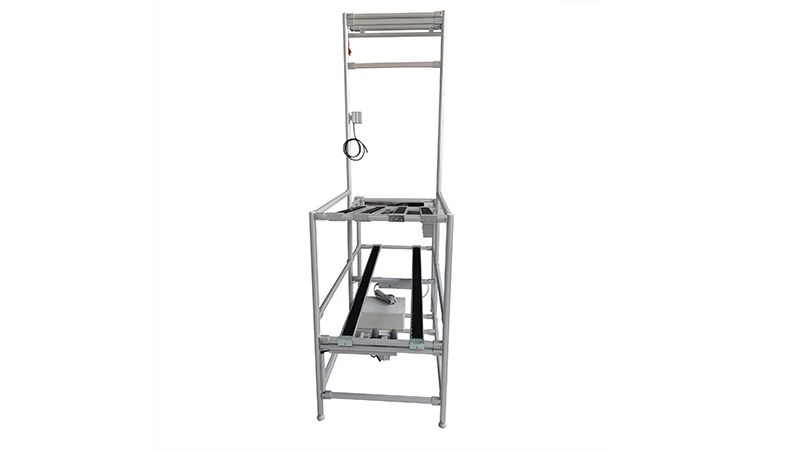
In the world of high-volume production, every second counts. Picture this: a bustling factory floor where assembly lines hum, workers move with purpose, and orders pile up by the minute. Now, imagine the chaos when that rhythm is broken—machines stall, workers wait, and deadlines slip. This is downtime, the silent profit killer that haunts manufacturers worldwide. But what if there was a way to turn those frustrating pauses into seamless productivity? Enter Aluminum Workbench C, a yet revolutionary tool that's quietly transforming how high-volume production lines operate. Let's dive into how this unassuming workstation is becoming the backbone of efficient, downtime-resistant manufacturing.
The Hidden Cost of Downtime: Why Every Minute Matters
Before we talk about solutions, let's get real about the problem. Downtime isn't just a minor inconvenience—it's a financial drain with ripple effects. According to industry reports, the average manufacturer loses between $5,000 and $20,000 per hour of unplanned downtime. For high-volume facilities churning out hundreds or thousands of units daily, those numbers skyrocket. But the costs go beyond dollars and cents. Missed delivery deadlines strain client relationships, overtime pay eats into profits, and frustrated teams face burnout from playing catch-up. Worse, frequent downtime erodes morale—when workers can't rely on their tools to keep up, even the most dedicated teams start to disengage.
So, what causes this downtime? Often, it's the little things: a wobbly workbench that slows down assembly, a workstation that can't adapt to a new product design, or a surface that wears out after months of heavy use. Traditional workbenches, made from wood or heavy steel, are notorious culprits. They're bulky, hard to adjust, and prone to damage—exactly the opposite of what a high-volume line needs. When a workbench fails, even for 15 minutes, it's not just that station that suffers; the bottleneck ripples down the line, turning a small hiccup into a full-blown production delay.
Aluminum Workbench C: More Than Just a Table
At first glance, Aluminum Workbench C might look like any other workstation. But take a closer look, and you'll see why it's become a game-changer for manufacturers. Built with precision-engineered aluminum profile, this workbench is a masterclass in functional design. Let's break down what makes it different.
Lightweight Strength: The Aluminum Advantage
Aluminum profile isn't just a material choice—it's a strategic one. Unlike steel, which is heavy and prone to rust, aluminum strikes the perfect balance between strength and flexibility. It's 30% lighter than steel but just as durable, making the workbench easy to move (when needed) without sacrificing stability. For high-volume lines that often reconfigure layouts to meet shifting demand, this mobility is a lifesaver. Imagine needing to rearrange your production floor for a new product launch: with a steel workbench, you'd need a forklift and a team of workers. With Aluminum Workbench C? Two people can reposition it in minutes, cutting setup time from hours to minutes.
But aluminum's benefits don't stop at weight. It's naturally corrosion-resistant, so even in factories with humidity or chemical exposure, the workbench stays looking and performing like new. No more rust stains on products, no more costly replacements due to wear and tear. Over time, this durability translates to lower maintenance costs—a critical factor for manufacturers watching their bottom line.
Modular Design: Adaptability at Its Core
High-volume production isn't static. One month, you're assembling small electronic components; the next, you're scaling up to larger machinery parts. Traditional workbenches lock you into a single configuration, forcing you to buy new stations every time your needs change. Aluminum Workbench C, however, is built on a modular system. Thanks to its T-slot aluminum profile, you can easily add shelves, tool holders, or even integrate flow rack attachments with a few simple aluminum profile accessories. Need a extra shelf for tools? Snap on a bracket. Want to mount a monitor for digital work instructions? Slide in a clamp. This adaptability means the workbench grows with your production line, eliminating the downtime (and expense) of replacing outdated equipment.
Ergonomics: Putting Workers First
Downtime isn't always caused by equipment failure—sometimes, it's caused by human fatigue. Awkwardly positioned workstations force workers into uncomfortable postures, leading to slower assembly times and more errors. Aluminum Workbench C addresses this with adjustable height settings, ensuring every operator can work at a level that reduces strain on their back, neck, and shoulders. When workers are comfortable, they're faster, more accurate, and less likely to take unscheduled breaks. It's a small change that leads to big results: studies show ergonomic workstations can boost productivity by up to 15% while cutting error rates in half.

Integrating with Lean Systems: Streamlining Workflow from Start to Finish
Aluminum Workbench C doesn't operate in a vacuum—it's designed to be part of a larger lean system, the manufacturing philosophy focused on eliminating waste and maximizing value. In a lean environment, every step must add value; anything that doesn't (like searching for tools or moving materials across the floor) is considered waste. This workbench aligns perfectly with that mindset, acting as a hub that connects every part of the production process.
Take material flow, for example. By integrating roller track accessories—like the 1-inch swivel roller balls—Aluminum Workbench C becomes a mini conveyor belt, allowing parts to glide smoothly from one station to the next. No more manual lifting or carrying; workers simply slide components across the workbench, reducing both time and physical strain. Pair this with a flow rack mounted overhead, and suddenly, materials are always within arm's reach. What used to take 2 minutes (walking to a storage area, finding the part, returning) now takes 10 seconds. Multiply that by hundreds of parts per day, and the time savings add up to hours of recovered productivity.
Another lean principle is "continuous improvement," and Aluminum Workbench C makes this easy. Its modular design lets teams experiment with new layouts or add features on the fly. If a worker suggests adding a tool rail to reduce reaching, you can install it in minutes. If a new product requires a larger workspace, you can extend the bench with additional aluminum profile sections. This flexibility turns the workbench into a living, evolving tool that adapts to your team's needs—not the other way around.

Real Results: How Manufacturers Are Cutting Downtime
Numbers and features are great, but nothing tells the story like real-world success. Let's look at a case study: a mid-sized electronics manufacturer producing smartphone components. Before switching to Aluminum Workbench C, their assembly line struggled with frequent downtime—an average of 45 minutes per day, mostly due to workbench-related issues. Their old steel workbenches were heavy and hard to adjust, so reconfiguring for new phone models took 2 hours of setup time. Tool organization was a mess, with workers spending 10-15 minutes per shift searching for misplaced tools. And worst of all, the steel surfaces would scratch delicate components, leading to costly rework.
After installing Aluminum Workbench C, the changes were immediate. Setup time for new product runs dropped from 2 hours to 20 minutes, thanks to the modular aluminum profile design. The integrated roller track cut material handling time by 40%, and tool holders mounted on the T-slots eliminated "search time" entirely. Best of all, the smooth aluminum surface reduced component scratches by 90%, slashing rework costs. In the first month, total downtime fell from 45 minutes to just 10 minutes per day. Over a year, that added up to over 120 hours of recovered production time—enough to fulfill an extra 5,000 orders. For a company operating on tight margins, that's a game-changing boost to the bottom line.

Traditional vs. Aluminum: A Side-by-Side Comparison
Still on the fence? Let's put Aluminum Workbench C head-to-head with traditional workbenches in the areas that matter most for high-volume production:
| Feature | Traditional Steel Workbench | Aluminum Workbench C |
|---|---|---|
| Weight | Heavy (200-300 lbs); requires machinery to move | Lightweight (80-100 lbs); movable by 2 people |
| Setup/Reconfiguration Time | 2-4 hours for layout changes | 15-30 minutes with modular aluminum profile |
| Durability | Prone to rust and dents; needs repainting every 1-2 years | Corrosion-resistant; no repainting needed; lasts 5+ years |
| Ergonomics | Fixed height; often leads to worker strain | Adjustable height; customizable to operator needs |
| Integration with Lean Tools | Limited; hard to add roller track or flow rack attachments | Seamless; T-slot design accepts aluminum profile accessories |
| Maintenance Costs | High (repairs, repainting, replacements) | Low (minimal upkeep, no rust treatment) |
Beyond the Workbench: Building a Downtime-Resistant Ecosystem
Aluminum Workbench C is powerful on its own, but its true potential shines when paired with complementary tools. Many manufacturers choose to integrate it with other aluminum profile accessories, like caster wheels for mobility or material racks for organized storage. For example, adding lockable caster wheels turns the workbench into a mobile station that can be wheeled directly to where it's needed—perfect for tasks like off-line quality checks or emergency repairs.
Another popular add-on is the aluminum honeycomb panel, which adds a lightweight yet sturdy surface for heavy-duty tasks. Unlike solid wood or steel, the honeycomb design reduces weight without sacrificing strength, making the workbench even more versatile. And for facilities dealing with electrostatic discharge (ESD) sensitive components, optional ESD-safe surfaces ensure products aren't damaged by static electricity—another layer of protection against costly rework.
Investing in the Future: Why Aluminum Workbench C Pays Off
Let's talk about cost. At first glance, Aluminum Workbench C might have a higher upfront price tag than a basic steel or wood workbench. But here's the thing: manufacturing tools aren't expenses—they're investments. A cheap workbench might save you $200 today, but if it causes 10 hours of downtime per month, that "savings" disappears in less than a year. Aluminum Workbench C, on the other hand, pays for itself through reduced downtime, lower maintenance costs, and increased productivity.
Consider the electronics manufacturer we mentioned earlier. Their initial investment in Aluminum Workbench C was $1,200 per unit. With 10 workbenches, that's $12,000. But by cutting downtime and rework costs, they saved $50,000 in the first year alone. That's a 400% return on investment—hard to ignore for any business watching its bottom line.
Final Thoughts: The Workbench That Works as Hard as You Do
In high-volume production, downtime isn't just a problem—it's a choice. Every time you stick with outdated tools, you're choosing to leave money on the table, frustrate your team, and fall behind the competition. Aluminum Workbench C isn't just a workstation; it's a commitment to efficiency, adaptability, and respect for your team's time. It's the quiet partner that keeps your line moving, your deadlines met, and your profits growing.
So, if you're tired of watching downtime eat into your production goals, it's time to rethink your workbenches. Aluminum Workbench C isn't just a tool for today—it's an investment in a smoother, faster, and more resilient tomorrow. After all, in manufacturing, the best way to predict the future is to build it—one efficient workbench at a time.