- Company Articles
- Products and Technology
- Product knowledge
- Hole Configuration in Gusset Alp 3030: Standard vs. Custom Options

Hole Configuration in Gusset Alp 3030: Standard vs. Custom Options
Related Product
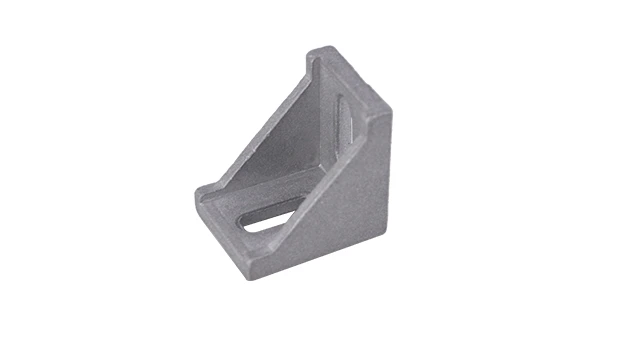
Gusset ALP 3030
The 3030 bracket/Gusset is an external fastening method that creates a 90 degree connection. 3030 means this size is used for 30 series aluminum profile with a quick connection by bolt and nut.
Introduction: The Unsung Hero of Aluminum Profile Structures
Walk into any modern manufacturing facility, warehouse, or assembly plant, and you'll likely be surrounded by structures that keep operations running smoothly: workbenches where products take shape, racks holding raw materials, conveyors moving components from one station to the next. What you might not notice at first glance are the small, unassuming parts that hold these systems together. One such part is the gusset—specifically, the gusset alp 3030 . These metal plates might seem trivial, but their design, especially the arrangement of holes, can make or break the efficiency, stability, and adaptability of an entire setup.
Aluminum profiles have become the backbone of lean manufacturing and modular systems, thanks to their lightweight, durable, and customizable nature. And within that ecosystem, aluminum profile accessories like gussets play a critical role in reinforcing joints, distributing weight, and ensuring that structures can handle the demands of daily use. But here's the thing: not all gussets are created equal. The way their holes are configured—how many, where they're placed, their size, and spacing—can drastically impact how well they integrate with 3030 aluminum profile systems and support your specific workflow.
In this article, we're diving deep into the world of hole configurations for gusset alp 3030. We'll break down what standard options offer, when custom configurations make sense, and how to choose the right one for your needs. Whether you're setting up a small workshop or scaling a large production line, understanding this tiny but mighty detail could save you time, money, and headaches down the line.
What is Gusset Alp 3030, Anyway?
Before we get into hole configurations, let's make sure we're all on the same page about what a gusset alp 3030 is. Simply put, it's a type of gusset plate designed specifically for use with 3030 aluminum profile systems. For context, 3030 aluminum profiles are extrusion bars with a square or rectangular cross-section, typically 30mm by 30mm, featuring T-slots along their length. These slots allow for easy attachment of accessories like brackets, shelves, and yes—gussets—using bolts, nuts, or special fasteners.
Gussets themselves are flat or angled metal plates (usually aluminum, to match the profiles) that reinforce the joints where two or more profiles meet. Think of them as the "cornerstones" of a structure: when you connect two profiles at a 90-degree angle, a gusset screwed into both profiles adds rigidity, preventing the joint from flexing under load. Without a gusset, that joint might wobble, sag, or even fail over time, especially if the structure is holding heavy materials or undergoing constant movement (like parts sliding on a conveyor).
The "alp 3030" in the name likely refers to its compatibility with 3030 profiles and possibly its material grade or design series. These gussets come in various shapes—most commonly L-shaped for corner joints, but also T-shaped or flat for straight joints—and their thickness can range from 2mm to 5mm, depending on the load they need to support. But the real star of the show here is the pattern of holes drilled into them. These holes aren't just random; they're precision-engineered to align with the T-slots in 3030 profiles and work with standard fasteners. And that's where the choice between standard and custom configurations comes into play.

Why Hole Configuration Matters More Than You Think
At first glance, you might think: "Holes are holes, right? Just drill a few and call it a day." But in the world of aluminum profile systems—where every component needs to fit together seamlessly and stand up to daily wear and tear—the way holes are arranged on a gusset can have a ripple effect on your entire operation. Let's break down why this seemingly small detail matters so much.
First, alignment is everything. When you're building a structure like a workbench or a material rack, the gusset needs to attach firmly to both the vertical and horizontal profiles. If the holes are misaligned with the T-slots in the profiles, you'll struggle to get the fasteners in place. You might end up forcing them, stripping threads, or leaving gaps—all of which weaken the joint. Over time, that weakness can lead to wobbling, which not only affects the structure's lifespan but also the quality of work done on it (imagine assembling small electronics on a shaky bench).
Second, load distribution. A gusset's job is to spread the weight or force applied to a joint across a larger area. The number and placement of holes determine how evenly that load is distributed. Too few holes, or holes clustered in one spot, and stress can (concentrate) on a single fastener, causing it to bend or snap. On the flip side, well-placed holes ensure that each fastener shares the load, making the joint stronger and more durable.
Third, compatibility with fasteners. Aluminum profile systems rely on specific fasteners—like T-bolts, hex bolts, or flange nuts—that fit into the T-slots. The size and spacing of the gusset's holes need to match these fasteners. A hole that's too small won't fit the bolt; one that's too large won't clamp the gusset tightly. Standard hole configurations are designed to work with the most common fastener sizes (M5, M6, M8), but if your setup uses non-standard fasteners, you might need custom holes.
Finally, assembly speed and flexibility. In a lean manufacturing environment, time is money. Standard hole patterns are designed to speed up assembly because they're predictable: everyone on the team knows where the holes will be, and you don't have to measure or drill on-site. Custom configurations, while offering more flexibility, can slow things down if they require special tools or adjustments. But for unique setups, that extra time upfront might save you from bigger headaches later.

Standard Hole Configurations: The Go-To for Most Setups
Standard hole configurations are the industry's way of saying, "This works for 90% of applications." They're pre-designed, mass-produced, and readily available from most aluminum profile accessories suppliers. If you're building a basic structure—a workbench for assembling circuit boards, a static rack for storing boxes, or a simple frame for a machine guard—standard holes are probably all you need. Let's take a closer look at what they offer.
Common Standard Patterns
The most popular standard gusset alp 3030 configurations are defined by the number of holes and their spacing. Here are the three you'll encounter most often:
- 4-hole L-shape: This is the simplest and most widely used design. It features two holes on each arm of the L, spaced to align with the T-slots in 3030 profiles. The holes are typically 5mm or 6mm in diameter (to fit M5 or M6 bolts) and spaced 30mm apart (matching the slot pitch of most 3030 profiles). This configuration is ideal for light to medium loads—think a small workbench or a shelf holding lightweight components.
- 6-hole L-shape: For slightly heavier loads, the 6-hole design adds an extra hole to each arm, usually centered between the existing two. This gives better load distribution and is common in structures like material racks (holding boxes of metal parts) or assembly line workstations that see frequent use.
- 8-hole L-shape: The heavyweight of standard configurations, with four holes per arm. These are spaced evenly to cover more of the profile's length, making them suitable for high-load applications, such as conveyor supports or racks holding heavy machinery parts. The holes here might be 8mm in diameter to accommodate M8 bolts for added strength.
All these patterns follow a key rule: the hole spacing matches the T-slot spacing of 3030 profiles, which is typically 30mm (the distance between the centers of adjacent T-slots). This ensures that when you place the gusset on the profile, the holes line up perfectly with the slots, allowing you to slide in a T-bolt, secure it with a nut, and have a tight, stable joint in seconds.
Pros of Standard Configurations
Why stick with standard? For starters, cost. Since they're mass-produced, standard gussets are cheaper than custom ones. Suppliers keep them in stock, so you can get them quickly—no waiting for a manufacturer to drill a custom pattern. They're also easy to work with: if you've ever assembled furniture from a flat pack, you know the relief of parts that fit together without guesswork. Standard gussets offer that same peace of mind. Your team won't need special training to install them, and if a gusset gets damaged, you can replace it with a new one from the shelf in minutes.
Another big plus is compatibility. Standard holes work with off-the-shelf fasteners, which are easy to source and affordable. You won't need to hunt down specialty bolts or nuts, and if you ever need to reconfigure your structure (a key principle of lean system design), you can reuse the gussets on another project since they'll fit any standard 3030 profile.
When to Stick with Standard
Standard configurations are your best bet if:
- Your structure is for light to medium loads (under 50kg per joint).
- You're using standard 3030 aluminum profiles with 30mm T-slot spacing.
- You need parts quickly and can't wait for custom manufacturing.
- Cost is a primary concern, and you don't want to pay extra for features you don't need.
Custom Hole Configurations: Tailored for Your Unique Needs
But what if your setup isn't "standard"? Maybe you're building a conveyor system that needs to support unevenly distributed weights, or a specialized machine frame with non-90-degree angles. Or perhaps you're using 3030 profiles with non-standard T-slot spacing (yes, some manufacturers make them with 25mm or 40mm pitches). In these cases, standard hole configurations might not cut it. That's where custom comes in.
What Custom Configurations Look Like
Custom hole patterns are designed from scratch (or modified from standard) to fit your specific requirements. This could mean:
- Non-standard spacing: If your 3030 profiles have T-slots spaced 25mm apart instead of 30mm, the holes on the gusset need to match that. Or maybe you need holes closer together in one area to accommodate a unique fastener or bracket.
- Irregular hole sizes: Maybe you need a mix of hole diameters—5mm for some bolts, 10mm for others—to attach different types of accessories (like a sensor bracket alongside a standard nut).
- Additional holes: Beyond the standard 4, 6, or 8, you might need extra holes for mounting auxiliary components, such as cable management clips or label holders.
- Angled holes: For joints that aren't 90 degrees (e.g., 45-degree bends in a frame), the gusset might need holes drilled at an angle to align with the profiles.
- Slot holes instead of round: Some custom gussets feature elongated slots instead of round holes, allowing for minor adjustments during assembly (useful if your profiles are slightly out of square).
The Custom Process: From Design to Delivery
Ordering custom gusset alp 3030 isn't as simple as picking a standard off the shelf, but it's not overly complicated either. Here's how it typically works:
- Define your requirements: Start by mapping out your structure. What's the maximum load each joint will bear? What are the dimensions of your 3030 profiles (slot spacing, T-slot width)? Do you need to attach any special components? The more details you provide, the better the supplier can design the holes.
- Collaborate with the supplier: Most reputable aluminum profile suppliers have in-house engineers who can help translate your needs into a hole pattern. They'll use CAD software to draft the design, ensuring the holes align with your profiles and fasteners. They might also suggest tweaks—like adding a reinforcement rib or increasing thickness—to improve performance.
- Prototype and test: For critical applications, it's wise to order a prototype first. This lets you test the gusset in your structure to ensure the holes align correctly, the joint is stable, and there's no interference with other components. It might add a week or two to the timeline, but it's cheaper than reworking hundreds of gussets later.
- Mass production: Once the prototype is approved, the supplier will mass-produce the custom gussets. Lead times here are longer than standard—usually 2-4 weeks vs. 1-2 days for standard—but the end result is a component that fits your setup like a glove.
Pros and Cons of Custom
The biggest advantage of custom configurations is precision. You get a gusset that's tailored to your exact needs, which can improve structural integrity, reduce assembly time (no forcing misaligned bolts), and even extend the lifespan of your setup. For specialized applications—like a conveyor system that moves heavy automotive parts or a cleanroom workstation with strict space constraints—this precision is invaluable.
The downsides? Cost and lead time. Custom gussets are more expensive to produce (since they require custom tooling and smaller production runs), and you'll have to wait longer to get them. They're also less flexible: if you later reconfigure your structure, those custom gussets might not work with the new design, whereas standard ones can be reused.
Standard vs. Custom: How to Choose?
Deciding between standard and custom hole configurations boils down to balancing your needs, budget, and timeline. To make it easier, let's compare them side by side:
| Factor | Standard Configurations | Custom Configurations |
|---|---|---|
| Cost | Lower (mass-produced, no tooling fees) | Higher (custom tooling, smaller runs) |
| Lead Time | Fast (1-3 days, in stock) | Slow (2-4 weeks, made to order) |
| Compatibility | Works with standard 3030 profiles and fasteners | Works with unique profiles, angles, or fasteners |
| Load Capacity | Good for light to heavy loads (standard ranges) | Optimized for specific loads (can handle extremes) |
| Flexibility for Reconfiguration | High (easily reused on other standard setups) | Low (designed for one specific setup) |
| Best For | Basic workbenches, static racks, standard lean systems | Specialized conveyors, high-load structures, non-standard angles |
So, when should you splurge on custom? Ask yourself these questions:
- Is my structure supporting loads beyond what standard gussets can handle (e.g., over 100kg per joint)?
- Am I using non-standard 3030 profiles (unusual T-slot spacing, custom extrusion)?
- Does the joint have a non-90-degree angle or require auxiliary components (sensors, cables) that need mounting holes?
- Is the structure critical to operations (e.g., a conveyor that can't fail) where failure would cost more than the custom gussets?
If you answered "yes" to any of these, custom might be worth the investment. Otherwise, standard is the way to go. Remember, lean manufacturing isn't just about cutting costs—it's about using resources efficiently. If a standard gusset works, there's no need to over-engineer it with custom holes.
Real-World Examples: Standard vs. Custom in Action
Still on the fence? Let's look at two case studies to see how these choices play out in real manufacturing settings.
Case Study 1: Small Electronics Manufacturer (Standard Configurations)
A small company that assembles Bluetooth speakers needed to build 10 workbenches for its assembly line. Each bench would hold a laptop, tools, and components (circuit boards, speakers, plastic casings)—total load per bench: around 30kg. They chose 3030 aluminum profiles for the frames and standard 4-hole gusset alp 3030 for the corners.
Why standard? The loads were light, the profiles were standard 30mm slot pitch, and they needed the benches up and running in a week. By using standard gussets, they saved money (about $5 per bench compared to custom), got the parts in 2 days, and their team assembled all 10 benches in a single day. Six months later, the benches are still stable, and the company has even reused a few gussets to build a small parts rack—proving the flexibility of standard components.
Case Study 2: Automotive Parts Supplier (Custom Configurations)
A supplier to a major car manufacturer needed to build a conveyor system to move engine blocks (weighing 80kg each) from the machining area to assembly. The conveyor frame used 3030 profiles, but the T-slots were spaced 40mm apart (non-standard) to accommodate heavier-duty fasteners. The standard gusset holes, spaced 30mm apart, wouldn't align—so they opted for custom 6-hole gussets with holes spaced 40mm apart.
The custom gussets cost 30% more than standard and took 3 weeks to arrive, but the payoff was huge. The aligned holes ensured tight, stable joints, and the extra holes distributed the engine block weight evenly. After a year of operation, the conveyor has had zero joint failures, and the company estimates that avoiding downtime (from a potential collapse) saved them far more than the upfront cost of custom gussets.
Conclusion: The Right Holes for the Job
At the end of the day, the choice between standard and custom hole configurations for gusset alp 3030 comes down to your specific needs. Standard configurations are the workhorses—affordable, fast, and reliable for most everyday setups. They're perfect if you're building something straightforward and don't want to overcomplicate things.
Custom configurations, on the other hand, are the specialists. They shine when your setup is unique—unusual loads, non-standard profiles, or critical applications where failure isn't an option. Yes, they cost more and take longer, but the peace of mind and performance gains are often worth it.
Whichever you choose, remember that the small details matter. A well-designed gusset with properly placed holes might not get the attention of a shiny new machine, but it's the unsung hero that keeps your lean system running smoothly, your workers productive, and your operations efficient. So next time you're planning a structure, take a moment to think about those holes—they'll thank you later.