- Company Articles
- Products and Technology
- Product knowledge
- Home Appliance Assembly: Enhancing Flexibility with Flat Swivel Castor Wheel with Brake

Home Appliance Assembly: Enhancing Flexibility with Flat Swivel Castor Wheel with Brake
Related Product
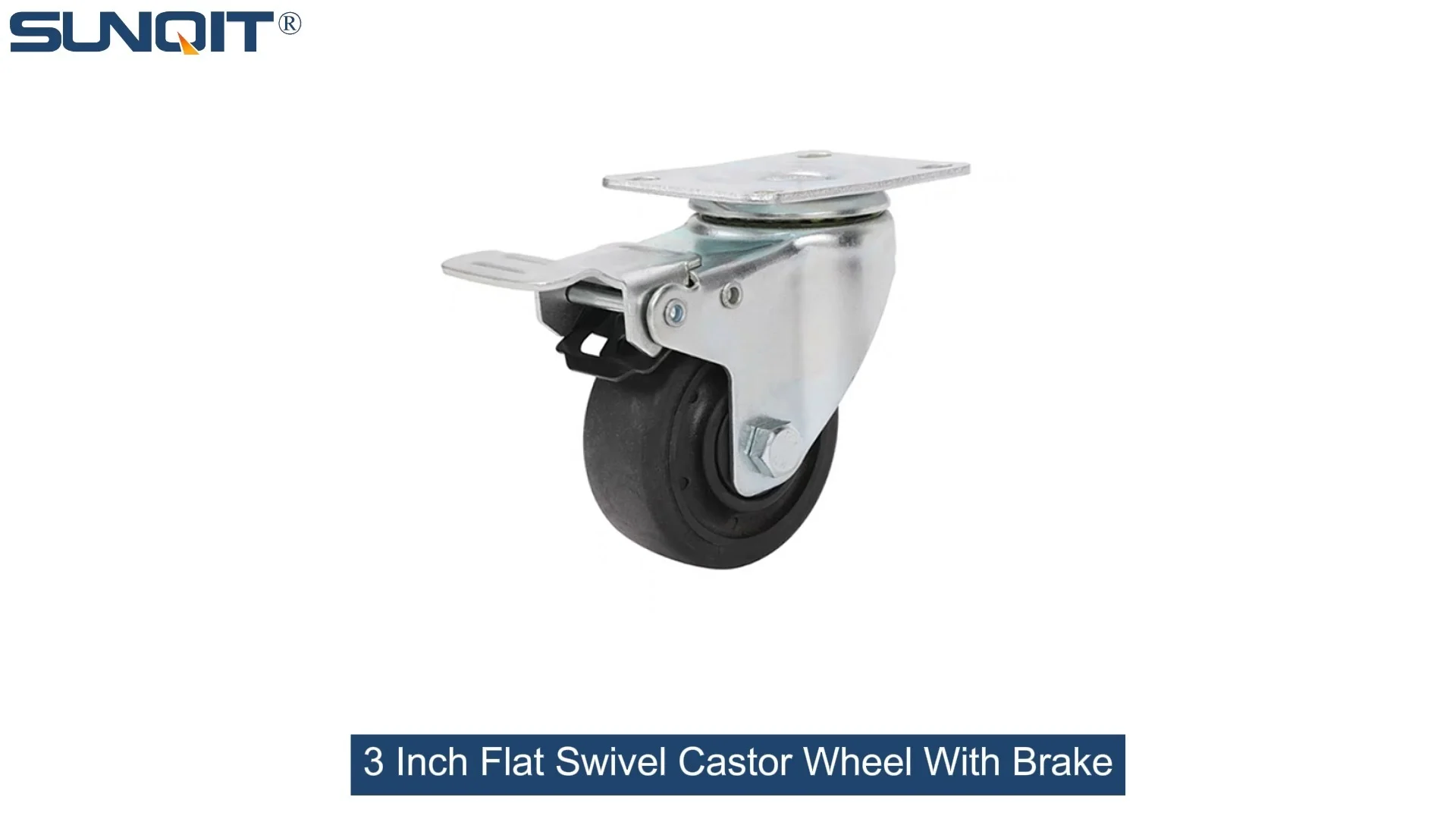
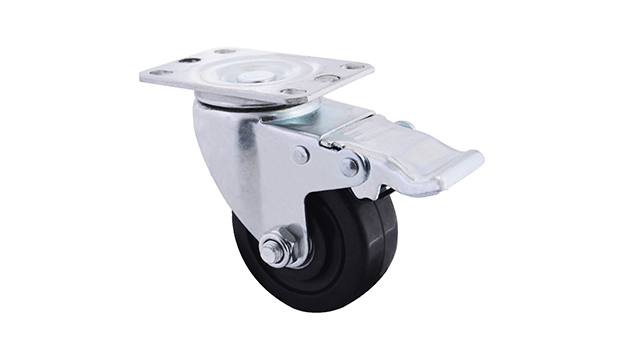
Flat Swivel Castor Wheel With Brake
Chair Casters Ball Bearing Wheels Rubber Base with brake design. Resistant to abrasion, impact and corrosion. Heavy payload can hold 70Kgs per pcs,which can make it works at a stable and smooth status.
Walk into any home appliance assembly plant, and you'll immediately sense the rhythm of creation. The hum of machinery, the clink of metal parts, and the focused energy of workers piecing together refrigerators, washing machines, and dishwashers—each step a dance between precision and speed. But beneath that rhythm lies a quiet challenge: adaptability. In an industry where product lines shift, consumer demands evolve, and factory layouts need to reconfigure at a moment's notice, rigidity is the enemy. Fixed workstations, immovable tool carts, and clunky material handlers can turn even the most well-oiled assembly line into a bottleneck. That's where the unsung hero of modern manufacturing comes in: the flat swivel castor wheel with brake . It's not just a wheel on a bracket; it's the key to unlocking flexibility in a world that can't afford to stand still.
The Hidden Cost of Stagnant Assembly Lines
Let's start with the basics: home appliance assembly isn't what it was a decade ago. Back then, a factory might churn out the same model of oven for years, with workstations bolted to the floor and material racks fixed in place. Today? It's not uncommon for a single line to switch between assembling a compact dishwasher, a smart refrigerator, and a high-efficiency dryer within a week. Each product has different parts, different tool requirements, and different workflow needs. And if your workstations can't keep up, you're already falling behind.
Take Maria, a line supervisor at a mid-sized appliance plant in Ohio. Last year, her team was tasked with adding a new "smart" washing machine to their production mix. The problem? Their existing workstations—heavy, wooden benches fixed to the floor—were designed for their older, bulkier model. To fit the new machine's slimmer frame and electronic components, workers had to stretch across the bench, reach for tools stored on distant racks, and even step off the line to grab parts. "We were losing 15 minutes per unit just in extra movement," Maria recalls. "And when you're making 200 units a day, that adds up fast." Worse, the fixed benches made it impossible to reposition the line for smaller batches, leading to piles of half-assembled parts piling up in corners. "It felt like we were working around the workstations, not with them," she says.
Maria's story isn't unique. Across the industry, manufacturers are grappling with three critical pain points:
- Static Workstations: Fixed benches and racks limit the ability to reconfigure layouts for new products or smaller batches, leading to wasted space and inefficient workflows.
- Material Movement Bottlenecks: Heavy components (like a refrigerator compressor or a washing machine drum) often require multiple workers to carry, increasing the risk of injury and slowing down production.
- Safety Risks: Without reliable braking mechanisms, even manually moved carts can drift or tip, endangering workers and damaging parts.
The solution? Mobility. But not just any mobility—smart mobility. Enter the flat swivel castor wheel with brake: a small but mighty component that transforms static workbenches into dynamic, adaptable tools. Let's break down why this unassuming caster is becoming a game-changer for home appliance assembly.
What Makes the Flat Swivel Castor Wheel with Brake Different?
At first glance, a caster wheel might seem like a simple invention—just a wheel attached to a swivel bracket. But in reality, not all casters are created equal. Traditional casters, often found on office chairs or basic carts, might swivel, lock poorly, or struggle under heavy loads. The flat swivel castor wheel with brake, though? It's engineered with the chaos of an assembly line in mind. Let's unpack its key features:
1. The Swivel: 360 Degrees of Freedom
Imagine trying to maneuver a loaded workbench through a tight gap between two conveyor belts. With a caster that only swivels 180 degrees, you'd have to backtrack, adjust, and repeat—wasting time and risking collisions. The flat swivel castor wheel with brake, however, offers a full 360-degree swivel range. Its precision ball bearings ensure smooth rotation, even when the workbench is loaded with 500 pounds of parts. "It's like turning a shopping cart with well-oiled wheels versus one with a stuck caster," says Raj, a maintenance technician at a Michigan-based appliance plant. "You push, it moves—no fighting the direction. That alone cut our workstation reconfiguration time by 40%."
2. The Brake: More Than Just a "Stop" Button
Here's where the "with brake" part becomes critical. A cheap caster brake might lock the wheel but leave the swivel free to turn, causing the workstation to drift sideways. Not this one. The flat swivel castor wheel with brake uses a dual-locking mechanism: when engaged, it locks both the wheel and the swivel plate. That means once you set the brake, the workstation stays put—even if someone bumps into it or the floor has a slight incline. "We had an incident a few years back where a cart without proper brakes rolled into a conveyor, damaging a batch of dryer drums," Raj remembers. "Since switching to these casters, we haven't had a single 'drift' accident. The brake is so solid, even our new hires feel confident using it."
3. Load Capacity: Built for Heavy Lifting
Home appliances aren't light. A half-assembled refrigerator can weigh 300 pounds; a washing machine tub, 150 pounds. Add tools, screws, and a workbench frame, and you're easily looking at 600+ pounds per workstation. The flat swivel castor wheel with brake is designed to handle this. Most models boast a load capacity of 250–350 pounds per wheel, meaning a standard four-caster workbench can safely carry 1,000–1,400 pounds. "We tested them with a fully loaded parts cart—tools, metal brackets, even a few spare motors—and they didn't so much as squeak," Maria says. "It's reassuring to know the casters won't give out when we need them most."
4. Floor-Friendly Design
Factory floors take a beating. Concrete, tile, even epoxy coatings can scratch or chip under heavy, metal-wheeled carts. The flat swivel castor wheel with brake uses a polyurethane tread that's soft enough to protect floors but tough enough to resist wear. "Our maintenance team used to spend hours patching floor scratches from metal casters," Raj notes. "Now? The only marks we see are from the forklifts. These wheels glide without leaving a trace."
From Workbench to Workhorse: Integrating Casters into Daily Operations
So, how does this caster actually transform an assembly line? Let's zoom in on three key areas where it makes the biggest difference: workstations , lean systems , and material flow .
1. Workstations: From Fixed to Fluid
The workbench is the heart of any assembly line. It's where workers spend 80% of their day, where parts are sorted, tools are stored, and the magic of creation happens. But a fixed workbench is a one-trick pony. Attach flat swivel castor wheels with brakes, and suddenly it's a multitasker. Need to shift from assembling oven doors to microwave control panels? Unlock the brakes, roll the workbench to the new position, lock the brakes, and you're ready. No bolts to unscrew, no heavy lifting, no downtime.
Take the example of a dishwasher assembly line. The "tub installation" workstation needs to be close to the conveyor when installing the steel tub, but farther away when attaching the plastic door panel (to avoid scratching the tub). With casters, the operator can adjust the distance in seconds. "Before, we had two separate workstations—one for tubs, one for doors," Maria explains. "Now we use one mobile bench. It saves 100 square feet of floor space and cuts down on tool duplication."
2. Lean Systems: Supporting the Pursuit of Perfection
Lean manufacturing isn't just a buzzword—it's a philosophy built on eliminating waste and continuous improvement. And mobility is a cornerstone of that philosophy. The flat swivel castor wheel with brake aligns perfectly with lean principles like 5S (Sort, Set in Order, Shine, Standardize, Sustain) by making it easier to:
- Sort and Set in Order: Mobile workstations can be rearranged to keep only essential tools within arm's reach, reducing clutter.
- Shine: When workbenches can be rolled away, cleaning crews can easily sweep and sanitize the entire floor—no more dust bunnies under fixed benches.
- Standardize: Casters ensure workstations are positioned consistently across shifts, so every worker knows exactly where to find what they need.
"We're big on 5S, and these casters made the 'Set in Order' step possible," Maria says. "We used to have tape on the floor marking where workbenches should go, but they'd always drift. Now, with the brakes, they stay in the tape lines. It sounds small, but it makes the whole line look and feel more organized."
3. Material Flow: Smoothing the Path with Roller Tracks and Conveyors
Mobility isn't just about moving workstations—it's about moving parts efficiently. That's where roller tracks and conveyors come into play. Roller tracks use a series of wheels to slide heavy parts (like a stove door or a fridge shelf) from one station to the next. But what happens when a part needs to leave the track and go to a workstation? Enter mobile trolleys equipped with flat swivel castor wheels with brakes.
Picture this: A batch of oven control panels arrives on a roller track. Instead of workers carrying each panel to their workbench (risking drops and strain), they roll a trolley—fitted with these casters—up to the track, slide the panels onto the trolley, then wheel it to their workstation. The casters' smooth swivel makes it easy to align the trolley with the track, and the brakes keep it steady while loading. "We used to have two people per track just moving parts," Raj says. "Now one person can handle it, and they're less tired at the end of the day. It's a win-win."

Traditional Casters vs. Flat Swivel Castor Wheel with Brake: A Side-by-Side Comparison
| Feature | Traditional Casters | Flat Swivel Castor Wheel with Brake |
|---|---|---|
| Swivel Range | 180–270 degrees (limited rotation) | 360 degrees (full, smooth rotation) |
| Brake Type | Wheel-only lock (swivel may drift) | Dual-locking (wheel + swivel plate) |
| Load Capacity | 100–200 lbs per wheel | 250–350 lbs per wheel |
| Floor Protection | Metal or hard plastic wheels (may scratch) | Polyurethane tread (gentle on floors) |
| Noise Level | Loud (metal-on-concrete scraping) | Quiet (polyurethane absorbs sound) |

Real Results: How Casters Transformed Maria's Line
Let's circle back to Maria. After months of frustration with her fixed workstations, she advocated for upgrading to mobile workbenches fitted with flat swivel castor wheels with brakes. The results? "It was like night and day," she says. Within the first month:
- Changeover time dropped by 40%: Switching from assembling a standard dishwasher to a compact model used to take 2 hours; now it takes 45 minutes.
- Worker fatigue decreased: "Our ergonomics survey scores went up by 25%," Maria notes. "Workers aren't stretching or carrying heavy parts as much."
- Space utilization improved: By reconfiguring workstations, they freed up 15% of floor space, which they used to add a new testing station.
Perhaps the biggest surprise? The impact on morale. "Our team feels more in control now," Maria says. "They can adjust their workbench to fit their height, move it closer to the parts they need, and even rearrange the line if they spot a better way to work. It's not just about efficiency—it's about empowering people."
Caring for Your Casters: Maintenance Tips for Longevity
Like any tool, flat swivel castor wheels with brakes need a little TLC to keep performing at their best. Here's how Raj and his team keep theirs in top shape:
- Clean the swivel joint monthly: Factory floors are dusty, and dirt can gum up the swivel bearings. A quick spray with compressed air and a wipe with a rag keeps things moving smoothly.
- Lubricate the brake mechanism quarterly: Use a silicone-based lubricant (avoid oil, which attracts dust) on the brake pedal and locking pins. "A little lube goes a long way," Raj says. "It keeps the brake from sticking."
- Inspect wheels for wear: Check the polyurethane tread for cracks or flat spots. If you see damage, replace the wheel promptly—worn wheels can cause wobbling or uneven braking.
- Tighten bolts annually: The constant movement can loosen the bolts holding the caster to the workbench. A quick check with a wrench ensures everything stays secure.
The Future of Assembly Line Mobility
As home appliance manufacturers embrace automation and smart factories, the role of mobility will only grow. Imagine workstations equipped with sensors that alert managers when a caster brake is left unlocked, or wheels that adjust their grip based on floor conditions. But even with these advancements, the core need—reliable, flexible movement—will remain. The flat swivel castor wheel with brake isn't just a tool for today; it's a foundation for tomorrow's factories.
"We're already talking about adding these casters to our testing equipment and packaging stations," Maria says. "If a tool or machine can move, why keep it stuck in one place? The more flexible we are, the faster we can adapt to what customers want. And in this industry, that's everything."
Conclusion: Flexibility Isn't a Luxury—It's a Necessity
In the fast-paced world of home appliance assembly, flexibility isn't just a buzzword; it's the difference between thriving and falling behind. The flat swivel castor wheel with brake may seem like a small component, but its impact is huge. By turning static workstations into mobile, adaptable hubs, it empowers workers, streamlines workflows, and supports the lean principles that drive modern manufacturing. It's the kind of innovation that doesn't shout—it just works, quietly making every day on the assembly line a little smoother, a little safer, and a lot more efficient.
So the next time you walk into an appliance store and marvel at a sleek new fridge or a quiet dishwasher, take a moment to appreciate the unsung heroes behind it. The workers, the engineers, and yes—even the casters. Because in the end, it's the small, thoughtful tools that make the big, beautiful products possible.